Best Customer Journey Platforms in 2026: 10 Platforms Compared
We compared the best customer journey platforms for 2026, from Salesforce and Adobe to Braze, Iterable and Customer.io, on channels, pricing and fit today.
- Editor's choice
 Salesforce Marketing Cloud
Enterprise cross-channel journeys
Starts at$2,000 per monthVisit salesforce.comFull review - Great alternative
 Adobe Journey Optimizer
Adobe ecosystem enterprises
Starts atSee websiteVisit business.adobe.comFull review - Also consider
 Braze
Real-time mobile-first engagement
Starts atSee websiteVisit braze.comFull review
TL;DR:
- Salesforce Marketing Cloud and Adobe Journey Optimizer lead for enterprises that need cross-channel journeys at large scale.
- Braze and Iterable suit consumer brands that run real-time, mobile-first journeys across push, email and in-app messages.
- Customer.io is the strongest pick for SaaS and tech teams that want event-driven journeys without an enterprise sales cycle.
- Most enterprise platforms hide pricing behind sales quotes, so budget for implementation and message volume, not just the license.
- Small teams should start with a self-serve tool and move up only when journey complexity or volume outgrows it.
Quick comparison
| Tool | Best for | Starts at | Free plan? | |
|---|---|---|---|---|
| Salesforce Marketing Cloud | Enterprise cross-channel journeys | $2,000 per month | No | Visit |
| Adobe Journey Optimizer | Adobe ecosystem enterprises | See website | No | Visit |
| Braze | Real-time mobile-first engagement | See website | No | Visit |
 Iterable | Complex lifecycle programs | See website | No | Visit |
 Customer.io | Event-driven SaaS messaging | $100 per month | Free trial | Visit |
 MoEngage | AI-assisted lifecycle marketing | See website | No | Visit |
 CleverTap | Analytics plus engagement in one tool | See website | No | Visit |
 Insider | Retail and ecommerce personalization | See website | No | Visit |
 Ortto | Small teams wanting visual journeys | See website | Free trial | Visit |
 Blueshift | AI-driven cross-channel campaigns | See website | No | Visit |
The best customer journey platforms
A customer journey platform maps what happens after someone first meets your brand, then sends the right message on the right channel at each step. We compared official pricing pages, feature documentation and public reviews to pick ten tools that cover enterprise suites, mobile-first engagement and self-serve options for smaller teams.
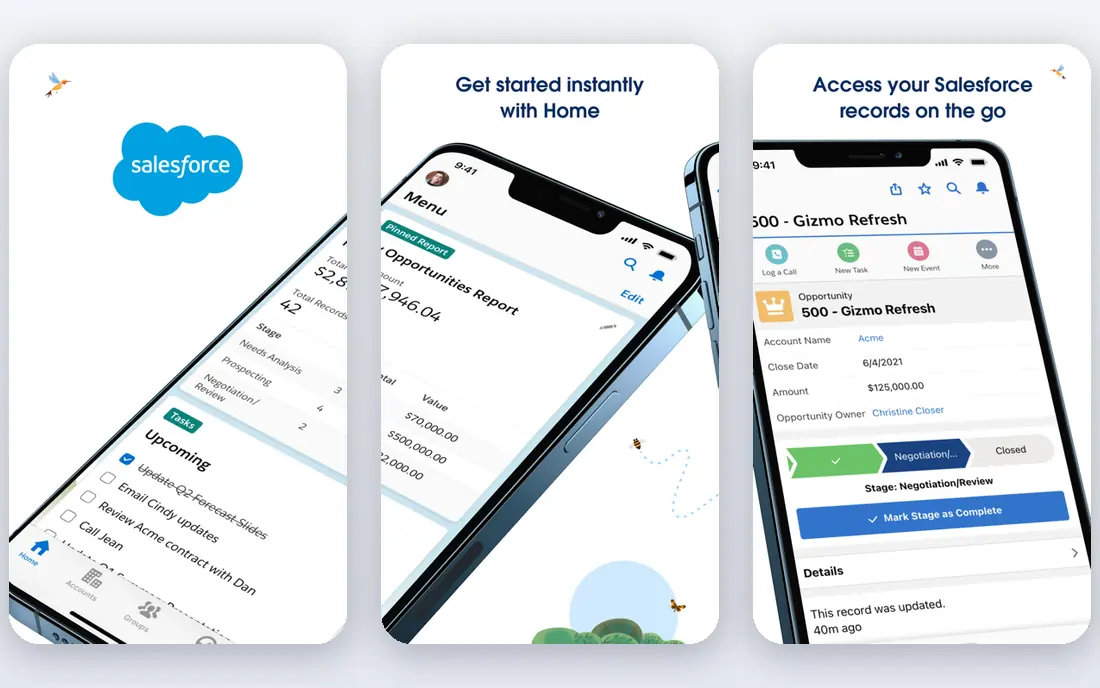
Salesforce Marketing Cloud is the enterprise default for journey orchestration, built around Journey Builder, Email Studio and Mobile Studio. Its restructured editions start at $2,000 per organization per month for the Pro+ tier, which bundles 2.5 million emails and 15,000 contacts, while Corporate+ runs $5,500 per month with Journey Builder and higher limits. That scale, plus native CRM data, is why large companies standardize on it.
The catch is total cost and effort. Implementation often takes months and can cost as much as the first year of licensing, and contact and message caps mean the entry tier gets tight fast. If your company already runs Salesforce CRM and you need journeys across email, SMS, push and advertising audiences, it is hard to beat. Smaller teams will find it heavy.
- Journey Builder handles complex multi-step flows
- Deep Salesforce CRM integration
- Huge partner ecosystem
- Expensive and complex to implement
- Pricing tiers and contact caps need careful reading
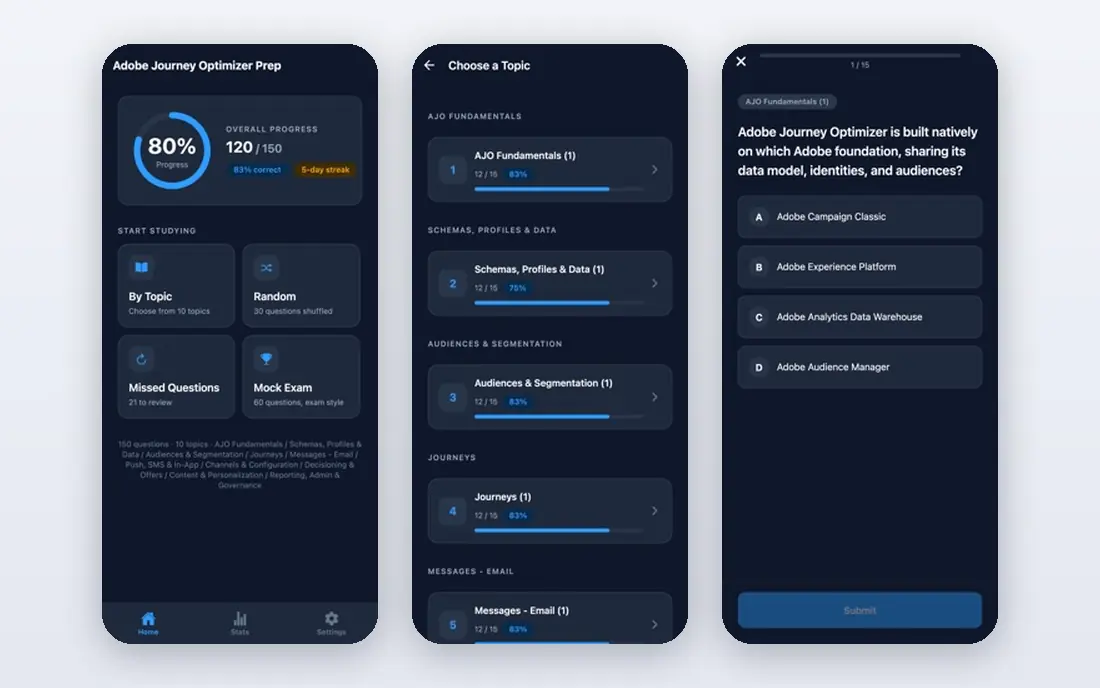
Adobe Journey Optimizer is Adobe's answer to enterprise journey orchestration, sitting on Adobe Experience Platform. It builds journeys from unified customer profiles and delivers email, SMS, push, in-app and web experiences in real time, with decisioning that adapts each step to the customer's behavior. For companies already invested in Adobe Analytics, Target or Commerce, the shared data layer is a genuine advantage.
Pricing is custom and typically bundles platform, data usage and message volume, so expect an enterprise negotiation. It is not a simple or low-cost replacement for other tools, and teams without dedicated marketing operations staff will struggle to use it fully. If Adobe is already your stack, though, Journey Optimizer ties it together better than a bolt-on tool.
- Real-time personalization across channels
- Strong Adobe Experience Platform integration
- Powerful decisioning
- Quote-only pricing
- Needs mature data and marketing operations teams to run well

Braze is a customer engagement platform built for consumer brands with serious mobile apps. Its Canvas tool orchestrates email, SMS, WhatsApp, push, web push and in-app messages from one flow, with real-time triggers and warehouse-native segmentation through Snowflake and BigQuery. Brands with millions of users rely on it for journeys that react in seconds rather than overnight batches.
There is no public price and no self-serve signup, so every engagement starts with a sales conversation and ends in a custom quote. In October 2026 Salesforce agreed to buy Braze for $5.66 billion, a deal still awaiting approval, which is worth noting if you are signing a long contract. If you need the broadest channel coverage at scale, Braze remains a top pick, but negotiate price protection and exit terms.
- Broadest channel coverage in one canvas
- Real-time triggers
- Scales to very large audiences
- No self-serve pricing
- Enterprise budgets only
- Acquisition news adds roadmap uncertainty
Iterable is built for growth and enterprise teams running sophisticated lifecycle programs across email, push, SMS and in-app messages. Its journey builder supports branching, experimentation and AI-assisted optimization, and it handles high volumes without forcing teams into rigid templates. Many consumer brands use it as the central hub for onboarding, retention and win-back flows.
Pricing is custom, which makes budgeting harder, and the platform assumes you have lifecycle marketers who will use its depth. Teams that only need basic drip emails will not get their money's worth. For companies where messaging is a core growth lever and journeys change often, Iterable earns its place on the shortlist.
- Strong cross-channel journey builder
- Good for growth and enterprise teams
- Flexible data model
- Quote-only pricing
- Can be more than smaller teams need
Customer.io is the developer-friendly option in this list, and our pick for SaaS and tech teams. Journeys trigger from real product events rather than static lists, and workspaces can process billions of events a month. Essentials starts at $100 per month, Premium at $1,000 per month, and push notifications, in-app messages, webhooks and API calls are unlimited on every plan. A 14-day trial lets you test with real data before paying.
The trade-off is focus. Customer.io is strongest for product-led and B2B messaging, and less of a fit for consumer brands that live on mobile push and wallet offers. It also assumes someone technical will set up events and data flows. If your team has developers and your journeys should react to what users actually do in your product, this is the best value here.
- Event-driven journeys with a 14-day trial
- Plans start at $100 per month
- Unlimited push, in-app and API calls
- Less built for consumer mobile marketing
- Email volume drives cost at scale
MoEngage is an insights-led engagement platform popular with consumer brands, especially in mobile-first markets across Asia, the Middle East and Europe. It combines analytics with journey orchestration, so teams can segment, test and send across push, email, SMS, WhatsApp and in-app messages without stitching separate tools together. Its AI features help with send-time optimization and content suggestions.
Pricing is quote-based and tied to monthly tracked users, so you will need a sales conversation for a number. US-based teams should check support hours and integration coverage for their specific stack before committing. For brands with large mobile audiences and a need for analytics plus messaging in one product, MoEngage is a strong contender.
- AI-assisted journey and content optimization
- Strong in mobile-first markets
- Integrated analytics
- Quote-only pricing
- US support and partner coverage is thinner than Braze or Iterable
CleverTap pairs product analytics with customer engagement, which appeals to app teams that want to analyze and message from the same data. You can build cohorts from funnels, retention curves and user behavior, then launch journeys across push, email, SMS, WhatsApp and in-app messages without exporting segments. That tight loop between insight and action is its main strength.
Pricing is not published for the core plans, so budget conversations start with sales. The analytics depth also adds complexity that pure messaging teams may not need. If your team constantly asks why users drop off and then wants to act on the answer in the same tool, CleverTap fits better than a messaging-only platform.
- Deep analytics built into the engagement platform
- Good retention and funnel analysis
- Broad channel support
- No published entry price
- Can feel complex for teams that only need messaging
Insider, sold as Insider One, targets retail and ecommerce brands that want personalization and journey orchestration from a single vendor. It covers onsite recommendations and content, plus email, push, SMS and WhatsApp journeys, so a retailer can run the website experience and the follow-up messages in one place. That breadth suits merchandising teams that think in terms of product discovery rather than channels.
There is no public pricing and no free plan, so evaluation starts with a demo and a quote. Smaller stores will find it heavy and expensive. For mid-size and large retailers that want web personalization and messaging under one contract, Insider is worth a demo alongside Braze and MoEngage.
- One vendor across web, app and messaging
- Strong onsite personalization
- Good for retail and ecommerce
- Quote-only pricing
- Demo-led sales process with no free plan
Ortto is the friendliest journey tool on this list for smaller teams. Its visual builder lets marketers map multi-step journeys with branching and scoring, pulling in CRM and product data without a heavy implementation project. It covers email, SMS and push, and it suits startups and mid-size companies that have outgrown basic email automation but cannot justify an enterprise suite.
The honest limit is scale. Ortto is less proven for the multi-million-user, multi-brand programs that Salesforce, Adobe and Braze handle routinely. If your audience is in the thousands or low hundreds of thousands and you want journeys live this month, Ortto is a sensible pick. Revisit the enterprise options when volume or complexity grows.
- Visual journey builder that small teams can learn fast
- Combines CRM data with messaging
- Free trial available
- Less proven at very large enterprise scale
- Pricing details require checking the current plans page
Blueshift is a customer data and engagement platform that leans on AI for recommendations, predictive segments and next-best-action decisions inside journeys. It unifies customer data into profiles, then activates them across email, push, SMS and paid channels, which suits retail, media and subscription businesses that personalize heavily. Its predictive models help teams target likely buyers and likely churners without hand-building every segment.
Pricing is quote-based, and its community and integration marketplace are smaller than those of Salesforce or Braze. That matters when you need a niche connector or want to hire people who already know the tool. If AI-driven personalization is central to your marketing and you want it built into the journey tool rather than bolted on, Blueshift deserves a look.
- AI-driven recommendations and predictive segments
- Unified customer profiles
- Strong for retail and media
- Quote-only pricing
- Smaller community and partner network than the biggest suites
How we picked these
We compared official pricing pages, product documentation and public reviews, and we only included platforms that actively support multi-step, cross-channel journeys in October 2026. We mixed enterprise suites with mobile-first tools and self-serve options so that both large brands and smaller teams find a fit. Pure email tools and single-channel push services were left out, since they do not cover the full journey job.
How to choose the right journey platform
Start with your channels and your data. List the channels you actually use today, plus the ones you plan to add in the next year, and check that the platform covers them natively rather than through fragile workarounds. Then look at where your customer data lives. A platform that connects cleanly to your CRM, warehouse or product analytics will launch faster than one that needs a data project first.
Next, match the tool to your team's skills. Enterprise suites assume dedicated marketing operations staff and long implementations. Self-serve tools assume a small team that wants journeys live quickly. Buying more platform than your team can operate is the most common mistake in this category, and it shows up as a costly contract that nobody fully uses.
Price the whole program, not the license
Ask vendors to quote your real contact count, message volume and channel mix, and to spell out overage rates in writing. Implementation, training and data integration often cost as much as the first year of software, especially for Salesforce and Adobe. For quote-only vendors, get at least two competing quotes and compare them on identical volumes, or the numbers will mislead you.
Run a pilot on one journey
Pick one journey that matters, such as onboarding or cart recovery, and run it end to end on your top two choices. Measure time to launch, deliverability, reporting clarity and how easily a non-technical marketer can change a step. The platform that ships that journey fastest, with reporting your team trusts, is usually the right buy.
FAQ
What is a customer journey platform?
It is software that maps the steps a customer takes with your brand and automates messages across channels at each step. Unlike basic email tools, it reacts to behavior in real time, branches based on actions and coordinates email, SMS, push and in-app messages in one flow. The goal is a coherent experience rather than disconnected campaigns.
Do I need a journey platform if I already use email marketing software?
It depends on complexity. If you send newsletters and a few drip emails, your email tool is enough. If you coordinate messages across several channels, react to product events, and run branching flows with testing, a journey platform saves manual work and avoids conflicting messages. The jump makes sense when channel coordination becomes a regular headache.
How much do customer journey platforms cost?
Self-serve options like Customer.io start at $100 per month, while enterprise suites like Salesforce Marketing Cloud start around $2,000 per organization per month and rise with contacts and message volume. Many leading tools, including Braze, Adobe Journey Optimizer and Iterable, publish no prices and quote per deal. Always price implementation and message overages alongside the license.
What is the difference between a journey platform and a CDP?
A customer data platform collects and unifies customer data from many sources into profiles. A journey platform uses that data to orchestrate messages and experiences. Some products do both, and many teams pair a CDP with a journey tool. If your data is already clean and connected, you may only need the journey layer.
Can small businesses use these platforms?
Yes, but they should start with self-serve tools like Customer.io or Ortto rather than enterprise suites. Small teams get value fastest from a tool they can set up themselves and pay for monthly. Move to an enterprise platform when audience size, channel count or governance needs outgrow the smaller tool.
How long does implementation take?
Self-serve tools can launch a first journey in days or weeks. Enterprise platforms typically take two to six months, including data integration, template building and team training. Ask any vendor for a realistic timeline based on your data sources, and treat vague promises with caution.