Best Customer Intelligence Platforms in 2026: 8 Platforms Compared
Compare the best customer intelligence platforms in 2026, with health scoring, feedback, product usage and churn signals, pricing and team fit compared.
- Editor's choice
 Gainsight
Enterprise customer intelligence
Starts atSee websiteVisit gainsight.comFull review - Great alternative
 Totango
Mid market templated workflows
Starts atSee websiteVisit totango.comFull review - Also consider
 ChurnZero
Mid market retention and health
Starts atSee websiteVisit churnzero.comFull review
TL;DR:
- Gainsight leads for large enterprise customer teams that need deep health scoring and journey orchestration.
- Totango, ChurnZero and Vitally suit mid market SaaS teams that need faster setup and clearer pricing signals.
- Qualtrics and Segment add feedback and unified customer data, which health scores alone cannot provide.
- Price by customer account count and data sources, not just by user seats, because account based pricing changes the total fast.
Quick comparison
| Tool | Best for | Starts at | Free plan? | |
|---|---|---|---|---|
| Gainsight | Enterprise customer intelligence | See website | No | Visit |
| Totango | Mid market templated workflows | See website | Yes | Visit |
| ChurnZero | Mid market retention and health | See website | No | Visit |
 Vitally | Product led SaaS intelligence | See website | No | Visit |
 Planhat | Data driven customer teams | See website | No | Visit |
 Custify | Budget SMB customer intelligence | See website | No | Visit |
 Qualtrics XM | Feedback and experience intelligence | See website | No | Visit |
 Segment | Unified customer data foundation | See website | Yes | Visit |
The best customer intelligence platforms
We compared health scoring, product usage signals, feedback collection, churn prediction, playbooks, reporting and pricing. Customer intelligence here means turning product, support, billing and feedback signals into a clear view of which customers are healthy, at risk or ready to grow.

Gainsight remains the benchmark for enterprise customer success and intelligence. Health scores can weight product usage, support sentiment, financial data and relationship signals into a single view, while Journey Orchestrator runs multi step playbooks triggered by real behavior, not just renewal dates. QBR tools and executive reporting help customer teams show value at board level.
The trade off is cost and complexity. Median contracts cited in buyer data are around $50,000 per year, with implementation and admin costs on top, and rollout often takes several months. Teams under a few hundred accounts may buy more platform than they can run in year one. For a large enterprise with CS Ops capacity, Gainsight's depth is unmatched here.
- Highly configurable health scoring
- Journey orchestration and playbooks
- Strong QBR and executive reporting
- No published pricing
- Implementation often takes months and needs a dedicated admin
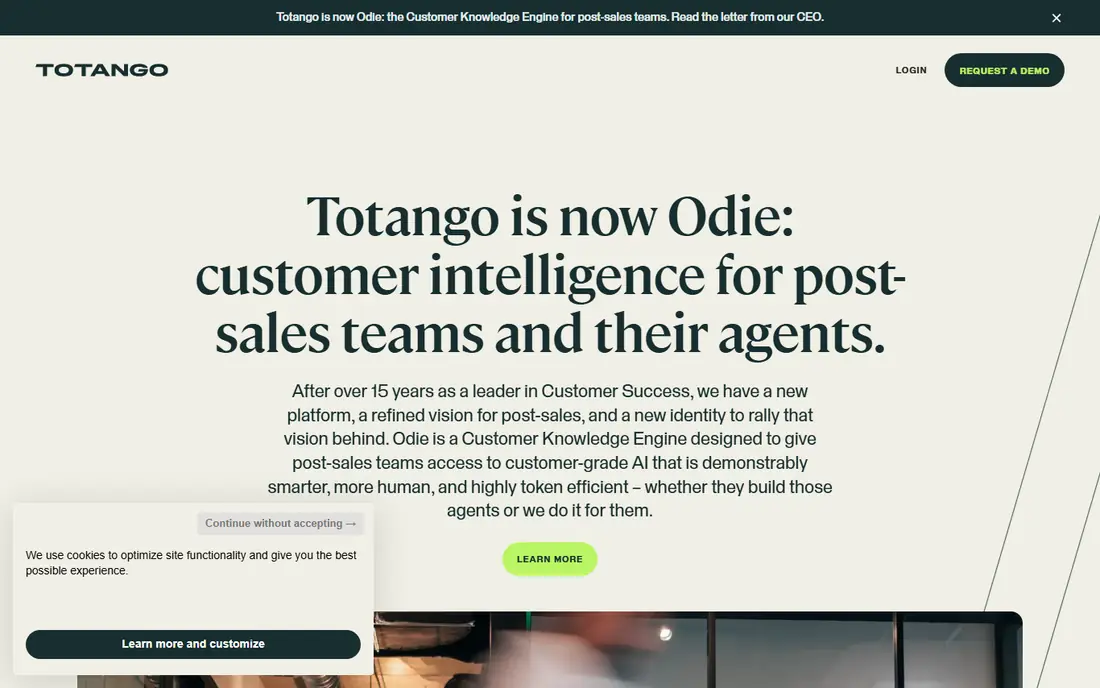
Totango, after its merger with Catalyst, offers templated workflows for onboarding, adoption, renewal and expansion, which help a mid market team start from proven playbooks rather than a blank system. Health scoring is modular, with journey templates that a CSM can adapt without deep configuration. Deployment is typically faster than Gainsight, often in weeks rather than months.
Pricing is quote based, with a free community tier for small teams and Starter tiers cited around $12,000 to $18,000 per year in buyer guides. For a team of 5 to 20 CSMs that wants structure without enterprise overhead, Totango is a strong balance of depth and speed.
- Templated SuccessBLOC workflows
- Faster deployment than enterprise suites
- Free community tier for small teams
- No published pricing for paid tiers
- Starter costs are higher than a light tool like Custify
ChurnZero focuses on retention for subscription businesses with 100 to 2,000 accounts. Health scores combine product usage, support and billing signals, while in app messages, emails and playbooks help CSMs act before a customer churns. Real time alerts and segmentation make it easier to spot at risk accounts early, rather than at renewal.
Pricing is quote based per customer account managed, not per user, with annual contracts cited from around $12,000 to $60,000 per year depending on scale. Implementation typically takes a few weeks. For a mid market SaaS team with a sales led motion, ChurnZero is one of the most focused retention tools in this list.
- Strong health scoring tuned for mid market
- In app messaging and playbooks
- Clear churn and expansion signals
- No published pricing
- Annual contracts cited from around $12,000 per year upward
Vitally suits product led SaaS teams that need a clear, usable view of customers without a heavy enterprise rollout. Health scores, lifecycle stages, notes and playbooks are flexible, and integrations with product, CRM and support tools bring signals together quickly. Teams often cite usability as the main reason they choose Vitally over a larger suite.
Pricing is quote based, with guides citing entry around $1,600 per month and higher tiers for larger account counts. Setup typically takes two to four weeks. For a team of 3 to 15 CSMs with 50 to 500 accounts, Vitally offers a modern, lean alternative to Gainsight and Totango.
- Flexible health scoring and customer views
- Developer friendly integrations
- Fast setup for lean teams
- No published pricing on the main page
- Some enterprise depth trails Gainsight
Planhat is built for data driven teams that want to analyze customer health, revenue and product signals in one place. Its data model handles complex account structures, while QBR automation, sentiment tracking and custom dashboards help CSMs and leaders see trends across a portfolio. Pricing is based on active customer accounts and modules, not per seat, which suits teams with many viewers.
Buyer guides cite Planhat starting around $1,150 per month for smaller teams, rising to $1,750 per month and higher for professional tiers. Implementation takes four to eight weeks for many teams. If your team has CS Ops capacity and values analytics depth, Planhat is a strong, modern enterprise alternative.
- Strong data model and analytics
- QBR automation and sentiment signals
- Account based pricing, not per seat
- No published pricing
- Needs CS Ops capacity to get full value from the data model
Custify is the most accessible platform in this list for early stage B2B SaaS. It covers health scoring, lifecycle automation, playbooks, churn risk signals and NPS or CSAT tracking, without enterprise pricing or a months long rollout. Setup can happen in days to weeks, which helps a small team show results quickly.
Pricing is quote based, with third party guides citing around $499 to $999 per month as a starting range. That makes Custify the only sub $10,000 per year entry point in this group for many small teams. Analytics depth and UX polish trail Gainsight and Planhat, but for under 200 to 500 accounts, Custify covers the core intelligence needs well.
- Low entry cost for SMB SaaS
- Health scoring, lifecycle automation and NPS tracking
- Fast setup in days to weeks
- Analytics depth is thinner than enterprise tools
- Email module is outbound only
Qualtrics XM adds the voice of the customer to intelligence that product data alone cannot provide. Surveys, NPS, CSAT, text analytics and sentiment trends show why customers feel the way they do, not just what they clicked. That feedback layer helps a team explain a health score drop, prioritize product fixes and prepare for a renewal conversation with real quotes and themes.
Qualtrics is not a full customer success platform by itself. It does not replace health scoring, playbooks or CSM workflows, so most teams pair it with Gainsight, Totango or ChurnZero. Pricing is quote based and enterprise oriented. Use Qualtrics when feedback quality and research depth matter more than a single CS dashboard.
- Deep survey and feedback analytics
- Text and sentiment analysis
- Strong enterprise research tools
- No published pricing
- Not a full CS platform on its own, so pair it with a health tool for action
Segment is the data foundation under customer intelligence. It collects events and customer traits from websites, apps, CRM, support and billing tools, unifies them into profiles, and sends clean data to analytics, marketing and CS tools. That clean foundation improves every health score, segment and report built on top of it.
Segment offers a free tier for small volumes, with paid plans quote based by volume. On its own, Segment does not show health scores or run CSM playbooks, so pair it with a CS platform or a BI tool. For a team whose customer data is scattered across five systems, Segment is often the first fix, before buying a larger intelligence suite.
- Unifies customer data from many sources into one profile
- Strong integrations
- Free tier for small volumes
- Not a CS dashboard on its own
- Needs analytics or CS tools on top for health and playbooks
How we picked these
We compared official feature and pricing pages, plus public buyer guides in October 2026. We favored platforms with live health scoring, feedback, product usage or unified data features, and a clear customer intelligence use case. We included enterprise, mid market and SMB options, plus a feedback platform and a data platform, because intelligence needs both signals and a clean data foundation. Prices shown are entry plans where published; otherwise we list See website.
How to choose a customer intelligence platform
Start with your account count and your signal sources. List product usage, support tickets, billing, NPS and CRM data, then check which platforms ingest those sources without heavy custom work. A tool that cannot read your product data will produce health scores based on guesses, not evidence.
Next, define one health model before you buy. Decide which signals mean healthy, at risk or ready to expand, and who acts on each signal. Test that model in a trial with 20 real accounts, and see if the scores match what your CSMs already know. If the scores contradict frontline knowledge, fix the model, not the CSMs.
Finally, price by accounts and volume, not by seats. Most platforms here price by customer accounts managed or by data volume, so a team with many small accounts can pay more than a team with fewer large accounts. Get a quote at your current account count and at 25 percent growth, and confirm what happens to pricing when you add a new data source.
A note on privacy and consent
Customer intelligence uses personal and company data, so set clear rules for collection, retention and access. Only collect signals you will act on, respect opt outs for surveys and messaging, and limit health data access to staff who need it. A transparent data policy builds trust with customers and keeps your intelligence program on solid ground.
FAQ
What is a customer intelligence platform?
It is software that combines product usage, support, billing, feedback and CRM signals into health scores, churn risk signals and growth opportunities for each customer account. It helps customer teams act before renewal, rather than reacting after a customer leaves.
What is the best customer intelligence platform for a small SaaS team?
Custify is the best budget pick, with fast setup and health scoring for under 500 accounts. Vitally suits a slightly larger product led team that needs more flexibility. Totango's free community tier is also worth testing for a very small team before paying.
How is customer intelligence different from a CRM?
A CRM tracks deals, contacts and activities for sales. Customer intelligence tracks health, usage, sentiment and risk after the sale, across the whole account lifecycle. Many teams use both: a CRM for pipeline, and a platform like Gainsight, ChurnZero or Vitally for retention and expansion.
How much do customer intelligence platforms cost?
Entry costs range from free for small Segment and Totango community use, through around $499 to $1,600 per month for Custify and Vitally, to $50,000 per year or more for enterprise Gainsight deployments. Price by account count, data volume and implementation, not by seats alone.
Do I need Segment if I already have a CS platform?
Not always. If your CS platform already ingests product, support and billing data cleanly, you may not need Segment. If your data is scattered, inconsistent or hard to route to several tools, Segment can clean and unify it first, which improves every downstream score and report.