Best Credit Check Services in 2026: 8 Services Compared
Compare the best credit check service options in 2026, with free monitoring, FICO scores, and paid plans in one plain, honest, full guide before you apply.

- Editor's choice
 Experian
Free FICO Score 8
Starts atFreeVisit experian.comFull review - Great alternative
 Credit Karma
Free two-bureau monitoring
Starts atFreeVisit creditkarma.comFull review - Also consider
 AnnualCreditReport.com
Official three-bureau reports
Starts atFreeVisit annualcreditreport.comFull review
TL;DR:
- Checking your own credit does not harm your score, and paid monitoring is optional for most people.
- Credit Karma plus the free Experian tier covers all three bureaus at no cost for basic monitoring.
- Experian gives a free FICO Score 8, while most free services show a VantageScore instead.
- Aura and myFICO suit buyers who want three-bureau coverage or lender-style FICO scores for a mortgage.
- AnnualCreditReport.com remains the only federally authorized source for official reports from all three bureaus.
Quick comparison
| Tool | Best for | Starts at | Free plan? | |
|---|---|---|---|---|
| Experian | Free FICO Score 8 | Free | Yes | Visit |
| Credit Karma | Free two-bureau monitoring | Free | Yes | Visit |
| AnnualCreditReport.com | Official three-bureau reports | Free | Yes | Visit |
 Aura | All-in-one paid protection | $12 per month | No | Visit |
 myFICO | Lender-style FICO scores | $19.95 per month | No | Visit |
 Capital One CreditWise | Free monitoring, no upsell pressure | Free | Yes | Visit |
 Equifax | Direct bureau access | See website | Yes | Visit |
 LifeLock | Identity protection bundle | $11.99 per month | No | Visit |
The best credit check services
A credit check service lets you see your credit reports and scores, watch for changes, and catch errors or fraud early. The key point to know first is plain: checking your own credit does not harm your score, and paid monitoring is optional, since free tools already cover a lot. We compared official service pages and current monitoring roundups for October 2026, and we list only legitimate credit check and monitoring services.
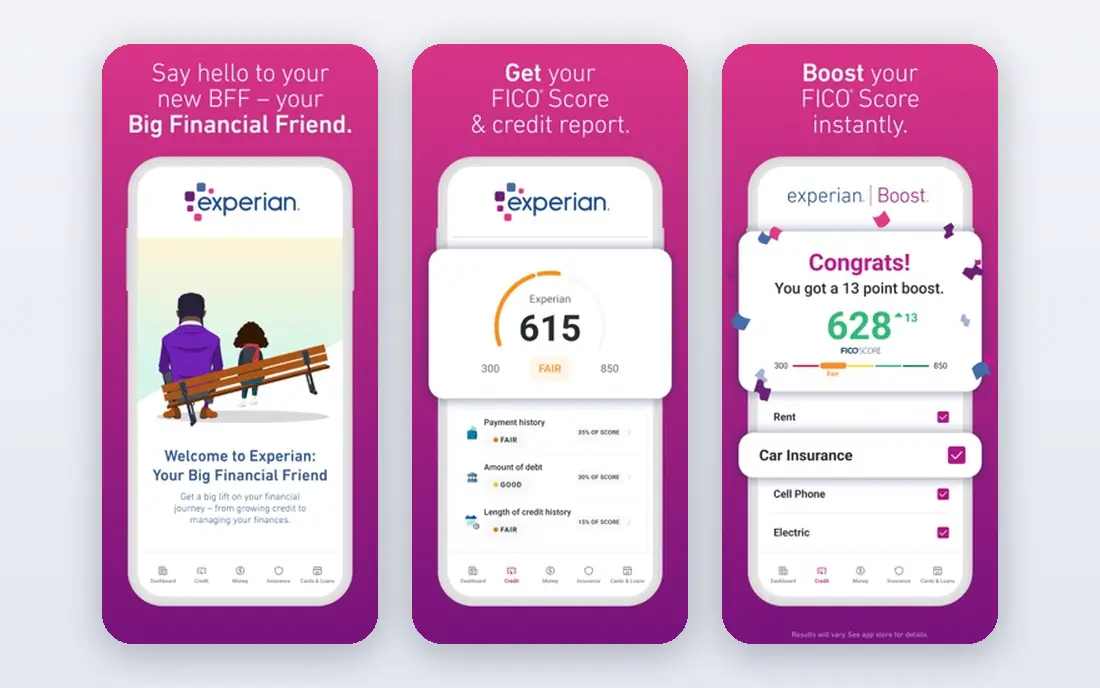
Experian is the best free starting point if you care about the score lenders most often use. Its free tier gives a genuine FICO Score 8 from Experian data, unlike most free services that show a VantageScore, plus monitoring for changes to your Experian file. Experian Boost lets you add utility and streaming payments, which may help some scores, though results vary by file.
The free tier watches only Experian, so Equifax and TransUnion go unmonitored unless you add another service. The paid CreditWorks tier adds three-bureau reports but costs more than some rivals with fewer extra features. Pair free Experian with Credit Karma and you cover all three bureaus at no cost.
- Free FICO Score 8 from Experian data
- Free Experian monitoring
- Boost option for utility payments
- Free tier monitors Experian only
- Paid three-bureau tier costs $24.99 per month in listings

Credit Karma is the best free companion to Experian, since it monitors Equifax and TransUnion at no cost. Weekly score updates, alerts for file changes, and a clear dashboard make it easy to spot errors or unexpected accounts. There is no paid tier needed for core monitoring, which keeps the experience simple.
The scores shown are VantageScores, which many lenders do not use for decisions, so treat them as a trend indicator rather than a lender score. Credit Karma also offers no identity theft insurance and no Experian coverage. Used alongside free Experian, it completes a strong free monitoring stack.
- Free monitoring for Equifax and TransUnion
- Weekly score updates
- No paid tier required for core monitoring
- Shows VantageScore, not FICO
- No identity theft insurance
- No Experian coverage
AnnualCreditReport.com is the official place to get your full credit reports from Experian, Equifax, and TransUnion. It is federally authorized, requires no subscription, and lets you review the full detail behind your scores, including accounts, balances, and inquiries. Checking these reports is the best way to catch errors that a score alone will not explain.
It is not a monitoring service, since it does not alert you to changes between checks, and free reports do not include scores. Use it alongside a monitoring tool: check full reports regularly, and let a free monitor watch for changes in between. That combination is both thorough and free.
- Only federally authorized source for official reports
- Covers all three bureaus
- No subscription needed
- Reports, not ongoing monitoring
- No scores included for free
Aura is our pick for buyers who want one paid subscription to cover credit and identity protection together. Plans start around $12 per month in current listings, with three-bureau monitoring, dark web scanning, identity theft insurance, and digital security tools including a VPN and password manager. Recent testing coverage praised its fast alerts and broad coverage for the price.
Aura is paid only, so free-stack users may not need it, and some bundled tools may duplicate antivirus or VPN software you already pay for. If you want monitoring plus insurance and recovery support in one place, and you value fast alerts, Aura offers strong value for a paid plan.
- Three-bureau monitoring on every plan
- Identity theft insurance
- VPN and password manager included
- Paid only
- Extra digital tools may duplicate software you already own
myFICO is the pick for buyers preparing for a mortgage or auto loan, where the exact FICO version matters. It shows FICO scores from all three bureaus, including versions lenders use for mortgages, which free VantageScore tools cannot match. That detail helps you see which score a lender will likely pull, rather than guessing from a different model.
Plans start around $19.95 per month in current listings, which is more than Aura for monitoring alone, and the app feels less polished than free rivals. For most everyday monitoring, the free stack is enough. For a major loan application, myFICO is worth a few months of paid access.
- Shows FICO scores lenders actually use, including multiple versions
- Three-bureau reports
- $1 million identity insurance in listings
- Higher price than general monitors
- Interface feels dated next to free apps
Capital One CreditWise stands out as a genuinely free monitor with no paid tier generating upgrade pressure. Anyone can sign up, even without a Capital One account, and get score tracking and alerts for changes. That simplicity appeals to buyers tired of free tools that constantly push a paid plan.
The score shown is a VantageScore, and coverage centers on one bureau in many listings, so pair it with other free tools for full coverage. As a no-pressure supplement to Experian and Credit Karma, CreditWise is a useful, honest option.
- Free for anyone, no Capital One account needed
- No paid tier pushing upgrades
- Clear alerts
- Shows VantageScore
- Single-bureau focus in many listings
Equifax, as one of the three bureaus, offers direct access to your Equifax report and score, with lock options that let you restrict access to your file. Its paid Complete plan adds three-bureau monitoring and identity insurance in listings, with intro pricing that varies. For buyers who want to deal directly with the bureau, that direct line has value.
Free tools from Equifax are narrower than Credit Karma, and paid pricing changes with promotions, so read current terms carefully. Equifax works best as part of a stack: use its lock and direct access alongside free monitors from other bureaus, rather than as your only tool.
- Direct access to your Equifax file
- Credit lock options
- Paid Complete plan adds three-bureau monitoring
- Paid plans vary in price and intro offers
- Free tools are narrower than Credit Karma
LifeLock suits buyers who want identity protection first and credit monitoring as part of that bundle. Plans start around $11.99 per month in current listings, with identity theft insurance, dark web monitoring, and recovery support, plus Norton security tools on many plans. The top tier offers up to $3 million in insurance coverage in listings, which is the highest in this guide.
Basic tiers offer narrower monitoring than Aura at a similar price, so check which tier actually includes three-bureau coverage before buying. If you already use Norton and want one bundle for security and identity protection, LifeLock is a coherent choice. For credit monitoring alone, a cheaper option may serve you better.
- Three-bureau monitoring on higher tiers
- Identity theft insurance up to $3 million on top tier
- Norton security bundle
- Higher tiers cost more
- Basic tier monitoring is narrower than rivals at the same price
How we picked these
We compared official bureau and service pages and current monitoring roundups, favoring legitimate services with clear bureau coverage, honest score models, and no misleading claims. We included free tools, official reports, and paid bundles so readers can build a free stack or choose paid protection with eyes open. We left out services with no working homepage or unclear bureau coverage.
How to check credit without hurting your score or overspending
Start with the free stack: Experian for a FICO Score 8 and Experian monitoring, Credit Karma for Equifax and TransUnion, and AnnualCreditReport.com for full official reports. That combination covers all three bureaus at no cost and answers most everyday needs, including spotting errors and fraud.
Know the difference between a soft and hard check
Checking your own credit is a soft inquiry and does not harm your score. A hard inquiry happens when a lender checks your file for a loan or card application, and it can lower your score slightly for a short time. Paid monitoring does not change that rule, and no service can remove accurate negative information from your file, despite claims you may see elsewhere.
When paid monitoring makes sense
Paid monitoring makes sense if you want three-bureau alerts in one dashboard, identity theft insurance, recovery support, or lender-style FICO scores for a mortgage. It is optional for most people, and a free stack plus a credit freeze offers strong protection at no cost. If you pay, pick one service that covers your real need, rather than stacking several paid plans.
FAQ
Does checking my own credit hurt my score?
No, checking your own credit does not harm your score. Your own checks are soft inquiries, which do not affect scoring. Only hard inquiries from lenders, such as when you apply for a loan or card, can affect your score, and even then the effect is usually small and temporary.
Is paid credit monitoring worth it?
Paid monitoring is optional for most people, since free tools from Experian and Credit Karma cover all three bureaus for basic monitoring. Paid plans add value if you want three-bureau alerts in one place, identity theft insurance, recovery help, or lender-style FICO scores. Compare the paid features against the free stack before subscribing.
What is the difference between FICO and VantageScore?
FICO scores are the scores most lenders use for mortgage, auto, and card decisions, while VantageScore is a different model used by many free tools. The two can differ by a wide margin for the same person, so a VantageScore trend is useful but not a substitute for a FICO score when a loan is near. Experian free and myFICO show FICO scores.
How often should I check my credit reports?
Check your full reports from AnnualCreditReport.com at least a few times a year, and review monitoring alerts as they arrive. Checking more often does not harm your score. If you are applying for a mortgage soon, check reports a few months early so errors can be disputed in time.
What should I do if I find an error on my report?
Dispute the error with the bureau that shows it, in writing or through its online dispute tool, and keep copies of everything you send. The bureau must investigate, and you can also contact the creditor that reported the item. Do not pay a service that promises to remove accurate negative information, since that cannot be done legally.
Should I freeze my credit?
A credit freeze restricts access to your file, which makes it harder for someone to open accounts in your name, and it is free at all three bureaus. It does not affect your score or your existing accounts. Freezing is one of the strongest free protections available, and you can temporarily lift it when you apply for credit.