Best Credit Monitoring Service in 2026: 9 Services Compared
Compare the best credit monitoring service in 2026 for three-bureau alerts, scores, dark web scans, and identity protection, with pricing for households.
- Editor's choice
 Experian
Direct bureau monitoring
Starts atSee websiteVisit experian.comFull review - Great alternative
 Aura
All-round identity protection
Starts atSee websiteVisit aura.comFull review - Also consider
 LifeLock
Norton-bundled protection
Starts atSee websiteVisit lifelock.comFull review
TL;DR:
- Three-bureau monitoring matters, because a change on one bureau may not appear on the others.
- Aura and Experian Premium suit people who want broad coverage, while Credit Karma suits free basic checks.
- Free monitoring usually covers fewer bureaus, so check which bureaus and scores are included before you rely on it.
- Monitoring alerts you to change, but it does not prevent fraud on its own, so freeze credit files where that fits your plans.
Quick comparison
| Tool | Best for | Starts at | Free plan? | |
|---|---|---|---|---|
| Experian | Direct bureau monitoring | See website | Yes | Visit |
| Aura | All-round identity protection | See website | Free trial | Visit |
| LifeLock | Norton-bundled protection | See website | Free trial | Visit |
 Identity Guard | Family identity protection | See website | Free trial | Visit |
 Credit Karma | Free basic monitoring | Free | Yes | Visit |
 myFICO | FICO score monitoring | See website | Free trial | Visit |
 IdentityForce | Guided recovery support | See website | Free trial | Visit |
 Equifax | Direct bureau monitoring | See website | Yes | Visit |
 TransUnion | Direct bureau monitoring | See website | Yes | Visit |
The best credit monitoring service
We compared official feature pages, pricing pages, privacy policies, and public reviews for these services. This is not financial advice. Credit monitoring can alert you to changes, but it does not improve a score by itself, and insurance terms vary by plan, so read the policy details before you buy.
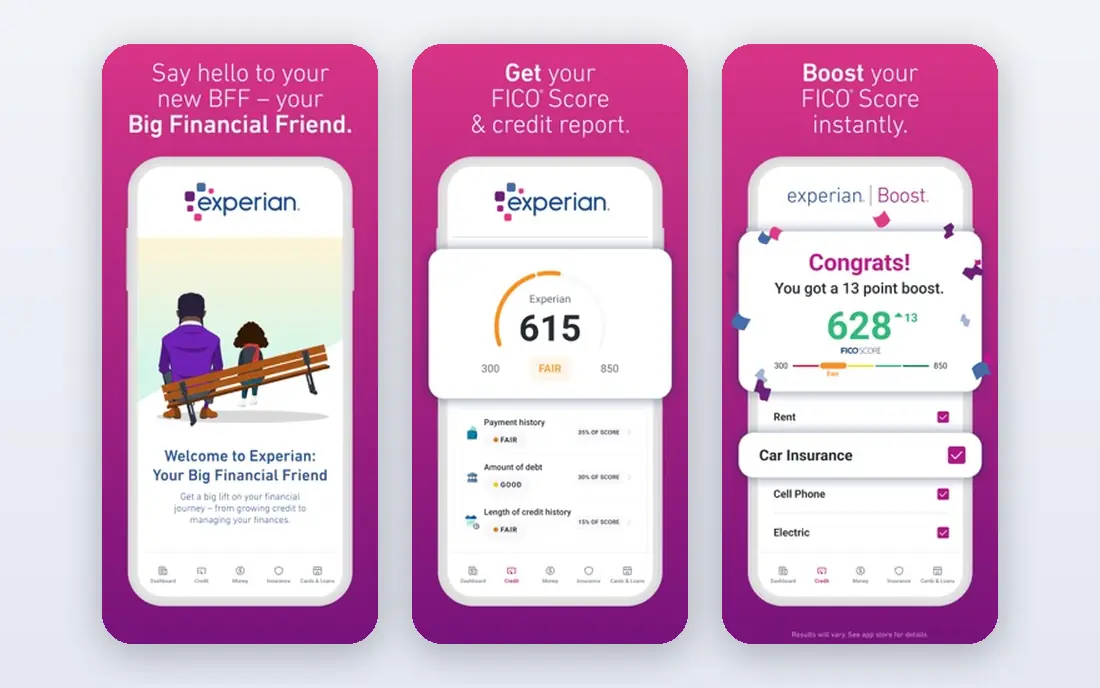
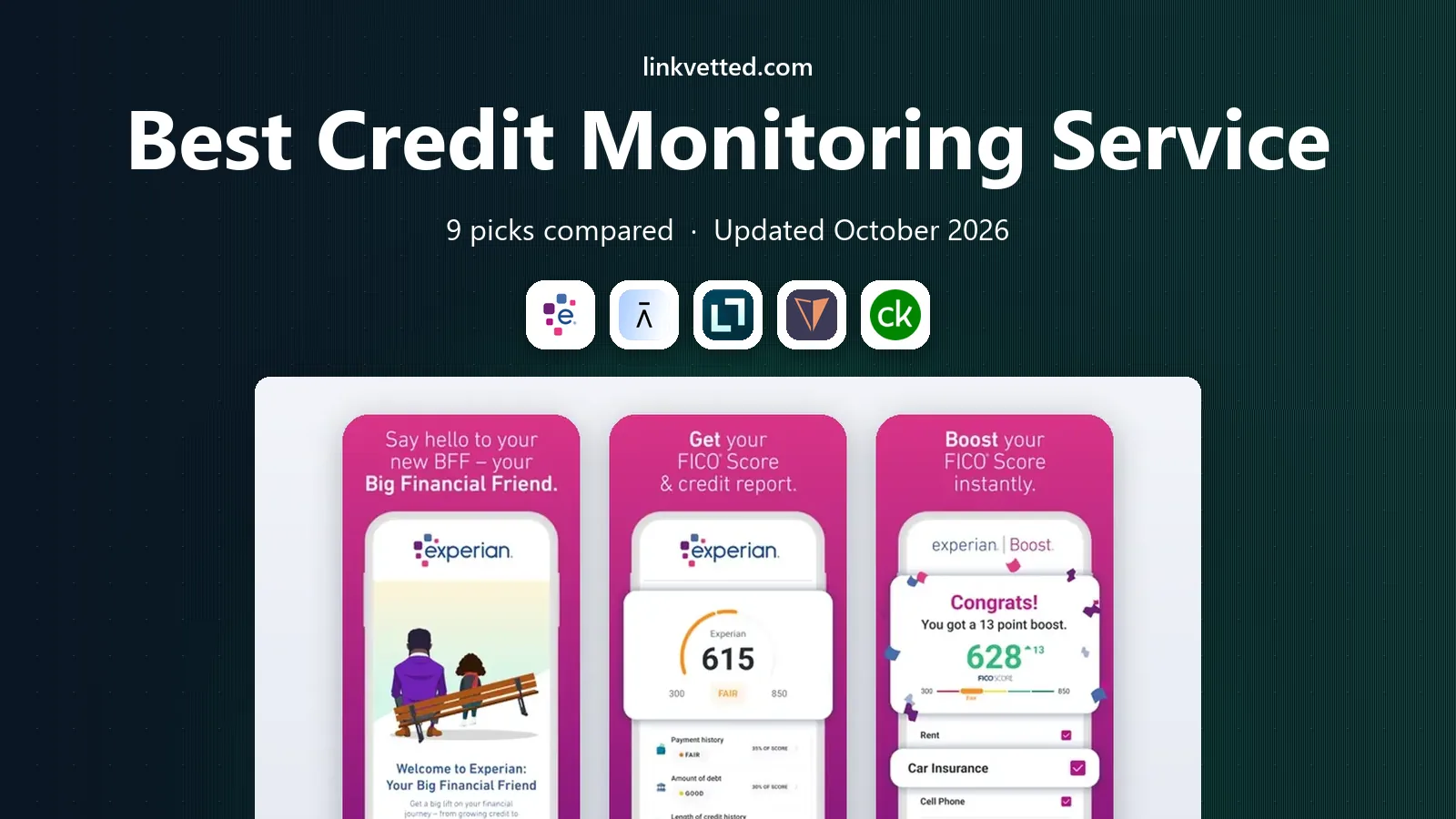
Experian fits people who want monitoring straight from a bureau. The free plan gives Experian monitoring and alerts, while paid IdentityWorks plans add three-bureau monitoring, scores, dark web scans, and identity theft insurance subject to policy terms. A credit lock for the Experian file is a useful control on paid plans. The limit is bureau scope on free tiers. A new account opened and reported only to another bureau may not trigger an Experian alert, so free monitoring alone is incomplete. For people who want bureau-direct data and FICO scores, Experian is a strong pick. For full three-bureau cover, price the paid plan, not the free tier.
- Direct Experian data
- FICO score access on paid plans
- Credit lock on paid plans
- Free plan covers Experian only
- Three-bureau cover needs paid plan
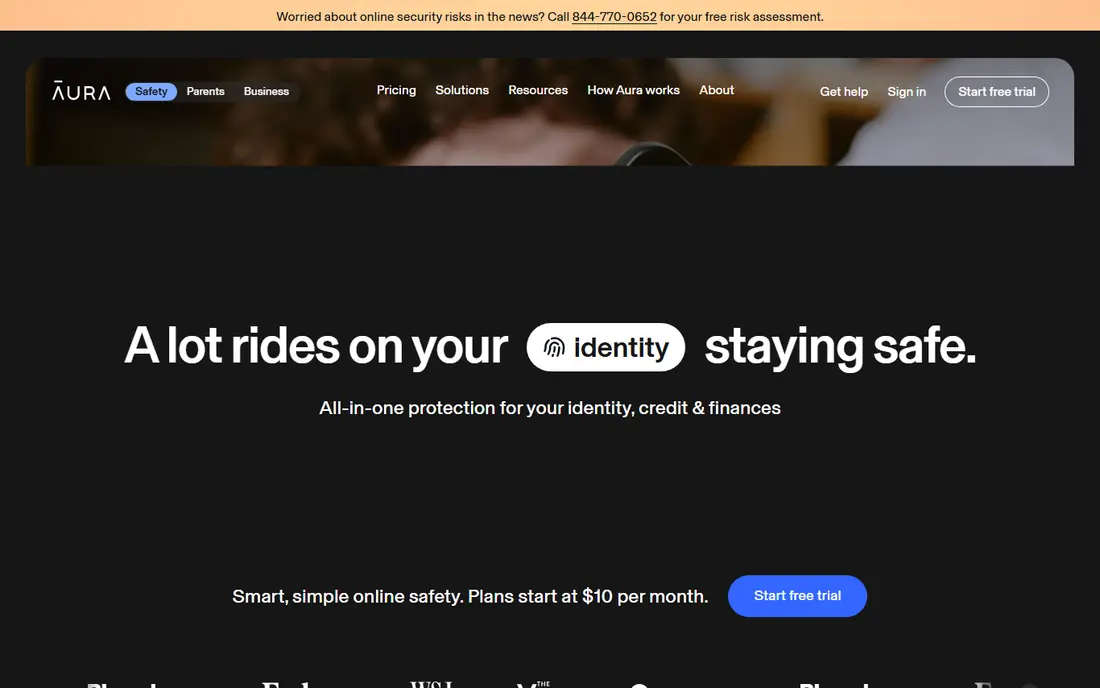
Aura suits households that want credit, identity, device, and financial account monitoring in one service. Its plans include three-bureau credit monitoring, dark web scans, VPN, antivirus, and password tools, with identity theft insurance subject to policy terms. Family plans cover multiple adults and children. The catch is complexity and price variation. Plans, billing terms, and promotional prices change, so check the renewal price, not just the first-year offer. Some users will not need VPN or antivirus, so a simpler bureau service may cost less. For households that want one broad service, Aura gives strong coverage in a single dashboard.
- Three-bureau monitoring on plans
- VPN and antivirus included
- Family plans
- Price varies by billing term
- Features can overwhelm simple users

LifeLock, now bundled with Norton, fits people who want identity monitoring plus device security in one subscription. It monitors personal data, financial accounts, and credit activity, with restoration specialists to help after identity theft. Higher plans add three-bureau monitoring and larger insurance limits, subject to policy terms. The weakness is tiering. Base plans cover fewer bureaus, so you must pay more for full three-bureau monitoring. Renewal prices can also rise above first-year offers, so check the renewal rate before you commit. For Norton users, the bundle can be good value. For credit-only needs, a bureau plan may be simpler.
- Wide identity monitoring
- Norton security bundle
- Restoration support
- Three-bureau monitoring needs higher plans
- Renewal prices rise
Identity Guard suits families that want identity and credit monitoring for adults and children. It scans the dark web, monitors personal data, and offers case managers to help with recovery steps. Family plans cover multiple adults, which can be cheaper than separate individual plans. The limit is bureau tiering and support hours. Three-bureau monitoring sits on higher plans, and support is not around the clock every day. Check which bureaus your plan covers and what hours help is available. For families that value guided recovery, Identity Guard is a solid choice, but price it at the tier that gives the coverage you actually need.
- Family coverage
- Dark web monitoring
- Case management support
- Three-bureau cover needs higher plans
- Support hours are limited
Credit Karma fits people who want free, basic monitoring without a subscription. It monitors TransUnion and Equifax, shows scores and report details, and sends alerts for changes on those files. For many users, that free view is enough to spot a new account or a major change. The gap is Experian. Credit Karma does not monitor the Experian file, so an Experian-only change could be missed. It also does not offer the same identity theft insurance bundle as paid services. Use Credit Karma as a free baseline, and add Experian direct monitoring or a paid three-bureau service if you want full coverage.
- Free
- Monitors two bureaus
- Free scores and reports access
- No Experian monitoring
- No full identity theft insurance bundle
myFICO suits people who care most about FICO scores used by many lenders. It gives official FICO scores and reports, with alerts when scores or report data change. Higher plans add three-bureau monitoring and more frequent score updates, which helps before a mortgage or large loan application. The downside is price and extras. myFICO costs more than free monitoring and offers fewer VPN, antivirus, or dark web extras than Aura or LifeLock. If your goal is to track the exact scores lenders may see, myFICO is the most direct choice. If your goal is broad identity protection, a broader service fits better.
- Official FICO scores
- Three-bureau reports on higher plans
- Score change alerts
- Higher price than basic monitoring
- Fewer identity extras
IdentityForce fits people who want a person to help after identity theft, not just an alert. It offers dark web monitoring, credit monitoring on higher plans, and dedicated case managers for recovery, with identity theft insurance subject to policy terms. That human help matters when paperwork and calls pile up. The trade-off is price and polish. IdentityForce is not the cheapest option, and its dashboard feels older than Aura. For users who value recovery support above extras like VPN, it is a strong pick. Check the exact bureau coverage on your tier, since three-bureau monitoring may need the higher plan.
- Dedicated case managers
- Dark web monitoring
- Identity theft insurance
- Price is mid to high
- Interface feels dated to some users
Equifax fits people who want direct monitoring of their Equifax file. Free options and paid plans offer alerts, score access on some tiers, and credit lock tools for the Equifax file. Bureau-direct data can be useful when you dispute an Equifax entry, since you see the file the bureau holds. The limit mirrors Experian: free monitoring covers only that bureau. For full coverage, you need a paid three-bureau plan or a combination of free bureau services. Equifax is a good complement to Credit Karma, since together they can cover all three bureaus at low cost, though with separate dashboards and alerts.
- Direct Equifax data
- Credit lock tools
- Free basic monitoring options
- Free cover is Equifax only
- Three-bureau cover needs paid plan
TransUnion fits people who want direct monitoring of their TransUnion file. It offers score access, report views, and credit lock tools on relevant plans, with alerts for TransUnion changes. That direct view helps when you need to check a TransUnion entry or lock that file quickly. The weakness is the same single-bureau limit. Used alone, TransUnion monitoring misses Experian and Equifax changes. Used with Credit Karma and Experian free monitoring, it can form a low-cost three-bureau patchwork, but alerts arrive in different apps. For a single paid dashboard, Aura or a paid bureau plan is simpler.
- Direct TransUnion data
- Score and report access
- Credit lock tools
- Free cover is TransUnion only
- Paid plans vary by feature
How we picked these
We compared official feature pages, pricing pages, privacy policies, and public reviews for each service. We favoured services that are still sold and supported in October 2026, that state bureau coverage clearly, and that offer a free tier, trial, or clear paid plan. We did not claim hands-on testing, and we did not invent prices, insurance limits, or scores that vendor pages do not show.
What to check before you buy
Check bureau coverage first, then score type, then extras. A service that monitors one bureau is not equal to a service that monitors three, even if both use the word monitoring. Also check whether scores are FICO scores, VantageScore scores, or educational scores, since lenders may use a different model.
Freezes, locks, and alerts
A credit freeze at each bureau is free in the US and stops most new credit accounts in your name, while a lock is a vendor tool that may be faster to toggle. Monitoring alerts you after a change, while a freeze helps prevent a new account. Use both where they fit: freeze files you are not actively using for credit, and keep monitoring for changes to existing accounts.
Insurance and recovery terms
Read insurance limits, exclusions, and recovery support before you buy. Identity theft insurance usually covers certain costs and losses up to a limit, subject to policy terms, and it does not cover every loss. Check who handles recovery calls, what hours support runs, and whether family members are covered on your plan.
FAQ
What is the best credit monitoring service?
Aura suits broad household protection, while Experian paid plans suit bureau-direct three-bureau monitoring. Credit Karma suits free basic checks on two bureaus. The best credit monitoring service for you depends on whether you want one dashboard, FICO scores, or the lowest cost.
Which credit monitoring service is best for three bureaus?
Aura includes three-bureau monitoring on its plans, and paid Experian, LifeLock, and Identity Guard plans offer three-bureau options at higher tiers. Always check the exact plan page, since base plans often cover fewer bureaus. Price the tier that gives three bureaus, not the entry tier.
What is the best free credit monitoring service?
Credit Karma offers free monitoring for TransUnion and Equifax, while Experian, Equifax, and TransUnion offer free monitoring for their own files. Combining free bureau services can cover all three bureaus at no cost, but alerts arrive in separate apps. Paid services give one dashboard and more extras.
Does credit monitoring improve my credit score?
No, monitoring alone does not raise a score. It alerts you to changes, errors, or possible fraud, and fixing errors can help over time. Paying bills on time, keeping balances low, and avoiding many new applications are the habits that shape scores. This is not financial advice, and score models differ by lender.
What is the best credit report monitoring service for families?
Aura and Identity Guard offer family plans that cover multiple adults and children, with identity monitoring and recovery help. Check child monitoring limits, adult counts, and insurance per adult before you buy. A family plan can cost less than separate individual plans for a household.
Should I freeze my credit as well as monitor it?
For many people, yes. A freeze at each bureau helps prevent new accounts, while monitoring alerts you to changes on existing accounts and files. Freezing is free in the US, and you can temporarily lift a freeze when you apply for credit. Keep your freeze PINs or online access safe.