8 Best Container Security Tools in 2026
Compare 8 best container security tools for scanning, runtime protection, and supply chain checks, with honest trade-offs for teams of all sizes. Read the
- Editor's choice
 Trivy
Free image and code scanning in CI
Starts atFreeVisit trivy.devFull review - Great alternative
 Snyk
Developer-led fixing for containers and code
Starts atSee websiteVisit snyk.ioFull review - Also consider
 Sysdig
Runtime context for Kubernetes security
Starts atSee websiteVisit sysdig.comFull review
TL;DR:
- Trivy and Anchore give teams a free scanning floor that can run in continuous integration on day one.
- Snyk and Docker Scout suit developer-led teams that want fix advice close to the code and image build.
- Sysdig and Wiz suit teams that need runtime context to sort which findings matter in live clusters.
- Aqua Security and Prisma Cloud suit larger estates that want build-to-runtime policy in one platform.
- Start with scanning, then add runtime context only when alert volume makes triage hard.
Quick comparison
| Tool | Best for | Starts at | Free plan? | |
|---|---|---|---|---|
| Trivy | Free image and code scanning in CI | Free | Yes | Visit |
| Snyk | Developer-led fixing for containers and code | See website | Yes | Visit |
| Sysdig | Runtime context for Kubernetes security | See website | Free trial | Visit |
 Wiz | Cloud and container risk in one graph | See website | No | Visit |
 Aqua Security | Build-to-runtime container policy | See website | Free trial | Visit |
 Prisma Cloud | Multi-cloud container and workload policy | See website | No | Visit |
 Docker Scout | Docker-native image analysis | Free | Yes | Visit |
 Anchore | SBOM-first scanning and policy | See website | Yes | Visit |
The best container security tools
For most engineering teams, the free scanning floor comes first. Container security now spans image scanning, runtime protection, and supply chain checks. These eight tools cover the main approaches, from free open source scanners to broad cloud platforms.
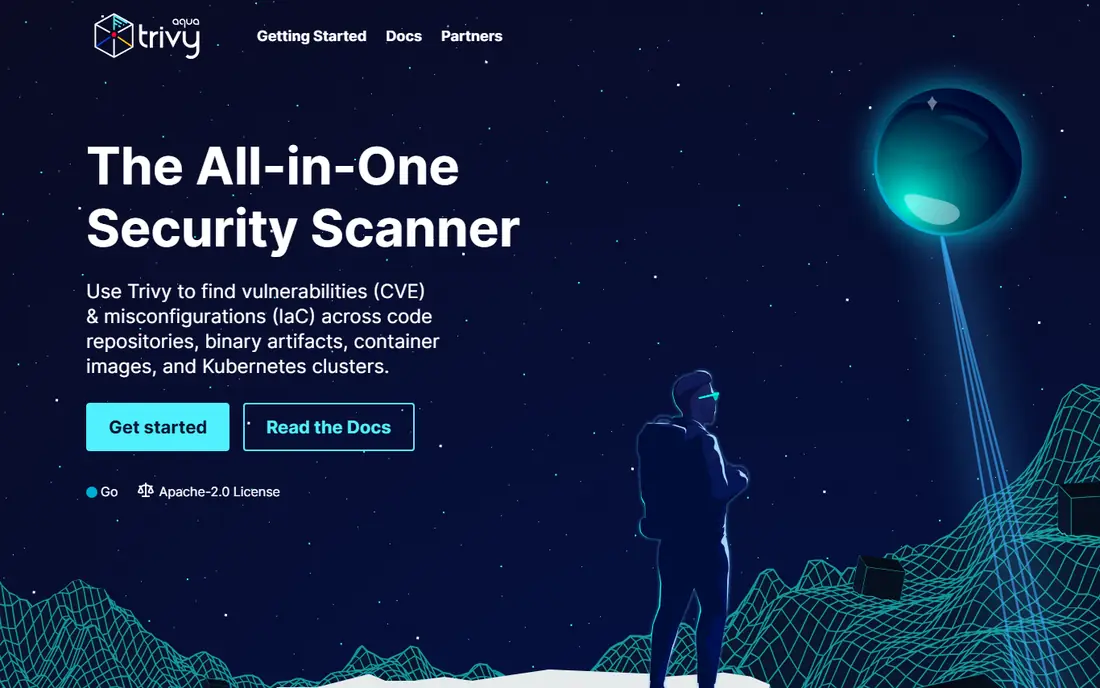
If you need free image and code scanning in ci, Trivy deserves attention. Trivy is the practical starting point for most teams. It scans container images, file systems, repositories, and infrastructure code, and it runs well in continuous integration.
The open source model keeps cost low and adoption simple. Teams can gate builds, keep SBOM records, and add scanning to every pipeline without a sales process. That fit is why Trivy stays on our shortlist for this use case, even when other tools offer more features in other areas.
The catch is scope. Trivy finds problems, but it does not by itself enforce runtime policy or manage a large estate, so larger teams often pair it with a platform. Before you choose Trivy, check the plan that includes the features you need, and confirm pricing on the official site.
- Open source scanner for images, files, and code
- SBOM output
- Fast CI integration
- No managed runtime platform on its own
- Teams must build triage and policy around it

Snyk takes a different angle on developer-led fixing for containers and code. Snyk suits teams where developers fix most findings. It points to base image upgrades and code fixes, and it fits into editors and pipelines developers already use.
That workflow focus helps close findings faster than a report-only scanner. When a fix is clear, a developer can act without waiting for a security review meeting. That fit is why Snyk stays on our shortlist for this use case, even when other tools offer more features in other areas.
The catch is pricing shape. Per-developer pricing is simple to understand, but it can grow quickly for large engineering groups, so model seat counts before buying. Before you choose Snyk, check the plan that includes the features you need, and confirm pricing on the official site.
- Fix advice and upgrade paths
- IDE and CI integrations
- Container and code coverage in one place
- Paid plans are per developer, which adds up for large teams
- Enterprise features need higher tiers
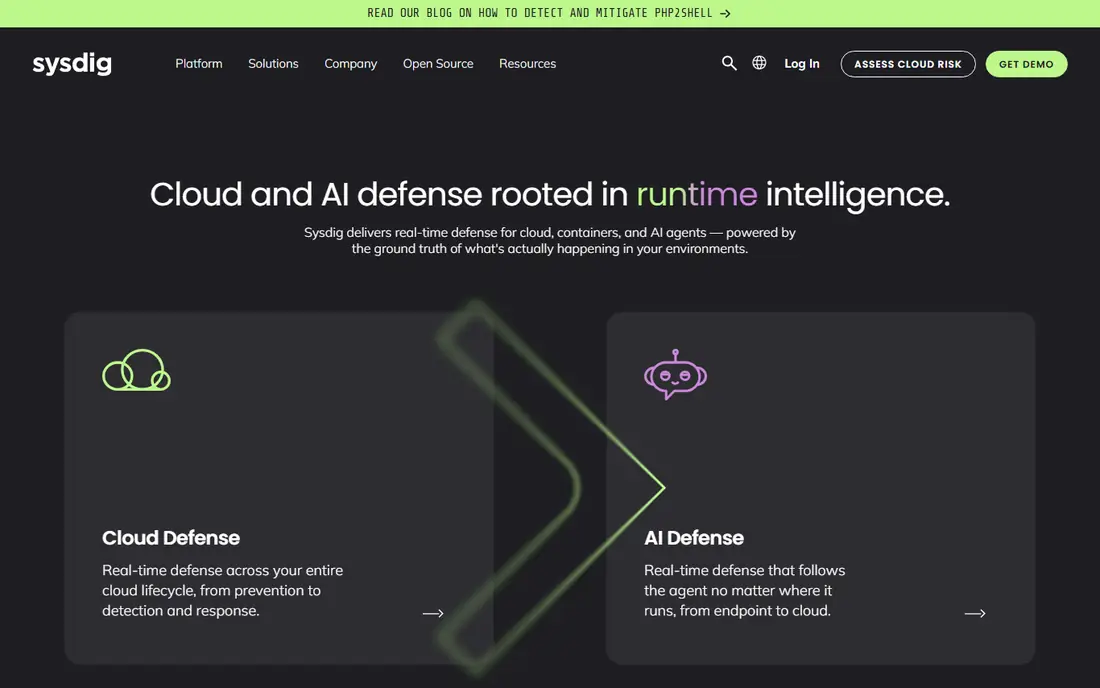
For runtime context for kubernetes security, Sysdig is a practical option to compare. Sysdig stands out for runtime context. It shows what is actually running and which packages are in use, so teams can focus on findings that affect live workloads.
That filtering matters when scan reports list hundreds of issues. In-use context helps security teams defend a short fix list instead of arguing over every finding. That fit is why Sysdig stays on our shortlist for this use case, even when other tools offer more features in other areas.
The catch is complexity and cost. Runtime tooling needs careful setup in Kubernetes, and pricing is typically quoted, so smaller teams should test the value first. Before you choose Sysdig, check the plan that includes the features you need, and confirm pricing on the official site.
- Runtime visibility for containers and Kubernetes
- In-use filtering to cut noise
- Policy and compliance views
- Quote-based pricing for larger estates
- Setup needs Kubernetes knowledge
Wiz is worth a close look for cloud and container risk in one graph. Wiz connects container findings to cloud context. Its graph shows how a vulnerable workload relates to internet exposure, identities, and cloud configuration.
That context helps teams explain risk to leaders in plain terms. A finding on an isolated workload is not the same as one on a public-facing service, and Wiz makes that difference visible. That fit is why Wiz stays on our shortlist for this use case, even when other tools offer more features in other areas.
The catch is fit and price. It is built for larger cloud estates with a security team, and smaller teams may find the platform broader than their current needs. Before you choose Wiz, check the plan that includes the features you need, and confirm pricing on the official site.
- Exposure graph linking cloud, containers, and identities
- Clear risk prioritization
- Broad cloud coverage
- Quote-based enterprise pricing
- Smaller teams may find it more platform than they need
If you need build-to-runtime container policy, Aqua Security deserves attention. Aqua Security covers the container lifecycle from build to runtime. Scanning, admission control, and runtime policy sit in one platform, which suits regulated workloads.
The link to Trivy gives it wide scanning reach. Teams can start with familiar open source scanning and add enforcement as their estate grows. That fit is why Aqua Security stays on our shortlist for this use case, even when other tools offer more features in other areas.
The catch is deployment effort. A full platform needs planning across build, registry, and cluster teams, so allow time for rollout and policy tuning. Before you choose Aqua Security, check the plan that includes the features you need, and confirm pricing on the official site.
- Image scanning plus runtime enforcement
- Pipeline and registry controls
- SBOM and policy features
- Platform assembly takes time
- Pricing is typically quoted for full deployments
Prisma Cloud takes a different angle on multi-cloud container and workload policy. Prisma Cloud suits teams that already manage cloud security across providers. Container scanning sits beside cloud posture, workload protection, and compliance views.
That breadth helps central security teams apply one policy across clouds and clusters. It also gives leaders a single view of cloud and container risk. That fit is why Prisma Cloud stays on our shortlist for this use case, even when other tools offer more features in other areas.
The catch is cost modeling. Credit-based and quoted pricing can be hard to forecast, and the platform needs owners who will keep policies current. Before you choose Prisma Cloud, check the plan that includes the features you need, and confirm pricing on the official site.
- Cloud workload protection with container scanning
- Policy across clouds
- Compliance and posture views
- Credit and quote-based pricing can be hard to model
- Platform breadth needs dedicated owners
For docker-native image analysis, Docker Scout is a practical option to compare. Docker Scout is the natural pick for teams already centered on Docker. Image analysis lives where images are built and stored, so developers see findings without new tooling.
That closeness to the workflow helps small teams adopt scanning quickly. Policy checks can flag risky images before they move further down the pipeline. That fit is why Docker Scout stays on our shortlist for this use case, even when other tools offer more features in other areas.
The catch is scope. It is strongest inside Docker workflows, so teams with mixed registries or broad runtime needs may still need another platform beside it. Before you choose Docker Scout, check the plan that includes the features you need, and confirm pricing on the official site.
- Native Docker Hub and Desktop integration
- Image analysis and policy checks
- Simple start for Docker teams
- Best value inside Docker workflows
- Less suited as a standalone enterprise platform
Anchore is worth a close look for sbom-first scanning and policy. Anchore is known for SBOM-first work through Syft and Grype. Teams can generate software bills of materials, scan them, and gate images based on policy.
That standards focus helps with audits and supply chain requests. SPDX and CycloneDX output gives customers and reviewers a clear record of what is inside an image. That fit is why Anchore stays on our shortlist for this use case, even when other tools offer more features in other areas.
The catch is assembly. The open source tools are strong, but teams must wire them into pipelines and triage themselves, unless they buy the enterprise platform. Before you choose Anchore, check the plan that includes the features you need, and confirm pricing on the official site.
- Open source Grype and Syft for scanning and SBOMs
- Policy gates for images
- Enterprise controls on paid plans
- Open source tools need assembly
- Enterprise pricing is quoted
How we picked these
We compared official product pages, documentation, and pricing models for each tool, plus public comparisons of scanning coverage and runtime features. We favored tools that still work in October 2026, cover container images and Kubernetes workloads, and offer a clear path from scan to fix. We did not claim hands-on testing. Instead, we weighed scan breadth, SBOM support, runtime context, and how much operational work each platform needs.
How to choose a container security tool
Start with a free scan floor
Add Trivy or Grype to continuous integration before buying a platform. That step alone catches many issues and shows your real finding volume. If triage stays manageable, a developer tool may be enough.
Add context when volume grows
When scan reports overwhelm the team, runtime context becomes valuable. Sysdig in-use filtering and Wiz exposure graphs help sort live risk from theoretical risk. Buy context for that problem, not as a default.
Check registry, runtime, and policy together
A scanner that only checks images leaves runtime gaps. A runtime tool without image gates leaves build gaps. Map your pipeline from code to cluster, then pick tools that cover each stage without too much overlap.
FAQ
Which container security platform is best?
Trivy suits teams that want a free scanning floor, while Snyk suits developer-led fixing. Sysdig and Wiz suit teams that need runtime context, and Aqua or Prisma suit larger estates that want one platform for build to runtime.
What are the best container scanning tools?
Trivy, Grype, Snyk, and Docker Scout are common scanning choices. Trivy and Grype are open source, Snyk adds fix advice, and Docker Scout fits Docker workflows. Pair scanning with SBOM records for audit use.
What are the best container security platforms for Kubernetes?
Sysdig, Wiz, Aqua Security, and Prisma Cloud all cover Kubernetes workloads with runtime or cloud context. The right pick depends on cluster size, cloud mix, and whether you need admission control.
Do I need runtime protection as well as scanning?
Scanning catches issues before deployment, but runtime protection catches drift, unexpected processes, and live exposure. Small teams can start with scanning, then add runtime controls as clusters and risk grow.
Are open source container security tools enough?
For many small teams, Trivy or Grype in CI plus good base image habits is enough. Larger or regulated estates often add a commercial platform for policy, reporting, and runtime enforcement.