Best Complete Platforms for E-Commerce (2026): 5 Picks Checked on Vendor Pages
Best complete platforms for e-commerce: 5 tools compared on price, free plans and fit. Clear notes on pricing gaps and limits. Current for November 2026.
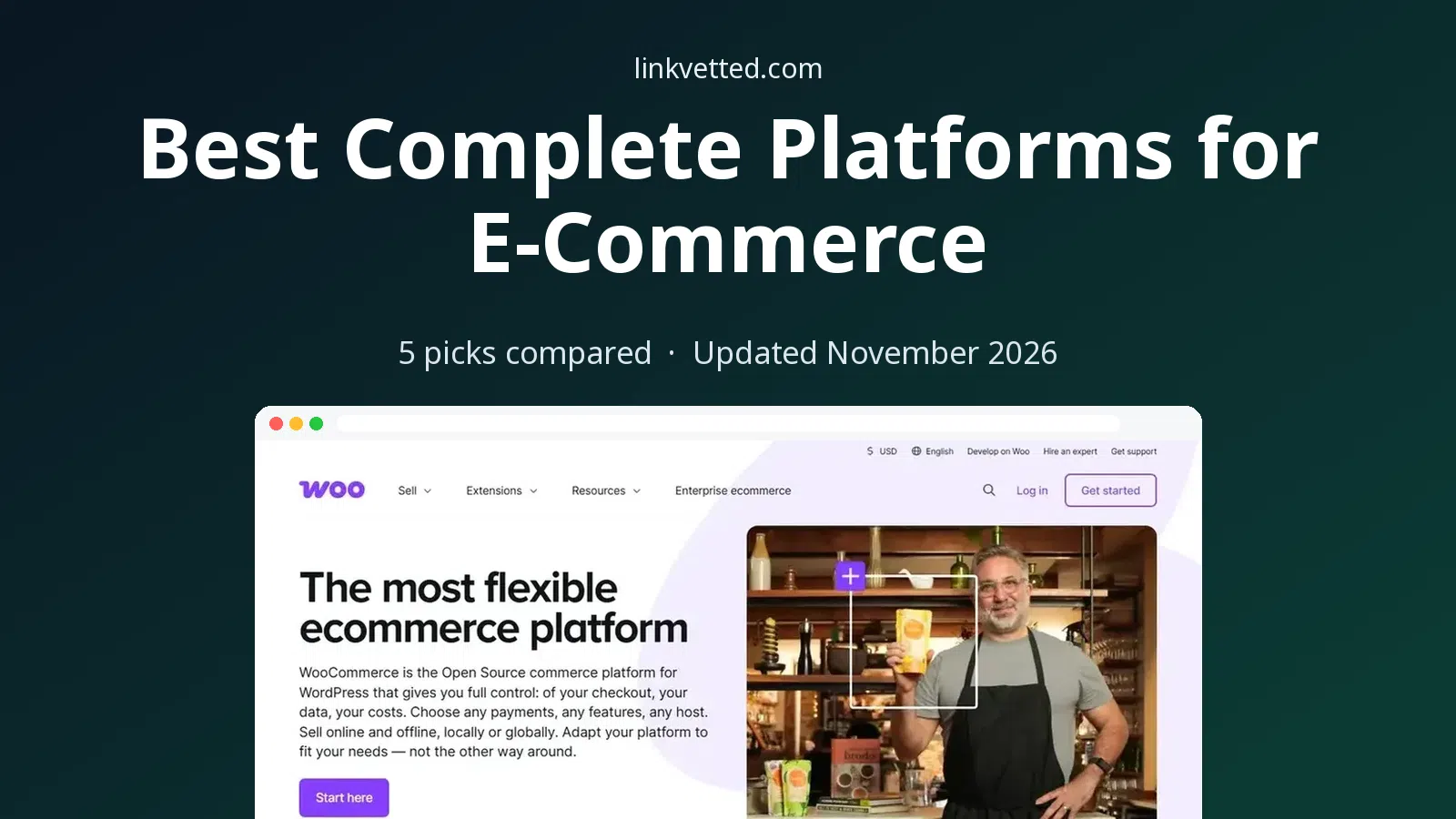
- Editor's choice
 Wix
Small companies wanting built-in hosting and tools
Starts atSee websiteVisit wix.comFull review - Great alternative
 WooCommerce
Open-source control with developer support
Starts at$29 a monthVisit woocommerce.comFull review - Also consider
 Salesforce Commerce Cloud
Commerce tied to a broader CRM
Starts atSee websiteVisit salesforce.comFull review
Direct answer
Start with Wix if you need small companies wanting built-in hosting and tools. Listed starting prices: WooCommerce from $29 a month, Squarespace from $12 a month and Shopify from $19 a month. For a different need, WooCommerce covers open-source control with developer support and Salesforce Commerce Cloud covers Commerce tied to a broader CRM. The other 2 tools in the list cover narrower or pricier cases.
TL;DR:
- Wix takes the first slot, best suited to small companies wanting built-in hosting and tools.
- What to know about Squarespace first: fewer deep commerce features.
- Shopify fits all-in-one storefront and business management.
- The cheapest monthly starting price in the list is $12 per month, offered by Squarespace.
Last checked November 2026. Prices and plan details were read from the vendors' own pages in November 2026; vendors change plans often, so confirm the current price on the vendor site before you buy.
Quick comparison
| Tool | Best for | Starts at | Free plan? | |
|---|---|---|---|---|
| Wix | Small companies wanting built-in hosting and tools | See website | Not stated | Visit |
| WooCommerce | Open-source control with developer support | $29 a month | Not stated | Visit |
| Salesforce Commerce Cloud | Commerce tied to a broader CRM | See website | Not stated | Visit |
 Squarespace | Design-led sites with straightforward selling | $12 a month | Free trial | Visit |
 Shopify | All-in-one storefront and business management | $19 a month | Free trial | Visit |
Every option for complete platforms for e-commerce explained
Choosing complete platforms for e-commerce usually comes down to price, fit and limits. This LinkVetted guide sets 5 tools side by side on those three points, with the facts kept short and checkable.
Wix is built with small companies wanting built-in hosting and tools in mind. Wix positions itself as a system for building the business you have in mind, with hosting, business tools, domains and marketing built in.
What to check first: Less depth for complicated catalogs.
Best features of Wix: AI-assisted site building.
That combination makes it approachable for small companies and solo founders who want a store and a website from one place without managing infrastructure. This comparison lists no price for Wix; ask the vendor. As for free access: Not stated.
- Approachable for non-technical users
- Domains and marketing built in
- Restricted control over the system itself
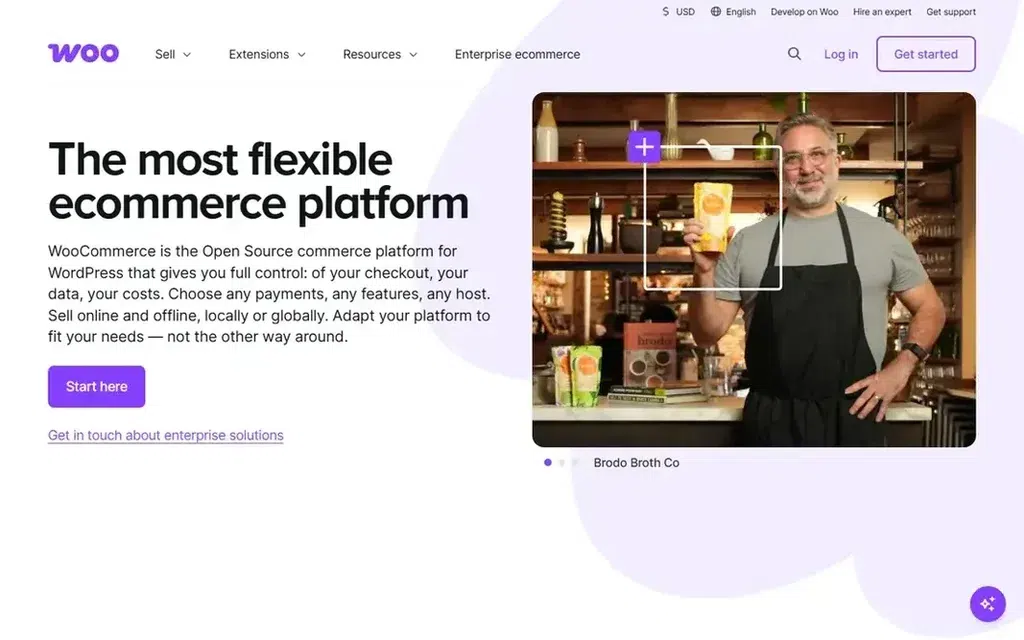
WooCommerce works best for open-source control with developer support. WooCommerce is the open-source ecommerce product pitched at merchants and developers building companies for the long term.
Trade-offs to know: Hosting and maintenance are your responsibility.
On top of that, choose something else if you want a vendor to handle infrastructure end to end. WooCommerce pricing: $29 per month. Free plan details: Not stated.
- Open-source foundation
- Adaptable starting point
- Needs technical upkeep
Salesforce Commerce Cloud is aimed squarely at Commerce tied to a broader CRM. Salesforce Commerce Cloud is the commerce offering within Salesforce, pitched at organizations that want shopping experiences connected to their customer data and wider business systems.
In daily use, for a standalone storefront, more straightforward platforms are commonly simpler to run. More specifically, companies outside that ecosystem may not gain as much. This comparison lists no price for Salesforce Commerce Cloud; ask the vendor. As for free access: Not stated.
Where it is weaker: Best value when already in the ecosystem.
- Links commerce with customer data
- Part of the wider Salesforce ecosystem
- Implementation demands expertise
Squarespace is designed for design-led sites with straightforward selling. If your roadmap comes with multi-channel or enterprise-scale selling, a dedicated commerce product is the better path.
Worth adding: Squarespace is not made for complicated catalogs or heavy operational needs, and advanced commerce requirements may push you elsewhere. Price to start with Squarespace: $12 per month. Free access: Free trial.
Downsides: Less suited to large catalogs.
- Domain and site setup in one place
- AI website builder tools
- Fewer deep commerce features

Shopify targets all-in-one storefront and business management. Shopify presents itself as an all-in-one commerce system for firms, combining storefront building with tools to run plenty of parts of a business. Its homepage flags AI assistance and positions the product as more than ecommerce software.
The main drawbacks: App extras can add complexity.
Upsides: payments and operations in one place; Storefront. Since Shopify is a hosted, opinionated product, teams wanting deep code-level control may find it constraining, and extensions commonly come through apps. Worth adding: otherwise, it is a sensible default for a complete setup. Consider alternatives if you need open-source ownership or a highly customized stack. Shopify starts at: $19 per month. Free access: Free trial.
- AI-assisted building and growth tools
- Wide set of built-in business tools
- Less control over the underlying code
How we chose
Pre-purchase checklist
- Confirm the entry price on the vendor page. For Wix and Salesforce Commerce Cloud that means a quote rather than a fixed price.
- Run a trial of Squarespace and Shopify with real work before paying for a year; your own workflow is the best test.
- Before choosing Wix, weigh its main limit: less depth for complicated catalogs.
- Test the integrations you rely on with WooCommerce before committing; some connectors sit on upper tiers.
- Find out what support Salesforce Commerce Cloud includes on your plan, and whether onboarding help costs extra.
FAQ
How are the tools for complete platforms for e-commerce ordered?
Wix sits first and Shopify last because the order follows typical fit for complete platforms for e-commerce, then price clarity and free access. It is a judgement call, so read each profile for fit and limits.
Do these tools publish their prices?
Not all of them. Wix and Salesforce Commerce Cloud publish no starting price, so expect a quote request for those. The rest, WooCommerce included, show a starting price, though seats and billing terms still change the final cost. Each of the 5 options in this complete platforms for E-Commerce guide has its own card above with the price, free plan and limits.
When should I choose WooCommerce over a hosted system?
WooCommerce makes sense when you want open-source ownership and have developer support for hosting and maintenance. Hosted products deal with that infrastructure for you.
Can I try these tools before paying?
Often, yes. Squarespace and Shopify offer a free trial. Use your own data and a real task during the test, and check what the free tier or trial limits before you rely on it. All 5 picks in this complete platforms for E-Commerce comparison list a starting price, free plan details and the main limits on their cards above.
Does any tool for complete platforms for e-commerce here have a free plan?
A permanent free plan is not offered by Wix, Shopify or the other tools here. Squarespace, Shopify offer a trial. Plan a short evaluation period instead.
Sources
- https://www.wix.com
- https://woocommerce.com
- https://www.salesforce.com/commerce
- https://www.squarespace.com
- https://www.shopify.com