Best Container Shipping Companies in 2026: 8 Companies Compared
Best container shipping companies compared: we review 8 major ocean carriers on fleet size, routes, reliability, and booking in 2026 for shippers today.
- Editor's choice
 MSC
Largest global network
Starts atSee websiteVisit msc.comFull review - Great alternative
 Maersk
Integrated logistics
Starts atSee websiteVisit maersk.comFull review - Also consider
 CMA CGM
Asia-Europe and global routes
Starts atSee websiteVisit cma-cgm.comFull review
TL;DR:
- MSC is the largest container carrier by fleet capacity, followed by Maersk, CMA CGM, and COSCO Shipping, which together hold over half of global capacity.
- Maersk suits shippers who want integrated logistics, digital booking, and end-to-end supply chain services beyond ocean freight.
- Hapag-Lloyd and ONE suit shippers who prioritise schedule reliability and service quality on key transatlantic and transpacific routes.
- ZIM suits smaller and niche shippers who value digital booking and agile services, though its network is smaller than the top carriers.
- Freight rates, transit times, and reliability vary by route and season, so compare live quotes for your exact lane rather than relying on fleet size alone.
Quick comparison
| Tool | Best for | Starts at | Free plan? | |
|---|---|---|---|---|
| MSC | Largest global network | See website | No | Visit |
| Maersk | Integrated logistics | See website | No | Visit |
| CMA CGM | Asia-Europe and global routes | See website | No | Visit |
 COSCO Shipping | Asia-focused capacity | See website | No | Visit |
 Hapag-Lloyd | Reliable scheduled services | See website | No | Visit |
 ONE | Transpacific reliability | See website | No | Visit |
 Evergreen | Asia-Europe capacity | See website | No | Visit |
 ZIM | Digital and niche services | See website | No | Visit |
The best container shipping companies
We compared fleet capacity, route coverage, alliance membership, digital booking tools, reliability reputation, and services for importers and exporters. These eight carriers are the largest and most widely used container lines in 2026, and most small shippers will book them through a freight forwarder rather than directly.
MSC, the Mediterranean Shipping Company, is the largest container carrier in the world by fleet capacity, with over 7 million TEU in 2026. Its scale gives it broad coverage across Asia, Europe, North America, Africa, and Latin America, with frequent sailings on major lanes. For shippers who need capacity on many routes, MSC offers options that smaller carriers cannot match.
Scale does not guarantee the best service on every lane. Reliability, transit time, and customer service vary by route, port, and season, and smaller shippers usually work through a forwarder to access MSC capacity and rates. If you need wide coverage and large capacity, MSC belongs at the top of the list, but always compare its live quote and schedule for your exact shipment.
- Largest fleet
- Very wide route coverage
- Large vessel capacity
- Global port network
- Service quality varies by route
- Direct booking suits larger shippers
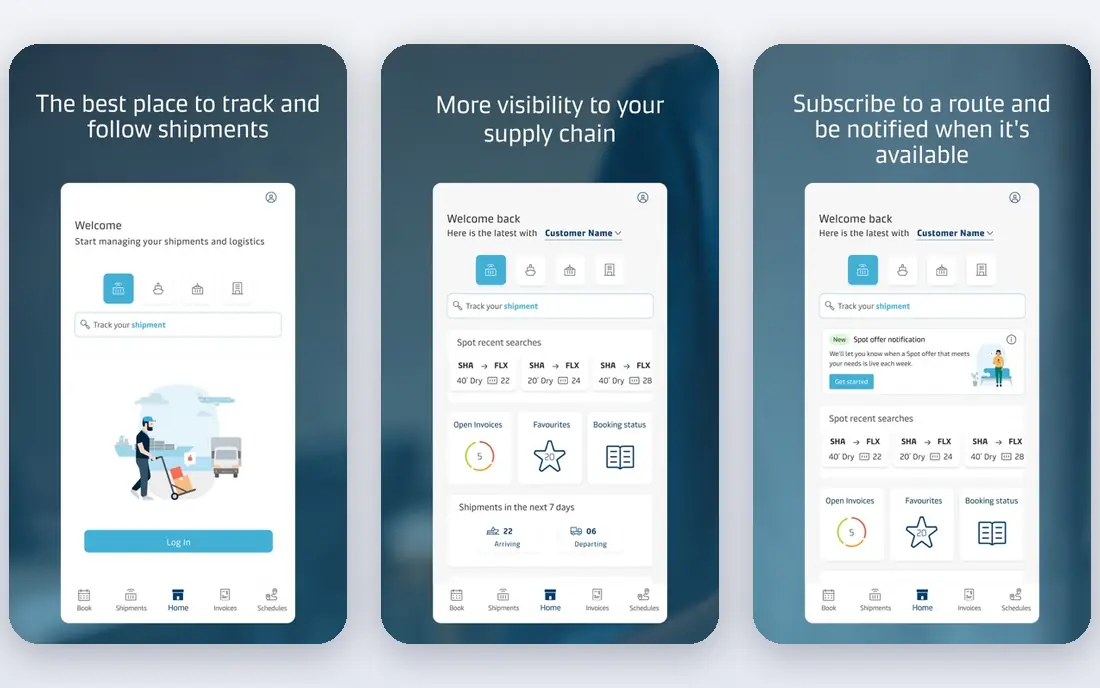
Maersk, formerly the largest carrier before MSC overtook it in 2022, remains the second-largest container line, with a fleet of over 4.6 million TEU. Its strength is integration: ocean freight, inland transport, warehousing, customs, and digital tracking can be managed through one provider. That end-to-end model suits shippers who want fewer vendors and clearer visibility across a supply chain.
Maersk rates can be higher than a budget carrier on some lanes, and its full logistics packages add cost beyond ocean freight alone. Smaller shippers may still use Maersk through a forwarder to get better rates. For firms that value digital tools, reliability, and a single logistics partner, Maersk is a strong choice.
- Integrated logistics
- Digital booking and tracking
- Strong North America and Europe networks
- Gemini alliance
- Rates can be premium
- Full logistics services add cost
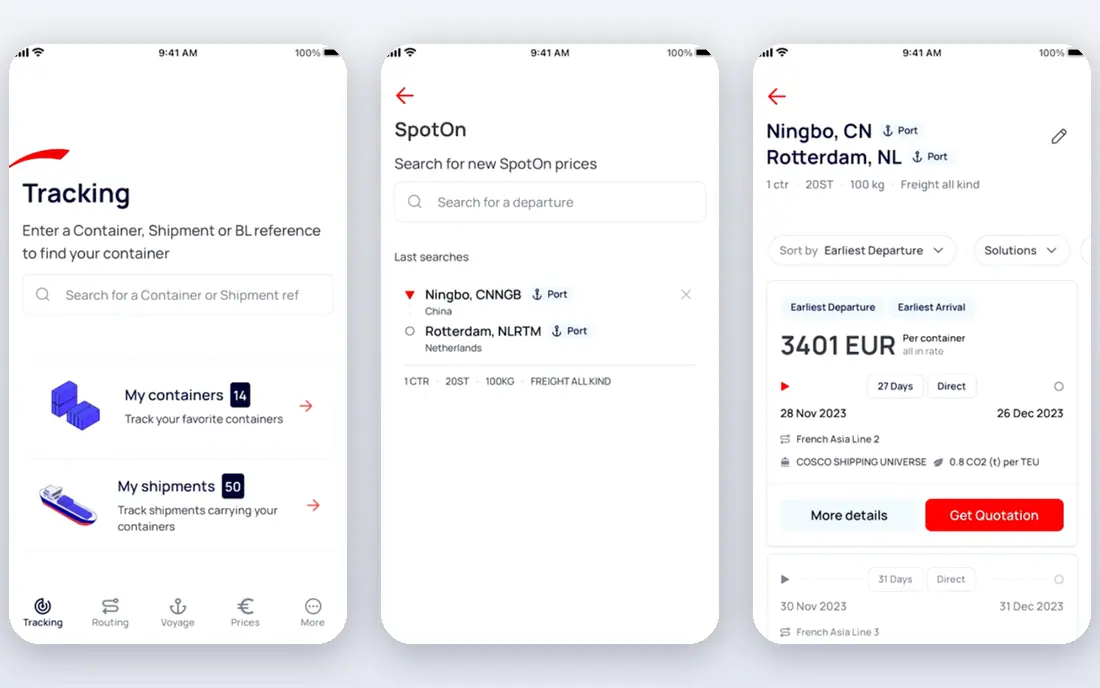
CMA CGM, based in France, is the third-largest container carrier, with over 4.2 million TEU. It is strong on Asia-Europe routes and offers broad global coverage through the Ocean Alliance, which also includes COSCO and Evergreen. Its CEVA Logistics arm adds freight forwarding, warehousing, and supply chain services for shippers who want more than port-to-port shipping.
As with other large carriers, reliability and transit times depend on the specific service and season. CEVA services can raise the total cost, so shippers should separate ocean freight from added logistics when comparing quotes. For Asia-Europe trade and global coverage, CMA CGM is a major, well-established option.
- Large global fleet
- Strong Asia-Europe services
- CEVA logistics arm
- Ocean Alliance member
- Service varies by lane
- Logistics add-ons increase total cost
COSCO Shipping Lines, part of the COSCO Shipping Group, is the fourth-largest carrier, with over 3.5 million TEU. It is dominant on Asia routes, with strong transpacific and Asia-Europe services through the Ocean Alliance, and it also operates the OOCL brand. For importers sourcing from China and nearby countries, COSCO offers deep capacity and frequent sailings.
Direct booking and customer service can be less straightforward for smaller US shippers, who usually book through a forwarder. Transit times and reliability also vary by lane, so a live schedule check matters more than fleet size. For Asia-focused trade, COSCO is a core carrier to include in any quote comparison.
- Large Asia capacity
- Ocean Alliance member
- Strong transpacific services
- OOCL brand
- Booking and service experience varies
- US shippers often use forwarders
Hapag-Lloyd, based in Germany, is the fifth-largest carrier, with about 2.4 million TEU. It is known for service quality and schedule reliability, and it operates in the Gemini Cooperation with Maersk, which aims to improve reliability on key routes. Its transatlantic and Asia-Europe services are particularly strong for European and US shippers.
Its fleet is smaller than the top four, so coverage on some niche lanes is thinner. Rates can also be higher than budget carriers, reflecting its service focus. For shippers who prioritise on-time arrival and predictable schedules over the lowest possible rate, Hapag-Lloyd is a strong pick.
- Strong service reputation
- Gemini alliance with Maersk
- Transatlantic strength
- Digital tools
- Smaller fleet than top four
- Rates can be higher on some lanes
Ocean Network Express, known as ONE, was formed from the container businesses of Japanese lines NYK, MOL, and K Line. It is the sixth-largest carrier, with over 2.1 million TEU, and it operates in the Premier Alliance. ONE is known for reliable transpacific services and efficient operations, which suit importers moving goods between Asia and North America.
Coverage is narrower than MSC or Maersk, so some lanes may need another carrier or a forwarder combination. ONE also tends to suit shippers who value schedule integrity over the widest possible network. For transpacific trade, it deserves a place in the quote comparison.
- Japanese consortium strength
- Premier Alliance member
- Good transpacific services
- Reliability focus
- Smaller fleet than top carriers
- Coverage gaps on some lanes
Evergreen Marine, based in Taiwan, is the seventh-largest carrier, with about 2 million TEU. It operates ultra-large container vessels on Asia-Europe and transpacific routes and is a member of the Ocean Alliance. For high-volume Asia trade, Evergreen offers substantial capacity and frequent services.
Service quality and customer support vary by route and booking channel, and small shippers will usually book through a forwarder. Evergreen is best judged lane by lane, with a live quote and schedule, rather than by fleet size alone. For Asia-Europe capacity, it is a major carrier to consider.
- Large vessel fleet
- Ocean Alliance member
- Strong Asia-Europe and transpacific routes
- Service reputation varies
- Booking often via forwarders for small shippers
ZIM Integrated Shipping, based in Israel, is the tenth-largest carrier, with about 700,000 TEU, but it punches above its size for digital services and niche routes. Its online booking, tracking, and customer tools are designed for smaller shippers, and its Asia-US services are a particular focus. For a small importer who wants a clear digital booking experience, ZIM can feel easier to use than a very large carrier.
The trade-off is scale. ZIM cannot match MSC or Maersk for global coverage, and capacity on some lanes is limited. It also charters a high share of its fleet, which can affect service stability. For niche lanes and digital-first booking, ZIM is a useful alternative, especially when compared alongside a larger carrier quote.
- Digital-first booking
- Agile niche services
- Strong Asia-US focus
- Faster decision making
- Smaller fleet
- Narrower network
- Less capacity on some lanes
How we picked these
We compared fleet capacity data from Alphaliner as reported in 2026, alliance membership, route coverage, digital booking tools, and shipper reports on reliability and service. We focused on the largest carriers by TEU, since they carry the bulk of global container trade and are the lines most forwarders quote. We weighed network breadth against service reputation, rather than ranking by size alone.
We did not claim hands-on shipping experience. Our comparison rests on published fleet data, carrier documentation, and industry reporting about alliances, routes, and digital services. Smaller regional carriers were left out because they do not offer comparable global coverage, though a forwarder may recommend one for a specific lane.
How to choose a container shipping company
Start with your lane, not the carrier ranking. A carrier that is excellent on Asia-Europe may be weak on your specific port pair, and transit time, frequency, and reliability matter more than total fleet size. Ask a forwarder for quotes from at least three carriers for the same origin, destination, container type, and cargo ready date, and compare total landed cost, including fuel surcharges, terminal fees, and inland transport.
Next, check schedule reliability and port coverage. Look at recent on-time performance for your lane, the number of weekly sailings, and whether the carrier calls directly at your ports or needs transshipment. A direct service is usually faster and less risky than a service with multiple transfers, even if the headline rate looks higher. Also confirm cut-off times, documentation needs, and customs support.
Finally, decide how you will book. Most small and mid-size shippers get better rates and support through a freight forwarder, which can compare carriers, handle documentation, and manage delays. Larger shippers with regular volume may benefit from a direct carrier contract. Either way, get rates and transit times in writing, confirm free time at origin and destination, and plan buffer time for port congestion or schedule changes.
FAQ
Which is the largest container shipping company?
MSC is the largest container shipping company by fleet capacity in 2026, with over 7 million TEU, ahead of Maersk, CMA CGM, and COSCO Shipping. Fleet size measures operated capacity, including owned and chartered ships, and it does not by itself guarantee the best rate or reliability on a specific lane.
How much does container shipping cost?
Container shipping cost depends on the lane, container size, cargo weight, fuel surcharges, port fees, and season. Rates change weekly and can move sharply with demand, congestion, and fuel prices. Get live quotes from a forwarder for your exact shipment, and compare total landed cost rather than ocean freight alone.
Should I book directly with a carrier or through a forwarder?
Most small and mid-size shippers benefit from a forwarder, which can compare carriers, handle documentation, and manage delays. Larger shippers with regular volume may get better terms direct. A forwarder also helps when a carrier has no direct service on your lane or when you need inland transport and customs help.
What is a TEU?
A TEU is a twenty-foot equivalent unit, a standard measure of container capacity. One 20-foot container equals one TEU, while a 40-foot container equals two TEU. Carriers are ranked by total TEU capacity of their operated fleet, which includes both owned and chartered ships.
How long does container shipping take?
Transit time depends on origin, destination, service type, and transshipment. Asia to US West Coast services often take about two to three weeks port to port, while Asia to Europe can take four to six weeks. Add time for booking, port handling, customs, and inland delivery when planning inventory.
What affects container shipping reliability?
Reliability depends on schedule design, port congestion, weather, vessel capacity, and alliance cooperation. Carriers in alliances share vessels and networks, which can improve frequency but also spread delays. Check recent on-time performance for your lane and build buffer time into supply plans, especially around peak seasons.