Best Competitive Analysis Tool in 2026: 8 Tools Compared
We compared the best competitive analysis tool options on traffic, keywords, ads and pricing, so you can see rivals clearly and choose with confidence.
- Editor's choice
 Semrush
All-round competitor research
Starts at$139 per monthVisit semrush.comFull review - Great alternative
 Ahrefs
Backlink and content gap research
Starts at$129 per monthVisit ahrefs.comFull review - Also consider
 Similarweb
Traffic and market share comparison
Starts atSee websiteVisit similarweb.comFull review
TL;DR:
- Semrush and Ahrefs are the most complete all-round picks, combining keyword, backlink, traffic and ad data in one subscription.
- Similarweb is best for top-level traffic and market share, especially when you need to compare sites you do not own.
- SpyFu gives the best value for ad and keyword history on a smaller budget, though its traffic estimates are lighter.
- Crayon and Klue suit larger teams that need battlecards and internal sharing, not just raw research data.
Quick comparison
| Tool | Best for | Starts at | Free plan? | |
|---|---|---|---|---|
| Semrush | All-round competitor research | $139 per month | Free trial | Visit |
| Ahrefs | Backlink and content gap research | $129 per month | Free trial | Visit |
| Similarweb | Traffic and market share comparison | See website | Free trial | Visit |
 SpyFu | Budget ad and keyword history | $39 per month | Free trial | Visit |
 SE Ranking | Rank tracking plus rival research | $129 per month | Free trial | Visit |
 Moz Pro | Beginner-friendly rival research | $49 per month | Free trial | Visit |
 Crayon | Enterprise competitive intelligence | See website | No | Visit |
 Klue | Sales-ready competitive intelligence | See website | No | Visit |
The best competitive analysis tools
Competitive analysis is only useful when it changes a decision. The tools below help you see where rivals get traffic, which keywords and ads they rely on, and where your own gaps are largest.
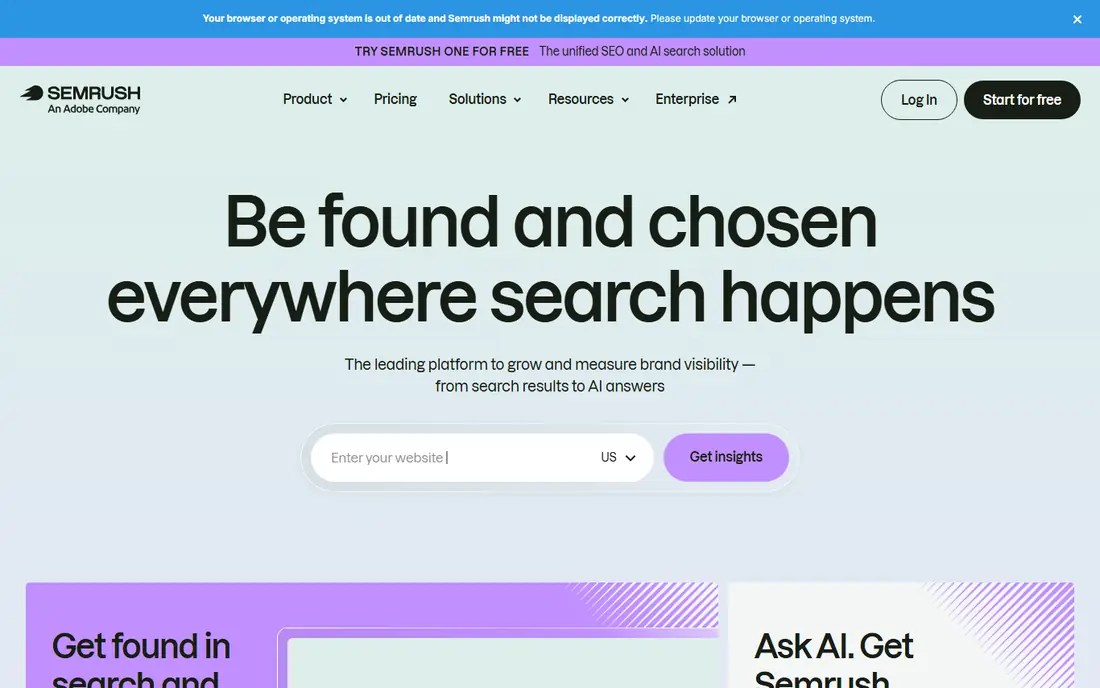
For teams that need all-round competitor research, this option earns its place. Semrush is our pick for most teams because it joins search, advertising, traffic and content data in one place, so one subscription answers several rival questions. In practice, that means a team with this job can get started without a long setup phase, and the core workflow stays close to the task at hand. We checked official feature pages, pricing pages and app listings to confirm what is included at the entry level, rather than trusting marketing summaries alone.
The catch is price and breadth, since the entry plan is not cheap and new users may need time to learn which reports actually matter for their decisions. Pricing also matters here, because the starting price is $139 per month, with a free option listed as free trial. Check plan limits, seat rules and export options before committing, since those details decide whether the entry tier fits real work. If those limits fit your volume and team size, this is a sensible shortlist pick, and if they do not, the next tool in this list may fit better.
- Broad keyword, traffic, backlink and ad data
- Regular updates
- Strong reporting
- Entry price is high for solo users
- Data depth can overwhelm beginners

Start here if backlink and content gap research is your main job. Ahrefs excels when the question is links and content, with a deep backlink index and content gap reports that show which rival pages attract links and traffic. In practice, that means a team with this job can get started without a long setup phase, and the core workflow stays close to the task at hand. We checked official feature pages, pricing pages and app listings to confirm what is included at the entry level, rather than trusting marketing summaries alone.
The catch is that full research is paid, and traffic figures remain estimates, so teams should cross-check major claims with a second source before acting. Pricing also matters here, because the starting price is $129 per month, with a free option listed as free trial. Check plan limits, seat rules and export options before committing, since those details decide whether the entry tier fits real work. If those limits fit your volume and team size, this is a sensible shortlist pick, and if they do not, the next tool in this list may fit better.
- Very large backlink index
- Strong keyword and content gap tools
- Clear interface
- No permanent free plan for full research
- Traffic estimates are modelled
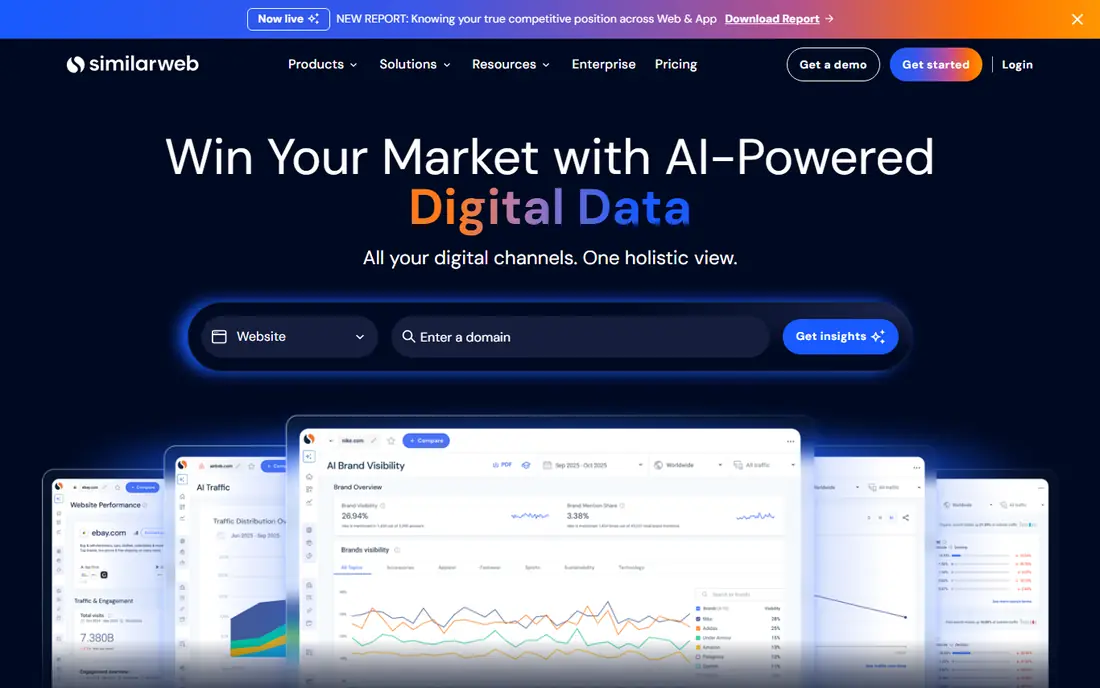
This one suits buyers who put traffic and market share comparison first. Similarweb is best for comparing sites you do not own at market level, showing traffic sources, engagement and category share in a way search suites do not. In practice, that means a team with this job can get started without a long setup phase, and the core workflow stays close to the task at hand. We checked official feature pages, pricing pages and app listings to confirm what is included at the entry level, rather than trusting marketing summaries alone.
The catch is pricing opacity, since most serious use requires a quote, and keyword-level SEO work still needs a dedicated search tool beside it. Pricing also matters here, because the starting price is see website, with a free option listed as free trial. Check plan limits, seat rules and export options before committing, since those details decide whether the entry tier fits real work. If those limits fit your volume and team size, this is a sensible shortlist pick, and if they do not, the next tool in this list may fit better.
- Top-level traffic, channels and audience data
- Good for market sizing
- Pricing is largely quote-based
- SEO keyword depth is lighter than suites
If budget ad and keyword history matters most, this tool deserves a close look. SpyFu gives small teams a fast way to see which keywords and ads rivals have relied on for years, at a price far below the big suites. In practice, that means a team with this job can get started without a long setup phase, and the core workflow stays close to the task at hand. We checked official feature pages, pricing pages and app listings to confirm what is included at the entry level, rather than trusting marketing summaries alone.
The catch is depth, since its backlink and traffic estimates are lighter, so it works best as a value pick or a second tool, not the only source for large decisions. Pricing also matters here, because the starting price is $39 per month, with a free option listed as free trial. Check plan limits, seat rules and export options before committing, since those details decide whether the entry tier fits real work. If those limits fit your volume and team size, this is a sensible shortlist pick, and if they do not, the next tool in this list may fit better.
- Long Google Ads and organic keyword history
- Low entry price
- Easy rival teardowns
- Traffic estimates are thinner
- Backlink data is lighter than Ahrefs
Consider this tool when rank tracking plus rival research is the priority. SE Ranking suits agencies and in-house teams that want rank tracking and rival research together, without paying for two separate platforms. In practice, that means a team with this job can get started without a long setup phase, and the core workflow stays close to the task at hand. We checked official feature pages, pricing pages and app listings to confirm what is included at the entry level, rather than trusting marketing summaries alone.
The catch is specialisation, since pure market research still favours Similarweb, and pure link research still favours Ahrefs. Pricing also matters here, because the starting price is $129 per month, with a free option listed as free trial. Check plan limits, seat rules and export options before committing, since those details decide whether the entry tier fits real work. If those limits fit your volume and team size, this is a sensible shortlist pick, and if they do not, the next tool in this list may fit better.
- Rank tracking, audits and rival research in one suite
- Agency-friendly plans
- Rival traffic data is less deep than Similarweb
- Some limits are plan-based
Teams focused on beginner-friendly rival research will find a lot to like here. Moz Pro is a friendly entry point for teams new to competitive research, with clear metrics and audits that do not require SEO training to read. In practice, that means a team with this job can get started without a long setup phase, and the core workflow stays close to the task at hand. We checked official feature pages, pricing pages and app listings to confirm what is included at the entry level, rather than trusting marketing summaries alone.
The catch is ceiling, since larger teams often outgrow its keyword and link depth and move to a bigger suite for deeper rival work. Pricing also matters here, because the starting price is $49 per month, with a free option listed as free trial. Check plan limits, seat rules and export options before committing, since those details decide whether the entry tier fits real work. If those limits fit your volume and team size, this is a sensible shortlist pick, and if they do not, the next tool in this list may fit better.
- Approachable interface
- Domain Authority metric
- Site audits included
- Keyword and backlink depth trails Semrush and Ahrefs
- Fewer ad tools
This pick makes sense when enterprise competitive intelligence drives the decision. Crayon fits larger companies that need rival changes pushed to sales and product teams, with battlecards that turn research into talking points. In practice, that means a team with this job can get started without a long setup phase, and the core workflow stays close to the task at hand. We checked official feature pages, pricing pages and app listings to confirm what is included at the entry level, rather than trusting marketing summaries alone.
The catch is scope and cost, since it is built for enterprise workflows and quote-based pricing, so small teams will find it heavy and expensive. Pricing also matters here, because the starting price is see website, with a free option listed as no. Check plan limits, seat rules and export options before committing, since those details decide whether the entry tier fits real work. If those limits fit your volume and team size, this is a sensible shortlist pick, and if they do not, the next tool in this list may fit better.
- Real-time rival tracking
- Battlecards
- Sharing across sales teams
- Quote-based pricing
- Overkill for solo marketers
Buyers who need sales-ready competitive intelligence should shortlist this one. Klue suits sales-led companies that want competitive intel inside the tools reps already use, rather than reports that sit in a marketing folder. In practice, that means a team with this job can get started without a long setup phase, and the core workflow stays close to the task at hand. We checked official feature pages, pricing pages and app listings to confirm what is included at the entry level, rather than trusting marketing summaries alone.
The catch is upkeep, since battlecards only stay useful if someone owns updates, and without that owner the value fades quickly. Pricing also matters here, because the starting price is see website, with a free option listed as no. Check plan limits, seat rules and export options before committing, since those details decide whether the entry tier fits real work. If those limits fit your volume and team size, this is a sensible shortlist pick, and if they do not, the next tool in this list may fit better.
- Battlecards and win-loss insights
- Integrations with CRM and Slack
- Curated intel
- Quote-based pricing
- Needs internal ownership to stay current
How we picked these
We compared official feature pages, pricing pages and published plan limits for tools that analyse competitors across search, traffic and ads. We checked data coverage, history depth, export options and whether pricing is public or quote-based. We favoured tools that explain their data sources and limits, since traffic estimates are always modelled, not exact.
How to use competitive analysis without copying rivals
Start with a short rival list, not the whole market. Five to ten direct rivals give clearer patterns than fifty loosely related sites. Track the same rivals monthly so changes stand out from normal noise.
Next, separate traffic from intent. A rival may get huge traffic from broad content that never converts, while a smaller rival wins the commercial keywords that matter. Keyword and ad data help you tell those stories apart.
Finally, turn findings into actions with owners and dates. A report that nobody acts on is just research theatre. Pick one gap, such as a missing content type or a weak paid keyword set, and test a fix before expanding the project.
FAQ
Which competitive analysis tool is best?
For most teams, Semrush or Ahrefs is best overall, because they cover search, backlinks and ads together. Similarweb is best if traffic and market share are your main question.
What are the best competitive analysis tools for small businesses?
SpyFu and SE Ranking-style suites offer strong value for small budgets, while Semrush and Ahrefs free or entry tiers can cover occasional research. Start with one tool and add a second only when a gap appears.
Is Similarweb data accurate?
Similarweb estimates are modelled from panels and partnerships, so they are useful for direction and share, not exact visitor counts. Use them to compare rivals relatively, and pair them with your own analytics for owned sites.
Can competitive analysis tools show competitor ad spend?
They estimate ad keywords and creative, not exact spend. Treat spend figures as directional, and use keyword and landing-page history to judge strategy rather than budget alone.
How often should I run competitive analysis?
Monthly checks suit most teams, with deeper quarterly reviews. Weekly checks help during launches or paid campaigns, but daily tracking usually adds noise without better decisions.