Best Cloud Web Hosting Platforms for Startups for 2026: Our 5 Vetted Picks
Best cloud web hosting platforms for startups, compared. 5 tools with published prices, free plans and limits. Short verdicts, no fluff. Straight answers.
- Editor's choice
 Cloudways
Managed hosting on cloud infrastructure
Starts at$20 a monthVisit cloudways.comFull review - Great alternativeGoogle Cloud Platform
AI and data-focused startups
Starts atSee websiteVisit cloud.google.comFull review - Also consider
 Kinsta
Managed WordPress for startups
Starts at$17.50 per monthVisit kinsta.comFull review
Direct answer
Cloudways is the first pick on this list for managed hosting on cloud infrastructure. Listed starting prices: Cloudways from $20 a month, Kinsta from $17.50 per month and Linode from $100 per compute instance a month. For a different need, Google Cloud Platform covers AI and data-focused startups and Kinsta covers managed WordPress for startups. Prices, free plans and limits for all 5 tools follow.
TL;DR:
- Cloudways is the opening pick, best for managed hosting on cloud infrastructure.
- A fair warning about Google Cloud Platform: product naming can confuse beginners.
- DigitalOcean fits developer-first cloud for lean teams.
- Just one of the 5 tools, DigitalOcean, has a free plan.
Last checked November 2026. Prices and plan details were read from the vendors' own pages in November 2026; vendors change plans often, so confirm the current price on the vendor site before you buy.
Quick comparison
| Tool | Best for | Starts at | Free plan? | |
|---|---|---|---|---|
| Cloudways | Managed hosting on cloud infrastructure | $20 a month | Free trial | Visit |
| Google Cloud Platform | AI and data-focused startups | See website | Not stated | Visit |
| Kinsta | Managed WordPress for startups | $17.50 per month | Free trial | Visit |
 Linode | Low-latency edge applications | $100 per compute instance a month | Free trial | Visit |
 DigitalOcean | Developer-first cloud for lean teams | $4 a month | Yes | Visit |
Our 5 cloud web hosting platforms for startups
LinkVetted compared 5 cloud web hosting platforms for startups. The goal is a practical shortlist: published prices, free plan facts, best-fit use cases and honest limits for every entry.
In short, Cloudways is for managed hosting on cloud infrastructure. Cloudways positions itself as a managed cloud hosting system that eases running websites on cloud infrastructure, with a focus on small and mid-size firms. Managed hosting trades some control for convenience, so teams with unusual infrastructure needs may feel constrained.
What to check first: Less control than raw cloud.
Highlights: Pitched at small and mid-size firms.
On top of that, startups planning custom architectures or heavy AI workloads may prefer a full cloud product where they configure services straight. Beyond that, for startups without a dedicated operations team, the managed layer can cut the work of provisioning, securing and maintaining servers, letting founders concentrate on product and customers rather than daily server administration. Price to start with Cloudways: $20 per month. On free options: Free trial.
- Managed cloud hosting focus
- Eases server management
- Most useful for hosting websites
Google Cloud Platform
Best for: AI and data-focused startups
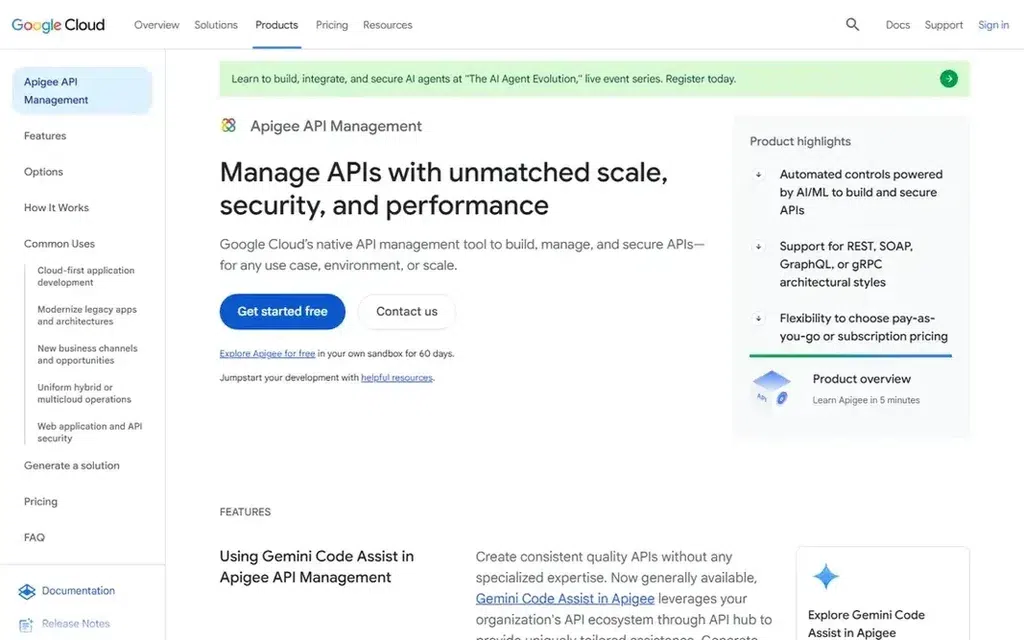
Google Cloud Platform targets AI and data-focused startups. The product assumes a reasonable level of cloud literacy, and teams new to infrastructure may have to invest in learning before they are productive.
No starting price is listed for Google Cloud Platform here; confirm pricing on the vendor site. Free plan details: Not stated.
Honest limits: Product naming can confuse beginners.
- Supports hybrid and multi-cloud
- Capable AI and data management focus
- Needs cloud skills to use well
Kinsta works best for managed WordPress for startups. Since the product is centered on WordPress, it is not the right fit for startups that require general-purpose cloud infrastructure for custom applications or AI workloads.
Startups that run their site or content business on WordPress frequently choose specialized managed hosting so caching, updates and security are handled for them, freeing the team to focus on content and growth instead of server maintenance. On cost, Kinsta starts like this: $17.50 per month. Trial and free access: Free trial.
Trade-offs to know: Specialized around WordPress.
- Emphasis on speed and security
- WordPress-focused hosting
- Not a general cloud platform
Think of Linode for low-latency edge applications. Linode, now part of Akamai Connected Cloud, is described as a widely distributed cloud computing system for building and delivering low-latency, edge-native applications. Also, startups that require numerous integrated managed services, or that want a completely managed website host, may want to compare other choices before committing.
The emphasis on distributed compute means the managed service catalog is narrower than what hyperscale clouds offer. Startups whose products rely on quick response times across regions, like APIs or latency-sensitive web apps, may find the distributed approach appealing. The compute-focused model keeps early infrastructure decisions relatively straightforward. Linode pricing: $100 per compute instance per month. Free options: Free trial.
Limits to weigh: Less suited to complicated enterprise stacks.
- Distributed cloud footprint
- Edge-native application focus
- Narrower managed service range
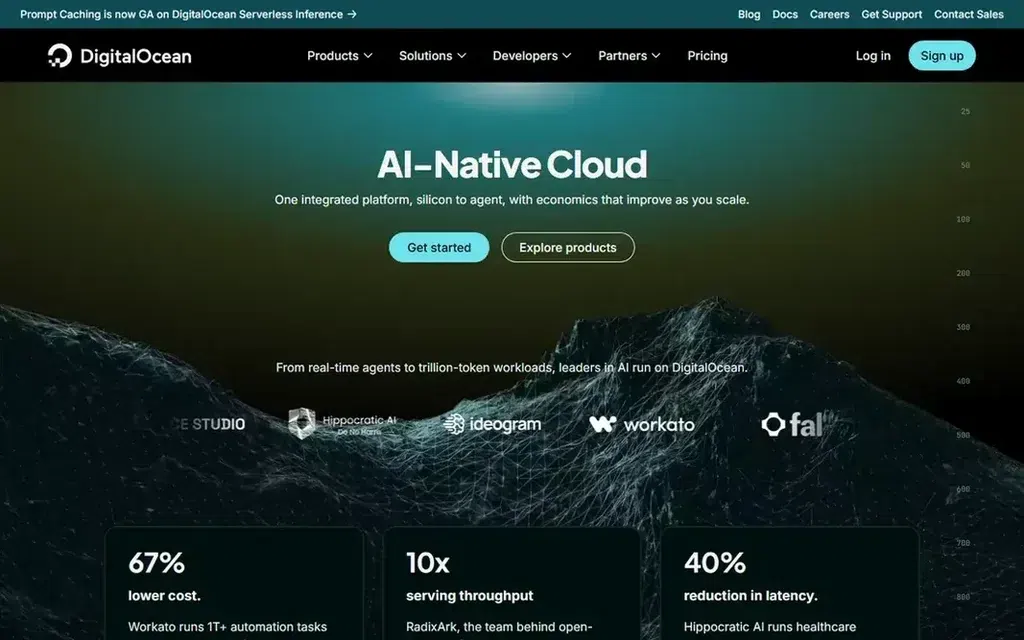
DigitalOcean is designed for developer-first cloud for lean teams. DigitalOcean presents itself as an AI-native cloud where teams can run AI products in production using a unified stack for agents, inference and cloud infrastructure. It emphasizes control, performance and economics at scale, which tends to appeal to startups with in-house engineering talent that want a more straightforward path to deploying applications and AI workloads without managing a sprawling service catalog.
What works well: Straightforward economics at scale; Designed for control and performance.
Watch-outs: Advanced enterprise services are limited.
Since it positions itself around a focused stack, DigitalOcean may not handle every specialized service a large enterprise expects. On top of that, startups with complicated compliance, hybrid or multi-cloud requirements may prefer a broader system, whereas teams that value simplicity and predictable infrastructure commonly find it a decent match. DigitalOcean pricing: $4 per month. DigitalOcean has a free plan.
- Inference and cloud
- Unified stack for agents
- Less breadth than hyperscale clouds
How we compared the tools
LinkVetted looked at what each vendor publishes: pricing, plan limits, feature coverage for cloud web hosting platforms for startups and stated drawbacks. No hands-on testing is claimed. Where a vendor does not publish a price, the entry says quote. Where a price depends on seats or billing term, the entry says so. Position on the page reflects fit for a typical buyer first, with price clarity and free access breaking ties. Treat it as a guide, not a ruling.
Before you commit
- Get a written quote from Google Cloud Platform; the list shows no starting price for them.
- Test the free plan from DigitalOcean against your real workload before relying on it.
- Use real work to test the free trial from Cloudways, Kinsta and Linode, rather than a demo project.
- Before choosing Cloudways, weigh its main limit: less control than raw cloud.
- Add up seats, add-ons and usage charges for Kinsta before comparing it with cheaper entries.
- Check whether Cloudways bills monthly or annually, and what cancelling early costs.
FAQ
How are the tools for cloud web hosting platforms for startups ordered?
The order follows typical fit for cloud web hosting platforms for startups, with Cloudways first and DigitalOcean last, then price clarity and free access. It is editorial judgement, not a score, so another team could rank the tools differently.
Can I try these tools before paying?
Often, yes. DigitalOcean has a free plan and Cloudways, Kinsta and Linode offer a free trial. Use your own data and a real task during the test, and check what the free tier or trial limits before you rely on it.
Is Cloudways the right pick for everyone comparing cloud web hosting platforms for startups?
No single tool suits every team. Cloudways comes first because it fits managed hosting on cloud infrastructure, while Google Cloud Platform suits AI and data-focused startups and Kinsta suits managed WordPress for startups. Match the tool to your own size, budget and workflow before deciding.
Can I move hosting providers later?
Migration is typically possible but the effort varies with how much of your stack is managed by the provider. Moving a WordPress site between managed hosts is commonly more straightforward than re-architecting custom applications across clouds.
What is the cheapest option for cloud web hosting platforms for startups in this list?
On published monthly entry prices, DigitalOcean is the lowest here at $4 per month. Entry price is only part of the cost, because seats, add-ons and billing terms can change the total. All 5 picks in this cloud web hosting platforms for startups comparison list a starting price, free plan details and the main limits on their cards above.
Sources
- https://www.cloudways.com
- https://cloud.google.com
- https://kinsta.com
- https://www.linode.com
- https://www.digitalocean.com