5 Best Cloud Platforms for IoT Connectivity for 2026, Vetted and Compared
Shortlisting the best cloud platforms for IoT connectivity? 5 products compared on cost, free access and ideal buyer. Plus the drawbacks of each tool.
- Editor's choice
 Azure IoT Hub
Microsoft-centric fleets and enterprises
Starts atPricing on requestVisit azure.microsoft.comFull review - Great alternativeIBM Watson IoT Platform
Enterprises within the IBM ecosystem
Starts atPricing on requestVisit ibm.comFull review - Also consider
 AWS IoT Core
Teams already building on AWS
Starts atPricing on requestVisit aws.amazon.comFull review
Direct answer
Azure IoT Hub comes first here, mainly for Microsoft-centric fleets and enterprises. Look at IBM Watson IoT Platform for enterprises within the IBM ecosystem, and at AWS IoT Core for teams already building on AWS. The full list of 5 tools follows, with free plan facts. None of these vendors publish plan prices, so pricing is on request for every option.
TL;DR:
- The list opens with Azure IoT Hub, aimed at Microsoft-centric fleets and enterprises.
- A fair warning about AWS IoT Core: configuration can feel complicated at first.
- Pricing across the list, from Azure IoT Hub to PTC ThingWorx, is by quote only.
- Just one of the 5 tools, AWS IoT Core, has a free plan.
- PTC ThingWorx is the one to check for industrial applications and connected products.
Last checked November 2026. Pricing on request: vendors did not publish plan prices when this guide was last checked (November 2026), so ask each vendor for a written quote.
Quick comparison
| Tool | Best for | Starts at | Free plan? | |
|---|---|---|---|---|
| Azure IoT Hub | Microsoft-centric fleets and enterprises | Pricing on request | Free trial | Visit |
| IBM Watson IoT Platform | Enterprises within the IBM ecosystem | Pricing on request | Not stated | Visit |
| AWS IoT Core | Teams already building on AWS | Pricing on request | Yes | Visit |
| Oracle Internet of Things Cloud Service | Oracle-aligned enterprise IoT projects | Pricing on request | Not stated | Visit |
 PTC ThingWorx | Industrial applications and connected products | Pricing on request | Not stated | Visit |
Cloud Platforms for IoT Connectivity profiles
Choosing cloud platforms for IoT connectivity usually comes down to price, fit and limits. This LinkVetted guide sets 5 tools side by side on those three points, with the facts kept short and checkable.
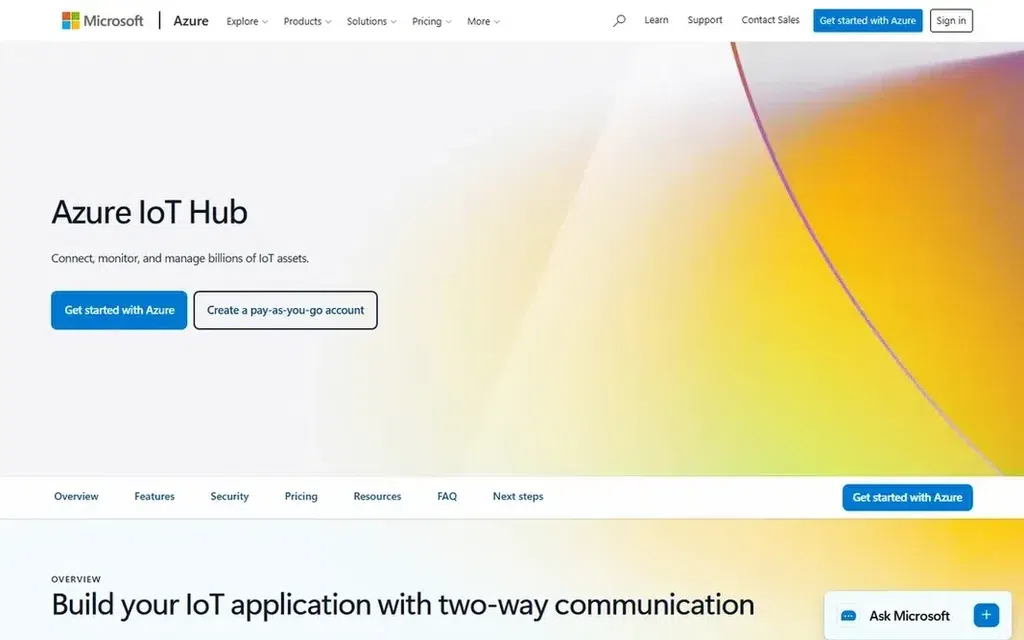
Where Azure IoT Hub fits: Microsoft-centric fleets and enterprises. Azure IoT Hub is a cloud system for connecting, monitoring, provisioning and configuring IoT devices at scale. It deals with device identity and management alongside messaging, making it a natural choice for organizations standardized on Azure, Active Directory or Microsoft development tools.
The service is deep, and small teams may find the portal and permission model heavy for a straightforward deployment. It is most compelling when your identity, analytics and operations already live in Azure; otherwise a lighter connectivity service may cut overhead. Pricing for Azure IoT Hub is not stated here, so ask the vendor for current figures. Trial and free access: Free trial.
Downsides: Feature set can overwhelm small projects.
- Configuration management for fleets
- Monitor and provision devices
- Needs Azure familiarity
IBM Watson IoT Platform
Best for: Enterprises within the IBM ecosystem
In short, IBM Watson IoT Platform is for enterprises within the IBM ecosystem. IBM Watson IoT Platform is IBM's offering for connecting devices and managing IoT data within its enterprise software catalog. It is pitched at organizations that already use IBM services and want device connectivity to sit alongside analytics and integration tooling from the same vendor.
Organizations without existing IBM investments commonly find more direct paths to connectivity with a cloud-native broker. From a buyer's view, IBM's IoT product lineup has changed over the years. So teams should verify current capabilities and roadmap straight with IBM before committing. Pricing for IBM Watson IoT Platform is not stated here, so ask the vendor for current figures. Free plan details: Not stated.
Drawbacks to consider: Needs IBM product familiarity.
- Suited to enterprise integration needs
- Part of a wide IBM software catalog
- Product line has shifted over time
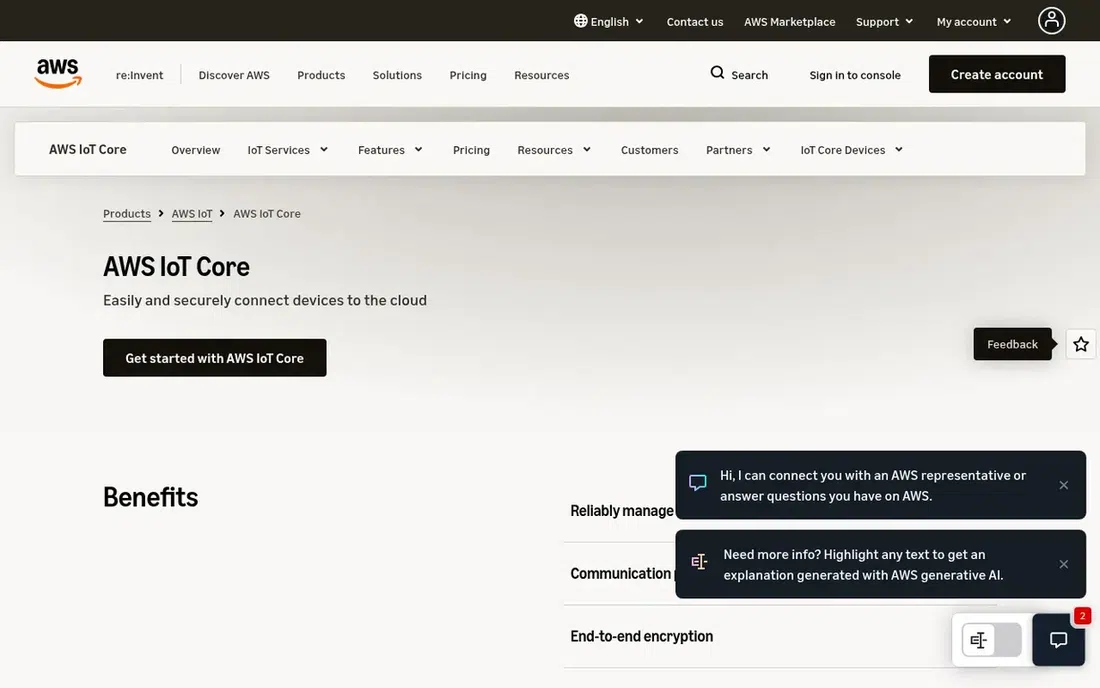
In short, AWS IoT Core is for teams already building on AWS. AWS IoT Core is a managed cloud service that makes it possible for secure two-way communication between internet-connected devices and AWS services. It merges a device gateway with device SDKs, so teams can link hardware, route messages and feed device data into downstream analytics and storage.
The main drawbacks: Configuration can feel complicated at first.
In daily use, teams without AWS experience may prefer a more straightforward broker, and industrial operations with heavy manufacturing focus should weigh purpose-built industrial products instead. In practice, the breadth of the product means setup and identity configuration take real effort, and message-based costs can grow rapidly on high-frequency telemetry. Pricing for AWS IoT Core is not stated here, so ask the vendor for current figures. AWS IoT Core includes a free tier.
- Device SDKs for typical hardware
- Tight integration with AWS services
- Costs scale with message volume
Oracle Internet of Things Cloud Service
Best for: Oracle-aligned enterprise IoT projects
Oracle Internet of Things Cloud Service targets Oracle-aligned enterprise IoT projects. Oracle Internet of Things Cloud Service links physical devices and sensors so they can exchange data with other devices and systems, positioned within Oracle's broader cloud and database portfolio.
Trade-offs to know: Best value inside Oracle ecosystem.
It fits enterprises that already run Oracle infrastructure and want device data to land near their existing data management and analytics services without adding another vendor relationship. Oracle Internet of Things Cloud Service shows no starting price here, so confirm the cost on the vendor site. As for free access: Not stated. What works well: Suits Oracle cloud and database stacks.
- Suited to regulated
- Device connectivity with enterprise integration
- Less typical for small startups
For industrial applications and connected products, PTC ThingWorx is a natural candidate. PTC ThingWorx is an industrial IoT product used to build connected-product and smart-operations applications.
Where it is weaker: Overkill for straightforward telemetry.
It is widely known for combining device connectivity with application development tooling, which fits manufacturers that want to model assets, build dashboards and deliver IoT applications without assembling every layer themselves. From a buyer's view, as a full application product, it carries more complexity and implementation effort than a pure connectivity service, and straightforward telemetry projects may not need that depth. Check the vendor site for PTC ThingWorx pricing; none is listed in this comparison. Free plan details: Not stated.
- Supports connected product development
- Pairs with industrial design workflows
- Wide system with a ramp-up time
How we built this list
Questions to settle before buying
- Confirm the entry price with every vendor: no tool from Azure IoT Hub to PTC ThingWorx shows a fixed starting price.
- Look at the free plan from AWS IoT Core closely: its caps decide whether it is usable for real work.
- Use real work to test the free trial from Azure IoT Hub, rather than a demo project.
- Read the limits listed for Azure IoT Hub first: needs Azure familiarity.
- Verify that exporting from Azure IoT Hub is possible on your plan and covers all your records.
- Compare total cost, not headline price: for Oracle Internet of Things Cloud Service, add extra seats, add-ons and any usage-based charges.
FAQ
Which options for cloud platforms for IoT connectivity have a free plan?
AWS IoT Core is the only tool in this list with a free plan. Free plans usually cap users, projects or features, so check the limits on the vendor page. One other tool offers a trial instead. For the full picture, the cards above cover all 5 entries of this cloud platforms for IoT connectivity list, including price, free plan and limits.
Is Azure IoT Hub the right pick for everyone comparing cloud platforms for IoT connectivity?
No single tool suits every team. Azure IoT Hub comes first because it fits Microsoft-centric fleets and enterprises, while IBM Watson IoT Platform suits enterprises within the IBM ecosystem and AWS IoT Core suits teams already building on AWS. Match the tool to your own size, budget and workflow before deciding.
Can I try these tools before paying?
Often, yes. AWS IoT Core has a free plan and Azure IoT Hub offers a free trial. Use your own data and a real task during the test, and check what the free tier or trial limits before you rely on it. Prices, free plan details and limits for all 5 tools in this cloud platforms for IoT connectivity roundup sit on the individual cards above.
Do these tools publish their prices?
No. None of the tools, from Azure IoT Hub to PTC ThingWorx, shows a fixed starting price here, so budget time for quotes.
Sources
- https://azure.microsoft.com/en-us/products/iot-hub
- https://www.ibm.com/products/iot-platform
- https://aws.amazon.com/iot-core
- https://www.oracle.com/internet-of-things
- https://www.ptc.com/en/products/thingworx