Choosing Cloud Computing Security in 2026: 6 Options Compared
6 tools for the best cloud computing security, compared on pricing, free plans and best-fit use. Concise write-ups of every option. See the full list.
- Editor's choice
 Microsoft Defender for Cloud
Hybrid and multicloud CNAPP within Microsoft
Starts atPricing on requestVisit microsoft.comFull review - Great alternative
 Orca Security
Agentless multicloud CNAPP and AI security
Starts atPricing on requestVisit orca.securityFull review - Also consider
 Sysdig
Runtime-first cloud security and response
Starts atPricing on requestVisit sysdig.comFull review
Direct answer
Start with Microsoft Defender for Cloud if you need hybrid and multicloud CNAPP within Microsoft. Orca Security fits Agentless multicloud CNAPP and AI security; Sysdig fits Runtime-first cloud security and response. The remaining 3 options are covered below with pricing notes and limits. None of these vendors publish plan prices, so pricing is on request for every option.
TL;DR:
- Microsoft Defender for Cloud is the opening pick, best for hybrid and multicloud CNAPP within Microsoft.
- Wiz fits connected code, cloud, and runtime visibility.
- CrowdStrike Falcon Cloud Security comes with a trade-off: best value within the Falcon ecosystem.
- Every tool from Microsoft Defender for Cloud to Wiz works by quote, with no list price shown.
- Neither Microsoft Defender for Cloud nor Wiz, nor any of the other 4 tools, has a permanent free plan; trials and quotes are the norm.
Last checked November 2026. Pricing on request: vendors did not publish plan prices when this guide was last checked (November 2026), so ask each vendor for a written quote.
Quick comparison
| Tool | Best for | Starts at | Free plan? | |
|---|---|---|---|---|
| Microsoft Defender for Cloud | Hybrid and multicloud CNAPP within Microsoft | Pricing on request | Not stated | Visit |
| Orca Security | Agentless multicloud CNAPP and AI security | Pricing on request | Not stated | Visit |
| Sysdig | Runtime-first cloud security and response | Pricing on request | Not stated | Visit |
 CrowdStrike Falcon Cloud Security | Cloud protection alongside endpoint security | Pricing on request | Not stated | Visit |
 Palo Alto Networks Prisma Cloud | Complete code-to-cloud CNAPP coverage | Pricing on request | Not stated | Visit |
 Wiz | Connected code, cloud, and runtime visibility | Pricing on request | Not stated | Visit |
Our 6 picks for cloud computing security
LinkVetted put together this guide to cloud computing security for readers who want a clear shortlist without reading every vendor page. It compares 6 tools on starting price, free plans, who each one suits and where each one falls short.
Microsoft Defender for Cloud
Best for: Hybrid and multicloud CNAPP within Microsoft
Where Microsoft Defender for Cloud fits: hybrid and multicloud CNAPP within Microsoft. The value is most solid where Microsoft tooling is already central, and depth across other clouds relies on configuration.
The main drawbacks: Most natural for Microsoft environments.
No starting price is listed for Microsoft Defender for Cloud here; confirm pricing on the vendor site. Free plan details: Not stated.
- CNAPP capabilities included
- Hybrid and multicloud coverage
- Cross-cloud depth varies by setup
Orca Security is built with Agentless multicloud CNAPP and AI security in mind. Orca Security presents itself as an AI-powered cloud security platform and CNAPP that secures multicloud environments from build to runtime, with AI security and workload defense.
Where it falls short: Feature depth varies by cloud.
Organizations prioritizing visibility across build and runtime stages are a good match. Coverage depth can differ between clouds and workload types, so confirm your specific environment during evaluation. Check the vendor site for Orca Security pricing; none is listed in this comparison. As for free access: Not stated.
- Comes with AI security focus
- Workload defense capabilities
- Needs clear scoping to avoid overlap
Sysdig is designed for Runtime-first cloud security and response. Sysdig frames cloud security as beginning at runtime, offering live visibility into your cloud so teams can prioritize critical risks, detect threats, and respond with confidence.
As for the details, a runtime-first focus can leave earlier lifecycle stages less covered, so pair it with posture or code-stage tooling if needed. Teams running container-heavy environments commonly value this runtime emphasis. Check the vendor site for Sysdig pricing; none is listed in this comparison. On free options: Not stated.
The main drawbacks: Best paired with broader posture tooling.
- Risk prioritization from runtime to development
- Quick threat detection
- Runtime focus may leave gaps earlier in the lifecycle
CrowdStrike Falcon Cloud Security
Best for: Cloud protection alongside endpoint security
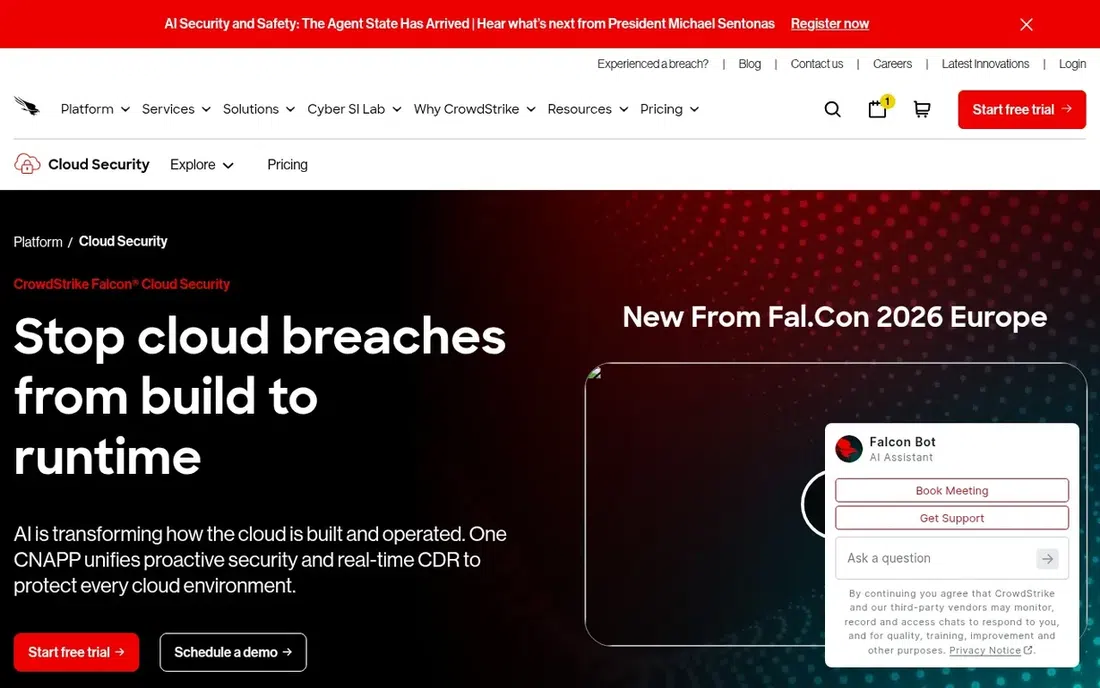
Pick CrowdStrike Falcon Cloud Security if this describes you: Cloud protection alongside endpoint security. Security teams that value a single vendor view across endpoints and cloud workloads are the natural audience.
Limits to weigh: Full scope relies on modules chosen.
CrowdStrike Falcon Cloud Security is presented as a way to see and secure everything across your clouds, applications, and data. CrowdStrike Falcon Cloud Security shows no starting price here, so confirm the cost on the vendor site. On free options: Not stated.
- Includes data and workloads
- Suits existing Falcon environments
- Best value within the Falcon ecosystem
Palo Alto Networks Prisma Cloud
Best for: Complete code-to-cloud CNAPP coverage

Choose Palo Alto Networks Prisma Cloud for complete code-to-cloud CNAPP coverage. Prisma Cloud is described by Palo Alto Networks as a complete Cloud Native Application Protection Platform for code to cloud security across any cloud, multicloud, and hybrid environment.
Where it falls short: May overlap with existing tools.
More specifically, teams with mixed cloud estates and a need for consistent policy across environments are the clearest fit. No starting price is listed for Palo Alto Networks Prisma Cloud here; confirm pricing on the vendor site. As for free access: Not stated.
- Positioned as a full CNAPP
- Includes code through runtime
- Wide scope can mean complicated setup
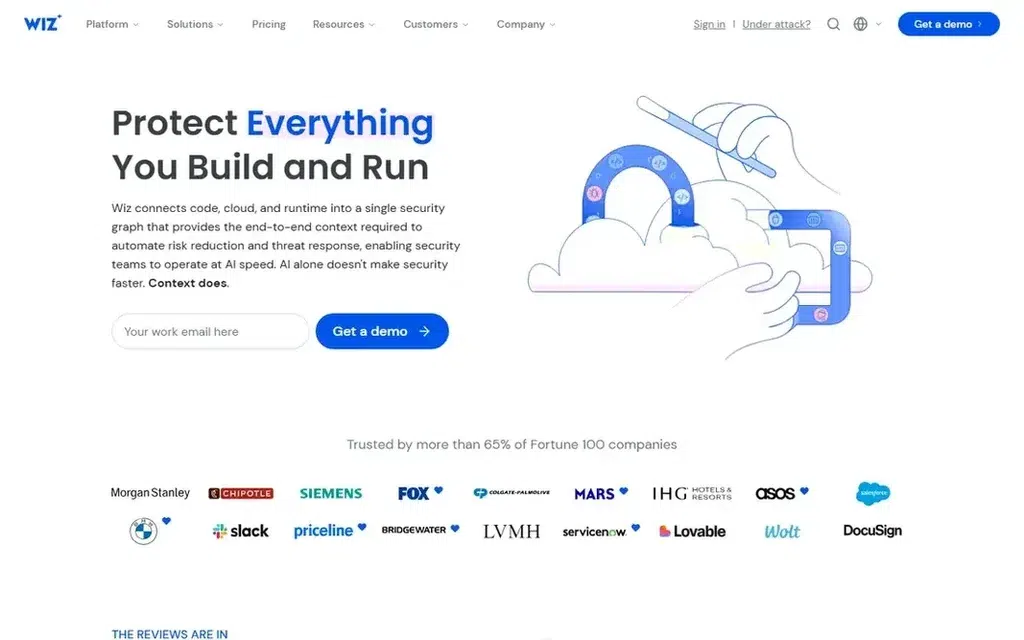
For connected code, cloud, and runtime visibility, Wiz is a natural candidate. Wiz describes itself as connecting code, cloud, and runtime into one agentic cybersecurity system that helps prevent risk and detect threats across every cloud and AI layer.
Teams needing only narrow runtime defense may find a focused tool more straightforward. Organizations standardizing on a single cloud security product for risk and threat detection are a good fit. This comparison lists no price for Wiz; ask the vendor. On free options: Not stated.
The main drawbacks: AI coverage depth varies by environment.
- Agentic system approach
- Includes cloud and AI layers
- Fast-moving product surface needs review
How we chose
For each of the 6 tools we noted price, free plan or trial, fit for cloud computing security and the main limit, using vendor pages and documentation. Prices and plan limits come from vendor pages and can change, so confirm them on the vendor site before you buy. The order reflects how well each tool fits the most common buying scenario for cloud computing security, then price clarity, then free plan access. It is a starting point, not a verdict.
Before you commit
- Confirm the entry price with every vendor: no tool from Microsoft Defender for Cloud to Wiz shows a fixed starting price.
- Read the limits listed for Microsoft Defender for Cloud first: most natural for Microsoft environments.
- Verify that exporting from CrowdStrike Falcon Cloud Security is possible on your plan and covers all your records.
- Compare total cost, not headline price: for Microsoft Defender for Cloud, add extra seats, add-ons and any usage-based charges.
- Check whether the features you need in Palo Alto Networks Prisma Cloud sit on the entry plan or only on higher tiers.
FAQ
Can I try these tools before paying?
Not by default. None of the tools, from Microsoft Defender for Cloud to Wiz, lists a free plan or a free trial here, so ask each vendor for a demo before committing.
How are the tools for cloud computing security ordered?
Microsoft Defender for Cloud sits first and Wiz last because the order follows typical fit for cloud computing security, then price clarity and free access. It is a judgement call, so read each profile for fit and limits.
Is Microsoft Defender for Cloud the right pick for everyone comparing cloud computing security?
No single tool suits every team. Microsoft Defender for Cloud comes first because it fits hybrid and multicloud CNAPP within Microsoft, while Orca Security suits Agentless multicloud CNAPP and AI security and Sysdig suits Runtime-first cloud security and response. Match the tool to your own size, budget and workflow before deciding.
What is a CNAPP and why does it matter?
A cloud-native application protection system merges multiple cloud security capabilities into one offering, usually spanning code, posture, and runtime. On top of that, confirm which capabilities are included for your environment.
Does any tool for cloud computing security here have a free plan?
No tool in this list, Microsoft Defender for Cloud and Wiz included, has a permanent free plan. Trials and quotes are the usual route, so plan a short evaluation period.
Sources
- https://www.microsoft.com/en-us/security/business/cloud-security
- https://orca.security
- https://sysdig.com
- https://www.crowdstrike.com/platform/cloud-security
- https://www.paloaltonetworks.com/prisma/cloud
- https://www.wiz.io