Choosing Cloud Security Posture Management for Azure in 2026: 6 Options Compared
Best cloud security posture management for azure: 6 contenders ranked by fit, with entry costs and free tiers. The catches are listed up front. Clear verdicts.
- Editor's choice
 Palo Alto Networks Prisma Cloud
Code-to-cloud CNAPP coverage
Starts atSee websiteVisit paloaltonetworks.comFull review - Great alternative
 Orca Security
Agentless multicloud CNAPP
Starts atSee websiteVisit orca.securityFull review - Also consider
 Microsoft Defender for Cloud
Native Azure posture and protection
Starts at$12.00 user/month, premium yearlyVisit azure.microsoft.comFull review
Direct answer
Palo Alto Networks Prisma Cloud is the first pick on this list for code-to-cloud CNAPP coverage. Listed starting prices: Microsoft Defender for Cloud from $12.00 user/month, premium yearly. Alternatives: Orca Security for Agentless multicloud CNAPP, and Microsoft Defender for Cloud for native Azure posture and protection. All 6 tools are compared below on price, free plan and limits.
TL;DR:
- This list starts with Palo Alto Networks Prisma Cloud, which is built for code-to-cloud CNAPP coverage.
- None of the 6 tools, from Palo Alto Networks Prisma Cloud to Tenable Cloud Security, has a free plan, so budget for a subscription or use a trial.
- What to know about Sysdig first: posture is one part of the story.
- Microsoft Defender for Cloud is the lowest-priced starter here at $12.00 user/month, premium yearly.
- Tenable Cloud Security suits compliance and risk automation.
Last checked November 2026. Prices and plan details were read from the vendors' own pages in November 2026; vendors change plans often, so confirm the current price on the vendor site before you buy.
Quick comparison
| Tool | Best for | Starts at | Free plan? | |
|---|---|---|---|---|
| Palo Alto Networks Prisma Cloud | Code-to-cloud CNAPP coverage | See website | Not stated | Visit |
| Orca Security | Agentless multicloud CNAPP | See website | Not stated | Visit |
| Microsoft Defender for Cloud | Native Azure posture and protection | $12.00 user/month, premium yearly | Free trial | Visit |
 Sysdig | Runtime-first cloud security | See website | Not stated | Visit |
 Wiz | Agentless multicloud visibility | See website | Not stated | Visit |
 Tenable Cloud Security | Compliance and risk automation | See website | Not stated | Visit |
6 options for cloud security posture management for azure in detail
Choosing cloud security posture management for azure usually comes down to price, fit and limits. This LinkVetted guide sets 6 tools side by side on those three points, with the facts kept short and checkable.

In short, Palo Alto Networks Prisma Cloud is for code-to-cloud CNAPP coverage. Prisma Cloud is presented by Palo Alto Networks as a complete Cloud Native Application Protection Platform for code-to-cloud security in any cloud, multicloud, and hybrid environment. Azure-native posture work can also be handled by Microsoft tooling if that is your only cloud.
Choose Prisma Cloud when you want a single CNAPP across development and production at scale. The breadth of the product means adoption takes deliberate planning, and smaller teams may find it heavier than needed. Check the vendor site for Palo Alto Networks Prisma Cloud pricing; none is listed in this comparison. Trial and free access: Not stated.
The main drawbacks: Needs planning to adopt completely.
- Works across multicloud and hybrid
- Capable code-to-cloud framing
- Feature breadth can overwhelm new teams
Think of Orca Security for Agentless multicloud CNAPP. Orca Security presents an AI-powered cloud security system and CNAPP that secures multicloud environments from build to runtime, with full AI security and workload defense.
It is not native to Azure, so teams wanting tight Microsoft integration may combine it with Defender for Cloud. Orca Security does not show a starting price in this comparison, so check the vendor site for current pricing. Free options: Not stated.
Where it falls short: Wide product needs prioritization.
- Comes with AI security and workload defense
- Agentless cloud coverage
- Not Azure-specific
Microsoft Defender for Cloud
Best for: Native Azure posture and protection
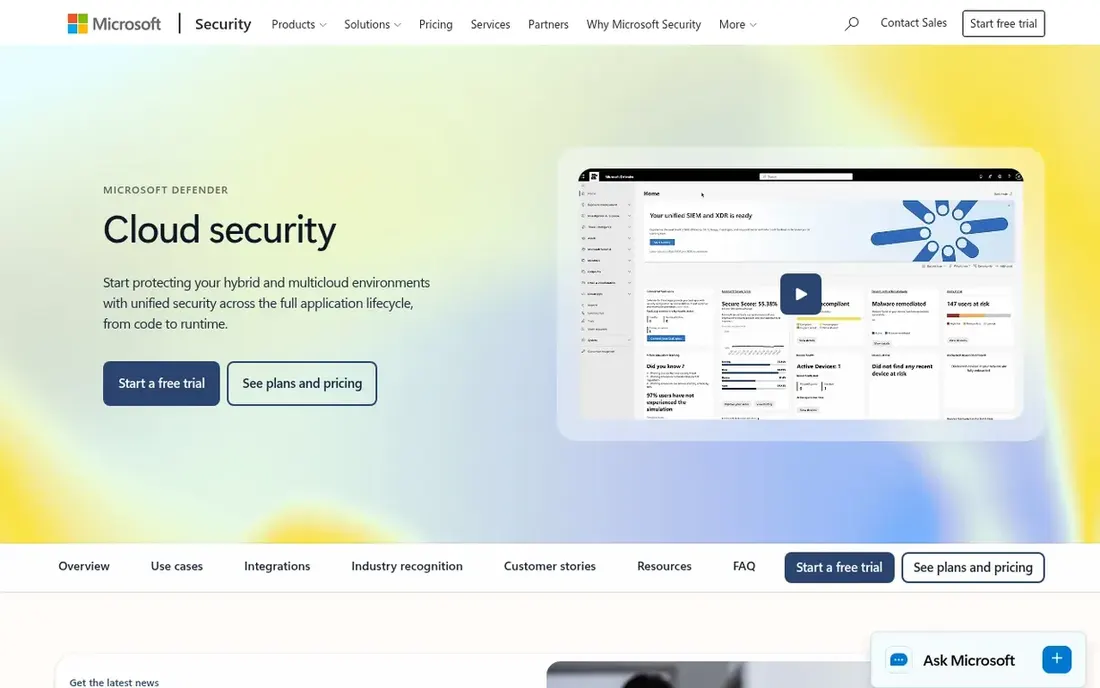
Microsoft Defender for Cloud is a good fit for native Azure posture and protection. Microsoft Defender for Cloud is a security option and CNAPP that guards cloud-native application development across multicloud and hybrid environments. Since it comes from Microsoft, it aligns closely with Azure services and is a natural starting point for teams already standardized on Azure.
Also, the tool is most compelling when your estate is mostly Microsoft-based. Teams running plenty of non-Microsoft products may want to compare depth elsewhere. Worth adding: choose a dedicated external CNAPP if you need a single pane across numerous providers with less Microsoft dependency. Price to start with Microsoft Defender for Cloud: $12.00 user/month, premium yearly. Free access: Free trial.
Downsides: Advanced features span several modules.
- Merges posture with workload protection
- Multicloud and hybrid coverage
- Best value inside the Microsoft ecosystem
Sysdig serves Runtime-first cloud security. Sysdig frames cloud security as beginning at runtime, offering live visibility from runtime to development so teams can prioritize critical risks, detect threats, and respond.
On top of that, Security and system teams can use it to link live activity back to development. It also relies on instrumentation across workloads. Check the vendor site for Sysdig pricing; none is listed in this comparison. Trial and free access: Not stated.
Drawbacks to consider: Needs runtime instrumentation.
- Threat detection and response
- Runtime visibility focus
- Posture is one part of the story
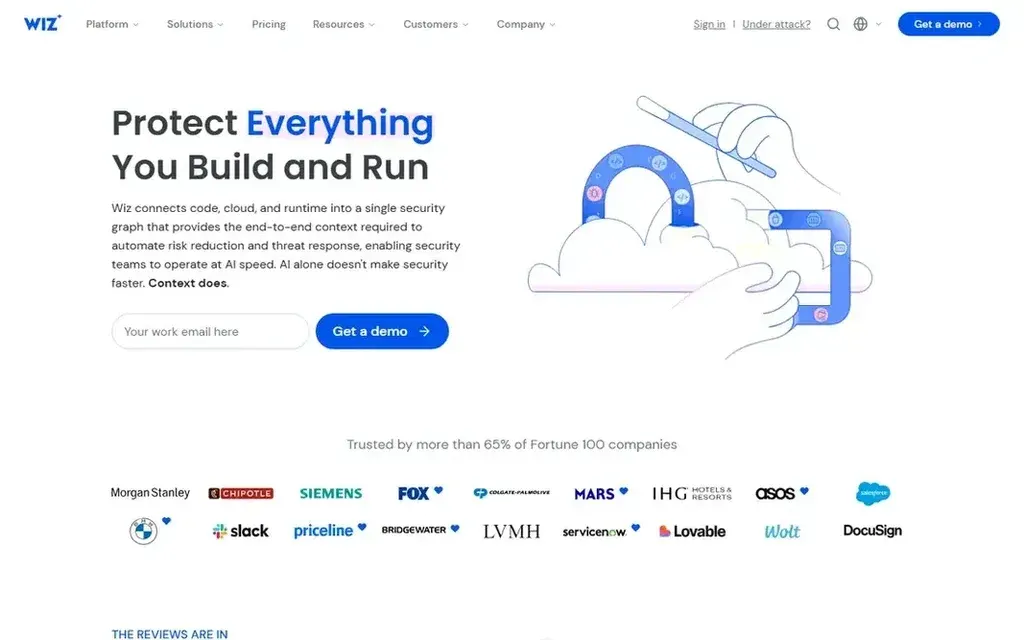
Wiz was built for Agentless multicloud visibility. Wiz describes itself as an agentic cybersecurity product that connects code, cloud, and runtime, helping teams prevent risk and detect threats across every cloud and AI layer. On top of that, Security teams commonly use it to correlate posture findings with workload and identity context.
Strengths: Agentless deployment model.
Honest limits: Wide scope needs tuning. As for the details, since the product spans plenty of areas, initial tuning and prioritization take effort. It is not tied to Azure the way Microsoft's tooling is, so teams wanting deep native integration may pair the two. Pricing for Wiz is not stated here, so ask the vendor for current figures. On free options: Not stated.
- Links code, cloud, runtime
- Handles cloud and AI layers
- Less native to Azure than Microsoft tools
Tenable Cloud Security targets compliance and risk automation. Tenable Cloud Security describes a unified cloud security offering with CNAPP, CSPM, DSPM, and KSPM capabilities across major cloud providers, plus compliance automation and risk remediation. It also lists CIEM, cloud workload protection, infrastructure-as-code scanning, AI security posture management, and runtime security.
Drawbacks to consider: Numerous modules to configure.
Beyond that, the number of modules means onboarding and policy tuning take time. As for the details, pick Tenable Cloud Security when compliance automation and multi-cloud posture are the driving requirements. Check the vendor site for Tenable Cloud Security pricing; none is listed in this comparison. Free access: Not stated.
What works well: CSPM, DSPM.
- Compliance and remediation automation
- Spans major cloud providers
- Less Azure-native than Microsoft tools
How we compared the tools
Questions to settle before buying
- Get a written quote from Palo Alto Networks Prisma Cloud, Orca Security, Sysdig and others; the list shows no starting price for them.
- Take the trial from Microsoft Defender for Cloud and push a live task through it before you pay.
- Read the limits listed for Palo Alto Networks Prisma Cloud first: feature breadth can overwhelm new teams.
- Price Microsoft Defender for Cloud for your actual team size; headline prices rarely include add-ons or overage.
- Check the integration list for Wiz against the tools you run today, and note which ones need a higher plan.
FAQ
How should I compare agentless and agent-based tools?
Agentless tools can speed initial visibility across accounts, while agent-based approaches may offer deeper runtime detail. More specifically, plenty of organizations combine both. Match the model to your workload types and operational capacity.
How are the tools for cloud security posture management for azure ordered?
Palo Alto Networks Prisma Cloud sits first and Tenable Cloud Security last because the order follows typical fit for cloud security posture management for azure, then price clarity and free access. It is a judgement call, so read each profile for fit and limits.
Can I try these tools before paying?
Often, yes. Microsoft Defender for Cloud offers a free trial. Use your own data and a real task during the test, and check what the free tier or trial limits before you rely on it.
Does any tool for cloud security posture management for azure here have a free plan?
A permanent free plan is not offered by Palo Alto Networks Prisma Cloud, Tenable Cloud Security or the other tools here. Microsoft Defender for Cloud offer a trial. Plan a short evaluation period instead.
Do I need a separate CNAPP if I already use Azure tools?
Not always, but a dedicated CNAPP can help when you need one view across multiple clouds, code, and runtime. It can also add context that native tooling may not surface in the same way. Evaluate overlap before adding another product.
Do these tools publish their prices?
Not all of them. Palo Alto Networks Prisma Cloud, Orca Security, Sysdig and others publish no starting price, so expect a quote request for those. The rest, Microsoft Defender for Cloud included, show a starting price, though seats and billing terms still change the final cost.
Sources
- https://www.paloaltonetworks.com/prisma/cloud
- https://orca.security
- https://azure.microsoft.com/en-us/products/defender-for-cloud
- https://sysdig.com
- https://www.wiz.io
- https://www.tenable.com/cloud-security