Top 5 Clinical Documentation Software for Enterprise for 2026 (Prices and Free Plans)
Best clinical documentation software for enterprise in 2026: 5 contenders with entry costs and free tiers. Read the caveats before you buy. Start here.
- Editor's choice
 athenahealth
Ambulatory documentation on a connected network
Starts atPricing on requestVisit athenahealth.comFull review - Great alternative
 Oracle Health
Secure, insight-driven clinical documentation
Starts atPricing on requestVisit oracle.comFull review - Also consider
 eClinicalWorks
Ambulatory EHR documentation
Starts atPricing on requestVisit eclinicalworks.comFull review
Direct answer
athenahealth leads the list, best for ambulatory documentation on a connected network. For a different need, Oracle Health covers secure, insight-driven clinical documentation and eClinicalWorks covers Ambulatory EHR documentation. The other 2 tools in the list cover narrower or pricier cases. None of these vendors publish plan prices, so pricing is on request for every option.
TL;DR:
- Athenahealth sits first on this list: ambulatory documentation on a connected network.
- Neither athenahealth nor Epic, nor any of the other 3 tools, has a permanent free plan; trials and quotes are the norm.
- Every tool from athenahealth to Epic works by quote, with no list price shown.
- For large integrated health systems, Epic is worth a look.
Last checked November 2026. Pricing on request: vendors did not publish plan prices when this guide was last checked (November 2026), so ask each vendor for a written quote.
Quick comparison
| Tool | Best for | Starts at | Free plan? | |
|---|---|---|---|---|
| athenahealth | Ambulatory documentation on a connected network | Pricing on request | Not stated | Visit |
| Oracle Health | Secure, insight-driven clinical documentation | Pricing on request | Not stated | Visit |
| eClinicalWorks | Ambulatory EHR documentation | Pricing on request | Not stated | Visit |
| Greenway Health | AI-assisted ambulatory documentation | Pricing on request | Not stated | Visit |
 Epic | Large integrated health systems | Pricing on request | Not stated | Visit |
The 5 tools in detail
Short on time? The summary and table above give the quick view of 5 tools for clinical documentation software for enterprise, and the profiles that follow give the detail behind each entry.
athenahealth is aimed squarely at ambulatory documentation on a connected network. The product's orientation toward ambulatory settings means it is not the natural choice for hospital inpatient documentation.
For everyday use, athenahealth builds healthcare products and services centered on ambulatory care, with documentation connected to a broader clinical and financial network. Athenahealth does not show a starting price in this comparison, so check the vendor site for current pricing. On free options: Not stated.
The main drawbacks: Less suited to inpatient documentation.
- Connected network orientation
- Ambulatory care focus
- Network value relies on participation
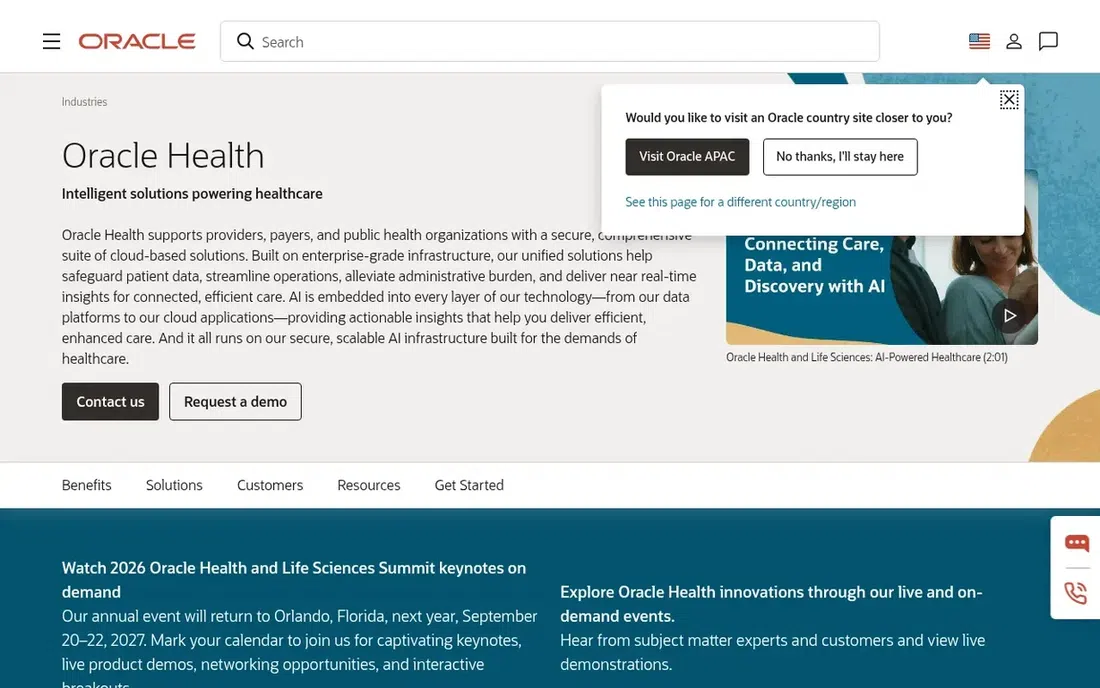
Oracle Health is built with secure, insight-driven clinical documentation in mind. Since the portfolio spans plenty of products, teams should confirm which documentation modules match their specialty and inpatient needs.
It fits enterprises that want clinical documentation connected to broader data and analytics capabilities, particularly organizations already comfortable working within a large technology ecosystem and seeking consistency across care settings. Oracle Health does not show a starting price in this comparison, so check the vendor site for current pricing. On free options: Not stated.
Points against: Documentation depth varies by module. What Oracle Health does well: dependable options.
- People-centric experience design
- Healthcare insights emphasis
- Migration planning needs care
Pick eClinicalWorks if this describes you: Ambulatory EHR documentation. Organizations with heavy inpatient documentation requirements will likely need a different system, since the product centers on ambulatory care.
eClinicalWorks does not show a starting price in this comparison, so check the vendor site for current pricing. On free options: Not stated.
Drawbacks to consider: Customization can add complexity.
- Ambulatory EHR orientation
- Widely used in outpatient settings
- Enterprise inpatient needs are restricted
Greenway Health
Best for: AI-assisted ambulatory documentation
Greenway Health is built with AI-assisted ambulatory documentation in mind. It suits enterprise organizations with outpatient networks that want documentation connected to revenue and practice operations, and that are open to AI-assisted features within a cloud environment.
Downsides: Workflow changes need planning.
The platform is oriented toward ambulatory practices, so hospital inpatient documentation needs fall outside its core focus. This comparison lists no price for Greenway Health; ask the vendor. Free access: Not stated.
- Clinical and financial work unified
- Cloud EHR and practice management
- Ambulatory focus limits inpatient use
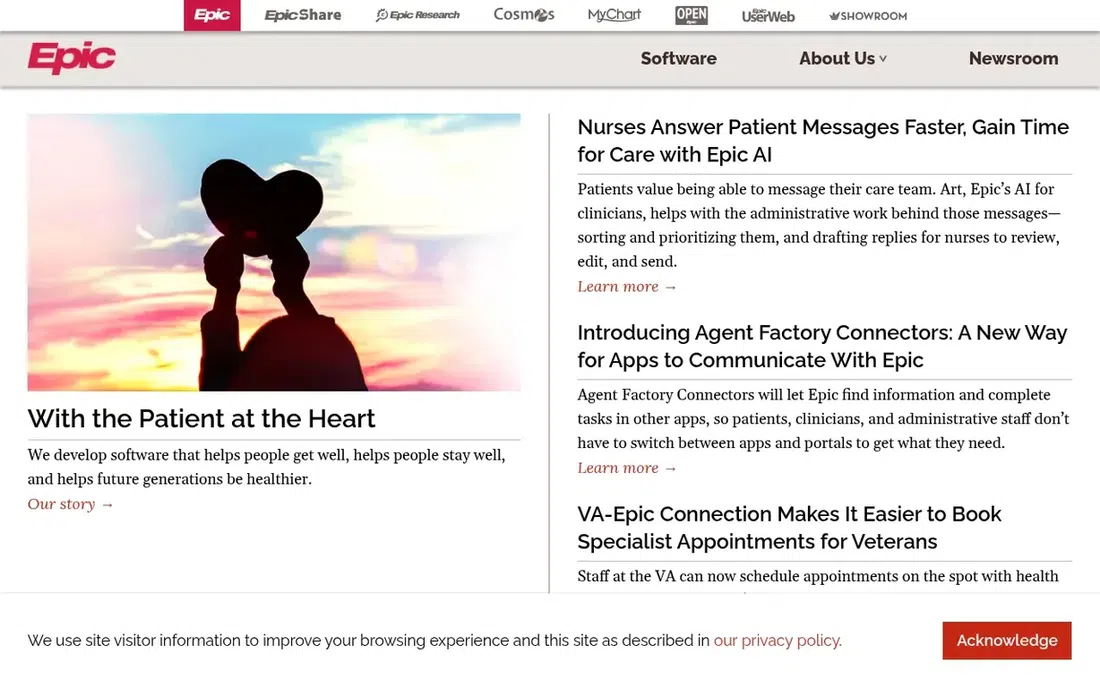
Epic is aimed squarely at large integrated health systems. The platform's depth includes real implementation effort, and smaller or highly specialized organizations may find that weight hard to justify.
From a buyer's view, Epic develops software built around the patient, with clinical documentation living inside a single integrated record that spans inpatient and outpatient care. Pricing for Epic is not stated here, so ask the vendor for current figures. Free plan details: Not stated.
Points against: Implementation demands significant resources.
- Longstanding healthcare specialization
- Broad integrated clinical record
- Best value at large scale
Selection criteria
What to check before you buy
- Ask each vendor, from athenahealth to Epic, for a written quote; none of them publishes a starting price.
- Read the limits listed for athenahealth first: less suited to inpatient documentation.
- Confirm you can export your data from eClinicalWorks, so leaving later does not mean losing records.
- Confirm that Greenway Health connects to the apps your team already uses, on the plan you would actually buy.
- Check whether the features you need in Oracle Health sit on the entry plan or only on higher tiers.
FAQ
How are the tools for clinical documentation software for enterprise ordered?
athenahealth sits first and Epic last because the order follows typical fit for clinical documentation software for enterprise, then price clarity and free access. It is a judgement call, so read each profile for fit and limits.
Does any tool for clinical documentation software for enterprise here have a free plan?
A permanent free plan is not offered by athenahealth, Epic or the other tools here. Plan a short evaluation period instead.
Can I try these tools before paying?
Not by default. None of the tools, from athenahealth to Epic, lists a free plan or a free trial here, so ask each vendor for a demo before committing.
Is athenahealth the right pick for everyone comparing clinical documentation software for enterprise?
No single tool suits every team. Athenahealth comes first because it fits ambulatory documentation on a connected network, while Oracle Health suits secure, insight-driven clinical documentation and eClinicalWorks suits Ambulatory EHR documentation. Match the tool to your own size, budget and workflow before deciding.
What makes clinical documentation software enterprise-ready?
Enterprise readiness typically means documentation spans several facilities and specialties, links up with existing systems, and supports governance across a large clinician base.
What should we check before signing with a vendor?
Confirm module coverage for every care setting, interoperability with your current systems, workflow configuration and support commitments. Also verify how documentation features align with your clinical governance and long-term data strategy before finalizing any agreement.
Sources
- https://www.athenahealth.com
- https://www.oracle.com/health
- https://www.eclinicalworks.com
- https://www.greenwayhealth.com
- https://www.epic.com