Best Clinical Documentation Software in 2026: 8 Tools Compared
Compare the best clinical documentation software for AI notes, dictation, templates and EHR charting, with prices, pros and honest trade-offs for clinicians.

- Editor's choice
 Suki
AI notes for ambulatory care
Starts atSee websiteVisit suki.aiFull review - Great alternative
 Abridge
AI notes for hospitals and clinics
Starts atSee websiteVisit abridge.comFull review - Also consider
 DeepScribe
AI scribe for specialty care
Starts atSee websiteVisit deepscribe.aiFull review
TL;DR:
- Suki, Abridge and DeepScribe lead for AI-generated clinical notes, with different strengths for ambulatory, hospital and specialty care.
- Nuance Dragon Medical One remains the leading dictation choice for clinicians who prefer voice to typing.
- Heidi Health, Freed and Nabla suit smaller practices and solo clinicians that want fast, affordable note drafting.
- Augmedix fits larger organizations that want a managed documentation service alongside technology.
- AI notes still need clinician review, editing and sign-off, since accuracy, privacy and record integrity remain the clinician's responsibility.
Quick comparison
| Tool | Best for | Starts at | Free plan? | |
|---|---|---|---|---|
| Suki | AI notes for ambulatory care | See website | Free trial | Visit |
| Abridge | AI notes for hospitals and clinics | See website | No | Visit |
| DeepScribe | AI scribe for specialty care | See website | Free trial | Visit |
 Nuance Dragon Medical One | Medical dictation | See website | Free trial | Visit |
 Heidi Health | Affordable AI notes for small practices | See website | Free trial | Visit |
 Freed | Fast notes for solo clinicians | See website | Free trial | Visit |
 Nabla | AI notes with EHR integration | See website | Free trial | Visit |
 Augmedix | Managed documentation service | See website | No | Visit |
The best clinical documentation software
Clinical documentation software helps clinicians turn visits into accurate notes faster, through templates, dictation, voice recognition or AI scribes that draft notes from conversations. Good tools cut after-hours charting, keep notes structured for billing and follow-up, and fit the clinician's EHR workflow. We compared official feature pages, pricing pages and public reviews for tools available in the US in October 2026. Note: this article is general information, not medical or legal advice, and clinicians must review, edit and approve every AI-drafted note before it enters the record.

Suki is an AI clinical assistant that helps clinicians create notes by voice, draft documentation from encounters, and support coding tasks. It integrates with major EHR systems, so notes can flow into the chart without manual copying. Ambulatory clinicians, including primary care and specialty practices, are its main audience, and Suki positions itself as a time saver for daily documentation.
Pricing is quote-based and depends on organization size and EHR integration, so smaller practices should ask for a clear per-clinician quote. Suki value also depends on how deeply it connects to your EHR. For an ambulatory practice that wants AI notes plus dictation in one assistant, Suki is a leading choice.
- AI assistant for notes, dictation and coding support
- EHR integrations
- Designed for ambulatory clinicians
- Pricing is quote-based
- Value depends on EHR integration depth
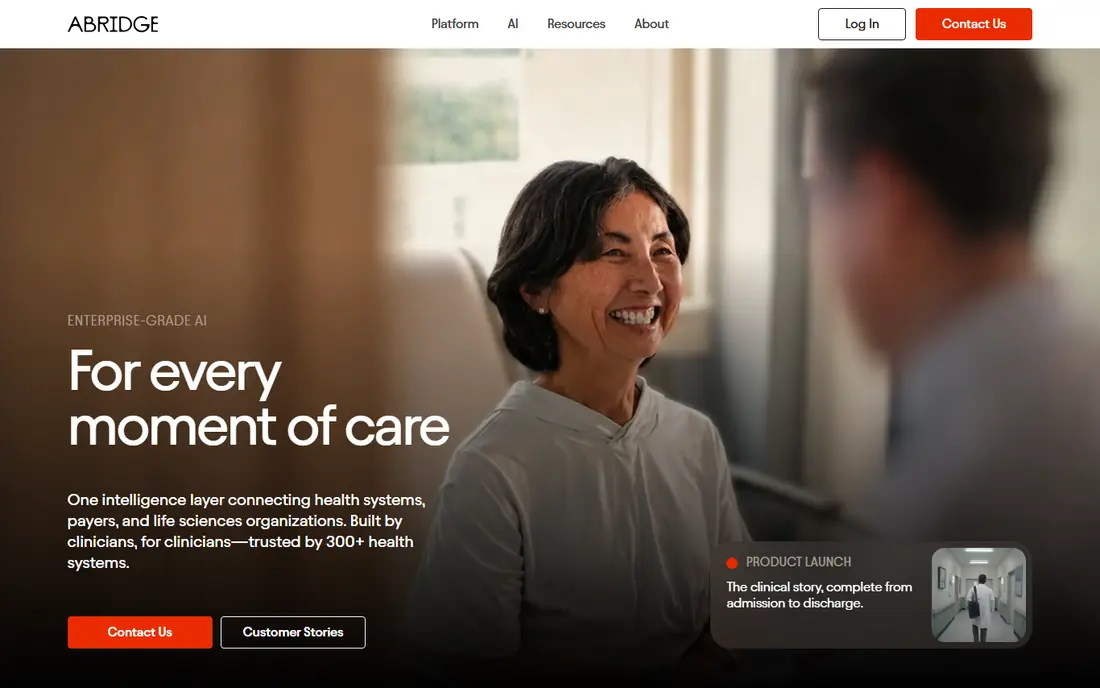
Abridge turns clinician-patient conversations into structured clinical notes, using AI to draft documentation that clinicians review and sign. It is used by hospitals and large health systems, with EHR integrations, audit trails and enterprise controls for privacy and security. Its focus on real conversation, rather than dictation alone, helps capture context that typed notes often miss.
Abridge pricing is quote-based and enterprise-focused, so solo clinicians will likely find it out of reach. For a hospital, clinic group or large practice that wants conversation-based notes at scale, Abridge is one of the strongest AI documentation platforms available.
- Conversation-based AI notes
- Strong hospital and health system adoption
- EHR integration and audit features
- Quote-based enterprise pricing
- Best fit for larger organizations
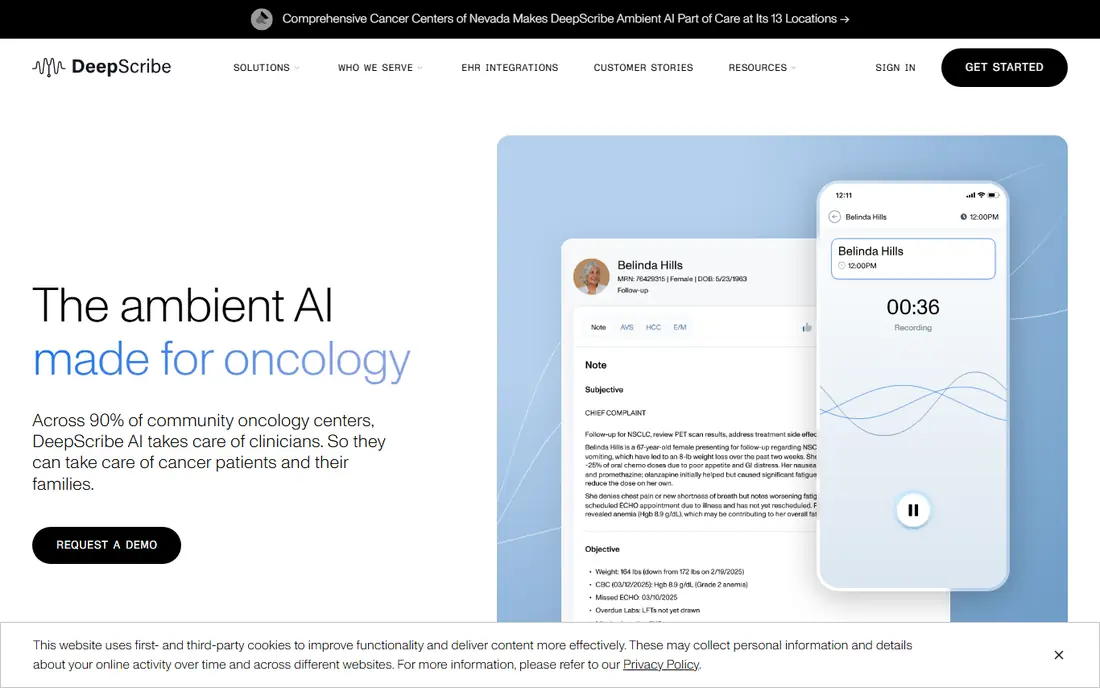
DeepScribe is an AI medical scribe that records encounters, drafts notes and maps them to structured EHR fields, with customization for specialties such as cardiology, orthopedics, behavioral health and primary care. Human quality review is available to check drafts before they reach the chart, which helps accuracy for complex visits. Its EHR integrations support common ambulatory systems.
Pricing is quote-based, and specialty tuning takes time to reach peak accuracy. Smaller practices should test DeepScribe with their most common visit types during a trial. For a specialty practice that wants AI notes shaped to its workflows, DeepScribe is a strong, focused option.
- AI scribe with specialty customization
- EHR integration
- Human quality review options
- Pricing is quote-based
- Specialty setup needs tuning for best accuracy
Nuance Dragon Medical One, now part of Microsoft, is a cloud-based medical dictation tool that turns clinician speech into text inside EHRs and other applications. It uses a medical vocabulary tuned for clinical terms, accents and specialties, and it learns from corrections over time. Clinicians who prefer speaking to typing, or who chart in complex EHR templates, often find it faster than keyboard entry.
Pricing is subscription-based and varies by organization, with a trial available. Dictation still needs review, since speech recognition can mishear drug names, numbers and similar terms. For a clinician who wants reliable voice charting without a full AI scribe, Dragon Medical One remains the benchmark dictation tool.
- Proven medical speech recognition
- Large medical vocabulary
- Works inside many EHRs
- Subscription pricing
- Dictation still needs editing and proofreading
Heidi Health is an AI medical scribe that transcribes visits, drafts notes from templates and produces output that can be copied or sent to an EHR. It is popular with solo clinicians, small practices and allied health teams that want AI notes without enterprise pricing or a long implementation. Setup is fast, and its free trial lets clinicians test note quality with real visit types.
Heidi Health is smaller than Abridge or Suki, and its enterprise reporting and admin controls are thinner. Larger hospitals may prefer a bigger platform. For a small practice that wants affordable AI notes quickly, Heidi Health is a practical and popular choice.
- Low-cost AI note drafting
- Templates and EHR-friendly output
- Fast setup for small teams
- Smaller vendor than Abridge or Suki
- Enterprise controls are less deep
Freed is an AI scribe that listens to visits, drafts SOAP notes and other formats, and aims to cut charting time for solo clinicians and small practices. Its workflow is simple: record or upload a visit, review the draft, edit as needed and copy it to the chart. That simplicity appeals to clinicians who do not want a complex enterprise rollout.
Pricing varies by plan, with a trial available, and EHR integration depth depends on your system, so test the copy-to-chart step during the trial. Freed is less suited to large hospitals that need enterprise controls. For a solo clinician drowning in after-hours notes, Freed is a fast, focused fix.
- Fast AI note drafting after visits
- Simple workflow
- Popular with solo and small practices
- Pricing varies by plan
- EHR integration depth varies by system
Nabla offers an AI clinical assistant that generates notes from dictation or conversation, with templates, coding support and EHR integrations. It emphasizes privacy and security in its design, which matters for practices handling sensitive health data. Nabla suits ambulatory practices, specialty clinics and telehealth teams that want AI notes plus dictation in one tool.
Pricing varies by plan, with a trial available, and Nabla is newer in the US market than Nuance or Suki, so check EHR coverage for your system. For a practice that values privacy design and a clean AI note workflow, Nabla is a credible modern option worth trialing.
- AI note generation with dictation and templates
- EHR integrations
- Privacy-focused design
- Pricing is plan-based and varies
- Newer in the US market than Nuance
Augmedix combines technology with a managed documentation service, where trained documentation specialists support AI-drafted notes and help keep charts accurate and timely. It integrates with EHR systems and serves hospitals, health systems and larger practices that want documentation handled as a service, not just a software tool. That human layer helps with complex visits and quality checks.
Augmedix pricing is quote-based and its service model fits larger organizations better than solo clinicians, who may prefer a self-serve scribe such as Freed or Heidi Health. For a large practice that wants documentation off clinicians' plates with human oversight, Augmedix is a strong managed option.
- Managed service plus technology
- Human documentation specialists support AI drafts
- EHR integration
- Quote-based pricing
- Service model suits larger organizations better than solo clinicians
How we picked these
We compared official feature pages, pricing pages, EHR integration lists and public reviews for clinical documentation tools available in the US in October 2026. We favored tools with real note generation, dictation or template capability, EHR integration, privacy statements and a working official homepage. We left out generic transcription tools without clinical features, discontinued products and tools that make unverified accuracy claims.
How to choose clinical documentation software
Start with your visit type and EHR. Test each tool with your most common visits, including complex, multi-problem and telehealth encounters, and check how drafts map to your EHR fields. A tool that works well for primary care may struggle with specialty terminology or behavioral health notes, so specialty fit matters.
Next, check privacy, review and cost together. Confirm HIPAA statements, a business associate agreement, recording consent practices and data retention, and confirm every note requires clinician review and sign-off. Compare per-clinician pricing, EHR integration fees and any human review costs, since quote-based tools vary widely. Finally, measure time saved honestly: track charting time before and after a trial, and check note accuracy, not just speed, since a fast but inaccurate note creates more work later.
FAQ
What is clinical documentation software?
Clinical documentation software helps clinicians create visit notes through templates, dictation, speech recognition or AI scribes that draft notes from conversations. It structures notes for the chart, billing and follow-up, and can cut after-hours charting. Every draft still needs clinician review, editing and sign-off before it becomes part of the record.
Are AI clinical notes accurate?
AI notes can be accurate for routine visits, but they can miss context, mishear terms or invent details, so clinician review is essential. Test a tool with your visit types, check drug names, numbers and plans carefully, and use human review for complex cases. This article is general information, not medical advice.
Do AI scribes replace dictation?
Not always. AI scribes draft full notes from conversations, while dictation tools such as Dragon Medical One turn speech into text for the clinician to shape. Some clinicians prefer dictation control, others prefer AI drafts. Tools such as Suki and Nabla combine dictation and AI drafting, so you can use both.
Is clinical documentation software HIPAA compliant?
Vendors state HIPAA compliance and offer a business associate agreement, but compliance also depends on recording consent, device security, access controls and how your practice stores notes. Read the vendor privacy and security pages, sign the agreement and train staff on consent and review practices.
How much does clinical documentation software cost?
Pricing varies widely, from low-cost plans for solo clinicians with tools such as Freed and Heidi Health, to quote-based enterprise pricing for Abridge, Suki, DeepScribe and Augmedix. Dictation tools such as Dragon Medical One use subscription pricing. Get a per-clinician quote for your EHR and visit volume before comparing.
Can AI notes integrate with my EHR?
Most tools on this list offer EHR integrations or copy-to-chart workflows, but depth varies by EHR vendor. Check your exact EHR system, test the full note-to-chart step during a trial, and ask whether integration, setup or human review fees apply. A tool that cannot reach your chart cleanly will not save time.