Best Clinical Operations Platform in 2026: 9 Platforms Compared
We compared the best clinical operations platform for sponsors, CROs, and sites, covering EDC, CTMS, eTMF, and site tools in one clear guide for 2026.
- Editor's choice
 Veeva Vault Clinical
Large sponsors on Veeva
Starts atSee websiteVisit veeva.comFull review - Great alternative
 Medidata Clinical Cloud
Global pharma and CROs
Starts atSee websiteVisit medidata.comFull review - Also consider
 Oracle Clinical One
Unified Oracle eClinical platform
Starts atSee websiteVisit oracle.comFull review
TL;DR:
- Clinical operations is not one tool: sponsors need EDC, CTMS, and eTMF together, while sites need eRegulatory, scheduling, and document tools.
- Veeva Vault Clinical, Medidata Clinical Cloud, and Oracle Clinical One lead for large, global trials, but they are quote-based and need implementation time.
- Castor, Medrio, Viedoc, and REDCap suit smaller teams, academic groups, and early-phase trials, with faster study builds and lower overhead.
- Florence eBinders leads for site document work, because it connects sites and sponsors without forcing sites to learn a sponsor system.
- Compliance is table stakes: check 21 CFR Part 11, GCP, audit trails, and validation support before you compare features.
Quick comparison
| Tool | Best for | Starts at | Free plan? | |
|---|---|---|---|---|
| Veeva Vault Clinical | Large sponsors on Veeva | See website | No | Visit |
| Medidata Clinical Cloud | Global pharma and CROs | See website | No | Visit |
| Oracle Clinical One | Unified Oracle eClinical platform | See website | No | Visit |
 Castor | Modern EDC for mid-size teams | See website | Free trial | Visit |
 Medrio | Small and early-phase teams | See website | No | Visit |
 Viedoc | Lean sponsors with study-based pricing | See website | No | Visit |
 Florence eBinders | Site regulatory documents | See website | No | Visit |
 OpenClinica | Academic and mid-size sponsors | See website | No | Visit |
 REDCap | Academic and nonprofit research | Free | Yes | Visit |
The best clinical operations platform
A clinical operations platform helps a trial team run a study from protocol to closeout: capturing data, tracking sites, managing documents, randomising patients, and keeping an audit trail for inspectors. No single product does every job equally well, so the best pick depends on trial size, phase, and whether you are a sponsor, a contract research organisation, or a research site. Our pick for large sponsors is Veeva Vault Clinical for breadth, while Castor is our pick for smaller teams that need a fast, modern start.
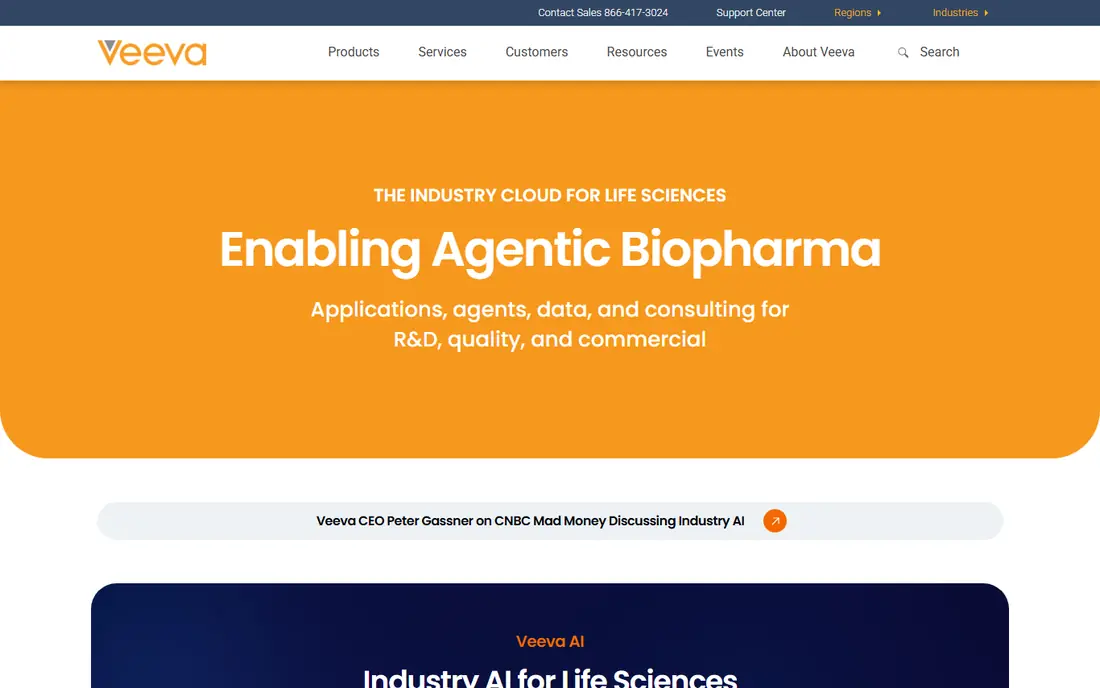
Veeva Vault Clinical brings electronic data capture, clinical trial management, and trial master file tools together on the Veeva Vault platform, so data, site activity, and documents share one system rather than three separate logins. That unity helps large sponsors track study startup, site documents, monitoring visits, and data queries in one place, with audit trails and role-based access built for regulated use.
The trade-off is scale and cost. Vault Clinical is priced by quote, based on study portfolio, users, and modules, and a full rollout needs implementation, migration, and validation work. Smaller teams may find it heavy for a single early-phase study. For a sponsor standardised on Veeva, or a large CRO running many global studies, it is a strong, coherent platform.
- Unified EDC, CTMS, and eTMF on one Vault platform
- Strong document and study startup tools
- Broad life sciences adoption
- Quote-based enterprise pricing
- Implementation and validation take time and staff
Medidata Clinical Cloud, built around Medidata Rave, is the enterprise standard for many large pharma sponsors and global CROs. Rave handles electronic data capture at global scale, while connected modules cover randomisation and trial supply, patient outcomes, monitoring, and safety data. Analytics dashboards track recruitment, site performance, and protocol deviations across a portfolio, which helps operations leaders spot problems early.
Small teams often find the platform complex and costly for a single study, because pricing is quoted per study and organisation, and study builds need experienced data managers. For a large, multi-country Phase II or III programme, Medidata offers depth, scale, and a large trained workforce that few rivals match. If your CRO already runs Rave, staying in that ecosystem usually saves training time.
- Medidata Rave EDC at enterprise scale
- Broad modules for randomisation, outcomes, and monitoring
- Deep analytics
- Quote-based pricing
- Complex setup for small teams

Oracle Clinical One aims to give sponsors one unified platform for study design, data capture, randomisation, and related eClinical work, rather than a patchwork of point tools. It fits organisations already invested in Oracle health and life sciences systems, where integration with safety, CTMS, and related tools reduces duplicate data entry. Global compliance features, audit trails, and validation support suit large, regulated programmes.
As with other enterprise platforms, pricing is quoted, and implementation needs planning, validation, and trained staff. A small biotech running one early study may find it more platform than it needs. For a large sponsor or CRO already on Oracle, Clinical One is a logical, unified shortlist pick.
- Unified eClinical platform for data, randomisation, and safety
- Strong for Oracle estates
- Global compliance support
- Quote-based enterprise pricing
- Rollout needs Oracle implementation expertise
Castor offers a modern, no-code electronic data capture platform that appeals to mid-size sponsors, CROs, and academic-adjacent teams that need a fast study build without a large data management team. Forms, visits, and queries can be built with configuration rather than programming, and the interface is clearer for site staff than many legacy EDC tools. An API-first design helps with integrations, and eConsent options support decentralised and hybrid trials.
Castor also offers a free tier for single-site academic studies within limits, which helps researchers test the platform before a commercial rollout. Commercial pricing is quoted, and very large global programmes may still prefer Medidata or Veeva for depth. For a team that wants speed, clarity, and a modern site experience, Castor is our pick.
- No-code study builds
- Modern interface for sites
- API-first design and eConsent options
- Enterprise features vary by tier
- Pricing is quote-based for commercial studies
Medrio has a long record in early-phase and medical device trials, with an electronic data capture platform that site staff find accessible and that supports offline capture where internet access is patchy. That offline strength matters for site visits, device studies, and locations with unreliable connectivity. The platform is available in many countries, which helps small sponsors running studies across a few sites.
Very large, complex global programmes may need the broader module depth of Medidata or Veeva, and Medrio pricing is quoted rather than published. For a small biotech, device sponsor, or CRO running Phase I or early Phase II work, Medrio offers a practical balance of usability, compliance, and cost.
- Accessible interface for early-phase teams
- Offline data capture
- Strong device and Phase I experience
- Less depth for very large global programmes
- Pricing is quote-based
Viedoc is a cloud-native EDC platform that positions itself for lean and mid-market sponsors, with no-code study design and study builds often completed in a few weeks. Its study-based licensing, without per-seat fees, appeals to sponsors whose study teams grow and shrink across a trial, because adding users does not automatically add licence cost. An eTMF option adds document management for teams that want more than EDC alone.
The ecosystem is smaller than the largest enterprise platforms, so a team with complex integrations should test those connections early. For a sponsor that wants transparent study pricing, fast builds, and a modern EDC without enterprise overhead, Viedoc is a strong pick, especially for Phase II work.
- No-code study design with fast builds
- Study-based licensing without per-seat fees
- ETMF options
- Smaller ecosystem than Medidata or Veeva
- Enterprise integrations need checking
Florence eBinders serves research sites, hospitals, and site networks that need to manage regulatory binders, investigator files, and site documents without paper binders or shared drives. Site staff can store, sign, and share documents with an audit trail, and SiteLink lets sponsors and sites exchange documents without forcing sites to learn each sponsor system. That site focus is its strength, because site burden is a major cause of trial delays.
Florence is not a replacement for sponsor EDC or CTMS, so sponsors still need a data capture platform alongside it. Pricing is quoted by site or network size. For a site, site network, or sponsor that wants to cut site document friction, Florence eBinders is our pick for site operations.
- Site-focused eRegulatory and eISF tools
- SiteLink for sponsor-site document exchange
- Clear audit trails
- Site tool, not a full sponsor EDC
- Pricing is quote-based
OpenClinica has served academic centres and mid-size sponsors for many years, with an EDC platform that supports study design, data capture, and reporting for regulated research. Its open source roots appeal to academic teams that want control and transparency, while commercial editions add support, hosting, and compliance features for sponsors that need them. It suits grant-funded studies where budget discipline matters.
The interface feels older than newer rivals such as Castor, and site training may take a little longer. Hosting, validation, and support options also vary by edition, so check what a quote includes. For an academic centre or mid-size sponsor on a grant budget, OpenClinica remains a credible, cost-conscious pick.
- Open source roots with commercial support
- Flexible study design
- Grant-friendly for academic centres
- Interface feels older than Castor or Viedoc
- Enterprise support and hosting need checking
REDCap, from Vanderbilt University, is the default data capture tool for many academic and nonprofit research teams. It is free to nonprofit institutions that join the REDCap Consortium, and it offers flexible forms, surveys, longitudinal data capture, and reporting that suit investigator-initiated studies. A large academic community means guides, shared instruments, and peer support are easy to find.
REDCap is not a commercial sponsor platform, and it does not replace a full CTMS, eTMF, or enterprise EDC for a large industry trial. It also needs institutional hosting, admin support, and local validation for regulated use. For an academic team, hospital research unit, or nonprofit study, REDCap is our pick for value and flexibility, provided your institution can host and support it.
- Free to nonprofit institutions in the REDCap Consortium
- Flexible surveys and data capture
- Large academic community
- Not a full commercial CTMS or eTMF
- Needs institutional hosting and admin support
How we picked these
We compared official feature pages, pricing pages, and public documentation for clinical operations platforms that are current in 2026. We favoured platforms with clear compliance support, active maintenance, and a track record in real trials, and we included sponsor, CRO, and site tools, because clinical operations spans all three. We did not claim hands-on trial testing. Prices shown as See website mean the vendor quotes per study, site, or organisation, so budget for validation, study build, and training on top of the licence.
How to choose a clinical operations platform
Start with your role and trial size. A large sponsor needs EDC, CTMS, and eTMF depth, while a site needs eRegulatory tools and low burden, and a small biotech needs fast builds and clear pricing. Next, check compliance: 21 CFR Part 11, GCP, GDPR or HIPAA as relevant, audit trails, electronic signatures, and system validation support. Ask for a validation pack and a reference customer in your trial phase.
Run a pilot build with a real protocol section, not a demo form, and test site entry, queries, and a mid-study amendment. Measure how long a site coordinator takes to enter data and resolve a query, because site time drives trial speed. Finally, confirm data export terms, so you can move your trial data if you change vendors later.
Sponsor, CRO, or site: different shortlists
Sponsors should shortlist Veeva, Medidata, Oracle, Castor, and Viedoc for EDC and operations depth. CROs should add Medrio and OpenClinica for flexible, cost-conscious delivery. Sites should shortlist Florence eBinders first, and academic teams should check REDCap before paying for a commercial EDC. A platform that fits one role rarely fits all three equally well.
FAQ
What is the best clinical operations software?
For large sponsors, Veeva Vault Clinical and Medidata Clinical Cloud lead for breadth and scale. For smaller teams, Castor and Viedoc lead for fast builds and clearer pricing. For sites, Florence eBinders leads for regulatory documents, and for academic teams, REDCap leads for value.
What is the difference between EDC, CTMS, and eTMF?
Electronic data capture, or EDC, collects trial data from sites. A clinical trial management system, or CTMS, tracks sites, visits, budgets, and milestones. An electronic trial master file, or eTMF, stores essential trial documents for inspection. Many platforms bundle two or three of these, but they remain distinct jobs.
How much does clinical trial software cost?
Most commercial platforms are quote-based, priced per study, site, or organisation, plus implementation and validation costs. Small studies can cost tens of thousands of dollars, while large global programmes can cost hundreds of thousands or more in year one. Academic tools such as REDCap are free to eligible nonprofit institutions, excluding hosting and admin costs.
Do clinical platforms support FDA and EMA compliance?
Leading platforms support 21 CFR Part 11, GCP, audit trails, and electronic signatures, but compliance also depends on how you configure, validate, and use the system. Ask for validation documentation, data centre certifications, and audit trail examples before you sign.
Can small biotechs use enterprise clinical platforms?
Yes, but they often pay for depth they do not need. Small biotechs usually do better with Castor, Medrio, Viedoc, or a CRO that already runs an enterprise platform, because study builds are faster and overhead is lower. Enterprise platforms make more sense when a portfolio grows to many global studies.
What is the best clinical operations tool for research sites?
Florence eBinders is our pick for sites, because it focuses on regulatory binders, signatures, and sponsor-site document exchange. Sites should also check what sponsor systems they must use for data entry, because site burden comes from the sum of all systems, not just one tool.