5 Best Claims Management Software for 2026, Vetted and Compared
Best claims management software in 2026: 5 contenders with entry costs and free tiers. Price notes and drawbacks come with each one. Updated for 2026.
- Editor's choice
 Waystar
Cloud-based revenue cycle management
Starts atPricing on requestVisit waystar.comFull review - Great alternativeChange Healthcare
Wide healthcare operations and consulting
Starts atPricing on requestVisit changehealthcare.comFull review - Also consider
 Availity
Secure payer-provider information exchange
Starts atPricing on requestVisit availity.comFull review
Direct answer
This list puts Waystar first for cloud-based revenue cycle management. Alternatives: Change Healthcare for wide healthcare operations and consulting, and Availity for secure payer-provider information exchange. Free plan facts and limits for all 5 tools follow. None of these vendors publish plan prices, so pricing is on request for every option.
TL;DR:
- Number one here is Waystar, a fit for cloud-based revenue cycle management.
- Optum is the one to check for integrated health services and analytics.
- A fair warning about Change Healthcare: claims management not the sole focus.
- Pricing across the list, from Waystar to Optum, is by quote only.
Last checked November 2026. Pricing on request: vendors did not publish plan prices when this guide was last checked (November 2026), so ask each vendor for a written quote.
Quick comparison
| Tool | Best for | Starts at | Free plan? | |
|---|---|---|---|---|
| Waystar | Cloud-based revenue cycle management | Pricing on request | Not stated | Visit |
| Change Healthcare | Wide healthcare operations and consulting | Pricing on request | Not stated | Visit |
| Availity | Secure payer-provider information exchange | Pricing on request | Not stated | Visit |
| Epic Resolute Professional Billing | Integrated clinical and billing workflows | Pricing on request | Not stated | Visit |
 Optum | Integrated health services and analytics | Pricing on request | Not stated | Visit |
5 options for claims management software in detail
Choosing claims management software usually comes down to price, fit and limits. This LinkVetted guide sets 5 tools side by side on those three points, with the facts kept short and checkable.

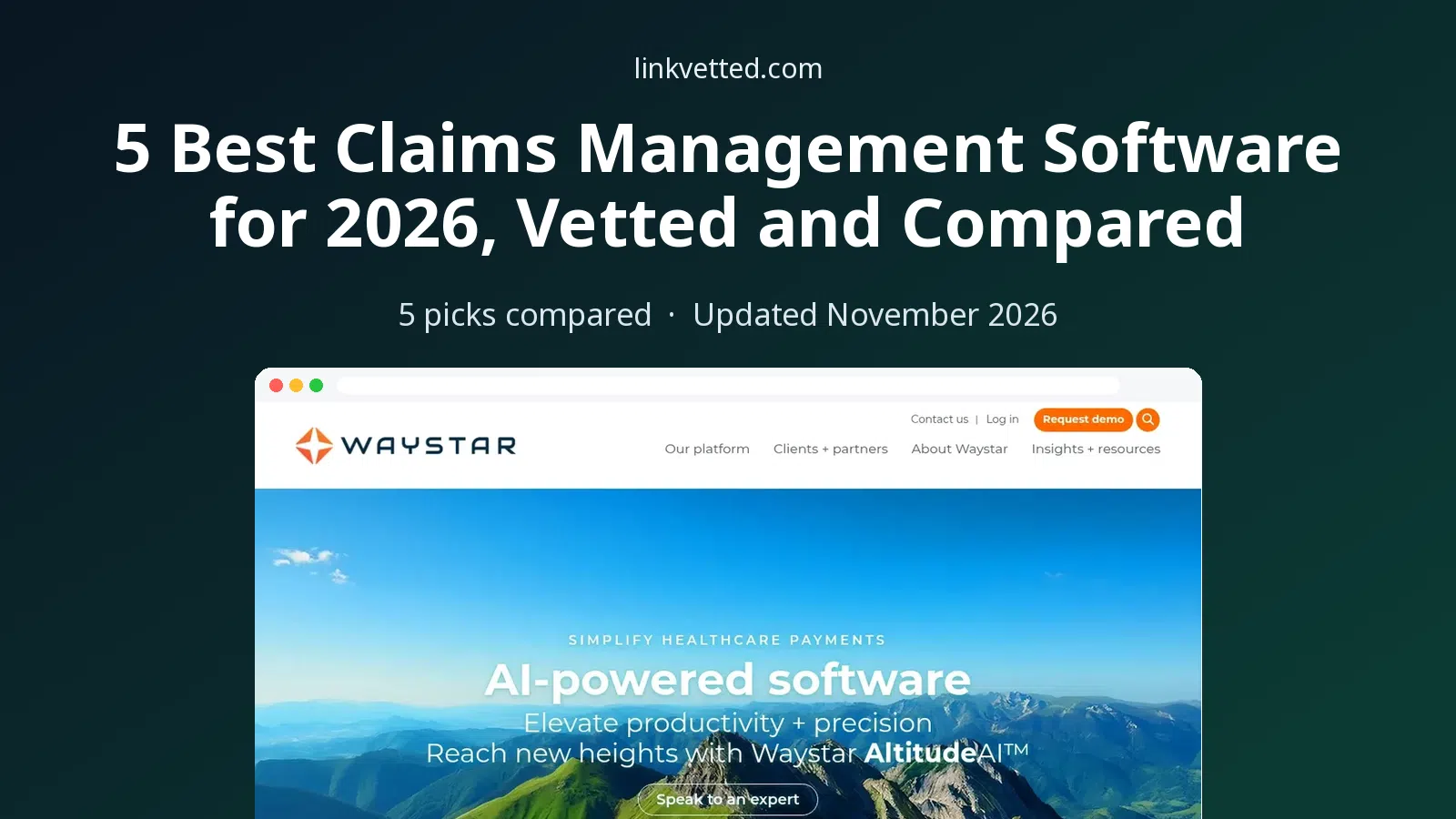
Waystar is a good fit for cloud-based revenue cycle management. Waystar provides cloud-based software that provides end-to-end revenue cycle management solutions, aiming to ease healthcare payments and accelerate financial results.
Points against: May be complicated for small practices.
It is well suited for healthcare organizations looking for a thorough system to handle claims and payments. Check the vendor site for Waystar pricing; none is listed in this comparison. On free options: Not stated.
- Focus on simplifying healthcare payments
- End-to-end revenue cycle coverage
- Needs implementation effort
Change Healthcare
Best for: Wide healthcare operations and consulting
Change Healthcare works best for broad healthcare operations and consulting. The vendor description flags a thorough approach to healthcare options beyond just claims.
Since Change Healthcare gives you a broad array of services, its claims management capabilities may not be as specialized as dedicated claims software. Organizations looking for a standalone claims tool might have to look elsewhere. Check the vendor site for Change Healthcare pricing; none is listed in this comparison. Free options: Not stated.
Where it is weaker: May need integrating several services.
- Supports operations and pharmacy benefits
- Bundles consulting and data options
- Claims management not the sole focus
Think of Availity for secure payer-provider information exchange. It fits organizations that require a dependable conduit for claims and other data between payers and providers.
Also, Availity's focus on network connectivity means it may not offer the deep claims management features some organizations need. No starting price is listed for Availity here; confirm pricing on the vendor site. Free plan details: Not stated.
Where it falls short: May not offer full revenue cycle suite.
- Focus on secure data exchange
- Enables smarter decisions
- Claims management is part of a broader network
Epic Resolute Professional Billing
Best for: Integrated clinical and billing workflows
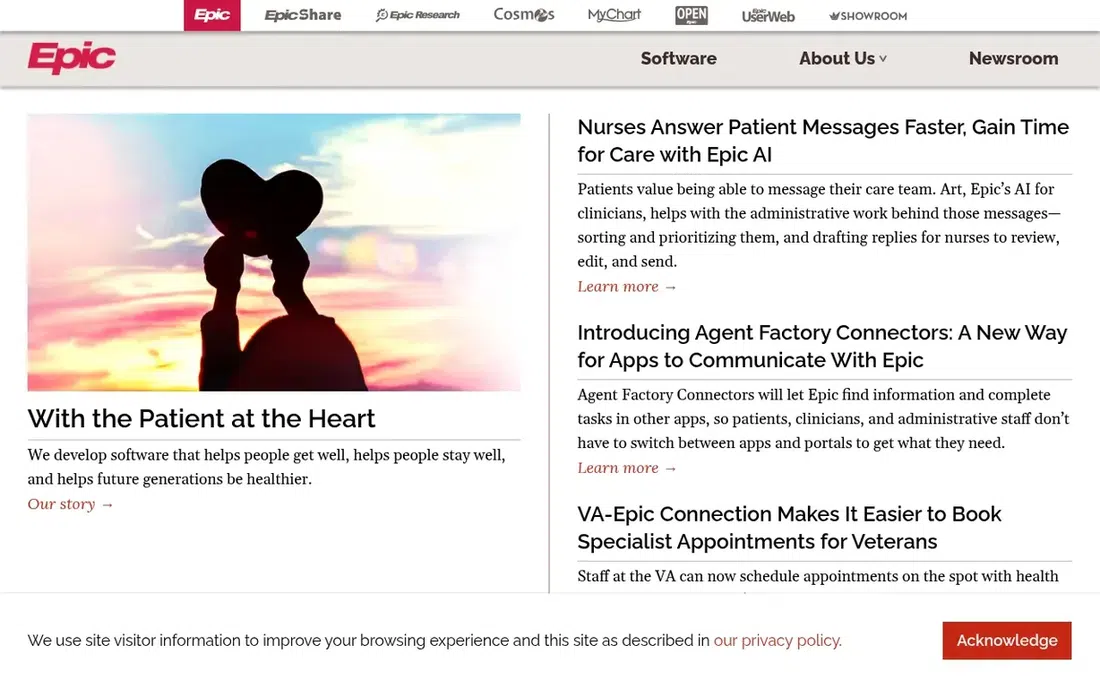
Epic Resolute Professional Billing targets integrated clinical and billing workflows. The vendor states that Epic develops software to help people get well, stay well, and support future generations.
On top of that, consider alternatives if you need a vendor-neutral or light billing system. Worth adding: Epic Resolute Professional Billing is part of Epic's suite of healthcare software, built to help organizations handle professional billing and claims alongside clinical documentation. This comparison lists no price for Epic Resolute Professional Billing; ask the vendor. Trial and free access: Not stated.
Drawbacks to consider: Primarily suited to Epic customers.
- Backed by a long-established vendor
- Tight integration with Epic clinical systems
- Restricted standalone appeal
Optum targets integrated health services and analytics. Optum is committed to making healthcare work better, leading the way to better experiences, better health, and lower costs. It gives you a range of services that can bundle claims management as part of a bigger healthcare operations suite.
Beyond that, if you need a straightforward, focused claims option, other vendors may be more suitable. In practice, smaller practices may find it overkill. Optum shows no starting price here, so confirm the cost on the vendor site. Trial and free access: Not stated.
Limits to weigh: Claims management is one of numerous offerings.
- Wide healthcare services portfolio
- Bundles data and analytics capabilities
- May be complicated to navigate
Selection criteria
LinkVetted looked at what each vendor publishes: pricing, plan limits, feature coverage for claims management software and stated drawbacks. No hands-on testing is claimed. Prices and plan limits come from vendor pages and can change, so confirm them on the vendor site before you buy. Position on the page reflects fit for a typical buyer first, with price clarity and free access breaking ties. Treat it as a guide, not a ruling.
Before you commit
- Confirm the entry price with every vendor: no tool from Waystar to Optum shows a fixed starting price.
- Read the limits listed for Waystar first: may be complicated for small practices.
- Map your must-have features to a specific Epic Resolute Professional Billing plan before you compare prices.
- Check how data leaves Availity: formats, limits and whether exports are available on every plan.
- Test the integrations you rely on with Change Healthcare before committing; some connectors sit on upper tiers.
FAQ
Do these tools publish their prices?
No. None of the tools, from Waystar to Optum, shows a fixed starting price here, so budget time for quotes.
Can I try these options before paying?
Not by default. None of the tools, from Waystar to Optum, lists a free plan or a free trial here, so ask each vendor for a demo before committing.
Is Waystar the right pick for everyone comparing claims management software?
No single tool suits every team. Waystar comes first because it fits cloud-based revenue cycle management, while Change Healthcare suits broad healthcare operations and consulting and Availity suits secure payer-provider information exchange. Match the tool to your own size, budget and workflow before deciding.
Is Availity a full claims management system?
Availity concentrates on secure information exchange between payers and providers, which bundles claims data. It may not offer full internal claims processing, so it is frequently used alongside other systems.
How are the tools for claims management software ordered?
Waystar sits first and Optum last because the order follows typical fit for claims management software, then price clarity and free access. It is a judgement call, so read each profile for fit and limits.
Sources
- https://www.waystar.com
- https://www.changehealthcare.com
- https://www.availity.com
- https://www.epic.com
- https://www.optum.com