The 6 Best Ci/cd Platforms for AI Model Rollouts in 2026, Ranked
Best CI/CD platforms for AI model rollouts in 2026: 6 contenders with entry costs and free tiers. Every pick includes one clear drawback. Quick to scan.
- Editor's choice
 Harness
Unified AI-driven software delivery
Starts atSee websiteVisit harness.ioFull review - Great alternative
 Google Cloud Build
Serverless builds on Google Cloud
Starts atSee websiteVisit cloud.google.comFull review - Also consider
 Jenkins
Self-hosted, configurable automation
Starts atSee websiteVisit jenkins.ioFull review
Direct answer
For unified AI-driven software delivery, Harness is where this list starts. Listed starting prices: CircleCI from $15 a month and GitLab CI/CD from $15 per user per month. Google Cloud Build fits serverless builds on Google Cloud; Jenkins fits self-hosted, configurable automation. All 6 tools are compared below on price, free plan and limits.
TL;DR:
- Harness takes the first slot, best suited to unified AI-driven software delivery.
- A fair warning about Google Cloud Build: most natural for Google Cloud environments.
- 3 of 6 tools offer a free plan: Harness, CircleCI, GitLab CI/CD.
- For unified source and pipeline management, GitLab CI/CD is worth a look.
Last checked November 2026. Prices and plan details were read from the vendors' own pages in November 2026; vendors change plans often, so confirm the current price on the vendor site before you buy.
Quick comparison
| Tool | Best for | Starts at | Free plan? | |
|---|---|---|---|---|
| Harness | Unified AI-driven software delivery | See website | Yes | Visit |
| Google Cloud Build | Serverless builds on Google Cloud | See website | Not stated | Visit |
| Jenkins | Self-hosted, configurable automation | See website | Not stated | Visit |
 GitHub Actions | Teams already hosting code on GitHub | See website | Not stated | Visit |
 CircleCI | Quick validation of frequent changes | $15 a month | Yes | Visit |
 GitLab CI/CD | Unified source and pipeline management | $15 per user per month | Yes | Visit |
CI/CD Platforms for AI Model Rollouts, one by one
This LinkVetted guide covers 6 options for CI/CD platforms for AI model rollouts. Each profile lists a starting price, free plan details, strengths and drawbacks, so you can drop poor fits quickly.
In short, Harness is for unified AI-driven software delivery. Harness describes itself as a unified AI software delivery system that handles the software delivery lifecycle using purpose-built AI agents.
The main drawbacks: Wide scope may exceed what small teams need.
As for the details, teams wanting a light, repository-native pipeline may prefer GitHub Actions. In practice, evaluate Harness when lifecycle-wide coordination and AI-assisted delivery are the priorities instead of a single build step. No starting price is listed for Harness here; confirm pricing on the vendor site. Harness offers a free plan.
- Spans the software delivery lifecycle end to end
- Purpose-built AI agents run the lifecycle
- Adoption needs aligning processes to the product
Google Cloud Build is designed for serverless builds on Google Cloud. Teams wanting a self-managed server for custom environments should look at Jenkins instead.
Pricing for Google Cloud Build is not stated here, so ask the vendor for current figures. Free options: Not stated.
Trade-offs to know: Most natural for Google Cloud environments.
- Consistent and steady automatic builds
- Completely managed serverless CI/CD platform
- Less appealing for teams on other cloud providers
Jenkins was built for self-hosted, configurable automation. Jenkins is an open source automation server that lets developers steadily build, test and deploy software.
Reasons to shortlist it: Widely used by developers worldwide.
The main drawbacks: You run the server and its upkeep. From a buyer's view, since it is self-hosted and extensible, it fits teams that require full control over where pipelines run, including environments close to model training infrastructure or private data. Pricing for Jenkins is not stated here, so ask the vendor for current figures. On free options: Not stated.
- Open source automation server
- Steady build
- Plugin-heavy setups need continuing maintenance
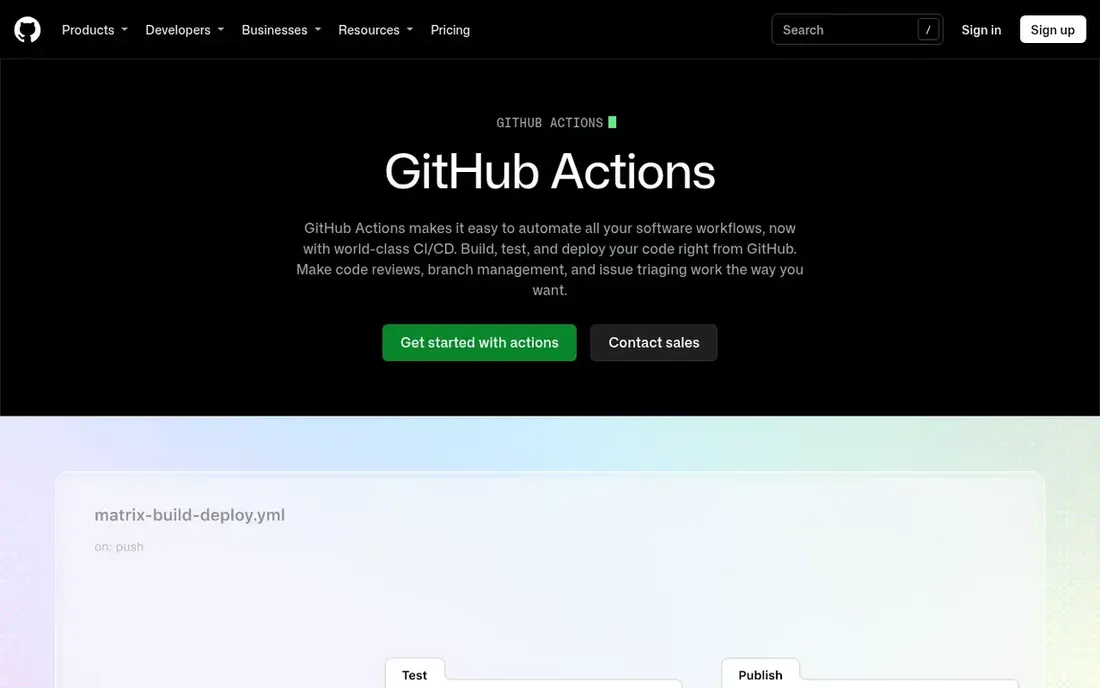
GitHub Actions works best for teams already hosting code on GitHub. GitHub Actions is a CI/CD and automation service from GitHub that lets you build, package, release, update and deploy a project in any language, either on GitHub or on an external system. It also supports agentic workflows and automation.
Since its most solid integration is with GitHub itself, teams working primarily in other source hosts may find the fit less natural. Elaborate rollout pipelines with plenty of approval gates can also grow intricate to maintain. No starting price is listed for GitHub Actions here; confirm pricing on the vendor site. On free options: Not stated.
Limits to weigh: Complicated multi-stage rollouts need careful workflow design.
Reasons to shortlist it: Runs on GitHub or external systems.
- Automations handled without running code yourself
- Release and deploy in any language
- Deepest value is tied to the GitHub ecosystem
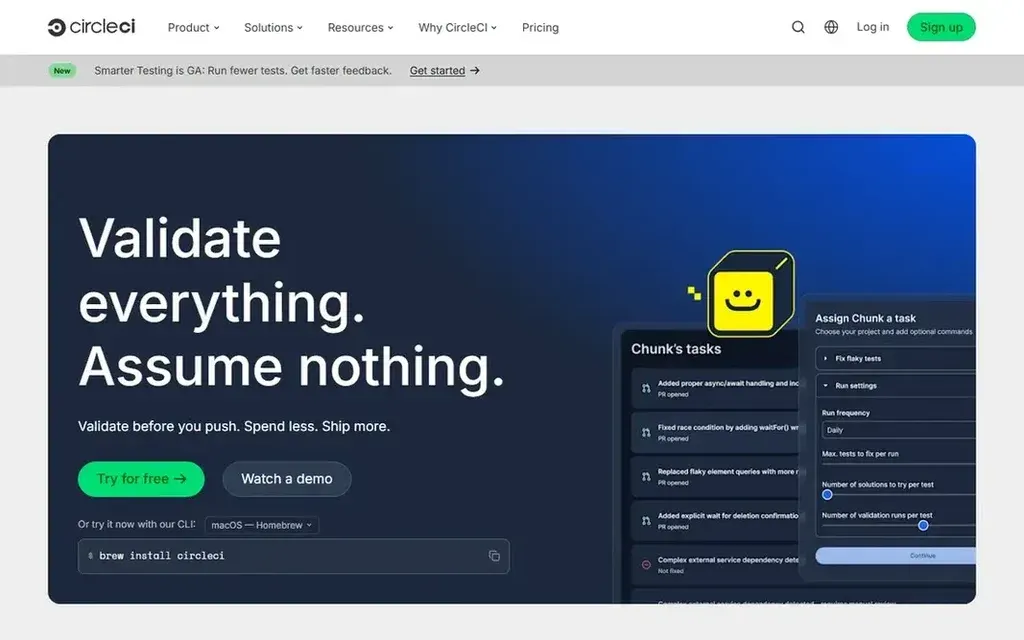
For quick validation of frequent changes, CircleCI is a natural candidate. It is targeted at modern teams that deliver production-ready software at speed, which fits model rollouts where frequent retraining and configuration changes must be validated before release. Its messaging centers on validation and automation instead of on being an all-in-one DevOps suite.
The main drawbacks: Positioning emphasizes speed over deep product breadth.
So teams wanting source hosting and pipelines together may prefer GitLab CI/CD. As for the details, configuration still takes engineering time to get right. For everyday use, evaluate it when rapid, repeatable validation of model artifacts matters more than system breadth. CircleCI pricing: $15 per month. CircleCI includes a free tier.
- Intelligent automation for testing and shipping
- Focus on production-ready delivery
- Pipeline configuration still needs engineering effort
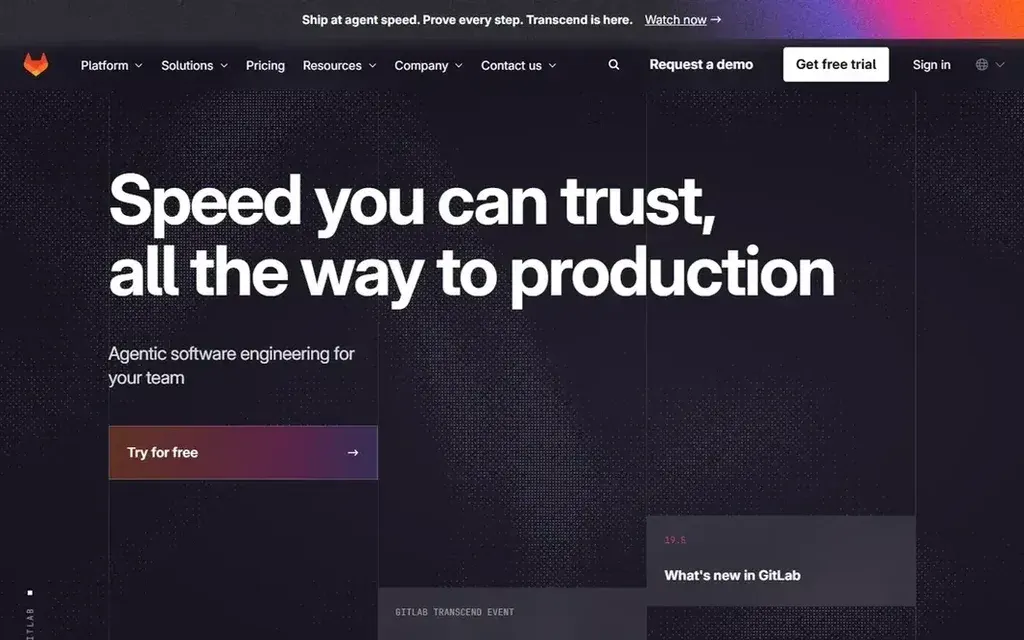
GitLab CI/CD is designed for unified source and pipeline management. Pipelines are defined and managed next to the repositories they serve, which keeps model training code, packaging steps and deployment jobs in one place. On top of that, the product rewards teams that commit to it completely, and those using only its pipeline features may not capture the wider benefit.
Honest limits: Value relies on adopting the wider GitLab product.
In daily use, GitLab CI/CD offers continuous integration and delivery as part of the broader GitLab DevOps lifecycle. As for the details, if your code lives on GitHub, GitHub Actions may be simpler, and if you want a standalone automation server, Jenkins is the more traditional choice. Entry price for GitLab CI/CD: $15 per user per month. GitLab CI/CD has a free plan.
- Wide DevOps lifecycle coverage
- Pipelines sit beside the source code
- Configuration has a ramp-up time for newcomers
What went into this list
The comparison looks at four things: starting price, free access, how well the feature set matches CI/CD platforms for AI model rollouts, and the main limit of each tool. Figures are shown as the vendors publish them. Billing terms, seat minimums and add-ons can change the real cost. Position on the page reflects fit for a typical buyer first, with price clarity and free access breaking ties. Treat it as a guide, not a ruling.
Pre-purchase checklist
- Get a written quote from Harness, Google Cloud Build, Jenkins and GitHub Actions; the list shows no starting price for them.
- Look at free plan limits closely: Harness, CircleCI and GitLab CI/CD have one, and the caps decide whether it is usable for real work.
- Before choosing Harness, weigh its main limit: wide scope may exceed what small teams need.
- Confirm you can export your data from GitLab CI/CD, so leaving later does not mean losing records.
- Involve the people who will use Harness daily; a short pilot beats a long feature checklist.
FAQ
Is Harness the right pick for everyone comparing CI/CD platforms for AI model rollouts?
No single tool suits every team. Harness comes first because it fits unified AI-driven software delivery, while Google Cloud Build suits serverless builds on Google Cloud and Jenkins suits self-hosted, customizable automation. Match the tool to your own size, budget and workflow before deciding.
Is a hosted or self-hosted pipeline better for model deployment?
Hosted services like GitHub Actions and Google Cloud Build cut server upkeep, whereas self-hosted choices like Jenkins provide more control over where pipelines run. In practice, the right choice depends on data locality requirements and how much system engineering capacity you have.
How are the tools for CI/CD platforms for AI model rollouts ordered?
Harness sits first and GitLab CI/CD last because the order follows typical fit for CI/CD platforms for AI model rollouts, then price clarity and free access. It is a judgement call, so read each profile for fit and limits.
Can these systems deploy to clouds other than their own?
Multiple of them state deployment to external systems or any cloud, including GitHub Actions and Azure Pipelines. Confirm the specific target environments you need on each vendor site, since integration depth varies by provider.
What is the cheapest option for CI/CD platforms for AI model rollouts in this list?
On published monthly entry prices, CircleCI is the lowest here at $15 per month. Entry price is only part of the cost, because seats, add-ons and billing terms can change the total.
Can I try these tools before paying?
Often, yes. Harness, CircleCI and GitLab CI/CD have a free plan. Use your own data and a real task during the test, and check what the free tier or trial limits before you rely on it.
Sources
- https://www.harness.io
- https://cloud.google.com/build
- https://www.jenkins.io
- https://github.com/features/actions
- https://circleci.com
- https://about.gitlab.com/stages-devops-lifecycle/continuous-integration