Stable Diffusion Alternatives in 2026: 8 Tools Compared
We review stable diffusion alternatives in this guide: 8 hosted image generators, from Midjourney and Firefly to Flux, Ideogram, Leonardo and Recraft, compared.
- Editor's choice
 Midjourney
Artistic quality
Starts at$10 per monthVisit midjourney.comFull review - Great alternative
 DALL-E 3
Conversational image editing
Starts at$20 per monthVisit openai.comFull review - Also consider
 Adobe Firefly
Commercially safe images
Starts at$9.99 per monthVisit adobe.comFull review
TL;DR:
- Stable Diffusion remains free and open, but most readers want a hosted tool that works without a GPU, driver setup, and model downloads.
- Midjourney leads on artistic quality, Adobe Firefly leads on commercial safety, and Ideogram leads on readable text in images.
- Flux suits developers and teams that want open weights plus hosted APIs, while Leonardo and Recraft suit game art and brand design work.
- Free tiers are useful for testing, but commercial use usually needs a paid plan, so read the licence terms before publishing client work.
Quick comparison
| Tool | Best for | Starts at | Free plan? | |
|---|---|---|---|---|
| Midjourney | Artistic quality | $10 per month | No | Visit |
| DALL-E 3 | Conversational image editing | $20 per month | Yes | Visit |
| Adobe Firefly | Commercially safe images | $9.99 per month | Yes | Visit |
 Flux | Photorealism and APIs | See website | Yes | Visit |
 Ideogram | Text in images | See website | Yes | Visit |
 Leonardo AI | Game and concept art | $10 per month | Yes | Visit |
 Recraft | Brand design and vectors | $10 per month | Yes | Visit |
 Playground AI | Beginners and social content | See website | Yes | Visit |
The best stable diffusion alternatives
We compared official pricing pages, model documentation, and public reviews for hosted image generators that offer a practical alternative to running Stable Diffusion locally. Each tool below works in a browser or app, without local GPU setup.
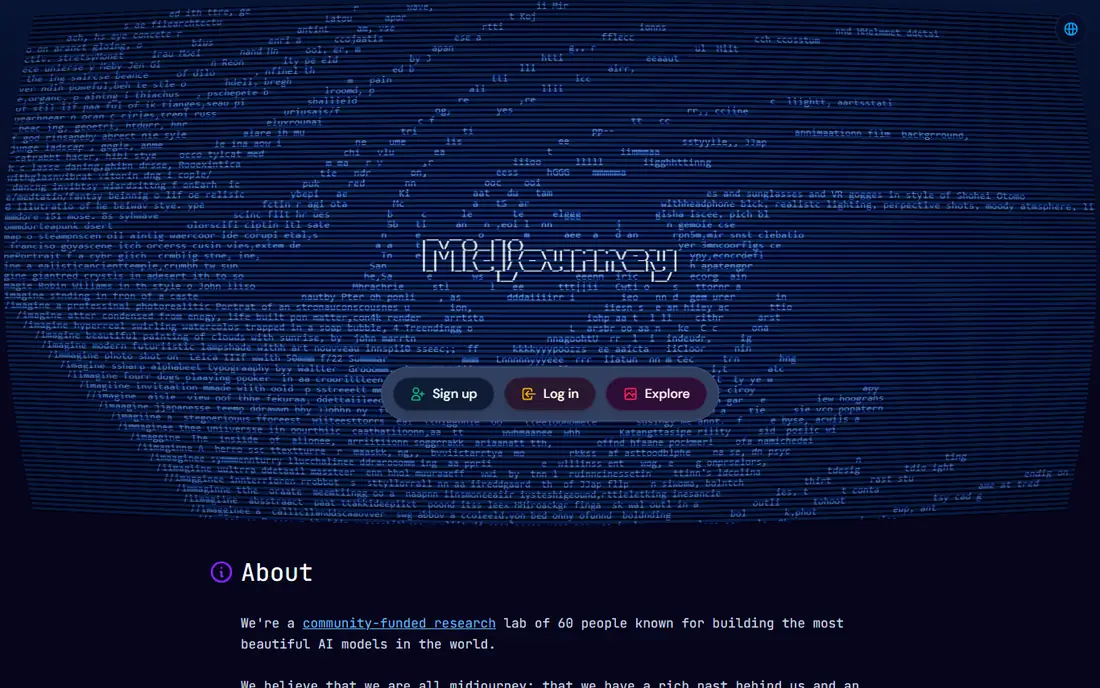
Midjourney remains the tool many creators name first when the look of the image matters most. Its v7 model produces coherent lighting, texture, and composition across illustration, concept art, and editorial styles, and its web editor now rivals the original Discord workflow for most users. Style references and character consistency tools help a series of images feel like they belong together.
The trade-offs are cost and control. There is no free tier, Basic starts at $10 per month, and Fast GPU time is metered, with unlimited Relax generations on Standard and above. Companies above $1 million in annual gross revenue need Pro or Mega for commercial use under its published terms. If you want one subscription and the image itself is the priority, Midjourney is our overall pick.
- Distinctive, polished artistic output
- Web editor plus Discord workflow
- Commercial use on paid plans
- No free plan
- Metered Fast GPU time on lower plans
- Weaker literal prompt following than DALL-E 3
DALL-E 3, accessed through ChatGPT, is the easiest alternative for a reader who already chats with an AI assistant. You describe an image, ask for changes in plain language, and iterate without learning prompt syntax or model settings. It follows detailed briefs closely and renders short text in posters and ads more reliably than many rivals.
Access is the catch. Free ChatGPT tiers offer limited image generation, while steady use needs ChatGPT Plus at $20 per month, and caps can vary when demand is high. The output also tends toward a cleaner, more literal style than Midjourney's artistic range. For beginners, marketers, and anyone who values editing in conversation over fine-grained control, DALL-E 3 is the simplest start.
- Easy conversational edits in ChatGPT
- Strong text rendering and prompt following
- No separate app to learn for ChatGPT users
- Full access needs ChatGPT Plus at $20 per month
- Generation caps vary with demand
- Style range is narrower than Midjourney
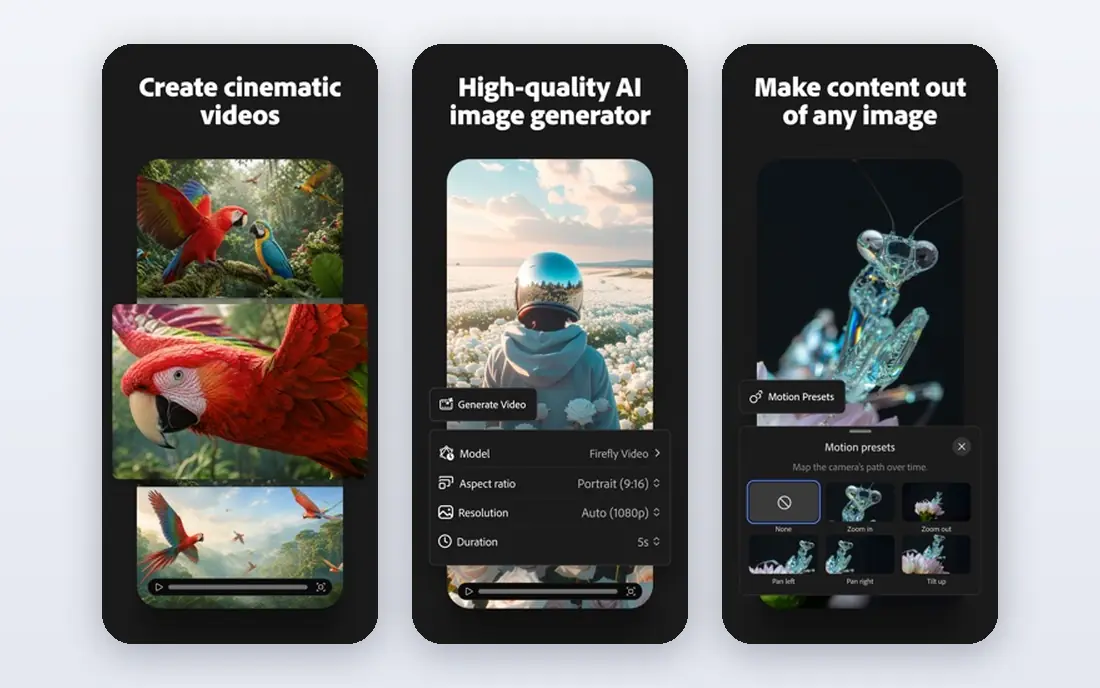
Adobe Firefly is the safest pick for business use, because Adobe trains its models on licensed Adobe Stock content and public domain material, and offers IP indemnification for commercial use on paid plans. That matters when an image will run in an ad, a client deck, or a product page, where an unclear training source can become a legal question. Firefly also sits inside Photoshop, Illustrator, and Express, so designers can generate, edit, and lay out in one workflow.
The cost of that safety is a certain polish that some artists find less adventurous than Midjourney or Flux. Free credits let you test it, while Standard starts at $9.99 per month in public comparisons. For agencies, in-house teams, and anyone publishing client work, Firefly is our commercial pick.
- Trained on licensed content with commercial indemnification on paid plans
- Fits Creative Cloud and Express workflows
- Free limited credits to test
- Artistic range can feel safer and less surprising than Midjourney
- Credit limits apply on lower plans
Flux, from Black Forest Labs, is the closest hosted rival to Stable Diffusion for readers who liked open models but want better photorealism. Its Flux.1 and Flux.2 models render realistic people, products, and scenes with strong prompt fidelity, and open weights allow local use for teams with hardware. Hosted access through APIs and partner apps gives pay-per-use pricing, often quoted per image rather than per month.
That flexibility can confuse budgeting. There is no single Flux subscription page that covers every host, so compare per-image API pricing with a monthly tool before committing to high volume. For developers, product teams, and photographers replacing stock images, Flux offers a strong mix of quality and openness.
- Strong photorealism and prompt fidelity
- Open weights for self-hosting
- Hosted APIs and partner apps for pay-per-use access
- No simple flat monthly SaaS price
- Hosted pricing varies by provider
- Self-hosting still needs a capable GPU
Ideogram built its reputation on one problem that defeated most early generators: putting correct, readable text inside an image. Posters, book covers, social graphics, and logo drafts come out with spelling and layout that usually survive a close look, which saves the editing time other tools demand. Its free tier gives limited slow credits for testing, and paid plans add priority credits.
Outside typography, Ideogram is capable rather than leading. Midjourney still wins on pure artistic style, and Firefly wins on commercial safety for large brands. If your work is mostly posters, ads, and social graphics where the words must be right, Ideogram is the first tool to try.
- Best-in-class readable text for posters, logos, and ads
- Free tier for testing
- Commercial use on paid plans
- Overall artistic range trails Midjourney
- Paid pricing has changed several times, so check the current plan page
Leonardo AI suits game developers, concept artists, and creators who produce assets in volume. Its canvas, model training, and character tools help a team keep a consistent style across characters, environments, and props, and its free tier offers daily tokens so a new user can test real work before paying. Paid plans start at $10 per month in public comparisons, with larger token banks for heavier use.
The learning curve is the token system. Different models and image sizes consume different token amounts, so budgeting takes a few sessions to understand. Quality also depends on picking the right model for the job, which rewards experimentation. For game art and rapid prototyping, Leonardo is a strong, practical alternative to local Stable Diffusion.
- Free daily tokens for testing
- Model training and canvas tools for game assets
- Private generations on paid plans
- Token math takes learning
- Output quality varies by model choice
Recraft stands out where other generators stop: it produces vector images that scale cleanly for logos, icons, and brand illustrations. Designers can set brand colors and styles, generate matching assets, and export files that work in Illustrator or Figma without tracing a raster image. That makes it useful for a brand kit, a pitch deck, or a set of social templates that must stay consistent.
Photorealism is not its strength, so product photos and realistic scenes belong with Flux or Midjourney. Paid plans start at $10 per month in public comparisons, with a free tier for testing. For brand and marketing design, Recraft fills a gap that general image generators leave open.
- Native vector output for logos and icons
- Brand style controls
- Free tier for testing
- Less suited to photorealistic scenes
- Smaller community than Midjourney or Flux
Playground AI is the low-pressure entry point in this list. Its interface uses style presets and plain prompts, so a beginner can make a usable social graphic in minutes, and its free tier allows many images per day for casual testing. It also supports several underlying models, which lets a user compare styles without signing up for multiple services.
Serious artists will notice the ceiling. Detailed, art-directed work still favors Midjourney, and commercial teams will prefer Firefly's licence clarity. For students, hobbyists, and small businesses making social content, Playground AI is an easy, low-cost way to move beyond local Stable Diffusion without a subscription on day one.
- Generous free tier for casual use
- Simple interface with style presets
- Quick social and marketing images
- Output quality trails Midjourney on detailed art
- Paid plans are needed for higher volume and commercial polish
How we picked these
We compared official pricing pages, model documentation, and public reviews for hosted image generators that work in October 2026. We kept only tools that exist and offer a real hosted alternative to local Stable Diffusion, and we balanced artistic quality, commercial safety, text rendering, and developer access. We did not claim hands-on testing we did not do; our comparisons rest on vendor documentation, published pricing, and public reviews.
How to choose the right generator
Start with the job, not the model. If the image must carry readable text, start with Ideogram. If it will run in paid client work, start with Firefly. If the look matters more than anything else, start with Midjourney. If you need an API or open weights, start with Flux. That single decision narrows eight tools to one or two, and a free tier test will usually settle the rest.
Check the licence before you publish
Free tiers often restrict commercial use or keep generations public, while paid plans usually grant commercial rights with conditions. Read the current terms for the plan you will actually buy, not the marketing summary, and keep a note of the plan name and date. For client work, Firefly's indemnification and Midjourney's revenue-based commercial terms deserve a close read.
Watch credit math
Some tools charge per image, some per credit, and some per GPU minute, and those units are not comparable at a glance. Run the same ten prompts on two shortlisted tools, count what each one costs, and multiply by your monthly volume. A tool that looks cheap per image can become expensive when you regenerate often, and a subscription with Relax or unlimited slow modes can win for high-volume testing.
FAQ
What is the best stable diffusion alternative?
There is no single winner, because the best pick depends on the job. Midjourney leads on artistic quality, Adobe Firefly leads on commercial safety, Ideogram leads on text in images, and Flux leads on photorealism with open weights. For most readers, we suggest testing Midjourney and Firefly first, since they cover art and business use well.
Can I use these tools for free?
Yes, with limits. Firefly, Ideogram, Leonardo, Recraft, Flux through partner apps, Playground, and DALL-E 3 through free ChatGPT tiers all offer free or limited generation. Midjourney has no free plan. Free tiers usually limit volume, speed, or commercial rights, so check terms before publishing work.
Are AI images safe for commercial use?
Usually yes on paid plans, but terms vary by vendor and plan. Adobe Firefly offers IP indemnification for commercial use on paid plans, while other tools grant commercial rights with conditions such as revenue limits or plan level. Read the licence for the exact plan you buy, and keep records of the terms at purchase time.
Do I still need a GPU for these alternatives?
No, for hosted tools. Midjourney, Firefly, Ideogram, Leonardo, Recraft, Playground, and hosted Flux all run on vendor servers, so a normal laptop and browser are enough. You only need a GPU if you choose to self-host Flux or Stable Diffusion weights locally.
Is Stable Diffusion itself still available?
Yes. Stable Diffusion remains available as open models that can run locally, and many hosted tools in this list grew out of that ecosystem. The alternatives here suit readers who want hosted convenience, support, and commercial terms without managing models, drivers, and GPU hardware themselves.