Best Certificate Lifecycle Management Software in 2026: 8 Tools Compared
We compared the best certificate lifecycle management software for 2026, covering discovery, automation, ACME, and renewal for TLS and PKI teams today.
- Editor's choice
 DigiCert Trust Lifecycle Manager
Premium CA plus management
Starts atSee websiteVisit digicert.comFull review - Great alternative
 Sectigo Certificate Manager
Value CA plus multi-CA management
Starts atSee websiteVisit sectigo.comFull review - Also consider
 Keyfactor Command
Enterprise PKI and machine identity
Starts atSee websiteVisit keyfactor.comFull review
TL;DR:
- Certificate automation is now essential, since public TLS lifetimes are shortening and manual renewal cannot keep pace.
- Start with discovery, because most teams find more certificates, owners, and expiry dates than they expected.
- CA-neutral platforms suit multi-CA estates, while CA-linked platforms suit teams that buy most certificates from one provider.
- ACME support, deployment automation, and change alerts matter more than a pretty inventory list.
- Test renewal on low-risk systems first, then expand to load balancers, cloud services, and internal PKI.
Quick comparison
| Tool | Best for | Starts at | Free plan? | |
|---|---|---|---|---|
| DigiCert Trust Lifecycle Manager | Premium CA plus management | See website | No | Visit |
| Sectigo Certificate Manager | Value CA plus multi-CA management | See website | Free trial | Visit |
| Keyfactor Command | Enterprise PKI and machine identity | See website | Free trial | Visit |
 Venafi TLS Protect | Large multi-CA TLS governance | See website | Free trial | Visit |
 AppViewX | Device and certificate deployment | See website | No | Visit |
 Entrust | High-assurance PKI programs | See website | No | Visit |
 GlobalSign Atlas | High-volume and European estates | See website | No | Visit |
 AWS Certificate Manager | AWS-integrated services | Free | Yes | Visit |
The best certificate lifecycle management software
These tools discover, issue, renew, and deploy certificates, and help teams avoid outages from expired certificates. We compared official feature pages, pricing pages, and public documentation.

DigiCert Trust Lifecycle Manager suits teams that already buy DigiCert certificates and want lifecycle management from the same provider. It covers discovery, issuance, renewal, and deployment for public and private certificates, with policy controls for key types, lifetimes, and approved issuers. That single-provider model simplifies support and billing for many enterprises.
Pricing is premium, and teams that use several CAs may prefer a neutral platform. DigiCert uses seat-based subscription tiers in its newer model, so teams should ask how seats map to servers, sites, and users in their estate. For DigiCert-centric teams, it is a coherent choice.
- Public and private PKI under one policy layer
- Strong CA reputation
- Discovery, automation, and deployment tools
- Premium pricing
- Best value when DigiCert is the main CA
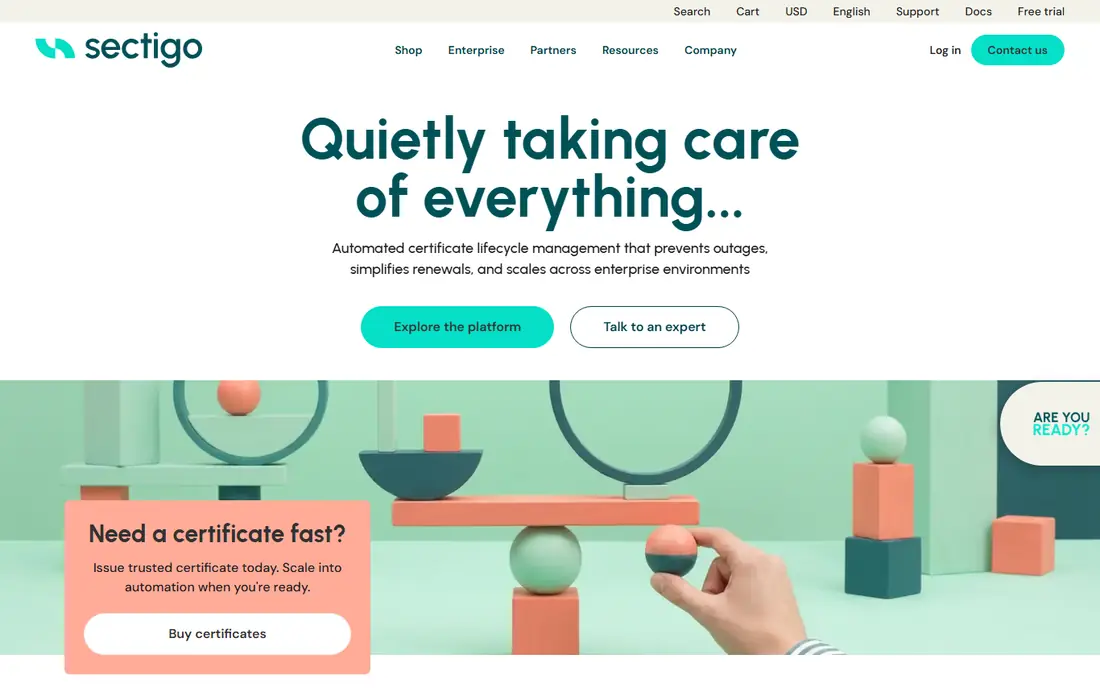
Sectigo Certificate Manager suits teams that want solid lifecycle management without DigiCert-level pricing. It is cloud-native, supports certificates from multiple CAs, and offers ACME automation for renewal and deployment. Sectigo certificate prices are often lower than DigiCert for comparable types, which helps large estates.
Platform pricing is not fully published, so teams should request a quote that separates certificate costs from platform fees. A 30-day trial helps test discovery and automation before committing. For value-focused teams with mixed CA estates, Sectigo is a strong pick.
- Cloud-native and CA-agnostic management
- Competitive certificate pricing
- Strong ACME automation
- Platform pricing is not fully public
- Enterprise features vary by tier
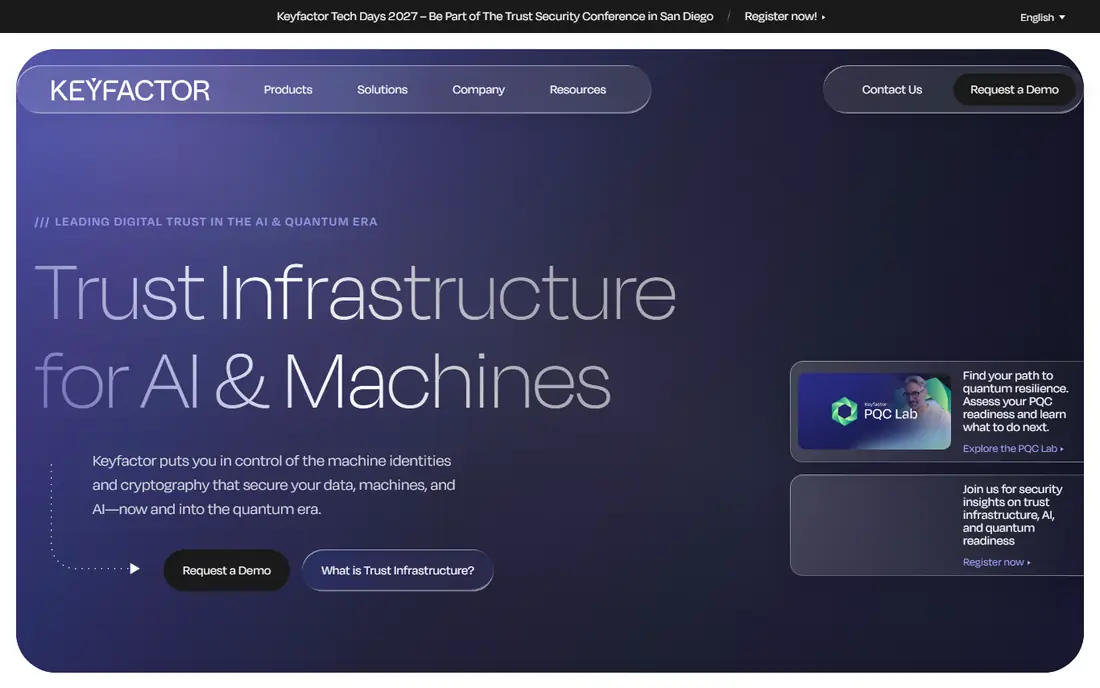
Keyfactor Command targets enterprises with large, complex certificate estates, including public TLS, private PKI, code signing, and machine identities. It discovers certificates across networks, clouds, and endpoints, applies policy, automates renewal and deployment, and integrates with major CAs and internal certificate authorities. That breadth suits teams that must govern every machine identity, not just public websites.
Implementation takes planning, and pricing is quote-based, so small teams will find it heavy. For large enterprises, especially those with private PKI and strict audit needs, Keyfactor offers depth that simpler tools do not match.
- Discovery plus lifecycle orchestration at scale
- PKI and machine identity in one platform
- Strong enterprise integrations
- Enterprise pricing and implementation effort
- More than small estates need
Venafi TLS Protect, now part of CyberArk, is a neutral control plane for TLS certificates across many CAs and platforms. It discovers certificates, enforces policy, automates renewal and deployment, and gives leaders a central view of risk and compliance. That neutrality matters for multinationals that cannot standardize on one CA.
Pricing is not public, and large rollouts need careful planning for discovery, ownership, and deployment targets. Teams should also note that Venafi and CyberArk certificate products are now sold under the same group, so quotes should clarify which product and tier is offered. For large multi-CA estates, Venafi remains a leading choice.
- Central policy control for TLS machine identities
- Multi-CA support
- Strong enterprise governance and reporting
- Pricing is not public
- Implementation needs planning for large estates
AppViewX suits enterprises where deployment is the hard part, not just renewal. It automates certificate lifecycle tasks across load balancers, firewalls, servers, and cloud services, with workflows for approval, deployment, and rollback. That reach helps teams where a renewed certificate that never reaches the load balancer still causes an outage.
Buying is demo-led and pricing is quote-based, so teams should ask for a quote tied to their device and certificate counts. Smaller estates may find a CA-linked platform simpler. For device-heavy enterprises, AppViewX deployment depth is a real advantage.
- Deep deployment reach across devices and load balancers
- Automation for certificate and key workflows
- Enterprise integrations
- Pricing is quote-based
- Demo-led buying process
Entrust suits regulated teams that need high-assurance PKI, such as government, finance, and healthcare, where key ceremonies, hardware security modules, and audit trails matter. Its certificate and PKI products support public and private certificates with strong policy controls, and its history in identity and security helps in compliance reviews.
Setup for high-assurance programs takes time, and pricing is quote-based. Teams that only need basic TLS automation will find simpler tools faster to deploy. For programs where assurance and audit matter most, Entrust is a serious option.
- High-assurance PKI and certificate services
- Hardware-backed key protection options
- Strong for regulated industries
- Pricing is quote-based
- High-assurance setup takes time and expertise
GlobalSign Atlas suits teams with high certificate volumes, especially in Europe, that want API-driven issuance and management from a major CA. It supports ACME automation, bulk issuance, and reporting, with volume pricing that can suit large website and device estates. European data and support options also help some regulated teams.
It is CA-linked rather than fully neutral, so multi-CA estates should check how it handles certificates from other providers. Pricing is volume-based and quote-led. For GlobalSign-centric, high-volume estates, Atlas is a practical choice.
- Volume certificate management with API automation
- Strong European presence
- ACME support
- Pricing is volume-based and quote-led
- Less of a neutral multi-CA platform than Keyfactor or Venafi
AWS Certificate Manager, or ACM, suits teams that run most workloads on AWS and use integrated services such as load balancers and CloudFront. Public certificates for those services are provided at no extra cost, with automatic renewal, which removes the most common expiry risk for AWS-hosted sites. Private CA options exist for internal certificates, with separate pricing.
ACM is not a full lifecycle platform for on-premises, multi-cloud, or device estates, and exported certificates and private CA use have costs. Teams with mixed estates should pair ACM with a broader CLM tool. For AWS-first teams, ACM is the obvious starting point, and it is free for integrated use.
- No cost for certificates used with integrated AWS services
- Automatic renewal for supported services
- Simple for AWS teams
- Limited outside AWS
- Private CA and export options cost extra
- Not a full multi-platform CLM
How we picked these
We compared official product pages, pricing pages, and documentation for certificate lifecycle tools still sold in October 2026. We favored tools with discovery, ACME automation, deployment support, and policy controls, and we wrote See website where pricing was not published rather than repeating third-party estimates. Free ACME options such as Let's Encrypt are useful for pilots, but they are not full enterprise CLM platforms.
How to choose a certificate lifecycle tool
Start with the shape of your estate, since that decides the right architecture.
Map your estate first
Run discovery, or ask vendors to run it in a trial, and count public, private, cloud, and device certificates, plus their owners and expiry dates. A team with one CA and simple websites needs a different tool from a multinational with several CAs, internal PKI, Kubernetes, and IoT devices.
Test renewal and deployment together
Renewal alone is not enough. Test the full path from renewal to deployment on a load balancer, a cloud service, and an internal server, and check alerts when deployment fails. A tool that renews well but deploys poorly will still cause outages.
Plan for shorter lifetimes
Public TLS lifetimes are stepping down toward 47 days by 2029, so manual renewal will become impossible at scale. Choose a tool with ACME automation everywhere it matters now, and prove weekly rotation on low-risk systems before the deadline pressure grows.
FAQ
What is certificate lifecycle management software?
It is software that discovers certificates, tracks owners and expiry dates, issues and renews certificates, and deploys them to servers, load balancers, and devices. Good tools automate renewal and deployment, enforce policy, and alert teams before expiry causes an outage.
Why do certificates expire so often now?
Public TLS certificate lifetimes are getting shorter for security reasons, with a move toward 47-day maximums by 2029. Shorter lifetimes reduce the risk from a compromised key, but they make manual renewal impractical, so automation is now essential.
What is ACME?
ACME is an automated protocol for issuing and renewing certificates, used by Let's Encrypt and many enterprise tools. It lets servers request and renew certificates without manual steps, which is the foundation for handling short lifetimes at scale.
Can AWS Certificate Manager replace a CLM platform?
For AWS-only workloads using integrated services, often yes, since ACM renews public certificates automatically at no extra cost. For mixed estates with on-premises, multi-cloud, and device certificates, a broader CLM platform such as Keyfactor, Venafi, or DigiCert is usually still needed.
How do I start without a large purchase?
Start with discovery and ACME automation on low-risk systems, using free ACME certificates or a trial of a CLM platform. Prove automated renewal and deployment on a few systems, then expand to the full estate with a funded plan.