Best Brokerage Platforms for Beginner Investors in 2026: 8 Platforms Compared
Compare the best brokerage platforms for beginner investors in 2026, from $0 commissions and fractional shares to education, IRAs, and easy mobile apps.
- Editor's choice
 Fidelity
Best overall for beginners
Starts at$0 commissionVisit fidelity.comFull review - Great alternative
 Charles Schwab
Education and support
Starts at$0 commissionVisit schwab.comFull review - Also consider
 Vanguard
Low-cost long-term funds
Starts at$0 commissionVisit vanguard.comFull review
TL;DR:
- Fidelity and Charles Schwab lead for beginners who want education, retirement accounts, and strong support alongside $0 stock and ETF commissions.
- Robinhood, Webull, and SoFi Invest suit beginners who want a simple mobile start, fractional shares, and low minimums.
- Vanguard and E*TRADE suit long-term fund investors who want low-cost index funds and solid research tools.
- This is not financial advice. Investing carries risk, including loss of principal, so start small, diversify, and check fees before you trade.
Quick comparison
| Tool | Best for | Starts at | Free plan? | |
|---|---|---|---|---|
| Fidelity | Best overall for beginners | $0 commission | Yes | Visit |
| Charles Schwab | Education and support | $0 commission | Yes | Visit |
| Vanguard | Low-cost long-term funds | $0 commission | Yes | Visit |
 Robinhood | Simple mobile investing | $0 commission | Yes | Visit |
 E*TRADE | Research and education | $0 commission | Yes | Visit |
 Webull | Paper trading and learning | $0 commission | Yes | Visit |
 SoFi Invest | Simple plus automated investing | $0 commission | Yes | Visit |
 Merrill Edge | Bank-linked investing | $0 commission | Yes | Visit |
The best brokerage platforms for beginner investors
A good beginner brokerage should make the first account, first deposit, and first investment clear, without pushing frequent trading. We compared official fee pages, account features, and education tools, favoring $0 stock and ETF commissions, fractional shares, retirement accounts, and beginner guidance. This article is educational only and is not financial advice.
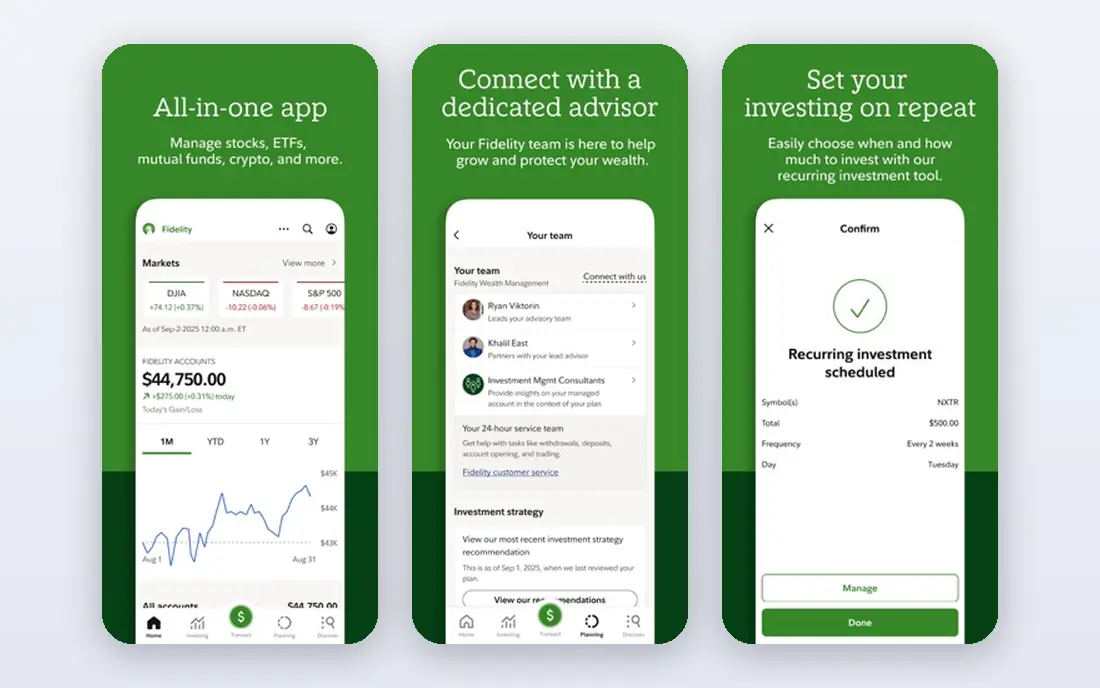
Fidelity is our pick for most beginners because it combines low cost with depth. You can open a taxable account or an IRA with no account minimum in many cases, buy fractional shares, and access a large library of articles, videos, and planning tools. Customer support is widely regarded as strong, which matters when you have a first-time question about funding, taxes, or account types.
The breadth can feel busy, since Fidelity serves beginners and active traders in the same app. Start with the basic trade ticket, a broad index fund or ETF if that fits your plan, and the education hub, then explore advanced tools only as your confidence grows.
- $0 online stock and ETF commissions
- Fractional shares from $1
- Strong education and retirement accounts
- App and website offer many features, which can feel busy at first
- Some advanced tools take time to learn
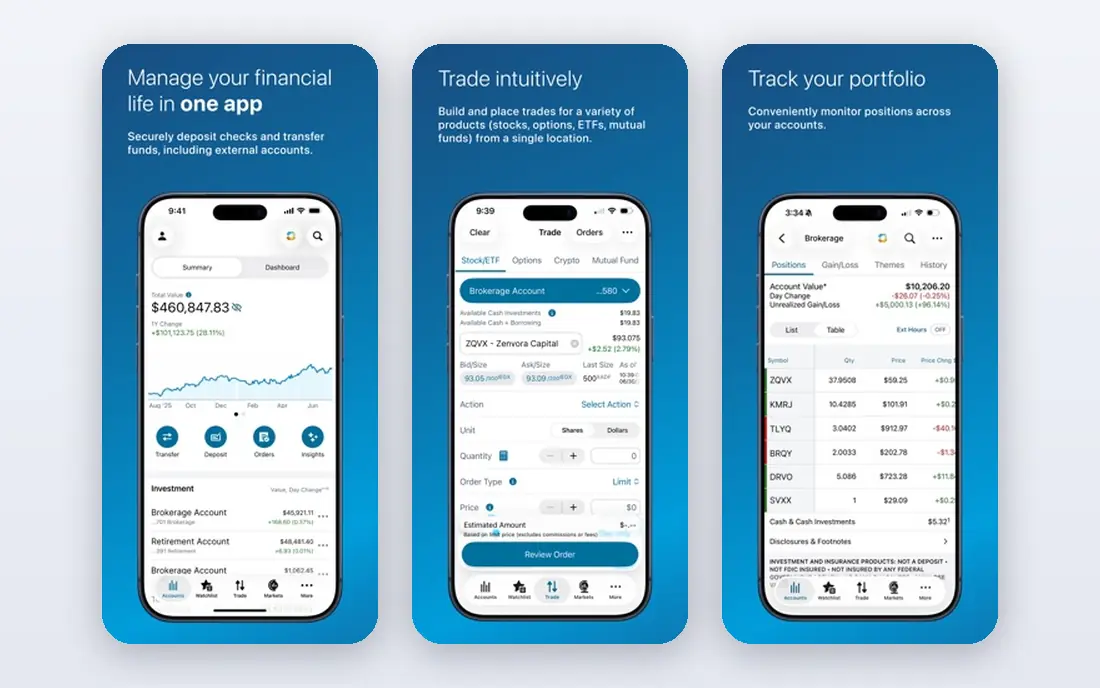
Charles Schwab is a close alternative to Fidelity for beginners who value guidance. It offers $0 commissions on online listed stocks and ETFs, fractional shares through Schwab Stock Slices, retirement accounts, and a large education library. Phone and branch support give new investors a human option when online help is not enough.
Schwab also offers thinkorswim for active traders, which can look complex next to the main app. Beginners can ignore that platform at first and use the standard Schwab app for simple investing. If in-person help matters to you, check branch availability near you.
- $0 online listed stock and ETF commissions
- Strong education
- Branch and phone support options
- Platform range can feel complex
- Some tools suit more experienced investors
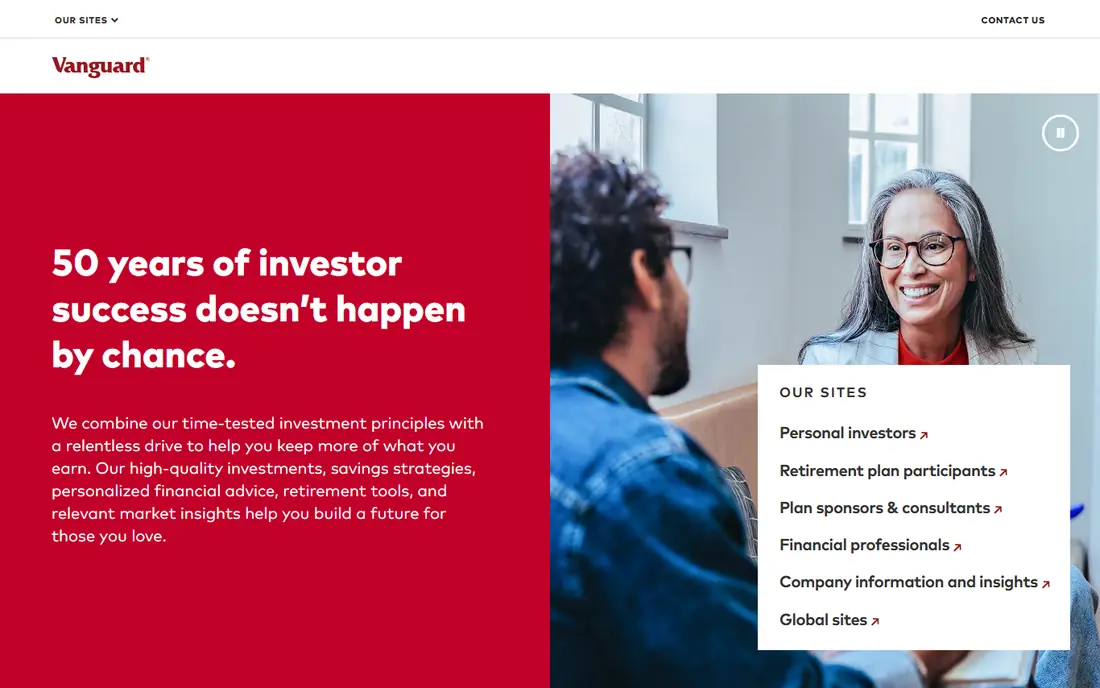
Vanguard suits beginners with a long-term, fund-based plan. It is known for low-cost index funds and ETFs, retirement accounts, and a focus on keeping costs low over decades. For a beginner who plans to invest regularly in broad funds and hold for years, Vanguard keeps the process simple and cost-aware.
The app is less polished than Fidelity, Schwab, or Robinhood, and it is not built for frequent trading or advanced charting. If your plan is steady, diversified fund investing, those limits may not matter, and low fund costs can matter more over time.
- Low-cost index funds and ETFs
- $0 online stock and ETF commissions
- Strong retirement focus
- App and interface feel plainer than rivals
- Active trading tools are limited
Robinhood remains the simplest mobile start for many beginners. The app makes account opening, funding, fractional share purchases, and recurring investments straightforward, with $0 commissions on stocks and ETFs. For a beginner investing small amounts regularly, that ease lowers the barrier to starting.
The trade-off is depth. Research, retirement planning, and education tools are lighter than Fidelity or Schwab, and the simple interface can make trading feel like a game. Set a plan, use recurring investments for long-term goals, and avoid trading on impulse or borrowed money.
- Very simple mobile app
- $0 stock and ETF commissions
- Fractional shares and recurring investments
- Research and education are lighter than Fidelity or Schwab
- Simple design can encourage frequent trading
E*TRADE, from Morgan Stanley, offers $0 commissions on online stocks and ETFs, fractional shares, retirement accounts, and a solid research library. Its charting, screeners, and education content help beginners learn how to research a fund or stock before buying. Webinars and articles cover basics as well as more advanced topics.
ETRADE offers more than one platform, including Power ETRADE, which can confuse a first-time user. Start with the main app and basic research tools, and move to advanced platforms only if you need them later.
- $0 online stock and ETF commissions
- Strong research and charting
- Education webinars and articles
- Multiple platforms can confuse new users
- Some features suit active traders more than beginners
Webull suits beginners who want to learn active investing with practice first. Paper trading lets you test ideas with virtual money before risking real funds, while charts, news, and community features support research. Commissions on US-listed stocks and ETFs are $0, and fractional shares help small accounts start.
Webull is less focused on simple retirement planning than Fidelity, Schwab, or Vanguard, so beginners with a fund-based retirement goal may prefer those platforms. Use paper trading to learn order types and risk, then start small with real money only when you understand the risks.
- $0 commissions on US stocks and ETFs
- Free paper trading
- Detailed charts and data
- Less suited to simple retirement fund plans
- Research depth varies by topic
SoFi Invest suits beginners who want a simple app plus an automated option. You can choose self-directed investing with fractional shares, or automated investing where SoFi builds and rebalances a portfolio based on your goals and risk level. That choice helps beginners who do not want to pick individual stocks at first.
Research tools are lighter than Fidelity or Schwab, and some account features and fees differ by product, so read the current fee page before opening an account. For a beginner who wants investing alongside banking and other SoFi services, the combined app is convenient.
- $0 stock commissions
- Fractional investing from $5
- Self-directed and automated options in one app
- Research tools are lighter than specialist brokers
- Some asset types carry separate fees
Merrill Edge suits Bank of America customers who want investing linked to banking. You can view bank and investment accounts together, use $0 online stock and ETF commissions, and access research, guidance, and retirement planning tools. That link simplifies funding and money movement for existing bank customers.
Non-Bank of America customers still get a solid brokerage, but the integration benefit is smaller. The interface feels more traditional than Robinhood or SoFi, which may suit beginners who prefer a bank-style platform over a mobile-first design.
- $0 online stock and ETF commissions
- Bank of America account links
- Solid research and guidance
- Best value for Bank of America customers
- Interface can feel traditional
How we picked these
We compared official fee schedules, account features, and education pages for US brokerages open to beginners. We favored $0 online stock and ETF commissions, no or low account minimums, fractional shares, retirement accounts, and clear beginner education. We excluded brokers aimed only at professional traders and platforms without US retail account access. This article is educational only and is not financial advice; trading and investing carry risk, including possible loss.
How to start as a beginner
Open one account, fund it with an amount you can afford to leave invested, and start with a diversified fund or ETF if that fits your goals. Use recurring investments to build a habit, keep costs low, and avoid margin, options, and high-risk borrowed-money products until you fully understand their risks.
Accounts, fees, and risk
Compare taxable accounts and IRAs, since tax treatment differs. Check commissions, fund expense ratios, account fees, and transfer fees on the official fee page, not only the headline $0 commission. Remember that $0 commission does not mean $0 risk, and past performance does not predict future results.
Learning before trading more
Use paper trading, education hubs, and small positions to learn order types, diversification, and risk. Avoid copying trades from social media without research, and be wary of anyone promising guaranteed returns. A slow, steady plan usually serves beginners better than frequent trading.
FAQ
What is the best brokerage platform for beginner investors?
Fidelity leads for most beginners, with Schwab close behind for education and support. Robinhood and SoFi suit simple mobile starts, while Vanguard suits long-term fund investors.
How much money do I need to start investing?
Many brokers in this guide have no account minimum and offer fractional shares from $1 to $5, so you can start small. Check the broker fee page, since minimums and fractional rules differ by product.
Are $0 commission trades really free?
Online stock and ETF commissions are $0 at the brokers in this guide, but fund expense ratios, options contract fees, margin interest, and other service fees can still apply. Read the full fee schedule before trading.
Should a beginner choose a taxable account or an IRA?
A taxable account offers flexibility, while an IRA offers tax advantages with contribution limits and withdrawal rules. Many beginners open both over time, starting with the account that fits their goal and tax situation.
Is investing safe for beginners?
Investing carries risk, including loss of principal, and account protection through SIPC covers broker failure up to limits, not market losses. Diversification, low costs, and a long horizon reduce risk, but do not remove it.
Can beginners use paper trading first?
Yes, Webull and other platforms offer paper trading with virtual money. Paper trading helps you learn order types and market moves without risking real funds, though it does not fully reproduce the emotions of real investing.