Best Book Analysis Software for Authors in 2026: 8 Tools Compared
We compared book analysis software for authors, from whole-manuscript reports to scene structure and prose checks, with prices and honest limits for revision.
- Editor's choice
 ProWritingAid
Broad manuscript editing and reports
Starts at$30 per monthVisit prowritingaid.comFull review - Great alternative
 AutoCrit
Fiction-specific prose analysis
Starts at$30 per monthVisit autocrit.comFull review - Also consider
 Fictionary
Scene-by-scene story structure
Starts at$19 per monthVisit fictionary.coFull review
TL;DR:
- ProWritingAid is our broadest pick, because it combines grammar, style and whole-manuscript reports in one tool that works in Word, Google Docs and Scrivener.
- AutoCrit and Marlowe focus more narrowly on fiction, with genre benchmarks and story-level reports that general grammar checkers do not offer.
- Fictionary is the strongest choice for scene-level structure, since it scores each scene for plot, character and setting rather than only polishing sentences.
- Hemingway Editor and Marlowe Basic give useful free starting points, so you can spot patterns before paying for a full report.
- No software replaces beta readers or a human editor, because tools measure patterns and cannot judge whether a story moves a reader.
Quick comparison
| Tool | Best for | Starts at | Free plan? | |
|---|---|---|---|---|
| ProWritingAid | Broad manuscript editing and reports | $30 per month | Yes | Visit |
| AutoCrit | Fiction-specific prose analysis | $30 per month | Yes | Visit |
| Fictionary | Scene-by-scene story structure | $19 per month | Free trial (7 days) | Visit |
 Marlowe | Whole-book developmental report | $29.95 per report | Yes | Visit |
 Hemingway Editor | Readability and tight prose | Free | Yes | Visit |
 Grammarly | Everyday grammar across apps | $30 per month | Yes | Visit |
 Plottr | Plotting and story organisation | See website | No | Visit |
 Scrivener | Organising and analysing a long manuscript | See website | No | Visit |
The best book analysis software for authors
Book analysis software does a job that a spellchecker cannot. It reads a whole draft, or a large part of it, and shows patterns in pacing, repetition, dialogue, scene structure and readability. We compared official pricing pages, report lists and manuscript limits to find tools that give authors useful revision guidance rather than a long list of small fixes.
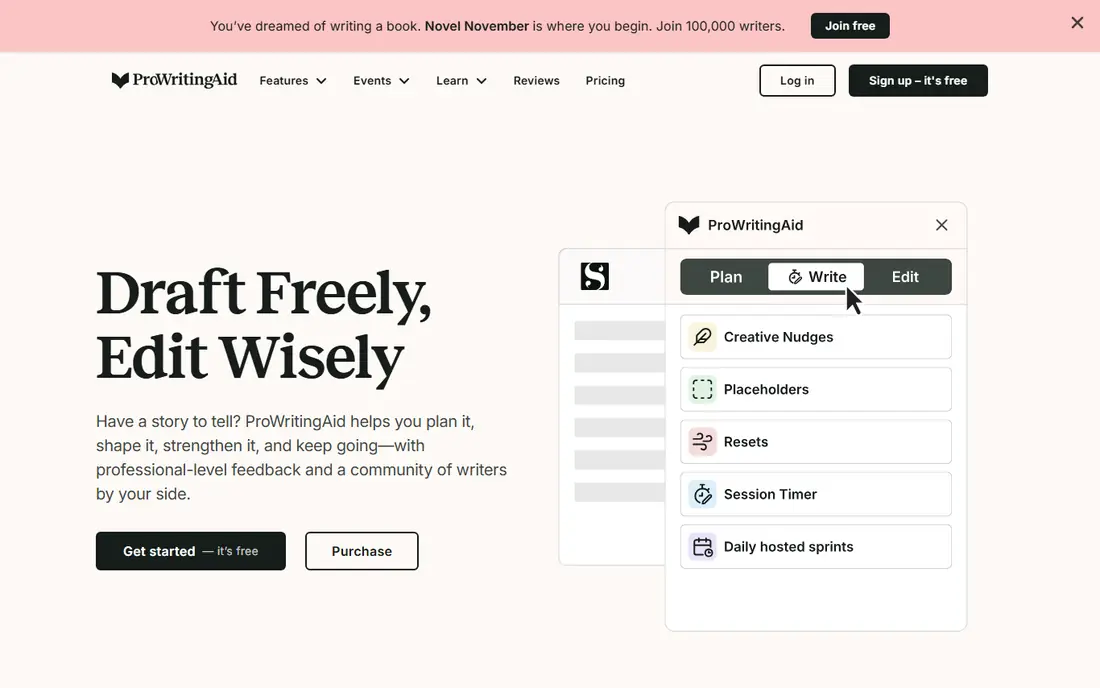
ProWritingAid is the most complete single tool in this list for authors who want both line editing and manuscript-level insight. Its reports cover grammar, style, overused words, sentence variety, dialogue tags, pacing and consistency, and a Manuscript Analysis feature can examine an entire book rather than one chapter at a time. Premium costs $30 per month, $120 per year, or $399 for a lifetime licence, and a free tier covers shorter checks.
The main weakness is volume. Twenty-five reports can bury a writer who only needs three clear problems to fix, so start with the summary, style and overused words reports and ignore the rest until you need them. Whole-book story analysis also uses separate Story Credits on some plans, which adds cost. Even with those caveats, ProWritingAid gives the widest view of a draft for the price.
- More than 25 reports
- Genre comparisons
- Works in Word, Google Docs and Scrivener
- Report volume can feel overwhelming
- Whole-book story analysis uses separate credits
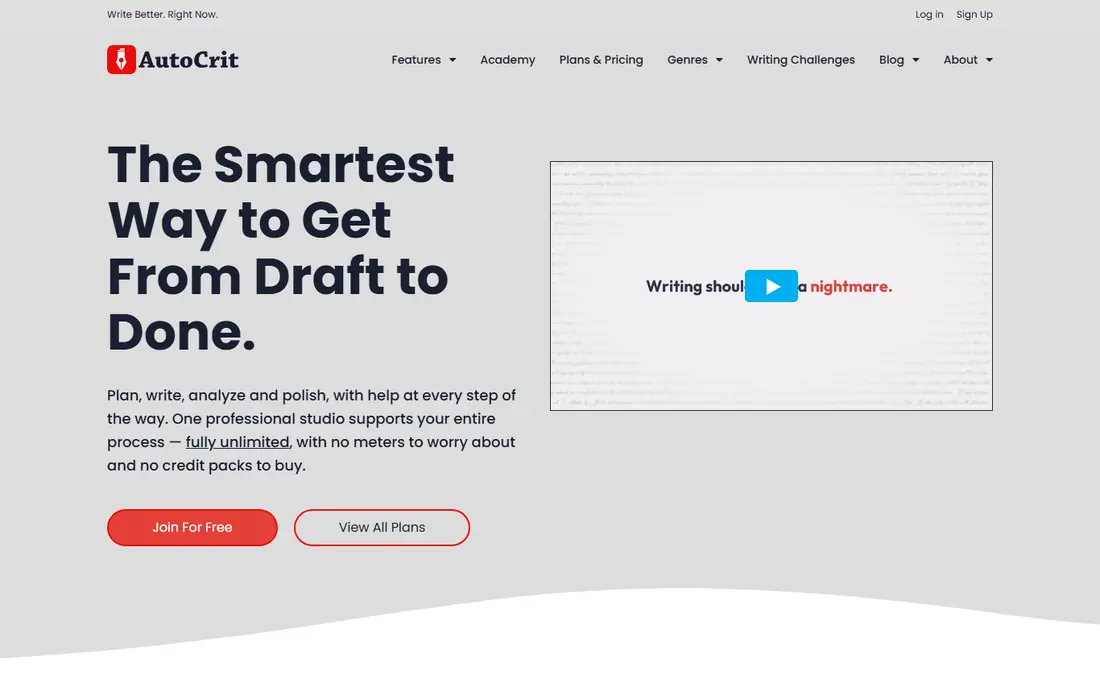
AutoCrit was built for fiction writers, and that focus shows in its reports. Instead of judging a novel like a business email, it compares pacing, dialogue balance, repetition and word choice against genre patterns drawn from published fiction. That makes it useful after a first draft, when the story exists but the prose still feels uneven. Pro costs $30 per month, or $15 per month when billed annually, and a free Basic plan offers a smaller set of reports.
AutoCrit is less strong as a general grammar checker, so many authors pair it with another tool for spelling and basic correctness. It also does not fix story structure at scene level in the way Fictionary does. Think of AutoCrit as a fiction prose clinic: strong on rhythm, repetition and dialogue, best used alongside a structural tool or a human reader.
- Reports built for fiction
- Genre benchmarking
- Pacing, dialogue and repetition checks
- Weaker general grammar coverage than ProWritingAid
- Pro price is high for prose alone
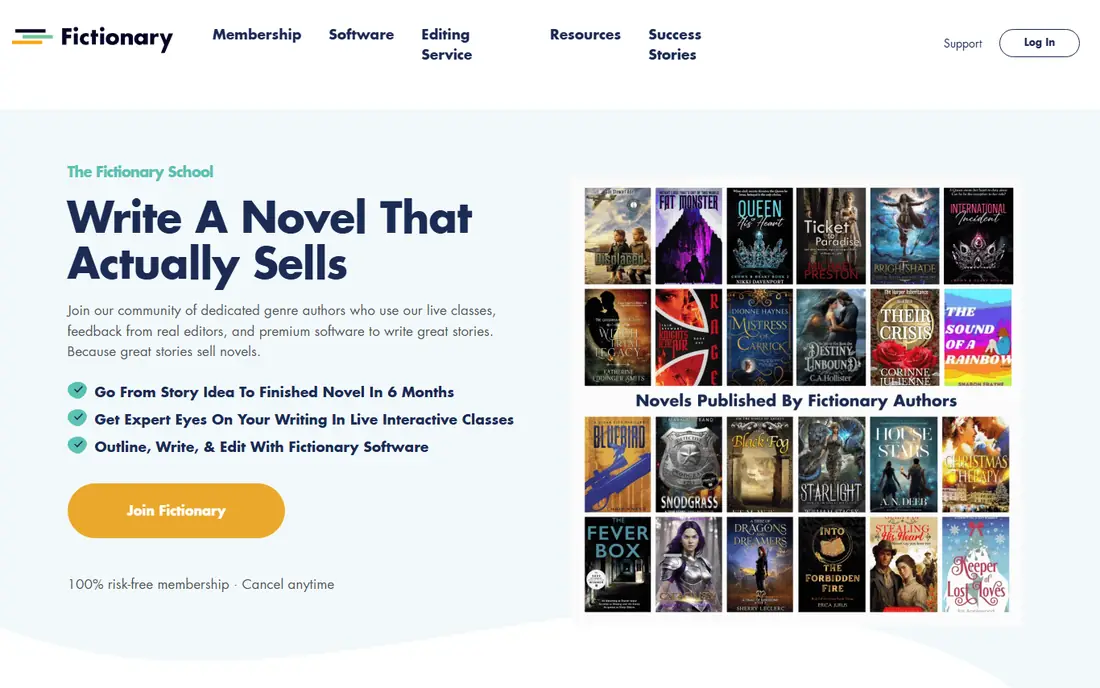
Fictionary takes a different angle from the tools above. It asks you to evaluate each scene for plot, character, setting and other story elements, then turns those scores into charts that show where a novel sags, where a character disappears, and where tension drops. That scene-level view is hard to get from a prose checker, and it is why Fictionary suits a draft that reads well sentence by sentence but feels broken as a story. Pricing starts at $19 per month, or $168 per year, with a 7-day free trial and no card required for the trial.
Fictionary does not check grammar, so you will still need a prose tool or an editor for that layer. It also asks for real work, since scene scoring takes time and honesty. For authors who suspect a structural problem but cannot name it, that effort is the point, and the resulting charts often make the revision order obvious.
- Scores 38 story elements per scene
- Visual story insights
- Built for fiction revision
- No grammar checking
- Subscription only, with a higher Premium tier
Marlowe, from Authors A.I., is an upload-and-report service rather than an editor you write inside. You submit a finished manuscript of at least 10,000 words in Word or ePub format, and Marlowe returns a report on plot structure, pacing, character development, dialogue balance, theme and genre comparison. A single Pro report costs $29.95, with monthly and annual plans for authors who revise often, and Basic reports are free with no word limit stated beyond the manuscript minimum.
That single-report price is the appeal. If you revise one novel a year, one Marlowe report costs less than a year of most subscriptions. The limit is judgement. Marlowe measures patterns against published novels, but it can misread tone, miss a point-of-view slip, or praise a technically sound scene that still feels flat. Use it to triage structural problems first, then pass the revised draft to beta readers.
- Full manuscript report in minutes
- Beat and arc analysis
- Free Basic reports
- Fiction-focused
- Automated reading can miss context a human would catch
Hemingway Editor is the simplest tool here, and sometimes the most useful. Paste text into the free web version and it highlights long sentences, dense passages, adverbs and passive constructions, with a readability grade to guide you. That clarity helps authors who overwrite, repeat themselves, or bury a strong scene under long sentences. A paid Plus version costs about $100 per year and adds more features, but the free version covers the core job.
Hemingway does not check grammar in depth, does not track a whole book, and will flag stylistic choices that are correct in fiction, such as a long sentence used for effect. Treat its highlights as questions, not orders. When a passage is marked hard to read, read it aloud and decide whether the difficulty serves the story or only slows the reader.
- Free web version
- Clear readability highlights
- Flags adverbs, passive voice and hard sentences
- Not a grammar checker
- No manuscript or story analysis
Grammarly is the generalist in this list, and it earns a place because most authors write in more than one app. It checks spelling, grammar and clarity in browsers, Word, Google Docs and many other tools, so errors get caught wherever you draft, outline or email. A free plan covers basic checks, while Pro costs $30 per month, or $144 per year, and adds fuller clarity, tone and style suggestions.
For a full novel, Grammarly is a starting layer rather than a complete analysis tool. It does not measure scene structure, pacing across chapters, or genre patterns in the way AutoCrit, Fictionary and Marlowe do. Use it to keep sentences clean, then run a fiction-focused tool for the deeper manuscript questions.
- Works across browsers, Word and Google Docs
- Strong spelling and grammar coverage
- Tone suggestions
- Not built for fiction manuscripts
- Pro price adds up for a single book
Plottr helps authors analyse a book before and during revision by making its structure visible. You can build timelines, outline chapters and scenes, track plot threads, and keep character and place notes in one story bible. That visual map often reveals a missing turning point, a thread that vanishes for ten chapters, or two climaxes competing for attention. A lifetime licence has been offered at about $150, with subscription and platform terms varying, so we list the price as See website.
Plottr does not score your prose or generate a developmental report on its own. The analysis comes from what you enter and what the timeline shows you, which means it rewards careful outlining and gives less to a writer who wants an instant automated verdict. For plotters and for authors revising a tangled middle, that visible structure is still a powerful form of analysis.
- Visual timeline and outline tools
- Story bible for characters and places
- Lifetime licence option
- Analysis is organisational, not automated prose scoring
- Learning curve for new plotters
Scrivener is a writing program first, but its organisational tools make it useful for manuscript analysis. The binder breaks a book into chapters and scenes, the corkboard shows those scenes as movable cards, and targets, word counts and snapshots let you compare drafts and track progress. An author revising a long novel can rearrange scenes, test a new chapter order, and keep earlier versions without losing work.
Scrivener does not grade prose, score scenes or compare your book with published fiction. Its analysis is manual and structural, closer to Plottr than to Marlowe. Pricing varies by platform and licence, so check the Literature and Latte site before buying. If you already draft in Scrivener, its built-in views may be enough for structural revision, with a prose tool added for line-level work.
- Binder, corkboard and outliner for long books
- Word count targets
- Snapshots for draft comparison
- No automated story scoring
- Interface can feel complex at first
How we picked these
We looked for tools that analyse a book beyond spelling, either at whole-manuscript, scene or prose-pattern level, and that are actively sold and supported for authors. We compared official pricing pages, free tiers, manuscript limits and report lists, and we kept a mix of prose checkers, structural tools and organisational programs. Tools that only generate text, or only format a finished book, were left out, because they do not analyse a draft you have already written.
A practical order for revision
Start with structure, then prose
Run a structural check first, with Fictionary, Marlowe or Plottr, because fixing sentences in a scene you later cut wastes time. Once the shape holds, move to prose tools such as ProWritingAid or AutoCrit for pacing, repetition and dialogue balance.
Use free reports before you pay
Marlowe Basic and Hemingway give useful patterns at no cost, and most paid tools offer a free tier or trial. Run the same chapter through two tools and compare what they agree on. Agreement across tools is a stronger signal than any single score.
Keep human readers in the loop
Software can count words, chart arcs and flag repetition, but it cannot tell you whether a character feels real or a twist lands. Send the revised draft to beta readers or an editor after the software pass, and treat their notes as the final check on story and voice.
FAQ
What is the best book analysis software for authors?
ProWritingAid is our broadest pick for most authors, because it covers grammar, style and whole-manuscript reports in one tool. For scene structure alone, Fictionary is stronger, and for a single low-cost developmental report, Marlowe is hard to beat.
Can book analysis software replace a human editor?
No. Software measures patterns such as pacing, repetition and dialogue balance, but it cannot judge taste, theme, humour or emotional impact in the way a human editor or beta reader can. Use software to clean and triage a draft, then get human feedback before publication.
How much does book analysis software cost?
Free options exist, including Hemingway and Marlowe Basic. Paid tools in this list range from a $29.95 single Marlowe report to about $19 to $30 per month for Fictionary, ProWritingAid, AutoCrit and Grammarly, with annual and lifetime options that lower the long-term cost.
Does Fictionary or AutoCrit check grammar?
Fictionary does not check grammar, and AutoCrit is weaker on general grammar than ProWritingAid or Grammarly. Most authors pair a structural tool with a grammar checker, or use ProWritingAid for both layers.
What manuscript length do these tools need?
Marlowe needs at least 10,000 words for a full report, which suits novels and longer nonfiction. ProWritingAid, AutoCrit and Grammarly work on shorter passages too, so they suit short stories, chapters and essays as well as full books.
Is my manuscript safe with these tools?
Reputable tools state that your manuscript stays yours and is not used to train their models, and Marlowe states this clearly. Still, read the privacy policy before uploading a full draft, avoid uploading unpublished work to tools you have not checked, and keep your own backup copy.