8 Best Billing Software Platforms in 2026
Compare the best billing software for invoices, subscriptions, and usage billing, with honest trade-offs for small firms and growing SaaS teams. Read the
- Editor's choice
 Stripe Billing
Subscriptions for teams already on Stripe
Starts atSee websiteVisit stripe.comFull review - Great alternative
 Chargebee
Flexible subscriptions for growing SaaS
Starts atSee websiteVisit chargebee.comFull review - Also consider
 Zoho Billing
Subscription billing for small SaaS firms
Starts atSee websiteVisit zoho.comFull review
TL;DR:
- Zoho Invoice and Square Invoices suit small firms that mainly send one-time or simple recurring invoices.
- Stripe Billing and Chargebee suit SaaS teams that need subscriptions, trials, and dunning in one system.
- Zoho Billing and Recurly suit growing firms that want subscription management without enterprise complexity.
- Zuora suits large firms with complex contracts, multi-entity billing, and revenue recognition needs.
- Paddle suits software sellers who want tax and payment handling bundled as a merchant of record.
Quick comparison
| Tool | Best for | Starts at | Free plan? | |
|---|---|---|---|---|
| Stripe Billing | Subscriptions for teams already on Stripe | See website | No | Visit |
| Chargebee | Flexible subscriptions for growing SaaS | See website | Free trial | Visit |
| Zoho Billing | Subscription billing for small SaaS firms | See website | Free trial | Visit |
 Recurly | Subscriber retention and revenue recovery | See website | Free trial | Visit |
 Zuora | Enterprise subscription and revenue management | See website | No | Visit |
 Square Invoices | Simple invoices for small service firms | See website | No | Visit |
 Zoho Invoice | Free invoicing for small businesses | Free | Yes | Visit |
 Paddle | Merchant of record billing for software sellers | See website | No | Visit |
The best billing software platforms
For most firms, the right billing tool matches how you charge today and next year. Billing software covers more than sending an invoice. These eight platforms handle one-time invoices, subscriptions, usage billing, and payment recovery, so you can match the tool to how you charge.
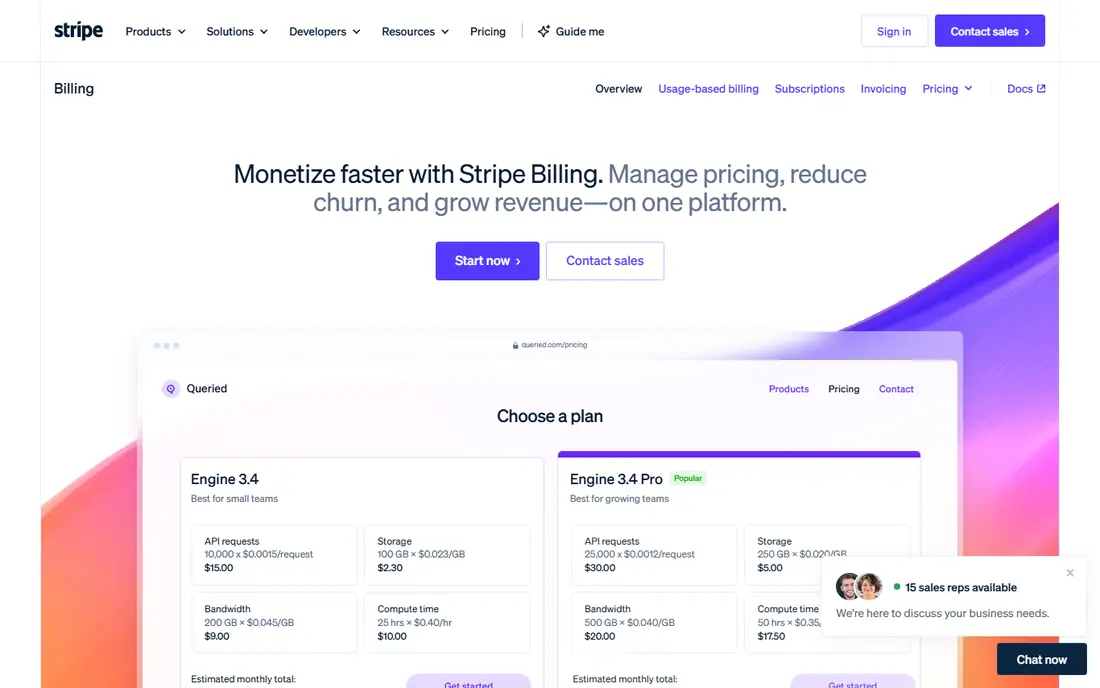
If you need subscriptions for teams already on stripe, Stripe Billing deserves attention. Stripe Billing suits teams already processing payments on Stripe. Subscriptions, invoices, trials, and dunning run on the same payment system, which reduces integration work.
That native link helps finance teams reconcile billing and payments in one place. Tax tools, customer portals, and revenue reports also sit close to the payment flow. That fit is why Stripe Billing stays on our shortlist for this use case, even when other tools offer more features in other areas.
The catch is ecosystem fit. Teams that use several payment providers may find a gateway-neutral platform more flexible than a Stripe-centered one. Before you choose Stripe Billing, check the plan that includes the features you need, and confirm pricing on the official site.
- Native Stripe payments and tax tools
- Subscriptions, invoices, and dunning
- Clear volume-based pricing
- Deepest value inside the Stripe ecosystem
- Payment processing fees apply on top
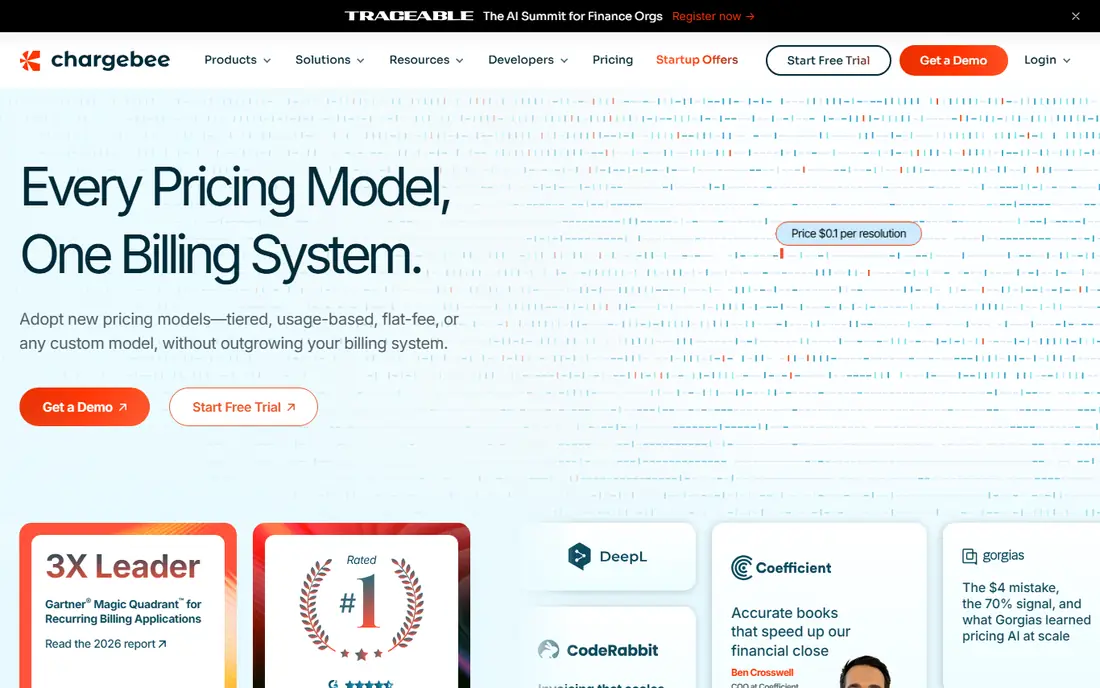
Chargebee takes a different angle on flexible subscriptions for growing saas. Chargebee suits SaaS firms that need flexible subscription models. Plans, trials, add-ons, and usage can sit in one catalog, and customers can manage their own subscriptions.
Multi-gateway support is a plus for firms that sell across regions. Dunning and payment recovery also help reduce churn from failed payments. That fit is why Chargebee stays on our shortlist for this use case, even when other tools offer more features in other areas.
The catch is volume pricing. Costs grow with billing volume, so model growth before choosing a plan, and check which revenue features sit on higher tiers. Before you choose Chargebee, check the plan that includes the features you need, and confirm pricing on the official site.
- Subscription lifecycle and pricing models
- Multi-gateway support
- Dunning and customer portals
- Costs rise with billing volume
- Advanced revenue features need higher plans
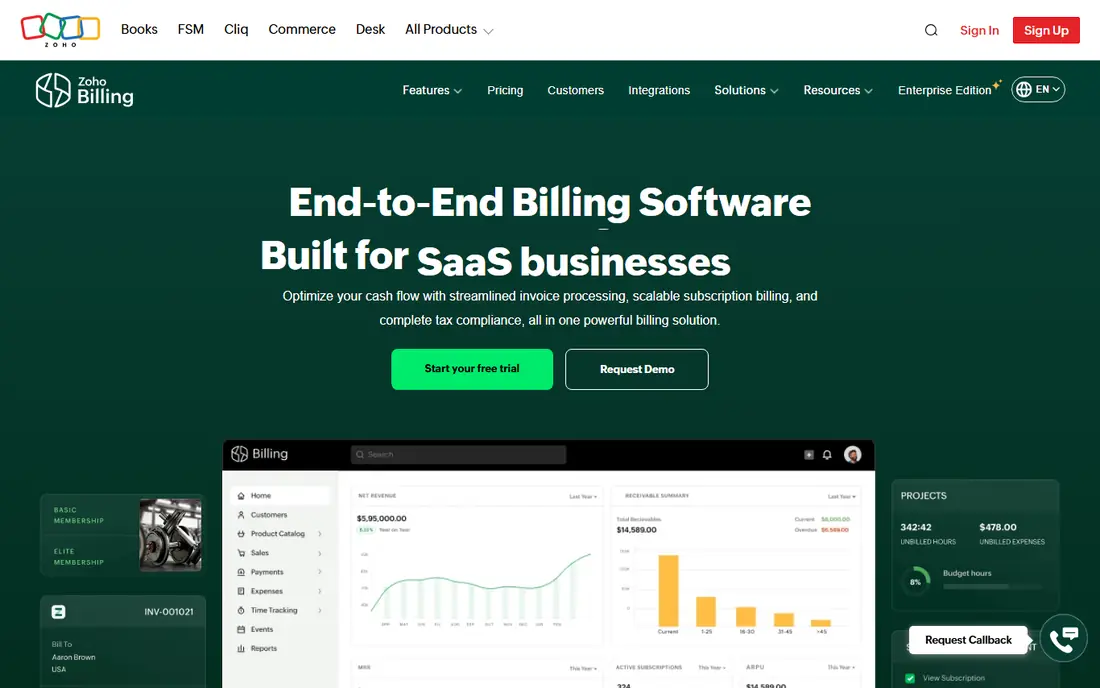
For subscription billing for small saas firms, Zoho Billing is a practical option to compare. Zoho Billing suits early-stage SaaS firms that want subscription billing without enterprise cost. Recurring plans, trials, and customer portals cover the core workflow.
Links to other Zoho apps help small teams keep CRM, accounting, and billing close together. That integration can save time for firms already using Zoho tools. That fit is why Zoho Billing stays on our shortlist for this use case, even when other tools offer more features in other areas.
The catch is depth. Complex usage billing and enterprise revenue recognition need higher editions, so check those needs before committing. Before you choose Zoho Billing, check the plan that includes the features you need, and confirm pricing on the official site.
- Subscription and recurring billing
- Customer portal and dunning
- Links to Zoho apps
- Usage billing depth is limited on lower plans
- Enterprise revenue features need higher editions
Recurly is worth a close look for subscriber retention and revenue recovery. Recurly suits subscription businesses that focus on retention. Smart retries, dunning, and analytics help recover failed payments and reduce involuntary churn.
That recovery focus matters for consumer and media subscriptions, where a failed card can end a relationship. Analytics also show where churn happens and why. That fit is why Recurly stays on our shortlist for this use case, even when other tools offer more features in other areas.
The catch is contract complexity. Firms with highly custom B2B contracts may need extra configuration, and pricing scales with billing volume. Before you choose Recurly, check the plan that includes the features you need, and confirm pricing on the official site.
- Smart dunning and payment retries
- Subscription analytics
- Trials and promotions
- Pricing is volume-based for larger firms
- Complex B2B contracts need care
If you need enterprise subscription and revenue management, Zuora deserves attention. Zuora suits large firms with complex subscription and contract billing. Multi-entity, multi-currency, and varied pricing models sit in one enterprise system.
Revenue recognition modules help listed firms handle subscription accounting rules. That depth matters when contracts include ramps, bundles, and amendments. That fit is why Zuora stays on our shortlist for this use case, even when other tools offer more features in other areas.
The catch is cost and effort. Pricing is quoted, implementation takes time, and smaller firms will find the platform more than they need. Before you choose Zuora, check the plan that includes the features you need, and confirm pricing on the official site.
- Complex subscription and contract billing
- Multi-entity and multi-currency support
- Revenue recognition modules
- Quote-based enterprise pricing
- Implementation needs a dedicated team
Square Invoices takes a different angle on simple invoices for small service firms. Square Invoices suits small service firms that want invoices sent and paid fast. Create an invoice, send a payment link, and accept card payments without a complex setup.
The mobile workflow helps field and service workers who invoice on site. Payment tracking and reminders also keep follow-up work low. That fit is why Square Invoices stays on our shortlist for this use case, even when other tools offer more features in other areas.
The catch is subscription depth. Firms that need complex trials, usage billing, or advanced dunning should look at a dedicated subscription platform. Before you choose Square Invoices, check the plan that includes the features you need, and confirm pricing on the official site.
- Simple invoice creation and payment links
- Card and online payments
- Mobile-friendly workflow
- Subscription depth is limited
- Best for one-time and simple recurring invoices
For free invoicing for small businesses, Zoho Invoice is a practical option to compare. Zoho Invoice is a strong free starting point for small firms. Branded invoices, recurring billing, payment reminders, and expense tracking cover daily needs.
The free plan suits freelancers and small firms with modest invoice volume. Multi-currency support also helps firms with clients abroad. That fit is why Zoho Invoice stays on our shortlist for this use case, even when other tools offer more features in other areas.
The catch is scope. It is an invoicing tool, not a full subscription platform, so firms with complex SaaS billing will need Zoho Billing or another system. Before you choose Zoho Invoice, check the plan that includes the features you need, and confirm pricing on the official site.
- Free invoicing with templates
- Recurring invoices and payment reminders
- Multi-currency support
- Not a full subscription platform
- Advanced billing features need Zoho Billing
Paddle is worth a close look for merchant of record billing for software sellers. Paddle suits software sellers who want tax and payment complexity handled for them. As merchant of record, Paddle manages sales tax, VAT, and payment compliance in many regions.
That offload helps small software teams sell globally without building tax systems. Checkout, subscriptions, and invoicing sit in one platform. That fit is why Paddle stays on our shortlist for this use case, even when other tools offer more features in other areas.
The catch is pricing and control. Revenue share pricing applies to sales, and firms give up some direct control over payment providers compared with direct billing. Before you choose Paddle, check the plan that includes the features you need, and confirm pricing on the official site.
- Merchant of record tax and compliance handling
- Global payments and subscriptions
- Checkout tools
- Revenue share pricing
- Less control over payment providers than direct billing
How we picked these
We compared official pricing pages, feature lists, and billing models for each platform, plus public reviews about dunning, tax handling, and integration depth. We favored billing tools that still work in October 2026, handle invoices or subscriptions clearly, and state their pricing model. We did not claim hands-on testing. Instead, we weighed billing model fit, gateway support, tax handling, and total cost at realistic volumes.
How to choose billing software
Start with how you charge
One-time invoices, flat subscriptions, and usage billing need different tools. A simple invoicing app works for one-time work, while SaaS firms need trials, proration, and dunning. Write down your pricing model before shortlisting.
Check tax and payment needs early
Global sellers need tax, currency, and payment method support. A merchant of record can offload tax, while a direct billing platform gives more control. Decide which trade-off fits your team and risk tolerance.
Test dunning and the customer portal
Failed payments cause churn, so test retry logic, email reminders, and the customer portal during a trial. A portal that lets customers update cards and plans will save support time and keep revenue flowing.
FAQ
What is the best software for billing small businesses?
Zoho Invoice and Square Invoices suit small firms for simple invoices, while Zoho Billing suits small SaaS firms. The best pick depends on whether you bill one-time work or recurring subscriptions.
Which software is best for billing subscriptions?
Stripe Billing and Chargebee suit many SaaS teams, while Recurly suits retention-focused subscriptions. Zuora suits large firms with complex contracts and revenue recognition needs.
What is the best billing platform for SaaS?
Chargebee and Stripe Billing are common SaaS picks, with Zoho Billing as a lower-cost option for early-stage firms. Check usage billing, dunning, and gateway support against your pricing model.
What is the best invoice software for small business free?
Zoho Invoice offers a free plan for small firms with branded invoices and recurring billing. Square Invoices also offers free invoice sending, with payment processing fees when clients pay by card.
Do billing platforms include payment processing fees?
Most billing platforms charge a platform fee or percentage on top of payment processing fees, except merchant of record services that bundle them. Check both fees together to compare true cost.