8 Best Apps to Resell On in 2026: Selling Platforms Compared
Looking for the best apps to resell on for clothes, sneakers, and more? We compare 8 resell platforms on fees, buyers, and ease of selling for sellers today.
- Editor's choice
 eBay
Widest range of items
Starts atFree to listVisit ebay.comFull review - Great alternative
 Poshmark
Fashion and closet reselling
Starts atFree to listVisit poshmark.comFull review - Also consider
 Mercari
Everyday items, fast listing
Starts atFree to listVisit mercari.comFull review
TL;DR:
- eBay and Facebook Marketplace reach the widest buyers, while Poshmark, Depop, and Mercari suit fashion and everyday items.
- StockX and Vestiaire Collective suit higher-value sneakers and luxury items, with authentication as a key benefit.
- Fees, shipping, and payout timing differ a lot, so check the current seller fee page before you list a valuable item.
- The best resell platform is usually the one where your exact item already sells, not the app with the most users overall.
Quick comparison
| Tool | Best for | Starts at | Free plan? | |
|---|---|---|---|---|
| eBay | Widest range of items | Free to list | Yes | Visit |
| Poshmark | Fashion and closet reselling | Free to list | Yes | Visit |
| Mercari | Everyday items, fast listing | Free to list | Yes | Visit |
 Depop | Vintage and streetwear fashion | Free to list | Yes | Visit |
 Facebook Marketplace | Local, no-fee sales | Free to list | Yes | Visit |
 Vestiaire Collective | Pre-owned luxury fashion | Free to list | Yes | Visit |
 StockX | Sneakers and streetwear with authentication | Free to list | Yes | Visit |
 OfferUp | Local buying and selling | Free to list | Yes | Visit |
The best apps to resell on
Reselling looks simple until fees, shipping, returns, and buyer trust enter the picture. The apps below cover the main ways people resell in the US: national marketplaces with shipping, fashion apps with a social feed, local apps with meetups, and authenticated platforms for sneakers and luxury goods. Pick by item type first, then by fee and buyer pool.
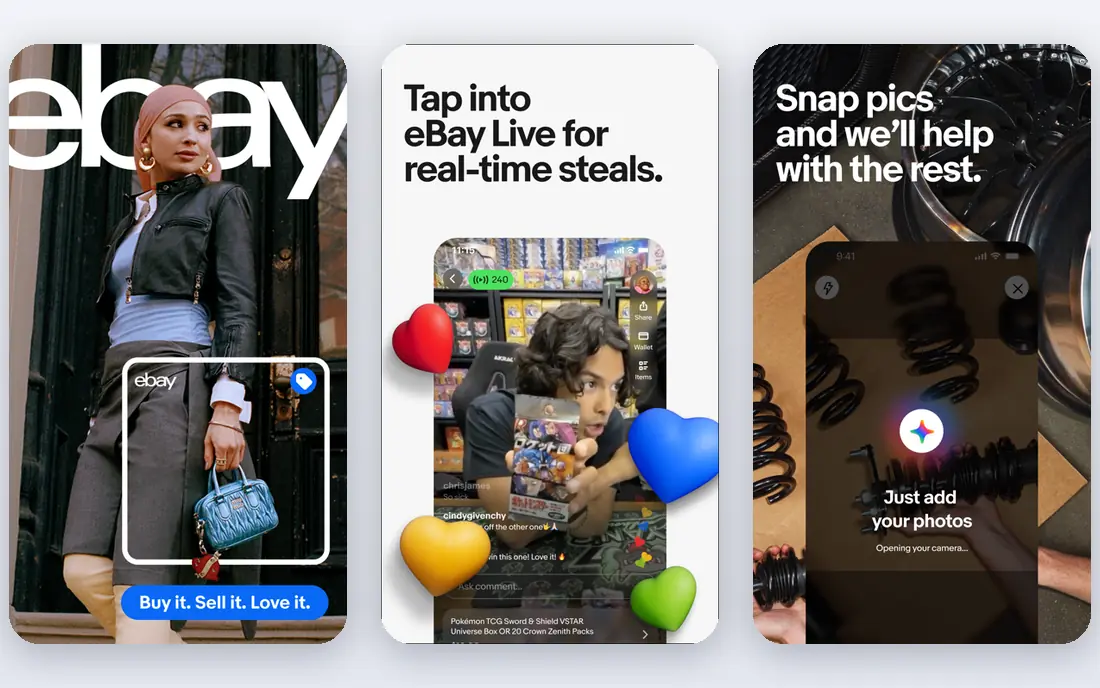
eBay remains the default resell platform for the widest range of items, from electronics and collectibles to clothes and home goods. You can list at a fixed price or run an auction, and the buyer pool is large enough that unusual items still find bidders. Shipping labels, tracking, and seller tools are built in, which helps new sellers ship correctly.
Fees are the main cost to watch. eBay charges a final value fee plus a payment processing fee on most sales, with rates that vary by category, so check the current fee page for your item before you price it. Returns and buyer cases also need attention, but for reach and category depth, eBay is still the safest first listing for most resellers.
- Largest buyer pool for most categories
- Auction and fixed-price options
- Seller protections and shipping tools
- Final value fees and payment processing fees apply
- Returns and cases take time to manage

Poshmark turns reselling into a social feed, where sharing listings, following closets, and joining parties helps items get seen. That model suits fashion resellers who list regularly and enjoy the community side of selling. Listings are closet-style, with photos, brand, size, and condition, and buyers can make offers or buy at the listed price.
The fee structure is simple but steep for cheap items: Poshmark takes a flat commission on sales, with a fixed fee on sales under $15 and a percentage on higher sales, so check the current seller page before pricing low-value pieces. For mid-priced fashion, the buyer pool and discovery often make up for the fee. If you sell mostly clothes, shoes, and accessories, Poshmark deserves a listing alongside eBay.
- Social feed and sharing drive discovery
- Simple flat commission on sales over $15
- Closet-style listings
- Commission is high on lower-priced items
- Fashion focus limits non-clothing sales
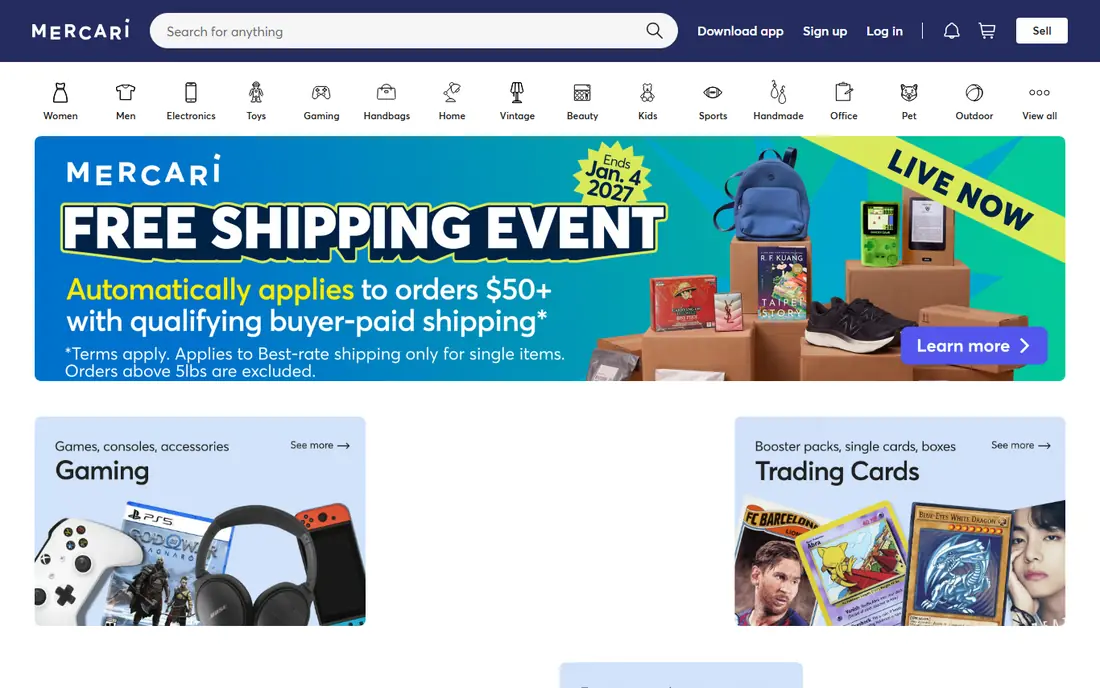
Mercari is built for fast phone listings, with a simple flow from photos to price to shipping. It covers clothes, electronics, toys, home goods, and more, which makes it a good general resell app for clearing a closet or a room. Prepaid shipping labels and in-app messaging keep the process tidy for new sellers.
A service fee applies to completed sales, and the exact rate should be checked on the Mercari seller page, since fee structures have changed over time. Mercari also suits lower and mid-priced items better than rare collectibles, where eBay reach matters more. For everyday reselling with minimal fuss, Mercari is one of the easiest apps to start with.
- Fast listing from a phone
- Wide everyday categories
- Prepaid shipping labels
- Service fee applies to sales
- Buyer pool is smaller than eBay for niche items
Depop is the fashion app for vintage, streetwear, and one-of-a-kind pieces, with a feed that feels closer to social media than to a traditional marketplace. Sellers curate a shop, style photos, and build a following, which helps unique items stand out. Buyers come looking for a look, not just a product search, so presentation and styling matter more here than on eBay.
Fees include a selling fee plus payment processing, so check the current Depop fee page before pricing. The audience skews young and fashion-focused, which is a strength for vintage denim, band tees, and streetwear, and a weakness for mainstream or formal items. If your stock is curated and visual, Depop can outperform larger apps on price per piece.
- Strong vintage and streetwear buyer pool
- Social, Instagram-style feed
- Good for unique pieces
- Fees on sale plus payment processing
- Audience skews young, so not every item fits
Facebook Marketplace is the best local resell option for most people, because it reaches buyers near you and, for local pickup sales, usually charges no selling fee. Furniture, appliances, bikes, and bulky items that are costly to ship sell well here, and messaging through Facebook makes arranging pickup simple. The sheer user base also helps everyday items move fast.
Local selling has its own risks, including no-shows, haggling, and scams, so meet in a public place, confirm payment before handing over an item, and keep records. Shipping through Marketplace adds fees and rules that differ from local sales. For bulky or local items, Marketplace often beats national apps on profit, even if the buyer pool is less specialized.
- Huge local buyer pool
- No selling fee on most local sales
- Easy local pickup and messaging
- Shipping sales have fees and rules
- Scams and no-shows need careful handling
Vestiaire Collective is a marketplace for pre-owned luxury and designer fashion, with authentication checks that give buyers confidence in high-value bags, watches, shoes, and clothing. That trust is the main reason to use it over a general app for a designer piece, since buyers will pay more when authenticity is checked. The global pool also helps rare sizes and styles find a buyer.
Selling takes longer than on Mercari or Poshmark, since items may go through authentication and quality checks, and commission applies on completed sales. Everyday fashion does not fit here, and the fee on a low-value item would eat the profit. For genuine designer pieces, Vestiaire Collective is the safer, higher-trust route, and the price often reflects that.
- Authentication for luxury items
- Global luxury buyer pool
- Handles high-value fashion well
- Commission and authentication steps add cost and time
- Not suited to everyday fashion
StockX works like a stock market for sneakers, streetwear, and collectibles, with live ask and bid prices that show what an item actually trades for. You list against a catalog entry rather than writing a fresh listing, and StockX authenticates the item before it reaches the buyer. That structure removes much of the haggling and trust risk that slows sneaker sales elsewhere.
Seller fees and payment processing apply, and the payout depends on the market price at sale time, so a hyped release can drop in value while you wait. StockX suits sellers who know their sizes, conditions, and market prices, and who want a clean, authenticated sale. For everyday clothes or non-catalog items, a general marketplace will serve you better.
- Live market prices for sneakers and streetwear
- Authentication on every sale
- Catalog-based listings
- Seller fees and payment processing apply
- Prices move with the market, so timing matters
OfferUp is a local-first marketplace for furniture, electronics, cars, and everyday goods, with shipping options for sellers who want wider reach. Listings are quick from a phone, and TruYou verification, which links identity and history, helps buyers trust a seller they have not met. That local focus makes it a good alternative to Facebook Marketplace for bulky and mid-priced items.
National reach is smaller than eBay, so niche items may take longer to sell, and shipping sales carry fees that local sales do not. OfferUp works best when you list locally first, price for pickup, and use shipping only for items that justify it. For clearing a home or selling used electronics nearby, it is a solid, low-friction option.
- Local focus with shipping options
- Easy phone listings
- TruYou verification for trust
- Smaller national reach than eBay
- Shipping fees and rules need checking
How we picked these
We compared official seller fee pages, app listings, and marketplace rules for reselling platforms, and we kept only apps that are currently offered in the US and that cover a clear resell use: general goods, fashion, local sales, or authenticated luxury and sneakers. We favored a mix of national and local apps, and we noted where fees, authentication, or shipping change the real profit. Fees are described in general terms here, since rates vary by category and change over time, so check the seller page for your item before you list.
How to choose a resell app
Start with the item, not the app. Designer bags belong on Vestiaire Collective, hyped sneakers belong on StockX, vintage fashion belongs on Depop, and bulky furniture belongs on Facebook Marketplace or OfferUp. General and niche items belong on eBay, while everyday clothes belong on Poshmark or Mercari. Listing the same item on two apps can help, but watch for double sales and keep inventory in sync.
Fees, shipping, and photos
Fees decide profit more than sale price alone, so work out the net payout after commission, payment processing, and shipping for each app. Weigh and measure the item before listing, since a shipping surprise can erase a margin. Photos matter just as much: clear daylight photos, flaws shown honestly, and brand, size, and condition in the title reduce returns and build trust, especially for fashion and luxury items.
Safety and payout timing
Use in-app payment and messaging where possible, and avoid off-app deals that remove buyer and seller protections. For local sales, meet in public, confirm payment, and keep a record of the handover. Check payout timing too, since some apps hold funds until delivery or authentication is complete, which matters if you need the money quickly for new stock.
FAQ
What is the best app to resell clothes on?
Poshmark and Mercari are the best general picks for everyday clothes, with Depop best for vintage and streetwear, and Vestiaire Collective best for designer pieces. eBay also works well for branded and niche clothing with a wide buyer pool. Pick by price and style: everyday pieces on Poshmark or Mercari, curated vintage on Depop, and luxury on Vestiaire Collective.
What is the best app to resell sneakers on?
StockX is the best pick for authenticated sneaker sales with live market pricing, especially for hyped releases. eBay also has a large sneaker buyer pool and an authenticity program for higher-value pairs. Depop suits vintage and styled sneakers, while local apps suit common pairs you want to sell fast without shipping.
Is it free to list items to resell?
Listing is free on most apps in this list, including eBay, Poshmark, Mercari, Depop, Facebook Marketplace, Vestiaire Collective, StockX, and OfferUp. The cost comes when an item sells, through commission, service fees, and payment processing, plus shipping where you cover it. Always check the current seller fee page for your category before you set a price.
Which resell app has the lowest fees?
Facebook Marketplace usually has the lowest fees for local pickup sales, since most local sales carry no selling fee. Among national shipping apps, fees vary by category and price, so no single app is cheapest for every item. Work out the net payout for your exact item on two or three apps, including shipping, before you choose.
Can I resell on more than one app at once?
Yes, but manage inventory carefully to avoid selling the same item twice. List on one app first for rare or single items, or remove the other listing the moment one sells. For common items with multiple units, cross-listing is safer, since you have stock to cover each sale. Keep photos and descriptions consistent across apps to reduce buyer questions.
How do I avoid scams when reselling?
Use in-app payments and messaging, never accept gift cards or off-app payment for a marketplace sale, and keep shipping tracking for every shipped item. For local sales, meet in a public place and confirm payment before handing over the item. For luxury and sneakers, use authenticated platforms, since their checks protect both sides on high-value sales.