Best Anti Money Laundering Software in 2026: 8 Tools Compared
Compare the best anti money laundering software for screening, monitoring and case work. We review 8 AML tools for banks and fintechs with current vendor pages.
- Editor's choice
 ComplyAdvantage
Screening data plus monitoring
Starts atSee websiteVisit complyadvantage.comFull review - Great alternative
 Unit21
No-code monitoring and cases
Starts atSee websiteVisit unit21.aiFull review - Also consider
 NICE Actimize
Enterprise financial crime suite
Starts atSee websiteVisit niceactimize.comFull review
TL;DR:
- ComplyAdvantage suits firms that want sanctions, PEP and adverse media data plus monitoring in one platform.
- Unit21 and Flagright suit fintechs that want no-code rules and case management without a large enterprise project.
- NICE Actimize and Napier AI suit large banks that need deep, enterprise grade financial crime suites.
- No AML tool replaces compliance judgment, and firms should confirm regulatory coverage, audit trails and filing support before buying.
Quick comparison
| Tool | Best for | Starts at | Free plan? | |
|---|---|---|---|---|
| ComplyAdvantage | Screening data plus monitoring | See website | No | Visit |
| Unit21 | No-code monitoring and cases | See website | No | Visit |
| NICE Actimize | Enterprise financial crime suite | See website | No | Visit |
 Hawk AI | Explainable AI monitoring | See website | No | Visit |
 Flagright | Fast no-code AML deployment | See website | Free trial | Visit |
 Sumsub | KYC plus AML screening | See website | No | Visit |
 Napier AI | Configurable enterprise monitoring | See website | No | Visit |
 Sanction Scanner | Accessible screening for smaller firms | See website | Free trial | Visit |
The best anti money laundering software
Anti money laundering software, often called AML software, helps firms screen customers, watch transactions, investigate alerts and keep records for regulators. The best AML software for a given firm depends on size, transaction volume, customer type and which regulators apply. A fintech onboarding thousands of users a month has different needs from a large bank running enterprise wide programmes.
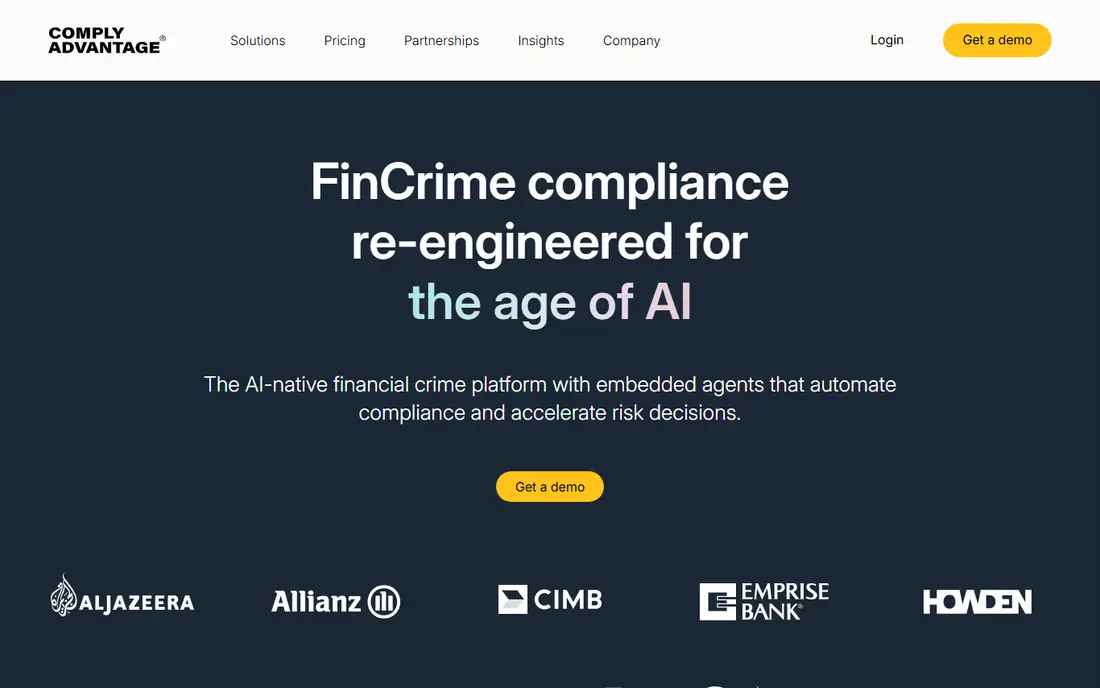
ComplyAdvantage is our pick for firms that want screening depth first. It maintains its own sanctions, politically exposed person and adverse media data, so screening results do not depend only on third party lists. That data depth helps compliance teams explain why a match fired and what changed since the last check.
Transaction monitoring is available, but buyers should confirm which tier includes it and what volume limits apply. Smaller firms that only need screening can start lower, while firms that want screening plus monitoring in one platform should price the higher tier from the start.
- Own sanctions, PEP and adverse media data
- Real time screening
- Monitoring on higher tiers
- Monitoring sits on higher tiers
- Pricing and plan limits need a sales conversation
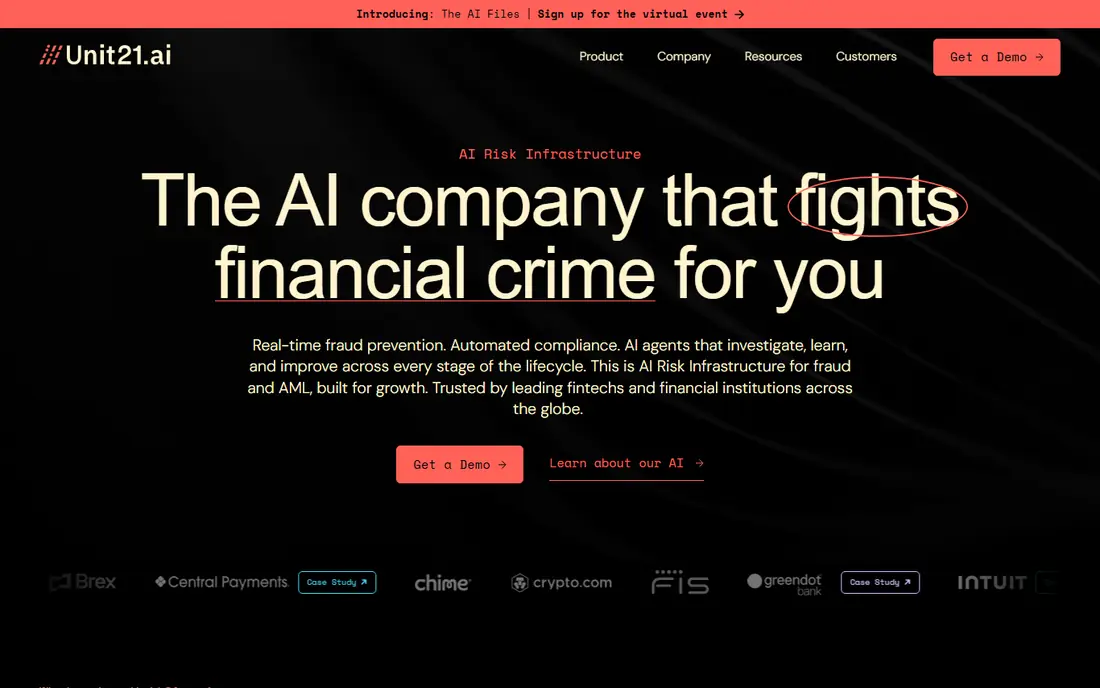
Unit21 suits fintechs and sponsor banks that need to move from alert to investigation to filing without rebuilding workflows. Analysts can build rules without code, manage cases in one queue and prepare regulator-ready filings from the case record. That end to end flow cuts handoffs between tools.
The platform is strongest for United States and European fintech use cases, so firms with heavy activity in other regions should check coverage and local filing support. Pricing is quoted, so ask for a clear volume and user based quote before comparing it with simpler screening tools.
- No-code rules and case management
- Carries alerts through to filings
- Strong for fintechs
- Quote based pricing
- Regulatory depth varies by region, so confirm your markets
NICE Actimize is the enterprise standard for large banks that run financial crime programmes at scale. It covers customer due diligence, transaction monitoring, screening, case management and regulatory reporting in one suite, with scenario libraries built over many years. Tier one banks choose it when breadth and proven scale matter most.
That breadth brings cost and implementation time. Smaller firms will find it too heavy and too expensive, and even large firms should budget for configuration and tuning. Choose Actimize when enterprise scale and depth outweigh speed of deployment.
- Broadest enterprise suite
- Deep scenario libraries
- Entity focused monitoring and filing
- Heavy implementation
- Enterprise pricing
- Interface feels dated next to newer tools
Hawk AI focuses on making machine learning alerts understandable. Instead of a black box score, analysts see why an alert fired, which helps with review, audit and regulator questions. It can sit alongside existing monitoring or act as the main detection layer for banks and payment firms.
Small teams with low volume may not need AI led monitoring yet, and pricing will reflect an enterprise grade product. For a midsize bank or payment firm drowning in false positives, Hawk AI is worth a pilot with a clear false positive reduction target.
- Explainable machine learning for alerts
- Fraud and AML in one view
- Reduces false positives
- Quote based pricing
- Best suited to banks and payment firms modernising, less so to tiny teams
Flagright appeals to fintechs, digital banks and payment processors that need to launch AML controls quickly. Rules can be built and tested in a simulator before they go live, and backtesting shows how a new rule would have performed on past data. That testing loop helps teams tune thresholds without guessing.
Identity verification is not the core, so firms that need deep onboarding checks will pair Flagright with a KYC vendor. As a monitoring and case platform with a fast start, it is one of the easiest enterprise capable options to trial.
- No-code rules with simulator and backtesting
- Fast deployment
- Clear case workflows
- Screening and monitoring focus
- Identity verification sits in other tools
Sumsub suits platforms where onboarding volume is the main compliance load. Identity verification, business verification and AML screening run in the same flow, so a new user can be checked once and monitored from there. That joined flow reduces drop off and duplicate data entry.
Firms with complex investigation and filing needs may still need a dedicated case platform alongside Sumsub. Choose it when onboarding and screening dominate your workload and you want one vendor for that front door.
- Onboarding verification plus screening in one flow
- Broad document and country coverage
- Per check pricing options
- Governance and case depth is lighter than full AML suites
- Pricing varies by verification type
Napier AI, now part of a larger financial crime group, gives banks a configurable monitoring platform with a sandbox for testing rules on production style data before launch. That safe testing matters when a bad rule can flood analysts with alerts or miss real risk. Deployment choice also helps banks with strict hosting rules.
The platform is enterprise grade, so small firms should expect a longer sales and setup process. For a bank that needs control over rules, deployment and tuning, Napier AI is a strong enterprise alternative to Actimize.
- Configurable rules and sandbox testing
- Cloud or on premises choice
- Strong for banks
- Quote based pricing
- Implementation needs skilled compliance and technical staff
Sanction Scanner suits smaller institutions and businesses that need reliable screening without an enterprise project. Sanctions, PEP and adverse media checks run through a clear interface, and the trial lets a team test match quality on its own customer list before committing.
Larger firms with complex monitoring, investigation and filing needs will likely outgrow a screening first tool. For a smaller firm that must screen customers properly and keep audit records, Sanction Scanner gives a practical starting point.
- Accessible sanctions, PEP and adverse media screening
- Easier entry price than enterprise suites
- Clear trial
- Less full suite depth than Actimize or Napier
- Transaction monitoring depth needs checking
How we picked these
We compared official vendor pages, product documentation and public AML reviews for tools with clear, current vendor pages in October 2026. We favoured platforms that cover screening, monitoring or case management with real regulatory use, and we included both enterprise suites and accessible fintech options. We did not claim hands-on testing. AML pricing is usually quoted by volume, users and modules, so confirm a written quote and check regulatory coverage for your markets before you buy. This article is general information, not legal or compliance advice.
What to check before you buy AML software
Start with your regulatory obligations, not the feature list. List the regulators, filing types, customer types and transaction volumes you must support, then ask each vendor to show those exact workflows. A tool that looks strong for retail fintech may lack the filing or data coverage a bank needs.
Screening, monitoring and cases
Check screening list sources and update frequency, monitoring rule flexibility, alert explainability and case audit trails. Ask how false positives are tuned, how rules are tested before launch, and how cases move to filings. A clean demo with sample data will not show alert volume problems, so run a pilot on your own data when possible.
Data, hosting and audit
Confirm data residency, access controls, retention and export options, plus whether the vendor supports your hosting rules. Ask for audit logs that show who changed a rule, who reviewed an alert and what evidence supported each decision. Regulators care about that trail as much as the alert itself.
FAQ
What is the best AML software for fintechs?
Unit21 and Flagright are strong fintech picks, thanks to no-code rules, case management and faster deployment than enterprise suites. ComplyAdvantage is better when screening data depth matters most, and Sumsub is better when onboarding verification dominates. The right pick depends on volume, customer type and filing needs.
What is the best anti money laundering software for banks?
NICE Actimize and Napier AI lead for large banks that need enterprise scale, deep scenario libraries and full filing workflows. Hawk AI is a strong addition or alternative when false positives and explainable AI are the main problem. Banks should pilot on real transaction data before committing to a suite.
What are the best anti money laundering software reviews saying in 2026?
Recent reviews praise Unit21 case management, ComplyAdvantage screening data and Flagright deployment speed, while noting enterprise pricing and implementation time for Actimize and Napier AI. Treat review scores as a starting point, since AML fit depends heavily on your regulators, volume and customer mix. A pilot on your own data matters more than a generic score.
How much does AML software cost?
Most AML platforms are quoted by monitored entities, transaction volume, users and modules, so public prices are rare. Screening focused tools can start at lower monthly levels, while enterprise suites run into large annual contracts. Always get a quote based on your real volume and module mix, and ask what counts toward each meter.
Does AML software replace a compliance officer?
No, software screens, monitors and organises cases, but compliance judgment, policy decisions and regulator communication still need trained people. A tool can surface risk and keep records, but it cannot set your risk appetite or defend a filing decision. Use software to support a compliance programme, not to replace it.