Best Anti Phishing Software in 2026: 8 Tools Compared
Compare the best anti phishing software for email filtering, phishing simulations, training and incident response, with prices and honest trade-offs for teams.
- Editor's choice
 Proofpoint
Enterprise email protection
Starts atSee websiteVisit proofpoint.comFull review - Great alternative
 Mimecast
Gateway plus archiving
Starts atSee websiteVisit mimecast.comFull review - Also consider
 Abnormal AI
Behavioral email detection
Starts atSee websiteVisit abnormal.aiFull review
TL;DR:
- Proofpoint and Mimecast lead for email gateway protection, with filtering, link and attachment checks and impersonation defense.
- Abnormal AI adds a behavioral detection layer on top of Microsoft 365 or Google Workspace, without changing mail flow.
- Microsoft Defender for Office 365 is the natural pick for companies already on Microsoft 365.
- KnowBe4, Cofense and Hoxhunt focus on phishing simulations and training, which cut click rates over time.
- The strongest setup pairs email filtering with training and a simple report button, so staff can flag suspect mail fast.
Quick comparison
| Tool | Best for | Starts at | Free plan? | |
|---|---|---|---|---|
| Proofpoint | Enterprise email protection | See website | No | Visit |
| Mimecast | Gateway plus archiving | See website | No | Visit |
| Abnormal AI | Behavioral email detection | See website | No | Visit |
 Microsoft Defender for Office 365 | Microsoft 365 shops | See website | No | Visit |
 KnowBe4 | Phishing simulations and training | See website | Free trial | Visit |
 Cofense | Simulation plus incident response | See website | No | Visit |
 Hoxhunt | Adaptive phishing training | See website | No | Visit |
 IRONSCALES | AI email security for mid-market | See website | Free trial | Visit |
The best anti phishing software
Phishing remains one of the most common ways attackers reach a business, through fake invoices, password reset links, impersonated executives and QR codes in email. Anti phishing software works in two ways: filtering malicious mail before it reaches inboxes, and training staff to spot and report what slips through. We compared official product pages, pricing pages and public reviews for tools available in the US in October 2026.
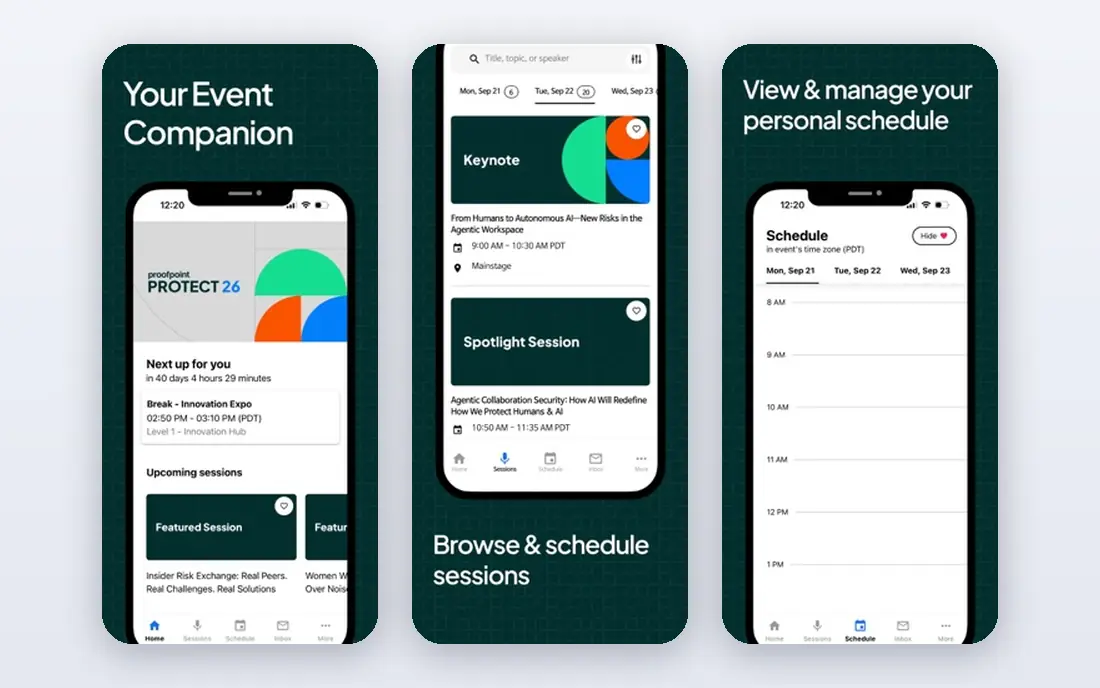
Proofpoint Email Protection filters spam, malware, phishing and business email compromise attempts, with URL defense that checks links at click time and attachment sandboxing for suspect files. It also offers security awareness training through ZenGuide, with simulations driven by real threat data. Large enterprises value its threat intelligence and its controls for data loss prevention and encryption.
Pricing is quote-based and depends on user count, term and modules, so budget planning needs a vendor quote. Proofpoint is also a large platform, and tuning policies for a big organization takes care. For an enterprise that wants deep email security plus training in one vendor, Proofpoint is a leading choice.
- Strong email filtering and impersonation defense
- Threat intelligence and URL defense
- Wide enterprise feature set
- Quote-based pricing
- Setup and tuning take time for large deployments

Mimecast is a cloud email security platform with gateway filtering, URL analysis, attachment sandboxing, impersonation checks and optional archiving and continuity. That bundle appeals to mid-market and enterprise IT teams that want mail security, backup and uptime in one contract. Its Engage plans add human risk and awareness features for staff training.
Mimecast pricing is tiered by organization size and module bundle, and is quote-based. Some older training products have moved to end-of-sale in favor of Engage, so new buyers should confirm which training plan they are buying. For a team that wants gateway security plus archiving, Mimecast is a proven, broad option.
- Gateway filtering plus archiving and continuity
- URL and attachment checks
- Awareness training options
- Quote-based pricing
- Awareness training has moved to newer Engage plans
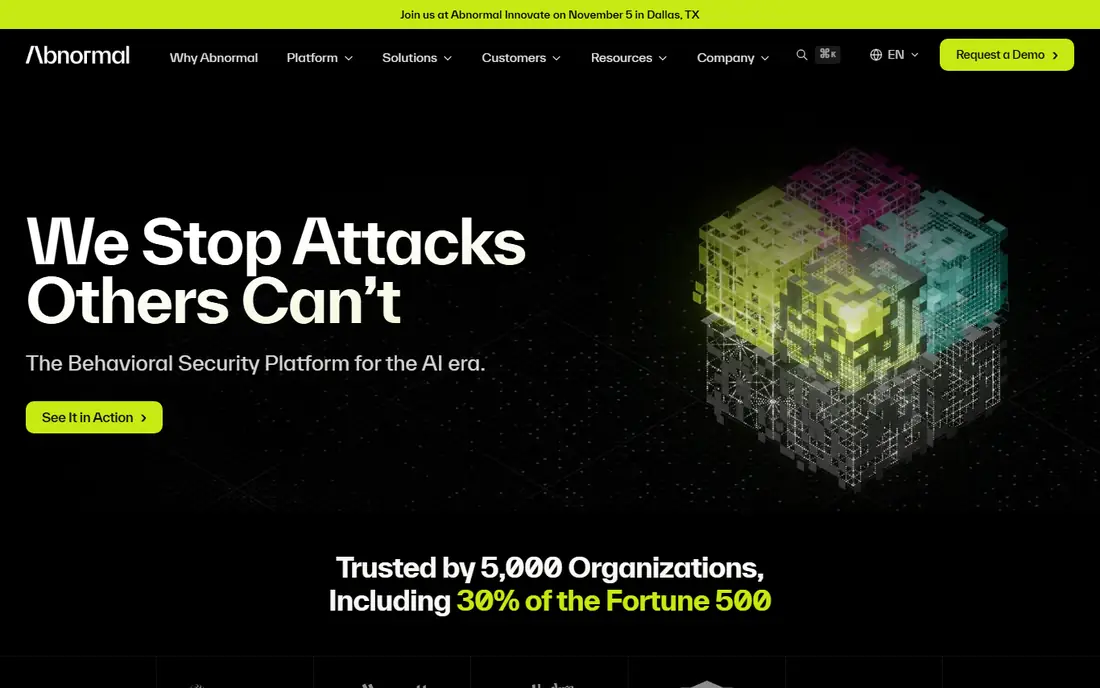
Abnormal AI uses behavioral analysis to spot business email compromise, vendor fraud, account takeover and other socially engineered mail that slips past traditional filters. It connects by API to Microsoft 365 or Google Workspace, so it adds a detection layer without changing mail routing. That makes it attractive for companies that already use native filtering but want stronger protection against impersonation.
Pricing is quote-based and depends on mailbox count and tier. Abnormal is an added layer rather than a standalone gateway for many buyers, so budget for it alongside existing mail security. If executive impersonation and vendor fraud are your top worries, Abnormal is one of the strongest specialist picks.
- Behavioral detection for business email compromise
- API-based, no mail flow change
- Works alongside native filtering
- Quote-based pricing
- Sold as an added layer, not a full gateway replacement for every buyer
Microsoft Defender for Office 365 protects Exchange, Teams, SharePoint and OneDrive with anti-phishing policies, Safe Links that check URLs at click time, Safe Attachments that detonate files in a sandbox, and impersonation protection. It fits naturally for companies already on Microsoft 365, since policies, reporting and admin controls sit in the same console as mail and identity.
Pricing is plan-based, with Plan 1 and Plan 2 tiers and bundles inside Microsoft 365 E5 and similar suites, so check the current Microsoft pricing page for your tenant. Companies on Google Workspace will get less value here. For a Microsoft shop, Defender is often the simplest and most cost-effective first layer, before adding a specialist tool if needed.
- Native Microsoft 365 integration
- Safe Links and Safe Attachments
- Attack simulation training included on higher plans
- Best value only inside Microsoft 365
- Advanced features need higher-tier plans
KnowBe4 is the best-known security awareness platform, with phishing simulations, training modules, risk scoring and the Phish Alert Button that lets staff report suspect mail with one click. Its PhishER product helps security teams triage reported mail and automate response. Unlimited phishing tests on some plans let teams run frequent, realistic simulations.
KnowBe4 publishes some seat pricing for training plans, but total cost varies by seat count, plan and contract term, so we list it as See website for a full quote. Training alone will not block malicious mail, so pair KnowBe4 with email filtering for a complete defense. For changing staff behavior, its library and reporting are hard to beat.
- Large simulation and training library
- Risk scoring and reporting
- Phish Alert Button for staff reporting
- Training alone does not block mail
- Pricing varies by seat count and term
Cofense combines PhishMe simulations with Reporter, which lets staff report suspect mail, and Triage, which helps security teams review, cluster and respond to reported messages. It supports email, SMS, voice and QR simulations, and its reporting focuses on competency, not just completion rates. That makes it a good fit for mature security teams that treat reported mail as incident data.
Pricing is quote-based. Smaller companies without a SOC workflow may find Cofense more than they need, and may prefer a simpler training tool. For organizations that want simulations tied directly to incident response, Cofense is a strong, operations-focused choice.
- Phishing simulations plus Reporter and Triage for SOC teams
- Email, SMS and voice simulations
- Competency reporting
- Quote-based pricing
- Strongest value for teams with a security operations workflow
Hoxhunt delivers adaptive phishing simulations that adjust difficulty and cadence per user, with instant coaching when a user clicks or reports a simulation. It covers email, Teams, SMS, voice and deepfake-style attacks, and its gamified approach aims to keep staff engaged over time. Security teams get human risk data to see which groups need more training.
Pricing is per employee and quote-based after a scoping call, so budget planning needs a vendor conversation. Hoxhunt also needs a program owner to review results and adjust campaigns. For companies that want training that adapts to each person, rather than the same simulation for everyone, Hoxhunt is a leading modern option.
- Adaptive simulations that adjust to each user
- Coaching at click or report time
- Covers email, Teams, SMS and voice
- Quote-based pricing after a scoping call
- Needs ongoing program management to show results
IRONSCALES offers AI-driven email security at the mailbox level, with phishing detection, incident response automation, simulation and training on its Complete plans. It is designed for mid-market teams that want strong protection without a long enterprise deployment. Its incident response tools help small security teams handle reported mail faster.
IRONSCALES is smaller than Proofpoint or Mimecast, so very large enterprises may prefer a bigger vendor ecosystem. Mid-market buyers, though, often find its deployment speed and combined protection plus training appealing. Trial it with your real mail flow to check false positives before a full rollout.
- AI mailbox-level protection
- Phishing simulation and training included on Complete plans
- Fast deployment for mid-market teams
- Smaller vendor than Proofpoint or Mimecast
- Some features depend on plan tier
How we picked these
We compared official product and pricing pages, feature documentation and public reviews for anti phishing tools available in the US in October 2026. We favored tools with real email filtering or simulation capability, clear reporting, and a working official homepage, covering both gateway protection and human training. We left out consumer-only antivirus tools, discontinued products and tools that only offer generic spam filtering without phishing-specific features.
How to choose anti phishing software
Start with your mail platform. Microsoft 365 shops should price Defender first, Google Workspace shops should look at API-based layers such as Abnormal, and companies that want gateway plus archiving should compare Proofpoint and Mimecast. Then add training, since filtering alone will miss some well-crafted impersonation mail.
Test with real mail, not just a demo. Run a pilot with a sample of users, check false positives on legitimate mail, and confirm the report button works in your mail client. Track click rates, report rates and time to remove malicious mail from inboxes, not just training completion. Finally, confirm contract terms, seat minimums and renewal pricing in writing, since enterprise security pricing is often quote-based and varies by term.
FAQ
What is anti phishing software?
Anti phishing software blocks or flags fraudulent mail that tries to steal passwords, payments or data, and trains staff to spot and report it. Email security tools filter, check links and attachments, and spot impersonation, while training tools run simulations and short lessons. Together they cut the chance that a single click leads to a breach.
Is email filtering enough on its own?
No. Filtering catches most bulk phishing, but targeted business email compromise and vendor fraud can look like normal mail. Training, a report button and fast incident response catch what filters miss. The best programs pair technical filtering with staff awareness and a clear reporting process.
How do phishing simulations work?
A simulation sends a realistic but harmless phishing message to staff, such as a fake password reset or invoice link. If a user clicks, they get coaching on what gave it away. If they report it, the security team gets practice handling real reports. Over time, click rates should fall and report rates should rise.
What is business email compromise?
Business email compromise is fraud where an attacker impersonates an executive, vendor or trusted contact to trick staff into sending money or sensitive data. It often uses no malware or bad links, so it can pass basic filters. Behavioral detection, verification steps for payment changes and staff training are key defenses.
Do small businesses need anti phishing software?
Yes, small businesses are frequent phishing targets because they often have fewer security controls. Microsoft 365 or Google Workspace native filtering is a starting point, plus training and a report process. Mid-market tools such as IRONSCALES and KnowBe4 offer trials that suit smaller teams.
How much does anti phishing software cost?
Enterprise email security is usually quote-based, varying by user count, modules and term, while some training tools publish seat pricing. Microsoft Defender pricing depends on your Microsoft 365 plan. Get quotes for your exact user count and modules, and compare renewal terms, not just first-year pricing.