Best All-in-One for Multi-Entity Companies: 8 Platforms Compared
We compared the best all-in-one for multi-entity companies on consolidation, intercompany accounting and reporting to help finance teams choose wisely.
- Editor's choice
 Oracle NetSuite
Global multi-entity groups
Starts atSee websiteVisit netsuite.comFull review - Great alternative
 Sage Intacct
Finance-led mid-market groups
Starts atSee websiteVisit sageintacct.comFull review - Also consider
 Acumatica
Growing groups, flexible licensing
Starts atSee websiteVisit acumatica.comFull review
TL;DR:
- True multi-entity accounting means separate books per entity, automated intercompany eliminations and consolidated reporting, not just tracking locations in one file.
- NetSuite, Sage Intacct and Acumatica are the strongest native multi-entity options for most mid-market groups, while simpler tools suit single-entity firms with several locations.
- Consolidation is where spreadsheets fail, so test the close process, currency handling and intercompany workflow in a demo before you commit.
- Pricing for the serious multi-entity platforms is almost always quote-based, so budget for implementation and training on top of the subscription.
- Pick the platform that matches your entity count, currency needs and reporting depth, not the one with the longest feature list.
Quick comparison
| Tool | Best for | Starts at | Free plan? | |
|---|---|---|---|---|
| Oracle NetSuite | Global multi-entity groups | See website | No | Visit |
| Sage Intacct | Finance-led mid-market groups | See website | No | Visit |
| Acumatica | Growing groups, flexible licensing | See website | No | Visit |
 Microsoft Dynamics 365 Business Central | Microsoft-centred teams | See website | No | Visit |
 Intuit Enterprise Suite | QuickBooks users scaling up | See website | No | Visit |
 Accounting Seed | Salesforce-based groups | See website | No | Visit |
 Oracle Fusion Cloud Financials | Large global enterprises | See website | No | Visit |
 Xero | Small firms with simple needs | See website | Free trial | Visit |
The best all-in-one platforms for multi-entity companies
We compared platforms on native multi-entity books, intercompany accounting, consolidation, multi-currency handling and reporting depth. We treated all-in-one as finance plus the operations that surround it, such as inventory, purchasing or CRM, where the platform offers them. Prices are quote-based for most of this list, so we note that plainly rather than guessing.
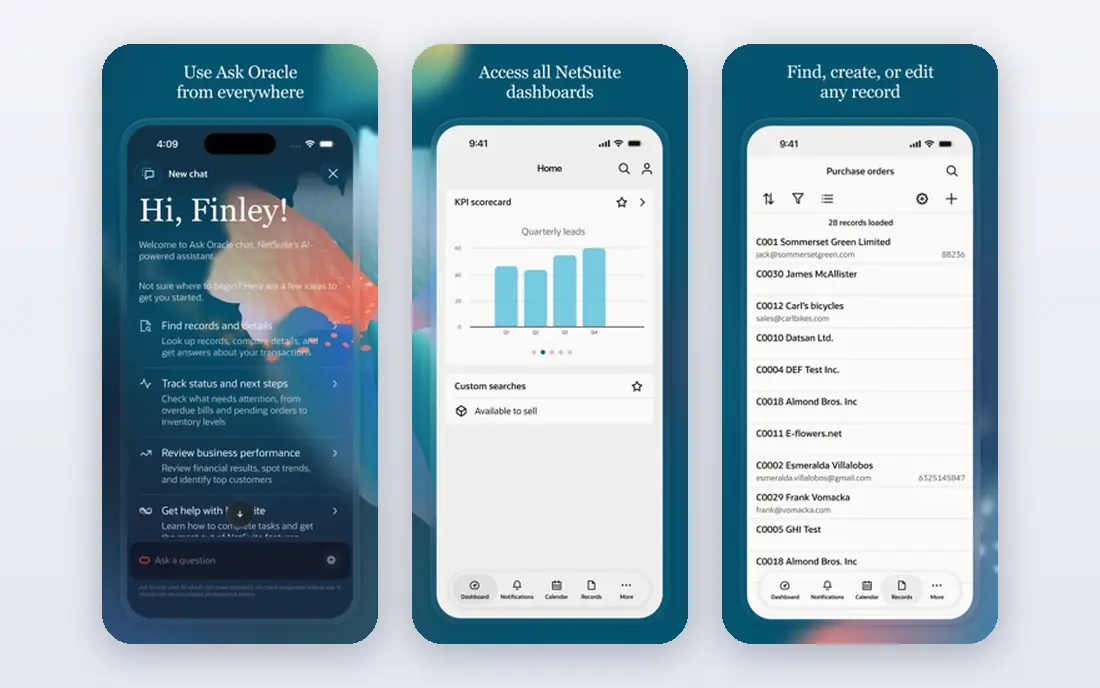
NetSuite with OneWorld is the default answer for many multi-entity groups, and the reason is simple: subsidiaries, currencies and consolidations live in one database rather than in a patchwork of files. Finance teams can run entity-level books, automate intercompany transactions and produce consolidated reports without exporting to spreadsheets. The platform also covers inventory, purchasing, supply chain and CRM, which makes it a genuine all-in-one for operating companies.
The cost is the catch. Pricing is quoted, implementation takes planning and smaller groups may find the project heavier than they need. If you run several entities across countries and currencies, though, NetSuite is the benchmark other platforms are judged against, and it is where our shortlist starts.
- Native OneWorld multi-entity and multi-currency support
- Consolidated reporting in one system
- Broad ERP modules beyond finance
- Quote-only pricing
- Implementation can be long and costly for smaller groups
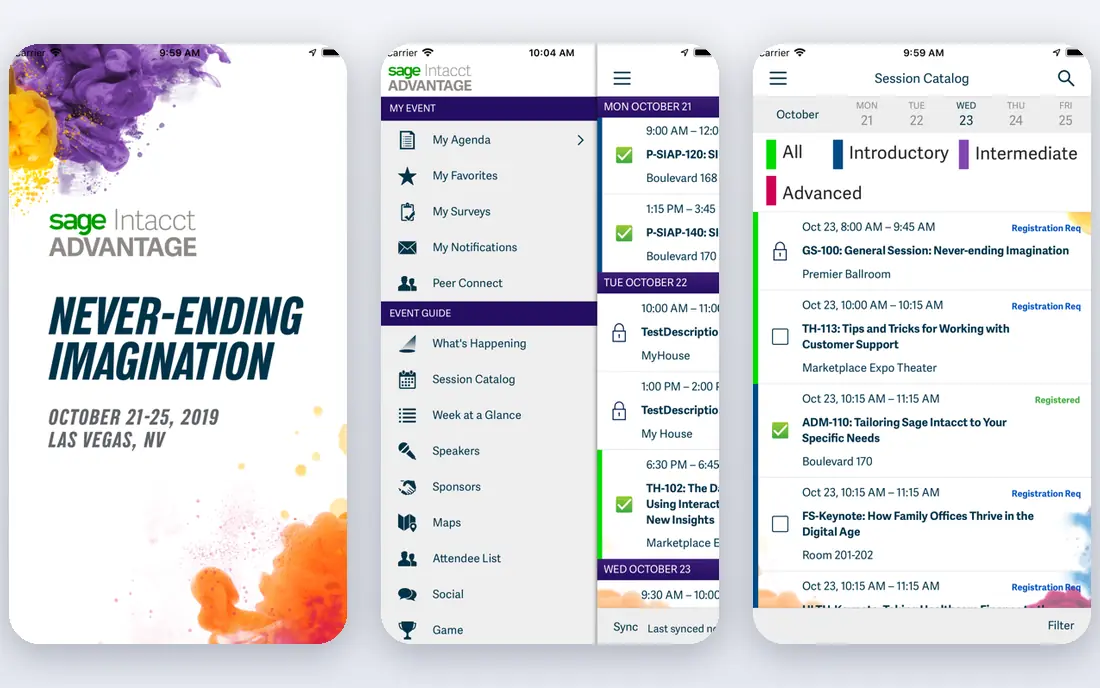
Sage Intacct is the finance team's favourite in this list. Its dimensional chart of accounts lets you slice results by entity, department, project or location without a tangle of account codes, and multi-entity consolidation is largely automated. Intercompany transactions, currency conversion and eliminations are handled inside the system, which speeds the close for groups that report often.
Where Intacct is thinner is operations. If you need deep manufacturing, warehouse or supply chain features, you will likely pair it with other systems, whereas NetSuite or Acumatica cover more of that natively. For services, nonprofit and finance-led groups whose hardest problem is reporting across entities, Intacct is often the best fit.
- Dimensional reporting
- Automated multi-entity consolidation
- Strong intercompany handling
- Finance-focused, so operations modules are thinner than full ERP rivals
- Per-user pricing can grow
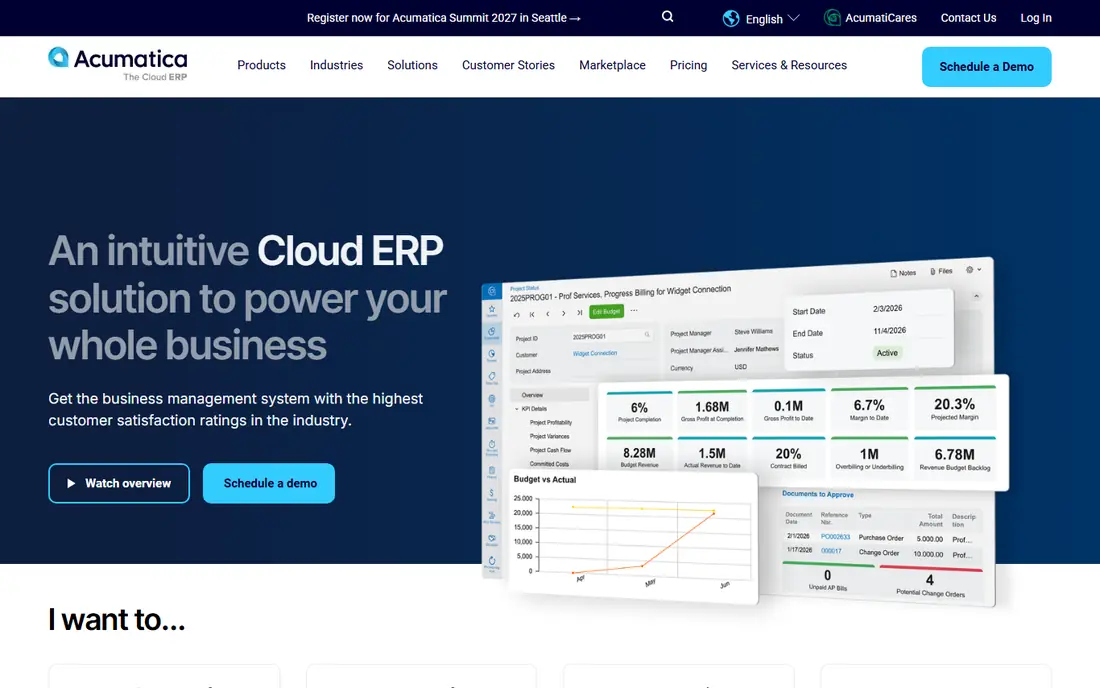
Acumatica gives growing groups a full cloud ERP with native multi-company, branch and intercompany accounting, plus inventory, distribution and project modules. Its licensing model charges by resources used rather than per user, which can be kinder to groups with many occasional users across entities. That flexibility is a real advantage for franchises, distributors and multi-branch firms.
The partner network matters more with Acumatica than with larger vendors, since implementation quality can vary. Vet the partner as carefully as the software, and ask for reference customers with a similar entity structure. Done well, Acumatica delivers serious multi-entity capability at a more approachable scale than enterprise ERP.
- Multi-company and intercompany accounting
- Consumption-based licensing
- Broad cloud ERP modules
- Implementation partner quality varies
- Smaller brand than NetSuite or Sage
Business Central suits teams already living in Microsoft 365, Outlook and Teams. It handles multiple companies, intercompany postings and consolidated reporting, and its published pricing makes budgeting easier than quote-only rivals. For small and mid-market groups with straightforward entity structures, it covers finance, inventory, sales and purchasing in one place.
Larger or more complex groups should test its limits. Deep multi-entity consolidation, multi-currency reporting and global compliance may need add-ons or careful configuration. If your group is Microsoft-centred and your entity structure is moderate, Business Central offers a pragmatic all-in-one path.
- Published pricing in many markets
- Tight Microsoft 365 integration
- Consolidation across companies
- Multi-entity depth is lighter than NetSuite or Intacct
- Complex groups may need add-ons
Intuit Enterprise Suite is the step up for companies that have outgrown QuickBooks Online but do not want to abandon the Intuit world. It adds multi-entity views and management, stronger reporting and more capacity, while keeping payroll, payments and time tracking in familiar territory. For US groups moving from single-entity QuickBooks to a handful of entities, the learning curve is gentle.
Be honest about its ceiling. True multi-entity consolidation with complex intercompany and multi-currency needs is stronger in NetSuite, Intacct or Acumatica. Enterprise Suite is best for groups whose entity count is growing but whose structure is still relatively simple.
- Familiar QuickBooks path
- Multi-entity views
- Payroll and payments in the same family
- Weaker true consolidation than dedicated multi-entity ERP
- Best for US-centric groups
Accounting Seed is built inside Salesforce, which makes it a natural pick for groups already running sales, service or operations there. It supports multiple ledgers, currencies, intercompany accounting and consolidation without leaving the Salesforce platform, so finance and operations share the same customer and project data. That native fit removes a whole layer of integration work.
The flip side is dependence on Salesforce. If your company is not committed to that platform, Accounting Seed is not the right starting point. For Salesforce-centred groups with several entities, though, it is one of the cleanest multi-entity options available.
- Native Salesforce accounting
- Multiple ledgers and currencies
- Intercompany and consolidation
- Requires Salesforce
- Less suited to firms outside that ecosystem
Oracle Fusion Cloud Financials is built for large, global groups with complex financial operations. It offers enterprise ledgers, multiple reporting currencies, translation adjustments, intercompany processing and strong controls, all at a scale that mid-market tools cannot match. Public companies and multinationals with strict compliance needs are its natural audience.
For most mid-market groups, Fusion is more than needed, and both price and implementation effort reflect that. If your group is large, acquisitive or operating under heavy regulatory scrutiny, Fusion belongs on the shortlist. Otherwise, start with the mid-market platforms above.
- Enterprise ledgers and reporting currencies
- Deep intercompany and controls
- Global scale
- Enterprise pricing and implementation
- Overkill for mid-market groups
Xero is included with a clear warning: it is excellent for small businesses, but it is not a native multi-entity ERP. Each Xero file is essentially one entity, and consolidation across files usually needs a reporting add-on. For a single legal entity with several locations, its tracking categories handle location reporting well at a low price.
If you genuinely run multiple legal entities that need consolidated accounts and intercompany eliminations, Xero will frustrate you as you grow. Treat it as a starting point for small firms, with a planned move to Intacct, Acumatica or NetSuite when entity complexity rises.
- Easy to use
- Affordable
- Good for single-entity firms with several locations
- True multi-entity consolidation needs add-ons
- Tracking categories are not full entity books
How we picked these
We compared vendor documentation, multi-entity feature coverage and independent buyer guides for 2026, focusing on native entity books, intercompany handling, consolidation and currency support. We favoured platforms that handle those tasks inside the system over ones that rely on spreadsheets or add-ons. We did not run implementations or migrate live data, so our findings reflect published features, pricing pages and third-party comparisons rather than hands-on deployment.
How to choose for your entity structure
Count your entities, currencies and reporting deadlines before you look at demos. A group with three domestic entities and one currency has different needs from a group with twenty subsidiaries in ten currencies. Map your intercompany flows too: loans, shared services, transfer pricing and cross-entity sales all create transactions that must eliminate cleanly on consolidation.
In demos, test the close, not just the dashboard. Ask the vendor to show an intercompany transaction from entry to elimination, a consolidated report with drill-down to one entity, and a currency revaluation. Check who can post across entities, how audit trails work and how long implementation typically takes for a group your size. Finally, price the whole project, including implementation, training, integrations and any consolidation add-ons, since the subscription alone rarely tells the full story.
FAQ
What counts as true multi-entity accounting?
True multi-entity accounting gives each legal entity its own books while letting finance consolidate results, eliminate intercompany balances and report by entity or group. Location or class tracking inside a single set of books is useful, but it is not the same as separate entity ledgers with automated consolidation.
Do I need a full ERP or just accounting software?
If your main problem is financial consolidation and reporting, a finance platform such as Sage Intacct may be enough. If you also need inventory, manufacturing, distribution or project operations across entities, a full ERP such as NetSuite or Acumatica fits better. Match the scope to your operations, not to a vendor's brochure.
How much does multi-entity software cost?
Most serious multi-entity platforms use quote-based pricing, since cost depends on entities, users, modules and implementation scope. Budget for implementation and training on top of the subscription, and ask vendors for a total first-year figure. Simpler tools such as Xero publish prices, but they cover less multi-entity depth.
Can I consolidate entities that use different systems?
Yes, with consolidation tools or reporting add-ons, but it is slower and more error-prone than native consolidation. Groups that acquire companies often live with mixed systems for a time, then standardise. If consolidation speed and accuracy matter, a single native platform is the cleaner long-term answer.
What should I test in a demo?
Test an intercompany transaction end to end, a consolidated report with drill-down, currency handling and user permissions across entities. Ask how the month-end close works and how long it typically takes for a group like yours. A polished dashboard alone tells you little about close quality.