The 5 Best Aio Platform in 2026, Ranked
Best aio platform, compared. 5 tools with published prices, free plans and limits. Salesforce comes first for AI-powered CRM and app integration. Easy to scan.
- Editor's choice
 Salesforce
AI-powered CRM and app integration
Starts atPricing on requestVisit salesforce.comFull review - Great alternative
 Microsoft Dynamics 365
Integrated CRM and ERP with AI
Starts atPricing on requestVisit microsoft.comFull review - Also consider
 Zoho One
Wide suite of integrated apps
Starts atPricing on requestVisit zoho.comFull review
Direct answer
Our first pick is Salesforce, best for AI-powered CRM and app integration. For a different need, Microsoft Dynamics 365 covers integrated CRM and ERP with AI and Zoho One covers wide suite of integrated apps. The other 2 tools in the list cover narrower or pricier cases. None of these vendors publish plan prices, so pricing is on request for every option.
TL;DR:
- Salesforce is the opening pick, best for AI-powered CRM and app integration.
- Odoo is the one to check for open-source integrated apps.
- A free plan is available from 2 of the 5 tools: Salesforce, Odoo.
- Salesforce, Odoo and the 3 others all sell by quote; expect sales conversations before you see a price.
- Before buying Zoho One, weigh this: some apps less mature than standalone.
Last checked November 2026. Pricing on request: vendors did not publish plan prices when this guide was last checked (November 2026), so ask each vendor for a written quote.
Quick comparison
| Tool | Best for | Starts at | Free plan? | |
|---|---|---|---|---|
| Salesforce | AI-powered CRM and app integration | Pricing on request | Yes | Visit |
| Microsoft Dynamics 365 | Integrated CRM and ERP with AI | Pricing on request | Not stated | Visit |
| Zoho One | Wide suite of integrated apps | Pricing on request | Not stated | Visit |
 HubSpot | Unified marketing, sales, and service | Pricing on request | Not stated | Visit |
 Odoo | Open-source integrated apps | Pricing on request | Yes | Visit |
Aio Platform compared in detail
Choosing aio platform usually comes down to price, fit and limits. This LinkVetted guide sets 5 tools side by side on those three points, with the facts kept short and checkable.
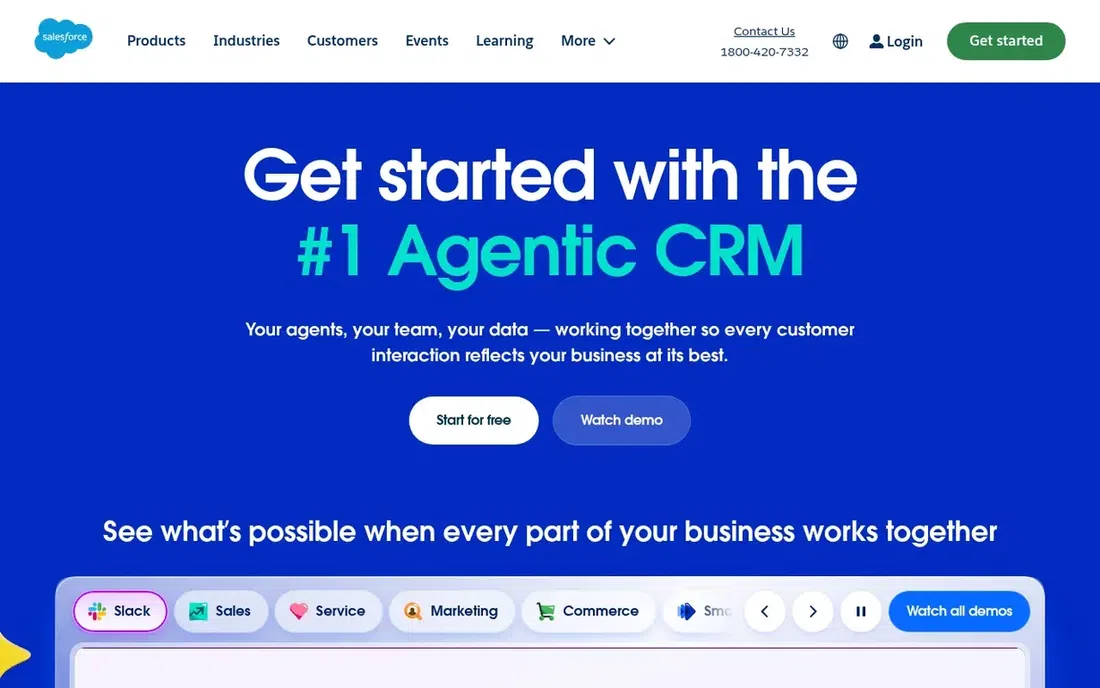
Salesforce serves AI-powered CRM and app integration. Smaller firms may find it overkill. In practice, if you need a more straightforward, more low-cost CRM, consider other choices.
Downsides: Can be costly for small teams.
That said, for organizations with complicated processes and a need for advanced AI, Salesforce is a solid contender. Salesforce is a leading AI CRM that helps businesses link with customers by uniting data, apps, and agents. It gives you a solid system for sales, service, marketing, and commerce, with a solid emphasis on artificial intelligence to drive automation and insights. This comparison lists no price for Salesforce; ask the vendor. You can start on Salesforce without paying.
- Broad app ecosystem
- Highly configurable
- Steep ramp-up time
Microsoft Dynamics 365 is built with integrated CRM and ERP with AI in mind. Microsoft Dynamics 365 supplies a suite of agentic CRM and ERP applications that link teams, processes, and data. It is built to help businesses enter the era of agentic business, where AI-driven agents assist with tasks.
In daily use, Dynamics 365 can be complicated to implement and customize, commonly requiring partner support. Companies seeking a light option may find it heavy. That said, for enterprises needing a unified CRM and ERP with AI capabilities, Dynamics 365 is a compelling choice. The licensing model can also be expensive, notably for large deployments. No starting price is listed for Microsoft Dynamics 365 here; confirm pricing on the vendor site. Trial and free access: Not stated.
Downsides: Implementation can be complicated.
- Merges CRM and ERP
- Deep integration with Microsoft tools
- Licensing can be expensive
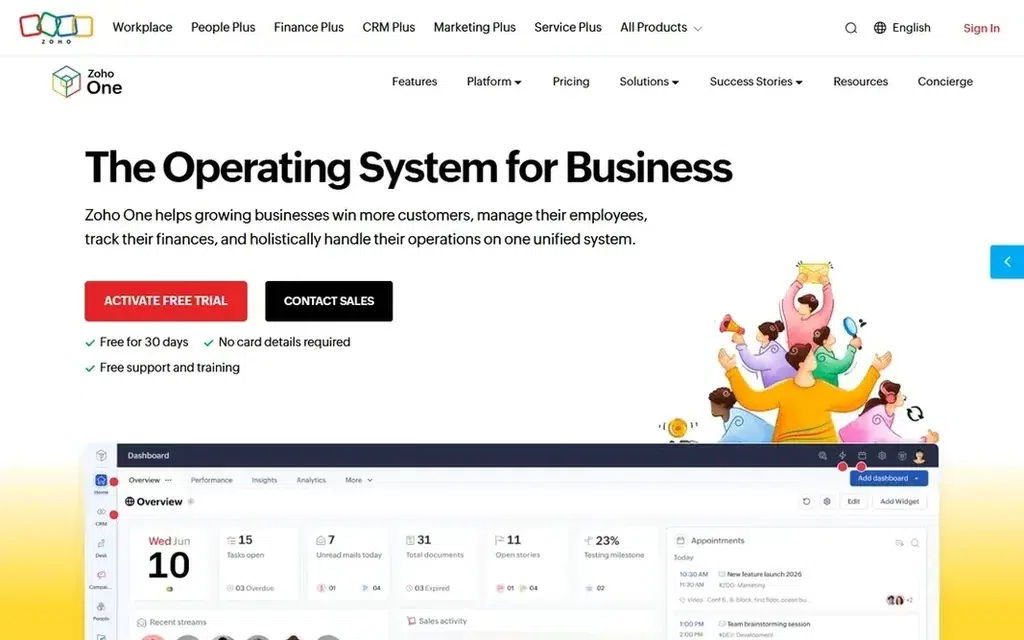
Zoho One works best for wide suite of integrated apps. Zoho One is marketed as an operating system for business, offering a unified product with over 50 integrated apps handling sales, marketing, finance, HR, and more. It aims to enable employees and enhance business operations by offering a single suite that links several functions.
This makes it a solid choice for organizations seeking a full set of tools without managing several vendors. If you need highly specialized functionality in a particular area, a best-of-breed approach might be better. No starting price is listed for Zoho One here; confirm pricing on the vendor site. Free options: Not stated.
Drawbacks to consider: Can be overwhelming to set up.
- Unified product for business operations
- Economical for plenty of users
- Some apps less mature than standalone
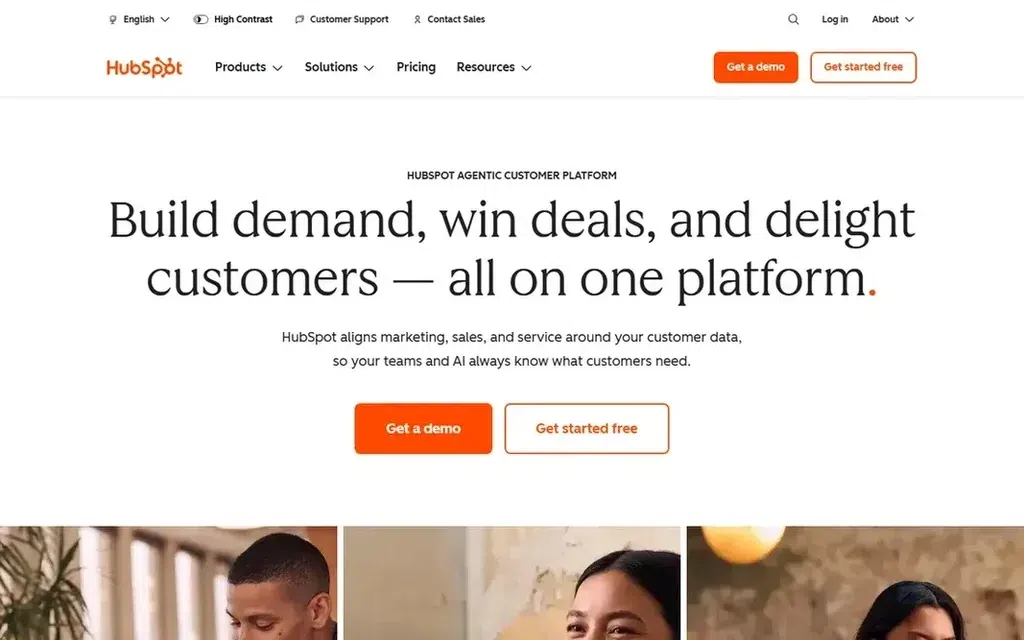
Choose HubSpot for unified marketing, sales, and service. It is built to help firms attract, engage, and delight customers across channels. Businesses with complicated operational needs might have to integrate extra software.
Honest limits: Less suited for complicated ERP needs.
Also, consider HubSpot if your primary focus is customer-facing activities instead of back-office management. Worth adding: while HubSpot excels at front-office functions, it may not replace dedicated ERP systems for manufacturing or inventory-heavy operations. Pricing for HubSpot is not stated here, so ask the vendor for current figures. Free options: Not stated.
- Approachable interface
- Scalable for expanding teams
- Can become expensive at scale
Pick Odoo if this describes you: open-source integrated apps. Odoo is an open-source ERP and CRM system that provides a suite of completely integrated apps including everything from ERP to CRM, eCommerce, and CMS.
Beyond that, Odoo is well suited to small to midsize businesses looking for a budget-friendly, modular product. From a buyer's view, some apps may not be as feature-rich as dedicated options. Pricing for Odoo is not stated here, so ask the vendor for current figures. Odoo offers a free plan.
Watch-outs: Needs technical expertise for customization.
- Cloud or on-premise deployment
- Open-source adaptability
- Some apps less refined
How the list was put together
Selection started from tools commonly considered for aio platform, then narrowed to 5 that have clear pricing information or a clear quote process. Treat prices as a snapshot: vendors change plans often, so check the vendor site for the figure that applies today. The order reflects how well each tool fits the most common buying scenario for aio platform, then price clarity, then free plan access. It is a starting point, not a verdict.
Things to verify first
- Confirm the entry price with every vendor: no tool from Salesforce to Odoo shows a fixed starting price.
- Read the fine print on the free plans from Salesforce and Odoo; seat, project and feature caps differ.
- Before choosing Salesforce, weigh its main limit: steep ramp-up time.
- Price Salesforce for your actual team size; headline prices rarely include add-ons or overage.
- Pick one real project and run it in Zoho One first; a small pilot shows fit faster than a checklist.
FAQ
Which options for aio platform have a free plan?
Salesforce and Odoo offer a free plan in this list. Free plans usually cap users, projects or features, so check the limits on the vendor page.
Can I try these tools before paying?
Often, yes. Salesforce and Odoo have a free plan. Use your own data and a real task during the test, and check what the free tier or trial limits before you rely on it.
Do these tools publish their prices?
No. None of the tools, from Salesforce to Odoo, shows a fixed starting price here, so budget time for quotes.
How are the tools for aio platform ordered?
Salesforce sits first and Odoo last because the order follows typical fit for aio platform, then price clarity and free access. It is a judgement call, so read each profile for fit and limits.
Sources
- https://www.salesforce.com
- https://www.microsoft.com/en-us/dynamics-365
- https://www.zoho.com/one
- https://www.hubspot.com
- https://www.odoo.com