Best AI Workout App Free in 2026: 8 Apps Compared
This best ai workout app free guide for 2026 compares 8 apps with free plans for AI training, strength and home workouts, with prices and limits for readers.

- Editor's choice
 Nike Training Club
Free guided workouts
Starts atFreeVisit nike.comFull review - Great alternative
 FitOn
Free classes at home
Starts atFreeVisit fitonapp.comFull review - Also consider
 Fitbod
AI strength programming
Starts at$12.99 per monthVisit fitbod.meFull review
TL;DR:
- Nike Training Club and FitOn give the most free guided workouts, with no subscription needed to start.
- Fitbod gives the strongest AI programming, but its free tier is limited to a few workouts.
- Freeletics is the best free starting point for bodyweight training, with paid AI coaching on top.
- These apps give general fitness information only, not medical advice, so stop and seek care if you feel pain.
Quick comparison
| Tool | Best for | Starts at | Free plan? | |
|---|---|---|---|---|
| Nike Training Club | Free guided workouts | Free | Yes | Visit |
| FitOn | Free classes at home | Free | Yes | Visit |
| Fitbod | AI strength programming | $12.99 per month | Yes | Visit |
 Freeletics | AI bodyweight coaching | Free | Yes | Visit |
 JEFIT | Strength logging and plans | Free | Yes | Visit |
 Hevy | Simple strength tracking | Free | Yes | Visit |
 Boostcamp | Structured lifting programs | Free | Yes | Visit |
 Caliber | Coach-designed strength plans | Free | Yes | Visit |
The best free ai workout apps
Free workout apps differ in what free means. Some are fully free, some offer a limited free tier, and some offer a trial. The list below starts with the most genuinely free options, then moves to AI tools where the free tier is a useful test before paying.
Nike Training Club is our pick for most people because it is free with no in-app purchase needed for the core library. Workouts cover bodyweight strength, HIIT, yoga, Pilates, mobility and sessions with weights, with video demos and audio coaching. Multi-week programs add structure when you want a plan rather than single sessions.
It is not a true AI coach. Programs do not adapt as deeply to your progress as Fitbod or Freeletics, and you will need to pick progressions yourself as you get stronger. For a free, high-quality guided library, though, nothing else on this list matches it. Start here if cost is the main barrier.
- Large free library
- Strength, cardio, yoga and mobility
- Multi-week programs
- Workouts are preset rather than fully adaptive
- Needs a Nike account
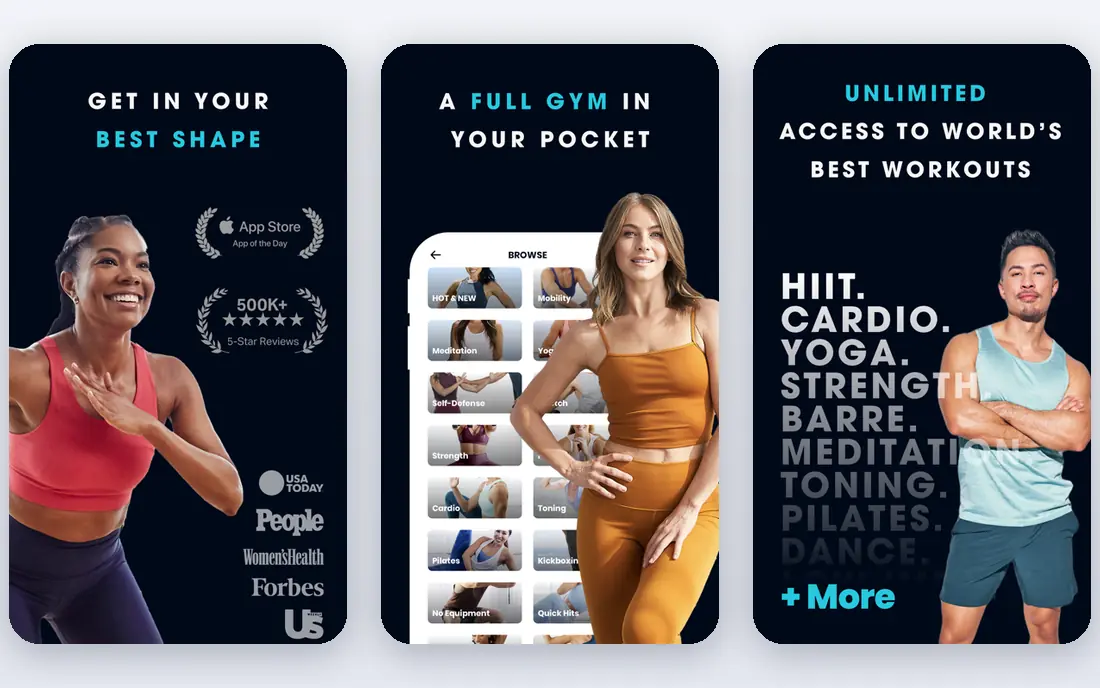
FitOn suits home workouts when you like classes more than solo programming. The free tier includes many cardio, strength, yoga and Pilates classes, with new sessions added regularly. You can train with friends, track streaks, and follow programs without paying, which helps consistency.
Pro at $29.99 per year adds more programs, meal plans and offline access, but the free tier is enough for most beginners. The weakness is programming depth for serious lifters, who will want a tracker such as Hevy or JEFIT alongside it. For general fitness at home, FitOn is hard to beat for free.
- Large free class library
- Cardio, strength, yoga and Pilates
- Social features
- Pro features need a paid plan
- Less strength programming depth than Fitbod
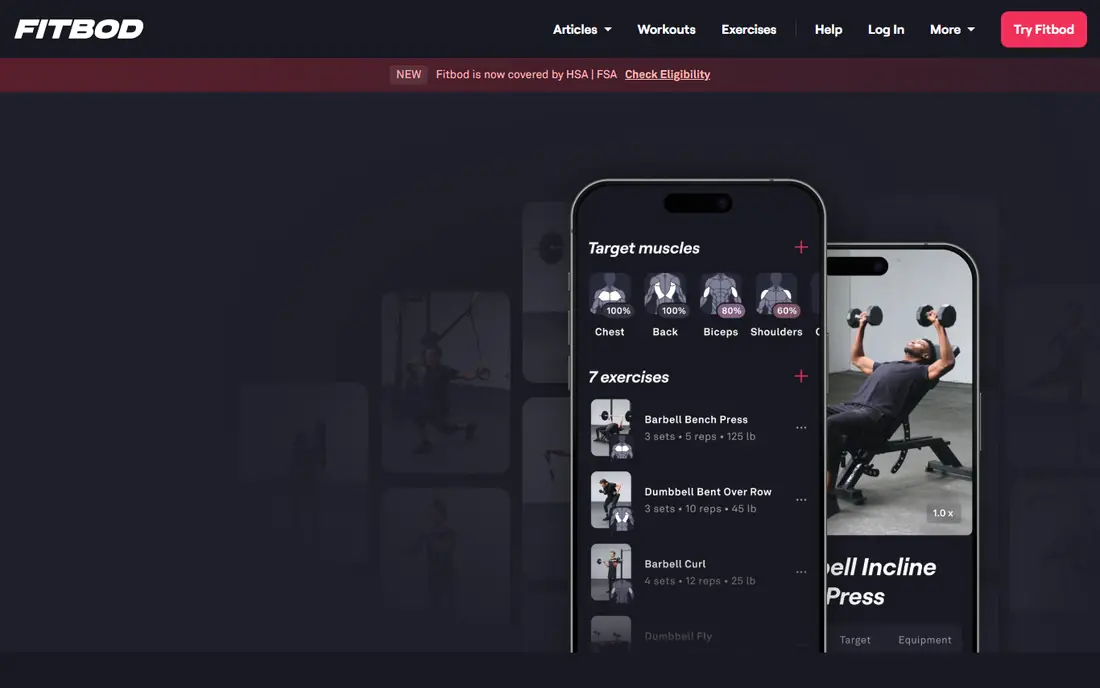
Fitbod is the strongest AI pick for gym training. Tell it your equipment, goals and available muscles, and it builds each session based on past volume, recovery and progression. That removes the daily question of what to do next, which is where many lifters stall. The exercise library and tracking are strong.
The free tier covers only a few workouts, so treat it as a test, not a long-term free plan. Paid pricing runs $12.99 per month or $79.99 to $95.99 per year depending on billing. Beginners may find the options overwhelming at first, but lifters who know basic form will get the most from it.
- AI builds workouts from equipment and recovery
- Progressive overload
- Large exercise library
- Free tier is limited
- Full use needs $79.99 to $95.99 per year
- Interface can overwhelm beginners
Freeletics is built around bodyweight training with an AI coach that adapts to your feedback, fitness level and available time. The free version includes many workouts, while the paid coach builds a structured plan, adjusts intensity, and tracks progress over weeks. That makes it a good fit for home, travel or park training.
It is less useful for heavy barbell work, since the core is bodyweight and HIIT. Paid pricing varies by term, so check the current offer in the app before subscribing. If you want a coach that adapts without equipment, Freeletics is the best free starting point here.
- Adaptive bodyweight AI coach
- No equipment needed
- Large workout library
- Full AI coach needs a paid plan
- Bodyweight focus limits heavy lifting
JEFIT is a workhorse for lifters who want to log every set and follow a plan. The free tier covers core logging, a large exercise library with guides, and community workout plans. Progress charts show strength over time by muscle group, which helps you see whether a program is working.
The app feels busier than Hevy or Fitbod, and advanced analytics sit in Elite, at around $12.99 per month or $69.99 per year. It is not a pure AI coach, but its plans and logging give structure at no cost. Use it when tracking matters more than automated programming.
- Very large exercise library
- Community plans
- Detailed progress charts
- Interface feels busy
- Elite features need a paid plan
Hevy keeps strength training simple. Log sets, reps and weight, follow routines, and share workouts with friends. The free tier covers core logging, while Pro at $9.99 per month or $23.99 per year adds unlimited routines and more detail. That low yearly price makes it an easy upgrade if you outgrow the free tier.
It does not build AI workouts the way Fitbod does, so you need a plan to follow or the discipline to build one. Pair it with a program from Boostcamp or a coach plan, and Hevy becomes a clean tracker that stays out of your way. For lifters who hate clutter, that simplicity is the point.
- Clean logging
- Routines and templates
- Social features
- Low-cost Pro
- Less AI programming than Fitbod
- Pro needed for unlimited routines
Boostcamp focuses on structured lifting programs from coaches, including powerlifting and bodybuilding plans. The free tier covers many programs, with progression built in, so you do not need to design sets and reps yourself. That structure helps lifters who want a proven plan without paying for a coach.
Some programs are paid, and the app is more program-focused than class-focused, so it suits gym users more than home class fans. It pairs well with Hevy for logging, or stands alone for lifters who want a plan and a tracker in one place. Check program details before starting, since volume varies a lot.
- Expert-built strength programs
- Free core access
- Clear progression
- Some programs are paid
- Less guided video than Nike Training Club
Caliber gives you a strength plan designed by a coach, with a free tier for basic tracking and paid Premium for fuller programming. The plans adapt to your level and equipment, and the app tracks progress in a clear way. That coach-led structure suits lifters who want guidance without a one-to-one coach price.
Premium pricing varies, so check the current plan in the app, and note that one-to-one coaching is a separate, higher cost. Caliber is not a class app, so home users who want yoga or HIIT classes should pair it with Nike Training Club or FitOn. For strength alone, it is a solid free test.
- Coach-designed plans
- Free tier for basics
- Progress tracking
- Premium coaching costs more
- Less class variety than FitOn
How we picked these
We compared official pricing pages, app store listings and 2026 roundups for workout apps with a real free tier or fully free library. We kept only products that work in October 2026 and that offer AI programming, adaptive plans or structured coaching, alongside strong free guided options. We favored clear free limits, honest pricing, and apps that cover gym, home and bodyweight training.
How to choose a free workout app that you will keep using
Match the app to your training place first. Home and travel training favors Nike Training Club, FitOn or Freeletics, while gym training favors Fitbod, JEFIT, Hevy or Boostcamp. An app that needs equipment you do not own will sit unused, however good its AI is.
Next, test the free tier for two full weeks, not two days. Log whether you open it, whether workouts fit your time, and whether progression feels right. A free app that you use four times a week beats a paid AI coach that you open once. If you pay later, pay for the feature that fixes a real problem, such as adaptive programming or unlimited routines.
Finally, treat these apps as general fitness information, not medical advice. They are for healthy adults doing general training, not for injury rehabilitation or for managing a medical condition. Stop if you feel sharp pain, dizziness or chest pain, and talk to a clinician or qualified trainer before starting a new program if you have a health condition, are pregnant, or are returning from injury.
FAQ
What is the best free ai workout app?
Nike Training Club is the best fully free option for guided workouts, while Fitbod is the best AI programming tool with a limited free tier. If you train with bodyweight only, Freeletics gives the best free AI coach starting point.
Is Fitbod really free?
Fitbod has a free tier, but it is limited to a few workouts. Full AI programming needs a paid plan, at $12.99 per month or $79.99 to $95.99 per year. Use the free tier to test whether the programming fits your gym and equipment.
What is the best free ai workout app for home workouts?
Nike Training Club and FitOn are the best free home options, with large class libraries and no equipment needed for many sessions. Freeletics is the best choice when you want an adaptive bodyweight coach at home.
Do AI workout apps replace a personal trainer?
No. AI apps build and adjust programs from your logged data, but they cannot watch your form in person, assess pain, or give medical guidance. They work well for general programming, while a qualified trainer is better for technique, injury history and specific goals.
Can beginners use AI workout apps safely?
Yes, with care. Start with beginner programs, use light weights, and learn form from video guides before adding load. Stop if you feel pain, and seek professional advice if you have a medical condition or are unsure about an exercise.