Which AI Translation Software Fits You? 7 Tools Compared
Weighing the best AI translation software? We lined up 7 products by cost, free access and fit. Every entry states what it lacks. Budget notes included.
- Editor's choice
 Lilt
Interactive enterprise machine translation
Starts atSee websiteVisit lilt.comFull review - Great alternative
 Apertera
Legal and financial translation
Starts atSee websiteVisit apertera.comFull review - Also consider
 DeepL
Quality European language translation
Starts at$5.49/month + $25 per 1M characters (API Pro)Visit deepl.comFull review
TL;DR:
- The list opens with Lilt, aimed at interactive enterprise machine translation.
- 4 of 7 tools offer a free plan: DeepL, Lara, Microsoft Translator, Google Cloud Translation.
- The lowest published monthly entry price here is $5.49/month + $25 per 1M characters, from DeepL.
- Unbabel suits AI translation with human editing.
Direct answer
Start with Lilt if you need interactive enterprise machine translation. Apertera is the stronger choice for legal and financial translation, while DeepL suits quality European language translation. Details, prices and limits for the rest of the 7 tools are below.
Quick comparison
| Tool | Best for | Starts at | Free plan? | |
|---|---|---|---|---|
| Lilt | Interactive enterprise machine translation | See website | Not stated | Visit |
| Apertera | Legal and financial translation | See website | Not stated | Visit |
| DeepL | Quality European language translation | $5.49/month + $25 per 1M characters (API Pro) | Yes | Visit |
 Lara | Adaptive, context-aware machine translation | Free | Yes | Visit |
 Microsoft Translator | Azure-based products | $10 per 1M characters | Yes | Visit |
 Google Cloud Translation | Scalable developer API | $20 per 1M characters | Yes | Visit |
 Unbabel | AI translation with human editing | From $0.00020/word (pay as you go) | Not stated | Visit |
AI Translation Software, one by one
LinkVetted put together this guide to AI translation software for readers who want a clear shortlist without reading every vendor page. It compares 7 tools on starting price, free plans, who each one suits and where each one falls short.
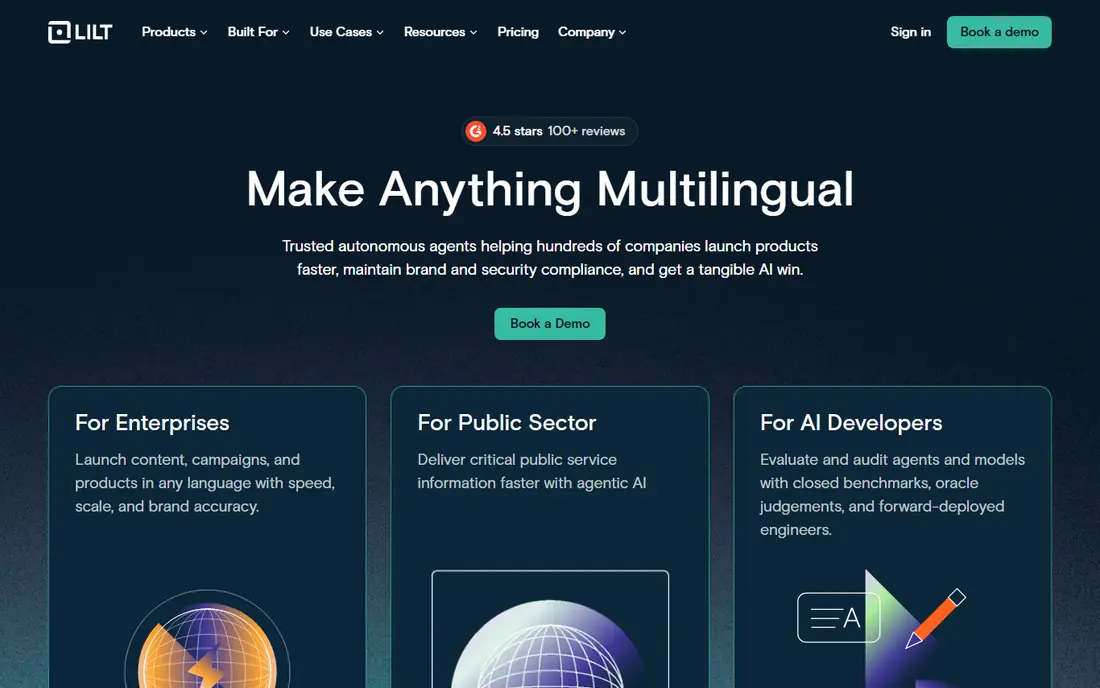
For interactive enterprise machine translation, Lilt is a natural candidate. Over a large program, that feedback loop compounds into real productivity gains.
More specifically, smaller buyers should start with DeepL or Google. Everything about the purchase says enterprise. No starting price is listed for Lilt here; confirm pricing on the vendor site. Free access: Not stated.
Downsides: Quote-based pricing only.
- Well suited to large-scale content programs
- Capable enterprise security posture
- Aimed at large buyers, not individuals

For legal and financial translation, Apertera is a natural candidate. Apertera is the current name for Alexa Translations, which rebranded in mid-2026.
Where it is weaker: Pricing needs a quote.
Certified translation workflows and domain-trained engines serve a market that general MT engines treat as an afterthought. Pricing for Apertera is not stated here, so ask the vendor for current figures. Trial and free access: Not stated.
- Certified translation workflows
- Rebrand of the established Alexa Translations
- Niche focus limits general use
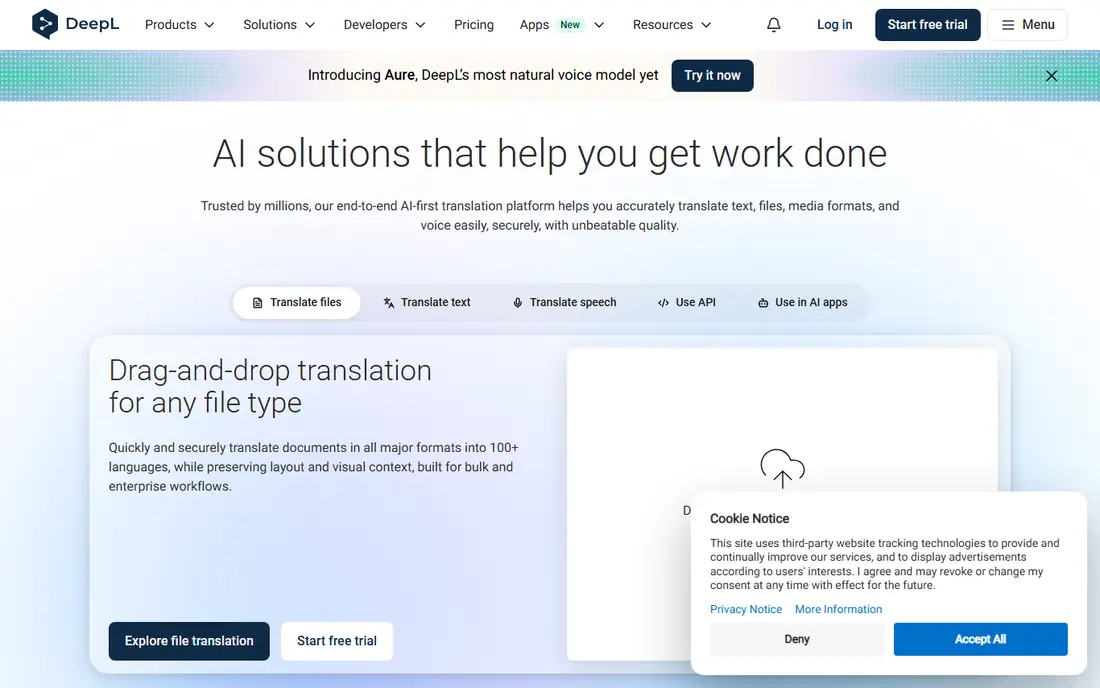
DeepL is built with quality European language translation in mind. DeepL built its name on one thing: translations that read like a person wrote them, a minimum of for French, German, Spanish, Italian, and Dutch. Beyond that, the difference against generic engines is most visible in longer sentences, where DeepL keeps the structure coherent rather than translating word by word.
The honest weakness is coverage. The free level also caps out rapidly on real workloads. If you need 100+ languages, look at the cloud providers below. Price to start with DeepL: $5.49/month + $25 per 1M characters. You can start on DeepL without paying.
Where it falls short: The free plan has character limits that run out quick.
- Widely regarded as the most natural-sounding output for major European languages
- Formal/informal tone control
- Weaker coverage outside European languages
Choose Lara for adaptive, context-aware machine translation. Lara is the new name to know: ModernMT announced it is evolving into Lara and will sunset at the end of 2026, with new registrations closed.
More specifically, the homepage currently lists it as free to use. If you were on ModernMT, start your migration planning now. On cost, Lara starts like this: Free. Lara has a free plan.
Honest limits: New product with a shorter track record.
- Built as the successor to ModernMT with adaptive learning
- Free to use
- Integration ecosystem still expanding
In short, Microsoft Translator is for Azure-based products. If your product lives in Azure or your users live in Office and Teams, the integration story is capable. The weakness is that the best experience assumes Azure.
As for the details, for Azure shops and Microsoft-centric teams, it is typically the cheapest serious choice. For everyday use, document translation and custom trained models also carry separate pricing that complicates the bill. Price to start with Microsoft Translator: $10 per 1M characters. You can start on Microsoft Translator without paying.
Honest limits: Document translation costs additional.
- Solid Office and Teams integration
- $10 per million characters is competitive
- Tied to the Azure ecosystem for the best experience
In short, Google Cloud Translation is for scalable developer API. If your stack already runs on Google Cloud, the integration is trivial.
The main drawbacks: Quality varies by language pair.
At $20 per million characters, high-volume applications should also do the math carefully; it is not the cheapest choice per character. Pricing is $20 per million characters for NMT, and the first 500,000 characters each month are free, which includes lots of testing and small production loads. Entry price for Google Cloud Translation: $20 per 1M characters. Google Cloud Translation offers a free plan.
- First 500,000 characters a month free
- Broadest language coverage in the industry
- Costs can spike on high-volume workloads
Unbabel makes the most sense for AI translation with human editing. The pipeline runs your content through MT and then through human editors who fix what the machine got wrong, with pricing beginning at $0.00020 per word on pay-as-you-go. Human editing means you do not get instant results, so it fits tickets and help articles better than live chat.
It is also a service model more than a pure API, which some developers find constraining. For customer support teams, that combination delivers quality that pure MT cannot match at a price agencies cannot touch. What you pay to start with Unbabel: From $0.00020/word. Trial and free access: Not stated.
Where it falls short: Not a fit for instant live needs.
- Solid for customer support use cases
- Merges machine translation with human editors for near-human quality
- Human editing brings turnaround time
A closer look at AI translation software
Picture a support team answering tickets in twelve languages. Hiring native agents for each one is out of the question, so they route everything through machine translation. Also, then a customer in Japan receives a reply that is grammatically perfect and fully wrong about the refund policy.
That is the reality of AI translation software: the engines are very good at language and terrible at context, and picking the right one means matching the engine to the risk level of the content.
How we chose
The comparison looks at four things: starting price, free access, how well the feature set matches AI translation software, and the main limit of each tool. Figures are shown as the vendors publish them. Billing terms, seat minimums and add-ons can change the real cost. The sequence is a judgement call: typical use case first, then pricing transparency, then free access. Use the profiles to check fit.
Before you commit
- Get a written quote from Lilt and Apertera; the list shows no starting price for them.
- Read the fine print on the free plans from DeepL, Lara, Microsoft Translator and Google Cloud Translation; seat, project and feature caps differ.
- Before choosing Lilt, weigh its main limit: quote-based pricing only.
- Ask Unbabel whether prices are locked for the first term and what happens at renewal.
- A short pilot of Google Cloud Translation with your real workflow tells you more than a feature table.
FAQ
How much does machine translation cost at scale?
Published rates range from $10 per million characters (Microsoft) to $20 per million (Google NMT), with DeepL charging $25 per million plus a product fee. Always test with real volume before committing.
Can I try these options before paying?
Often, yes. DeepL, Lara, Microsoft Translator and Google Cloud Translation have a free plan. Use your own data and a real task during the test, and check what the free tier or trial limits before you rely on it.
What is the cheapest option for AI translation software in this list?
On published monthly entry prices, DeepL is the lowest here at $5.49/month + $25 per 1M characters. Entry price is only part of the cost, because seats, add-ons and billing terms can change the total.
Is Lilt the right pick for everyone comparing AI translation software?
No single tool suits every team. Lilt comes first because it fits interactive enterprise machine translation, while Apertera suits legal and financial translation and DeepL suits quality European language translation. Match the tool to your own size, budget and workflow before deciding.
What happened to ModernMT?
ModernMT announced it is evolving into Lara, with the ModernMT service sunsetting at the end of 2026 and new registrations closed. Existing users should plan migration to Lara or another engine. Lara is currently free to use at laratranslate.com.
Which options for AI translation software have a free plan?
DeepL, Lara, Microsoft Translator and Google Cloud Translation offer a free plan in this list. Free plans usually cap users, projects or features, so check the limits on the vendor page.