Best AI Tools for Market Research in 2026: 8 Tools Compared
Compare the best AI tools for market research in 2026, with surveys, interviews, trend analysis, audience insights, and guidance for smarter choices. now
- Editor's choice
 Attest
Consumer surveys
Starts atSee websiteVisit askattest.comFull review - Great alternative
 Remesh
Live AI-moderated conversations
Starts atSee websiteVisit remesh.aiFull review - Also consider
 quantilope
Automated consumer insights
Starts atSee websiteVisit quantilope.comFull review
TL;DR:
- AI research tools speed up surveys, interviews, and synthesis, but human judgment still matters for sampling, bias, and final decisions.
- Survey platforms suit quantitative questions, while interview and conversation tools suit open-ended reasons behind the numbers.
- Check panel quality, data privacy, and how AI summaries are sourced before you trust an insight.
- Start with one clear research question and a small sample, then expand only if the results prove useful.
Quick comparison
| Tool | Best for | Starts at | Free plan? | |
|---|---|---|---|---|
| Attest | Consumer surveys | See website | No | Visit |
| Remesh | Live AI-moderated conversations | See website | No | Visit |
| quantilope | Automated consumer insights | See website | No | Visit |
 SightX | AI survey analysis | See website | No | Visit |
 Pollfish | Fast mobile surveys | See website | No | Visit |
 Appinio | Real-time audience polls | See website | No | Visit |
 Zappi | Concept and ad testing | See website | No | Visit |
 Brandwatch | Social and trend listening | See website | No | Visit |
The best AI tools for market research
AI tools for market research now cover surveys, live conversations, social listening, and synthesis of past studies. We compared official product pages, research methods, panel and data sources, and reporting tools to build this list. Most platforms price by quote, so treat the proposal and trial as part of your evaluation.
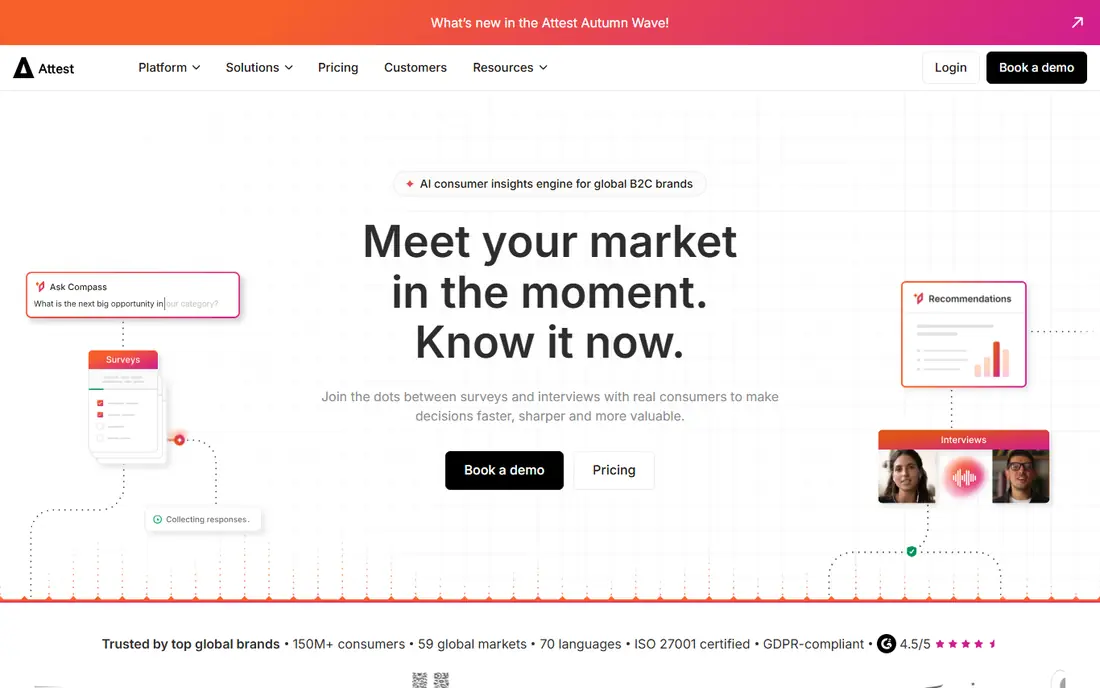
Attest suits teams that need quick consumer answers without building a panel from scratch. You define an audience, field a survey, and get results with breakdowns you can share with stakeholders. That speed helps product and marketing teams test a claim, a price point, or a message before a larger launch.
AI helps with analysis and summaries, but survey quality still depends on question wording and sample choice. Avoid leading questions, test the survey on a small group first, and check who is in the sample. For fast, survey-led consumer research, Attest is a practical starting point.
- Consumer panels in many markets
- Fast survey setup
- Clear audience targeting
- Quote pricing only
- Survey design still needs human care
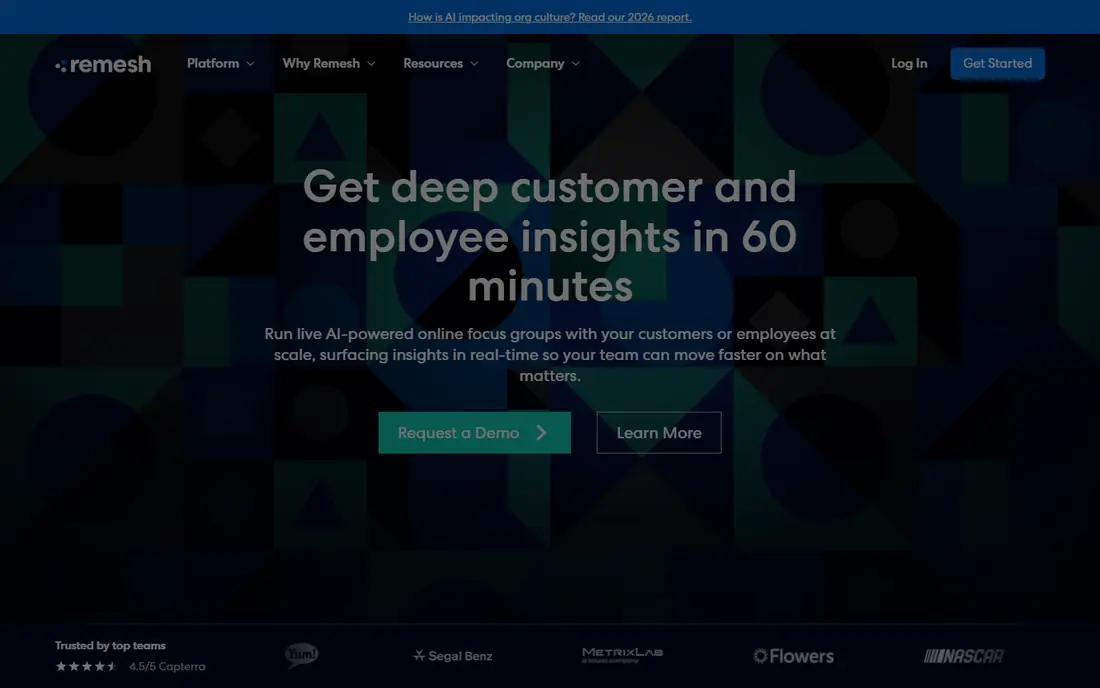
Remesh is different from a standard survey because it runs live, AI-moderated conversations with many participants at once. People answer open questions, react to each other, and the system surfaces themes as the session runs. That format suits early exploration, when you need language and reasons, not just percentages.
The method needs a clear discussion guide, or the conversation can drift. Plan your opening questions, probes, and closing checks in advance, and review raw responses alongside AI summaries. For qualitative insight at a larger scale than focus groups, Remesh offers a distinct approach.
- Live group conversations at scale
- AI moderation and follow-ups
- Fast synthesis
- Quote pricing only
- Works best with a skilled moderator plan
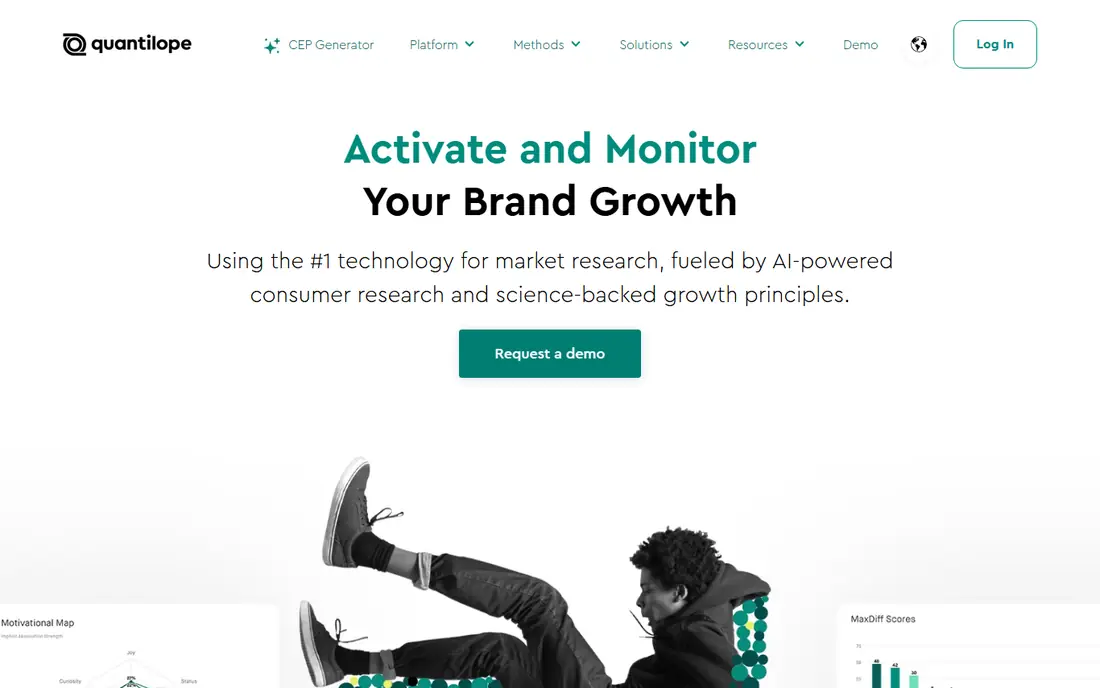
quantilope combines survey fielding with automated analysis methods used in brand, pricing, and concept research. Teams can run standard studies faster than with manual analysis, and dashboards help non-researchers read results without waiting for a full report. That mix suits brands that run repeat studies and need consistent methods over time.
Advanced methods still require research knowledge to interpret well, so plan training or support in the first project. Ask how samples are sourced and how results are weighted. For teams that want automated quantitative research with depth, quantilope is a strong candidate.
- Automated research methods
- Survey, analysis, and reporting in one platform
- Strong for brand tracking
- Quote pricing only
- Learning curve for advanced methods
SightX helps teams create surveys, reach audiences, and analyze results with AI assistance for themes and summaries. The appeal is speed: a team can move from question to shareable chart without a separate analysis step. That helps small marketing teams that lack a dedicated researcher.
Speed should not replace checks. Review AI summaries against raw responses, confirm sample sizes for each subgroup, and avoid overreading small segments. For fast survey work with AI analysis built in, SightX is worth a trial on a real project.
- AI-assisted survey creation and analysis
- Audience panels
- Fast reporting
- Quote pricing only
- Newer platform, so check panel depth for niche audiences
Pollfish is built for fast mobile surveys, which suits teams that need quick reads on awareness, preference, or ad recall. Distribution through mobile apps helps reach people on their phones, and targeting options let you narrow by age, location, and other traits. Results arrive quickly, so you can test and adjust while a campaign is still live.
Long, complex surveys are a weaker fit, since mobile attention is short. Keep questionnaires tight, use clear wording, and check completion rates. For rapid, mobile-first survey checks, Pollfish is a useful tool in the mix.
- Mobile survey distribution
- Fast fielding
- Audience targeting options
- Quote pricing varies by audience
- Short surveys suit it better than long ones
Appinio suits teams that want answers within hours, not weeks. You can field a poll, watch results arrive in real time, and filter by audience segments to see how groups differ. That pace helps with creative testing, naming checks, and early product reactions where a directional answer is enough.
Directional is the key word: quick polls support early decisions, not final claims about a whole market. Check sample size, panel source, and weighting before you present results as fact. For fast audience polls, Appinio is a straightforward and useful option.
- Real-time results
- Large panel in many markets
- Easy question setup
- Quote pricing only
- Best for quick polls rather than deep studies
Zappi focuses on standardized testing for concepts, ads, packaging, and product ideas, with benchmarks that help you compare a new idea against past results. That structure suits brands that test often and want consistent scores over time. Reports are designed for stakeholders who need a clear verdict, not just raw data.
Custom or exploratory questions fit less neatly into a standardized test, so use Zappi for the decisions it is built for and another tool for open exploration. Ask which benchmark set applies to your category and market. For repeat concept and ad testing, Zappi offers speed and comparability.
- Standardized concept and ad tests
- Benchmarks for comparison
- Fast turnaround
- Quote pricing only
- Standardized tests suit repeat work better than custom studies
Brandwatch covers the other side of research: what people already say online, rather than what they tell you in a survey. Social listening, trend tracking, and sentiment analysis help you spot rising topics, competitor mentions, and shifts in how a category is discussed. AI summaries speed up reading large volumes of posts.
Social data is not a representative sample of all buyers, so treat it as directional and pair it with survey work for key decisions. Check data sources, language coverage, and how sentiment is scored. For trend and conversation research, Brandwatch is a well-established platform.
- Broad social and web listening
- Trend and sentiment analysis
- AI summaries
- Quote pricing only
- Social data needs careful interpretation
How we picked these
We compared official product pages, research methods, data sources, and reporting, and we favored tools with clear methods and US-facing panels or data coverage. We kept a mix of surveys, live conversations, standardized tests, and social listening, since no single method answers every research question. Where pricing is by quote, we say so and focus on method fit instead.
How to run AI market research you can trust
Start with a single decision and a single question. A tool that promises to answer everything often answers nothing well, so write down what you will do differently based on each possible result. That discipline keeps sample sizes, question wording, and analysis focused on the choice at hand.
Next, check the data behind the insight. Ask where respondents came from, how many answered each question, and how AI summaries were built. Read a sample of raw responses before you accept a theme, and look for bias in wording, sample, and timing. Social listening needs the same care: check which platforms and languages are covered, and whether vocal minorities are shaping the trend.
Finally, combine methods for important decisions. A survey can size a preference, a conversation can explain it, and social listening can show whether it is growing. Present uncertainty honestly, including sample limits and what you still do not know. AI speeds up research, but the judgment about what to trust remains human work.
FAQ
What is the best AI tool for market research?
It depends on your question. Attest and Appinio suit fast surveys, Remesh suits live conversations, Zappi suits concept testing, and Brandwatch suits social trends.
Can AI replace a market researcher?
No, not for decisions that matter. AI speeds up fielding, coding, and summaries, but sampling, question design, bias checks, and final judgment still need a human researcher.
How do I check the quality of a survey panel?
Ask about panel source, recruitment, sample size, weighting, and completion rates. Also test the survey yourself and review raw responses for rushed or patterned answers.
Is social listening a substitute for surveys?
No. Social listening shows what vocal online users discuss, while surveys can reach a defined audience. Use both when a decision needs both breadth and representativeness.
How much do AI market research tools cost?
Most platforms here price by quote based on audience, sample size, and study type. Ask for a scoped quote on a real project rather than comparing headline claims.
What should I test in a trial?
Run a real question with a real audience, check data quality and reporting speed, and compare AI summaries against raw responses. That trial tells you more than a demo dataset.