Best Go-to-Market AI Software in 2026: 8 Tools Compared
Compare the best go-to-market ai software in 2026. We review 8 AI tools for prospecting, enrichment, outreach, intent and revenue workflows for teams.

- Editor's choice
 Clay
Custom enrichment workflows
Starts atSee websiteVisit clay.comFull review - Great alternative
 Apollo
All in one prospecting
Starts at$49 per user per monthVisit apollo.ioFull review - Also consider
 HubSpot
CRM plus marketing and sales
Starts atFreeVisit hubspot.comFull review
TL;DR:
- Clay is the most flexible choice for teams that build custom enrichment and outreach workflows from many data sources.
- Apollo is the best value all in one for prospecting and outreach, with a free tier and paid plans from $49 per user per month in published pricing.
- HubSpot suits teams that want CRM, marketing, and sales AI in one system, rather than stitching many point tools together.
- ZoomInfo, 6sense, Gong, Outreach, and Salesloft are enterprise grade tools that fit larger teams with bigger budgets and dedicated revenue operations staff.
- Data quality matters more than AI copy. Bad contact data will hurt deliverability and waste rep time, no matter how good the AI writing looks.
Quick comparison
| Tool | Best for | Starts at | Free plan? | |
|---|---|---|---|---|
| Clay | Custom enrichment workflows | See website | Yes | Visit |
| Apollo | All in one prospecting | $49 per user per month | Yes | Visit |
| HubSpot | CRM plus marketing and sales | Free | Yes | Visit |
 ZoomInfo | Enterprise B2B intelligence | See website | No | Visit |
 6sense | Account based intent | See website | Free trial | Visit |
 Gong | Conversation and revenue intelligence | See website | No | Visit |
 Outreach | Enterprise sales engagement | See website | No | Visit |
 Salesloft | Revenue orchestration | See website | No | Visit |
The best go-to-market ai software
Go to market AI software is a broad label. Some tools find and enrich accounts, some write and send outreach, some score intent, and some analyze calls and forecast revenue. The eight tools below cover those jobs, so pick by the stage of your funnel that needs help most.

Clay is the builder tool in this list. RevOps teams pull company and contact data from many sources, enrich it in a waterfall, score it with AI, and push clean lists to a CRM or sequencer. That flexibility lets a team build a workflow that matches its exact ideal customer profile, rather than accepting a vendor list.
The trade is skill and cost. Clay works best when someone owns the workflow, tests data quality, and keeps credits under control. A small team that wants a ready made prospect list may find Apollo simpler, while a team with custom routing needs will value Clay control.
- Waterfall enrichment from many data sources
- AI agents for research and scoring
- Flexible tables and workflows for RevOps teams
- Pricing has changed across published summaries, so confirm current tiers
- Needs RevOps skill to build well

Apollo is the value pick for outbound teams. You can find contacts, enrich them, build sequences, and track replies without buying three separate tools. AI drafting and call summaries help reps move faster, and the free tier lets a small team test the database before paying.
Data quality is the honest watch out. No database is perfect, and accuracy varies by industry and region. Verify emails for key accounts, watch bounce rates, and keep your CRM clean, rather than blasting a large list on day one.
- Large contact database with prospecting and sequencing in one tool
- AI email drafting and call summaries
- Free tier for small teams
- Data accuracy varies by segment, so verify key contacts
- Higher tiers needed for advanced features and larger credit volumes
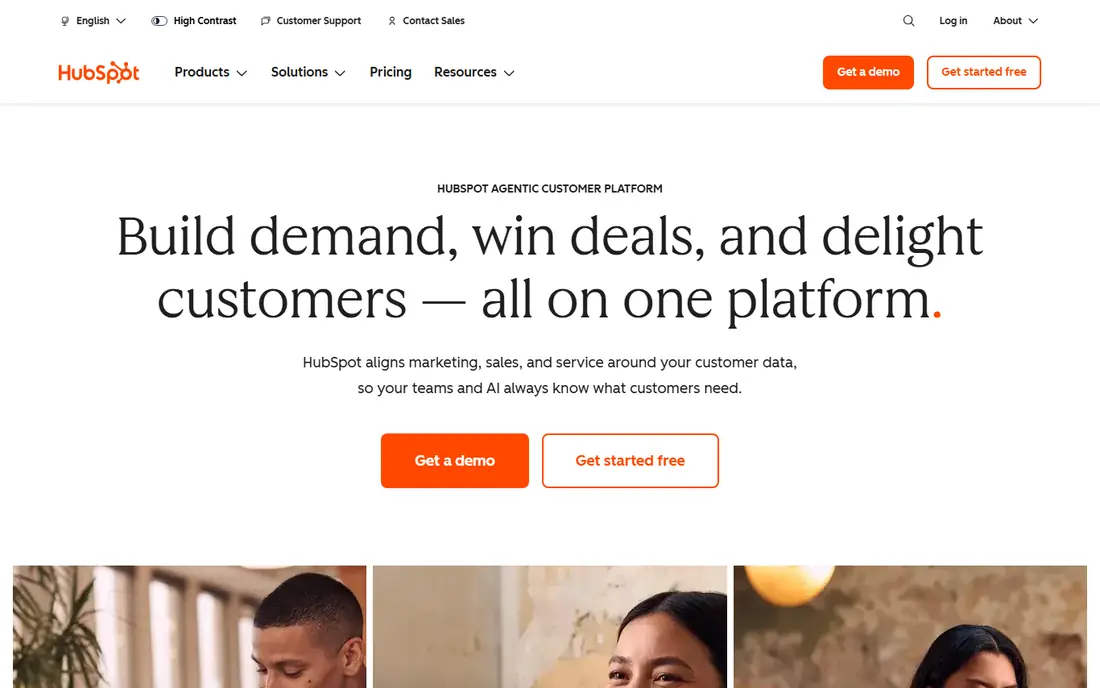
HubSpot suits teams that want sales, marketing, and service in one system. The free CRM gives a solid base, and paid hubs add sequences, lead scoring, AI drafting, and reporting that connect to the same contact record. That single record avoids the sync problems that come from stitching many tools.
The cost curve needs planning. A free start is easy, but seats, hubs, and add ons add up as the team grows. Map the hubs you will actually use, and price them for your team size, before you compare HubSpot with a point tool.
- Free CRM with paid sales and marketing hubs
- AI assistant for drafting, scoring, and summaries
- Large integration ecosystem
- Costs rise as seats and hubs are added
- Enterprise AI features sit on higher tiers
ZoomInfo is the enterprise data platform in this list. It combines company and contact data, intent signals, and AI workflows that help teams prioritize accounts and run plays across sales and marketing. For a mid market or enterprise team with a large target market, that depth is valuable.
The price and contract size put it out of reach for many startups. ZoomInfo is usually sold as an annual platform, not a small monthly tool, so shortlist it when data breadth and intent are core to your strategy and your budget matches an enterprise deal.
- Large B2B database with intent signals
- AI GTM studio and agent workflows
- Strong fit for mid market to enterprise teams
- Enterprise pricing, often quoted annually
- Smaller teams may find it costly and heavy
6sense is built for account based go to market work. It scores accounts by buying intent, surfaces which accounts are in market, and helps marketing and sales coordinate on the same target list. AI tools add summaries and next steps for revenue teams.
That focus means 6sense is not a simple prospecting list tool. It fits teams running account based programs with marketing, sales, and RevOps working together. Smaller teams that just need contacts and sequences will find Apollo or Clay simpler and cheaper.
- Predictive scoring and account intent
- AI agent tools for revenue teams
- Strong account based marketing workflows
- Enterprise pricing and implementation
- Best value for account based programs, not simple outbound lists
Gong helps teams learn from real sales conversations. It records and analyzes calls and meetings, surfaces deal risks, coaches reps on talk patterns, and feeds forecast signals to managers. For a team that lives on calls, that insight can change how deals are reviewed.
The catch is that Gong needs call volume and coaching habits to pay off. A team with few calls, or managers who do not review deal insights, will see less value. Price it as a revenue intelligence investment, not as a simple recorder, and confirm platform fees in the quote.
- Call and meeting analysis with coaching insights
- Deal review and forecasting signals
- Engagement tools for sales teams
- Pricing is quote based and enterprise grade
- Value depends on call volume and manager coaching use
Outreach is the enterprise engagement platform for sales development teams at scale. Reps run sequences across email, call, and social steps, managers track activity and outcomes, and AI tools help draft and prioritize outreach. That structure suits a large SDR team with clear playbooks.
Smaller teams may find Outreach heavy and costly compared with Apollo or HubSpot sequences. Shortlist Outreach when you have a dedicated SDR function, RevOps support, and a need for enterprise controls and reporting.
- Sequencing, calling, and meeting tools in one engagement platform
- AI agents for outreach workflows
- Strong enterprise controls
- Pricing is quote based
- Setup and admin need dedicated RevOps time
Salesloft, now part of a broader revenue orchestration story, helps teams run cadences, manage deals, and use conversation data to guide next steps. It suits mid market to enterprise revenue teams that want engagement, deal insight, and forecasting connected.
The overlap question matters. Salesloft, HubSpot, and a CRM can cover similar ground, so scope which system owns sequences, which owns the contact record, and which owns forecasting before you buy. That clarity avoids paying twice for the same job.
- Cadence driven engagement with deal management
- AI agents and conversation intelligence
- Forecasting tools through related products
- Pricing is quote based
- Overlap with CRM and other tools needs careful scoping
How we picked these
We compared official product pages, pricing pages, and public reviews for go to market AI tools in October 2026. We kept only tools that are still offered, that use AI for prospecting, enrichment, outreach, intent, or revenue intelligence, and that serve B2B sales and marketing teams. We did not claim hands on testing. Prices shown are published starting prices where available, and quote based tools are marked as See website.
What to check before you buy
Define the funnel stage first
List whether your bottleneck is finding accounts, enriching contacts, writing outreach, booking meetings, or forecasting deals. Buy the tool that fixes that stage. A great intent tool will not fix bad outreach copy, and a great sequencer will not fix bad data.
Test data quality on your market
Run a sample list for your exact ideal customer profile, not a generic demo list. Check email validity, title accuracy, and company fit for your segment. Data quality in your market matters more than database size in general.
Check AI output and compliance
Review AI drafted emails and summaries for accuracy, tone, and compliance with your outreach rules. Confirm how the vendor handles data privacy, opt outs, and regional rules, especially for European contacts, before you scale sending.
Price credits, seats, and platform fees together
Some tools price by seat, some by credits, and some add a platform fee. Build a total for your team size and monthly volume, including credit overages, before you compare headline prices.
FAQ
What is go to market AI software?
It is software that uses AI to help a company find accounts, enrich contacts, write outreach, score intent, analyze sales conversations, and forecast revenue. Different tools cover different stages, so the category includes prospecting, engagement, intent, and revenue intelligence tools.
Is Apollo enough for a small outbound team?
For many small teams, yes. Apollo covers prospecting, enrichment, and sequencing in one tool with a free tier. Add Clay when you need custom enrichment workflows, and add Gong when call intelligence becomes a priority.
How much does go to market AI software cost?
It ranges from free tiers and $49 per user per month tools to enterprise platforms quoted annually in the tens of thousands. Price by seats, credits, and platform fees at your actual team size and volume.
Does AI outreach replace sales reps?
No. AI helps with research, drafting, scoring, and summaries, but reps still need to qualify, handle objections, and build trust. Teams that treat AI output as a draft to review get better results than teams that send it unchecked.
What is the difference between Clay and ZoomInfo?
Clay is a flexible workflow tool that enriches data from many sources and lets RevOps teams build custom lists. ZoomInfo is a large enterprise database with intent signals and AI workflows in one platform. Clay offers control, while ZoomInfo offers breadth in a single vendor deal.