Best AI Pricing Solutions for D2C Companies in 2026: 8 Solutions Compared
We compared the best ai pricing solutions for d2c companies on data needs, repricing control and price, so direct brands can price more confidently today.
- Editor's choice
 Competera
AI price optimization at scale
Starts atSee websiteVisit competera.aiFull review - Great alternative
 Pricefx
Flexible pricing plus CPQ
Starts atSee websiteVisit pricefx.comFull review - Also consider
 Omnia Retail
Approval led price management
Starts atSee websiteVisit omniaretail.comFull review
TL;DR:
- Competera and Pricefx suit larger D2C brands with large catalogs and clean historical sales data, since AI pricing needs reliable data to work well.
- Prisync and Price2Spy suit smaller D2C brands that mainly need competitor monitoring and rule based repricing at a published price.
- Omnia Retail and BlackCurve fit teams that need approval steps and a clear record of why each price changed.
- Most enterprise AI pricing tools are quote based, so budget for implementation and data work, not just a monthly fee.
- Start with margin floors and guardrails before you turn on automation, since a model without limits can cut price faster than you expect.
Quick comparison
| Tool | Best for | Starts at | Free plan? | |
|---|---|---|---|---|
| Competera | AI price optimization at scale | See website | No | Visit |
| Pricefx | Flexible pricing plus CPQ | See website | No | Visit |
| Omnia Retail | Approval led price management | See website | No | Visit |
 BlackCurve | Approval led pricing decisions | See website | No | Visit |
 Prisync | Competitor tracking and repricing | $59 per month | Free trial | Visit |
 Price2Spy | Competitor monitoring and repricing | See website | Free trial | Visit |
 Quicklizard | Plug and play AI pricing | See website | No | Visit |
 Priceva | Rule based dynamic pricing | See website | Free trial | Visit |
The best AI pricing solutions for D2C companies
Direct to consumer brands sell without a retail middleman, which means they control price, but also own every pricing mistake. AI pricing tools use demand, seasonality, competitor data and elasticity to suggest or set prices, while simpler tools track competitors and apply rules you define. The eight tools below cover both ends, from full AI optimization to practical competitor repricing for smaller D2C teams.

Competera is our pick for larger D2C brands with thousands of SKUs and enough sales history for a model to learn from. It combines competitor data with a pricing platform that uses contextual AI and many demand drivers to suggest prices across products and channels. Third party summaries cite claims of improved gross margin and reduced pricing team workload, though those figures are vendor reported and should be tested in a pilot.
The catch is readiness. AI pricing only helps if your sales data is clean, your competitor feeds are reliable, and someone on your team can challenge model suggestions. Smaller brands without that foundation will get more value from a simpler tool first, and Competera pricing is quote based, so expect a scoped proposal.
- Combines competitor data with AI pricing models
- Uses many demand drivers
- Built for large catalogs across channels
- Quote based pricing
- Needs clean historical data and a pricing team to validate recommendations
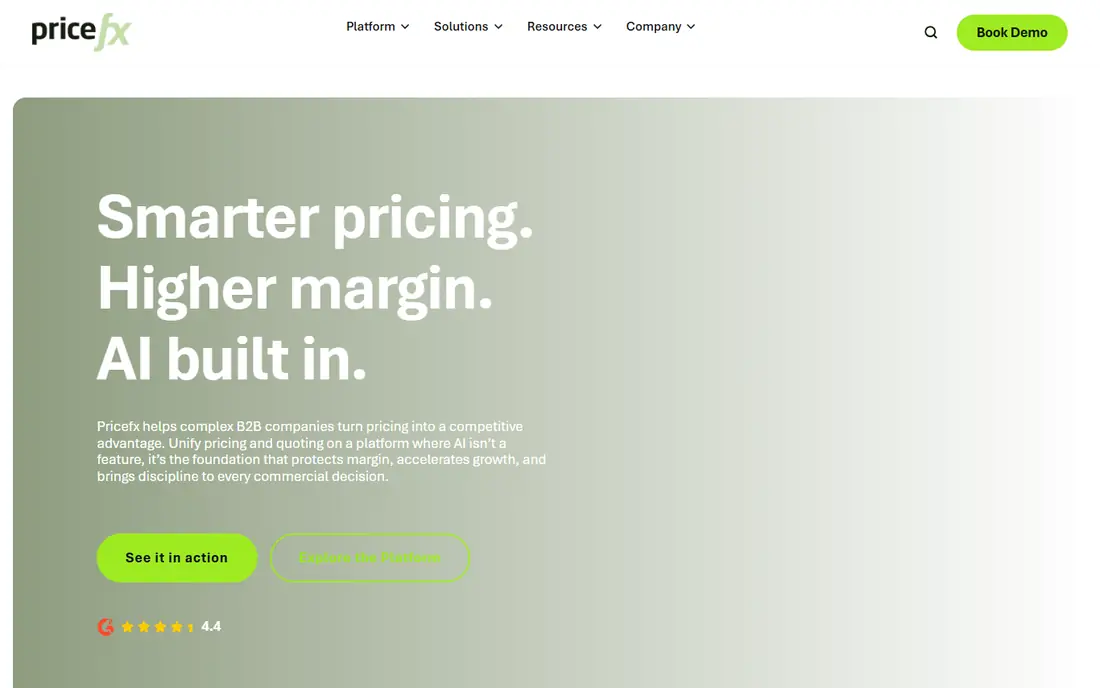
Pricefx suits D2C brands whose pricing is genuinely complex, such as bundles, subscriptions, regional prices and channel specific rules. Its modular platform combines price management, configure price quote and analytics, and it integrates with common ERP and CRM systems rather than forcing one stack. An AI layer sits on top of rules you define, which keeps human control over the final price logic.
Flexibility is also the weakness. Reviewers describe Pricefx as a blank canvas that needs a skilled implementation partner to get full value, and cost overruns are a real risk if scope is loose. For a simple catalog with a few dozen products, a lighter tool will be faster and cheaper.
- Modular pricing, CPQ and analytics in one platform
- Multi currency and multi region support
- AI tools including a conversational copilot
- Highly configurable, so implementation needs skill and time
- Quote based pricing
- Overkill for simple catalogs
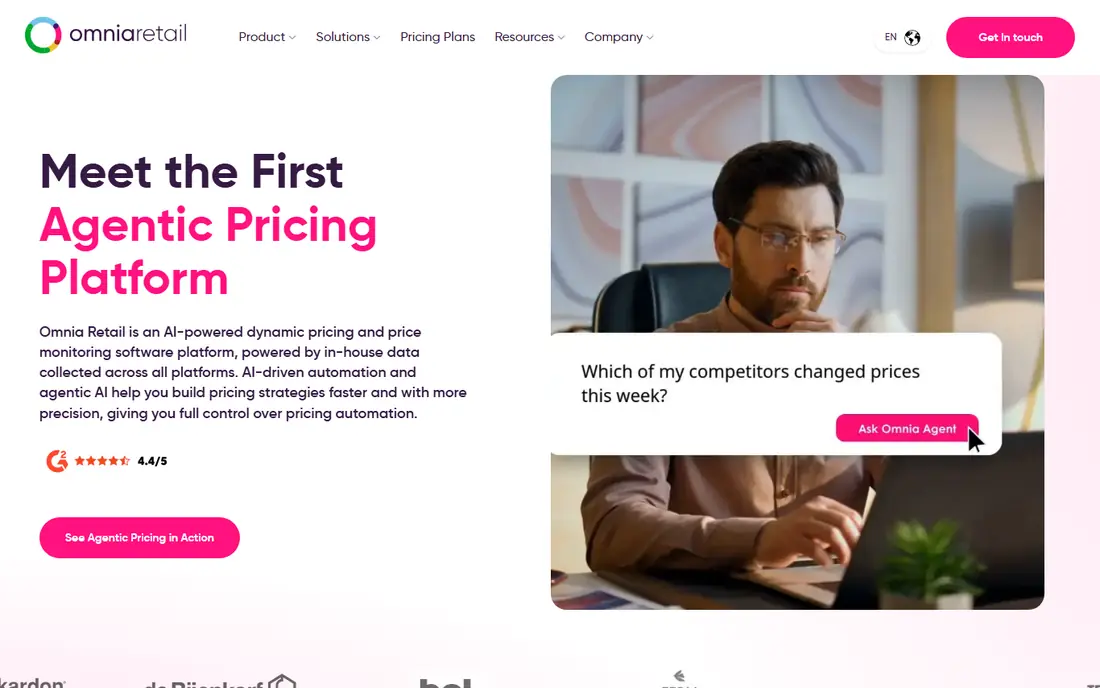
Omnia Retail fits D2C teams where price changes need review before they go live. It preserves reviewable rule outcomes before rollout, so a manager can see why a price was suggested and approve or reject it, which matters when a wrong price can damage margin or channel trust. It also covers competitor data and AI pricing analytics, so governance does not mean giving up automation.
Smaller teams may find the setup heavy, and third party comparisons note that enterprise oriented governance can delay time to value for small organizations. If your team is two people who already trust each other, a simpler repricer may be enough. If pricing touches finance, merchandising and channels, Omnia governance earns its keep.
- Approval gated publishing with traceable rule outcomes
- Competitor and AI pricing features
- Strong for teams that need governance
- Quote based pricing
- Setup complexity can delay value for smaller teams
BlackCurve suits D2C brands that want every price change tied to a goal and an approval, with a record they can review later. That traceability helps when finance asks why margin moved, or when a channel partner questions a price. The platform is built around governed recommendation workflows rather than fully automatic repricing, which gives cautious teams control.
The trade off is speed for teams that prefer full automation. If you want prices to move hourly with no human step, a competitor repricer will feel faster. BlackCurve is better when the cost of a wrong price is high and a short review step is worth the delay.
- Ties each price decision to approvals with traceable rationale
- Helps retailers manage every item price toward a goal
- Clear decision workflow
- Quote based pricing
- Best for teams with a defined pricing process, not ad hoc price changes
Prisync is our pick for smaller D2C brands that need practical competitor intelligence without an enterprise contract. The professional plan starts at 59 dollars a month for up to 100 products with price updates several times a day, while premium at 129 dollars and platinum at 229 dollars cover larger catalogs, marketplace tracking and advanced analytics. A free trial lets you test matching quality before you pay.
The limit is AI depth. Prisync is strongest at tracking competitors, alerting on changes and applying repricing rules, rather than modeling demand elasticity from scratch. For most small D2C brands, that is the right starting point, and you can move to a full AI platform once catalog and data grow.
- Published pricing from 59 dollars a month
- Competitor monitoring with alerts and stock tracking
- Dynamic pricing engine included
- AI depth is thinner than Competera or Pricefx
- Higher tiers needed for large catalogs and API access
Price2Spy fits D2C teams that run weekly pricing reviews and want recurring competitor matching with alerts tuned to their assortment. It covers product matching, price monitoring, pricing analytics and repricing, so a small team can move from watching competitors to acting on changes in one workflow. Third party summaries have cited entry pricing near 78.95 dollars a month, though you should confirm the current price on a quote.
Matching quality is the thing to test. Any competitor tool is only as good as its product matches, so run a trial on your top 50 SKUs and check match accuracy before you trust automated repricing. Price2Spy rewards that testing with a workflow that is easy to control once matches are clean.
- Product matching, price monitoring, analytics and repricing in one tool
- Configurable alerts tuned to assortment
- Free trial available
- Pricing is not published on the main page in a simple list
- Setup quality depends on matching accuracy
Quicklizard suits D2C brands that want AI pricing without building a pricing team around a complex platform. It positions itself as an end to end, plug and play pricing service for retailers and brands, covering the full product lifecycle across channels. That service model can shorten time to value compared with a blank canvas platform that needs heavy configuration.
The drawback is fit for small brands. A service model with quote based pricing is built for scale, and a brand with a small catalog may not have the data volume or budget to justify it. Larger D2C brands that want AI pricing managed as a service should shortlist Quicklizard alongside Competera.
- End to end AI pricing as a service across channels
- Built for retailers and brands at scale
- Covers the full product lifecycle
- Quote based pricing
- Less suited to very small catalogs
- Integration effort depends on your stack
Priceva fits D2C teams that want transparent rules rather than a black box model. Its workflow follows a clear path from competitor data to pricing rules to automated repricing to catalog update, which makes it easy to explain a price change to finance or a channel partner. Rule based pricing suits teams with clear margin rules and mid size catalogs.
The limit is AI sophistication. Priceva is stronger on rules and competitor response than on demand modeling, so brands with large catalogs and rich history may outgrow it. As a first dynamic pricing tool, though, its transparency is a genuine advantage.
- Clear rule based and competitor based repricing
- Catalog update workflow
- Useful explainer of pricing approaches for new teams
- AI depth is thinner than enterprise rivals
- Pricing requires a quote for many plans
How we picked these
We compared vendor product pages and independent pricing software comparisons current in October 2026, and we kept only tools with a live D2C or e-commerce pricing offer and a clear repricing or optimization workflow. We favored tools with published pricing where available, and we flagged quote based pricing rather than guessing at it. We did not claim hands-on testing, and we compared official feature pages, pricing pages and public reviews.
How to choose AI pricing for a D2C brand
Start with your data, not the vendor demo. Count SKUs, check sales history depth, and confirm competitor coverage for your top products. AI pricing needs at least a year of clean sales data, stable product matching and margin data by SKU to produce useful suggestions. If that data is messy, fix matching and margins first, or start with rule based repricing while data improves.
Next, set guardrails before automation. Define a floor price per product or category based on margin, a maximum discount, channel price rules and a list of products that never auto reprice, such as hero products or bundle anchors. Pilot on 10 to 20 percent of the catalog for four to eight weeks, compare margin and revenue against a control group, and only expand automation when the pilot beats the control on margin, not just on sales.
Finally, agree on ownership. Pricing touches finance, merchandising and marketing, so name one owner, a review cadence and an approval path for exceptions. A tool without an owner becomes either unused or dangerous, since no one checks its suggestions. The best tool for your brand is the one your team will actually govern week after week.
FAQ
What is AI pricing for D2C brands?
AI pricing uses models that weigh demand, seasonality, competitor prices, stock and past sales to suggest or set prices for each product. Rule based pricing instead applies fixed rules, such as staying a set percent below a competitor but above a margin floor. AI pricing can react faster and handle larger catalogs, but it needs clean data and human oversight.
Do small D2C brands need AI pricing?
Most small D2C brands do not need full AI pricing at first. Competitor monitoring and rule based repricing from tools such as Prisync or Price2Spy usually deliver most of the value at a published price. Move to AI pricing once your catalog is large, your data is clean, and manual pricing takes more time than your team can spare.
How much does AI pricing software cost?
Smaller competitor tools start near 59 dollars a month, while enterprise AI platforms are quote based and cost far more once implementation and data work are included. Always ask for total cost, including onboarding, integrations and any per SKU charges, not just a monthly platform fee. A pilot quote should state what is included.
Will AI pricing start a price war with competitors?
It can, if every brand reprices automatically against each other with no floors. Guardrails such as margin floors, minimum advertised price rules and a ban on auto repricing hero products reduce that risk. Review price changes weekly at first, and pause automation for categories where competitors are racing to the bottom.
How do I measure whether pricing software works?
Compare margin, revenue and units against a control group of products that were not repriced, over at least four weeks. Track price change frequency, margin per order and stockouts, since a tool that boosts sales by cutting margin may still lose money. Judge the pilot on profit, not on sales alone.
Can AI pricing handle subscriptions and bundles?
Some platforms handle bundles, subscriptions and channel specific prices well, notably Pricefx and Competera, while simpler repricers focus on single product prices. If bundles or subscriptions drive a large share of revenue, test those cases in the pilot rather than assuming they work. Ask the vendor to show bundle pricing in the demo with your own data.