Top 6 AI Observability Pipeline Software for 2026 (Prices and Free Plans)
Best AI observability pipeline software in 2026: 6 tools with starting prices, free plans and limits. Fit and flaws are laid out for each entry. Easy to scan.
- Editor's choice
 Braintrust
Evaluation-driven agent development
Starts at$249 a monthVisit braintrust.devFull review - Great alternative
 Dynatrace
Observability with automation and security
Starts at$7 per host a monthVisit dynatrace.comFull review - Also consider
 LangSmith
Tracing and debugging LLM agents
Starts at$39 per seat per monthVisit langchain.comFull review
Direct answer
Braintrust comes first here, mainly for evaluation-driven agent development. Listed starting prices: Braintrust from $249 a month, Dynatrace from $7 per host a month and LangSmith from $39 per seat per month. Look at Dynatrace for Observability with automation and security, and at LangSmith for tracing and debugging LLM agents. Prices, free plans and limits for all 6 tools follow.
TL;DR:
- Top of the list is Braintrust, which targets evaluation-driven agent development.
- The cheapest monthly starting price in the list is $6 per month, per CPU core, billed annually, offered by Galileo.
- Only 3 of the 6 tools have a free plan (Braintrust, LangSmith, Galileo), so check the caps.
- A fair warning about Dynatrace: system breadth can be complicated to adopt.
- Datadog LLM Observability fits teams already using Datadog.
Last checked November 2026. Prices and plan details were read from the vendors' own pages in November 2026; vendors change plans often, so confirm the current price on the vendor site before you buy.
Quick comparison
| Tool | Best for | Starts at | Free plan? | |
|---|---|---|---|---|
| Braintrust | Evaluation-driven agent development | $249 a month | Yes | Visit |
| Dynatrace | Observability with automation and security | $7 per host a month | Free trial | Visit |
| LangSmith | Tracing and debugging LLM agents | $39 per seat per month | Yes | Visit |
 WhyLabs | Model and data behavior monitoring | See website | Not stated | Visit |
 Galileo | Evaluating and guardrailing agents | $6 a month, per CPU core, billed annually | Yes | Visit |
 Datadog LLM Observability | Teams already using Datadog | $8 per committer per month | Free trial | Visit |
AI Observability Pipeline Software compared in detail
This LinkVetted guide covers 6 options for AI observability pipeline software. Each profile lists a starting price, free plan details, strengths and drawbacks, so you can drop poor fits quickly.
Braintrust makes the most sense for evaluation-driven agent development. It suits teams with a solid evaluation culture who want production traces and test results connected in one workflow.
Where it falls short: Evaluation-centric framing.
It can also overlap with existing QA or experimentation tooling. Price to start with Braintrust: $249 per month. Braintrust has a free plan.
- Regression catching before release
- Evaluation workflows built in
- May duplicate existing test tooling
Pick Dynatrace if this describes you: Observability with automation and security. Dynatrace describes its system as observability made for the age of AI, combining observability, AI, automation and application security. Choose a focused product when your primary goal is quick, prompt-level visibility into agent behavior.
Limits to weigh: Not tailored only to LLM pipelines.
Worth adding: the breadth that makes it capable can also make adoption more involved than a narrow AI tracing tool. It is not tailored solely to LLM pipelines, so agent-specific debugging may feel less central. On cost, Dynatrace starts like this: $7 per host per month. Trial and free access: Free trial. What works well: AI and automation together.
- Application security included
- Observability
- System breadth can be complicated to adopt
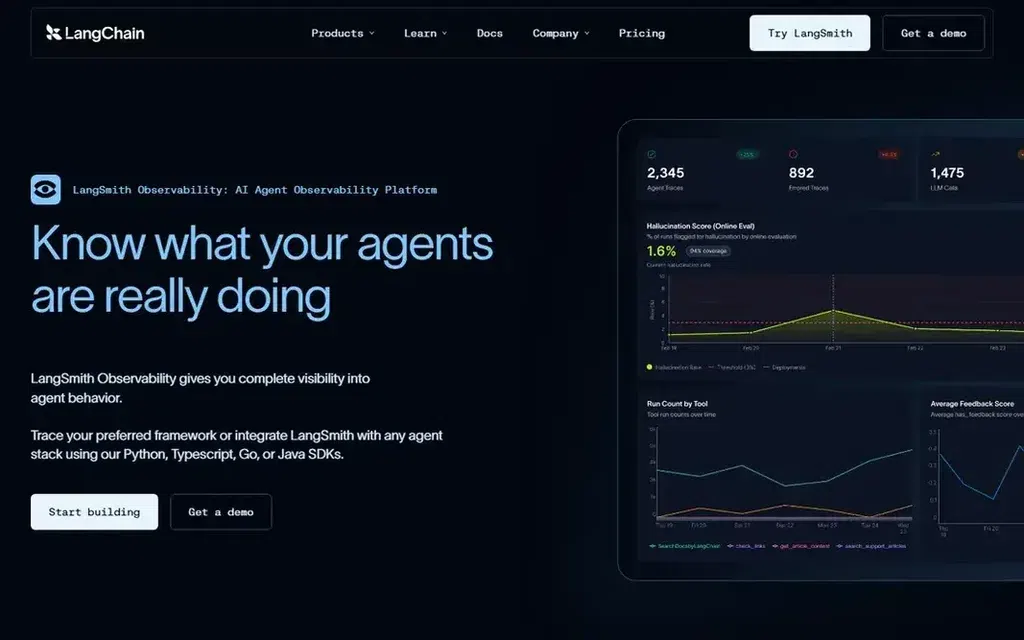
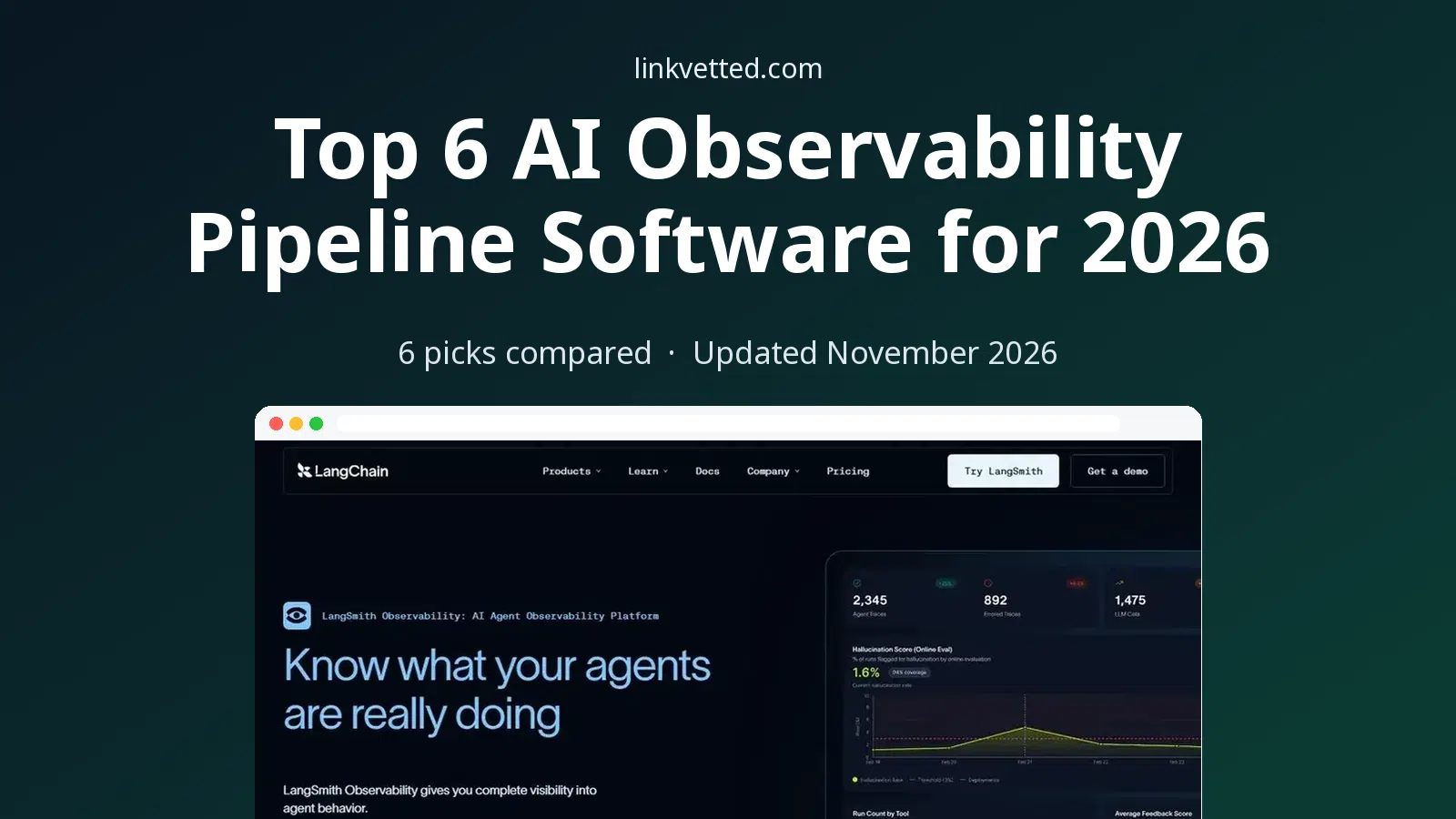
LangSmith serves tracing and debugging LLM agents. It is geared toward teams that require to debug agents, find failures rapidly, and watch cost and latency as prompts and chains change.
Honest limits: May overlap with existing APM tools.
Because it concentrates on the LLM and agent layer, teams that require deep infrastructure or full-stack telemetry may pair it with a broader monitoring system. Consider alternatives when your priority is whole-stack monitoring instead of agent-level tracing. LangSmith cost at the entry level: $39 per seat per month. LangSmith includes a free tier.
- Live monitoring
- Cost and latency tracking
- Concentrated on the LLM and agent layer
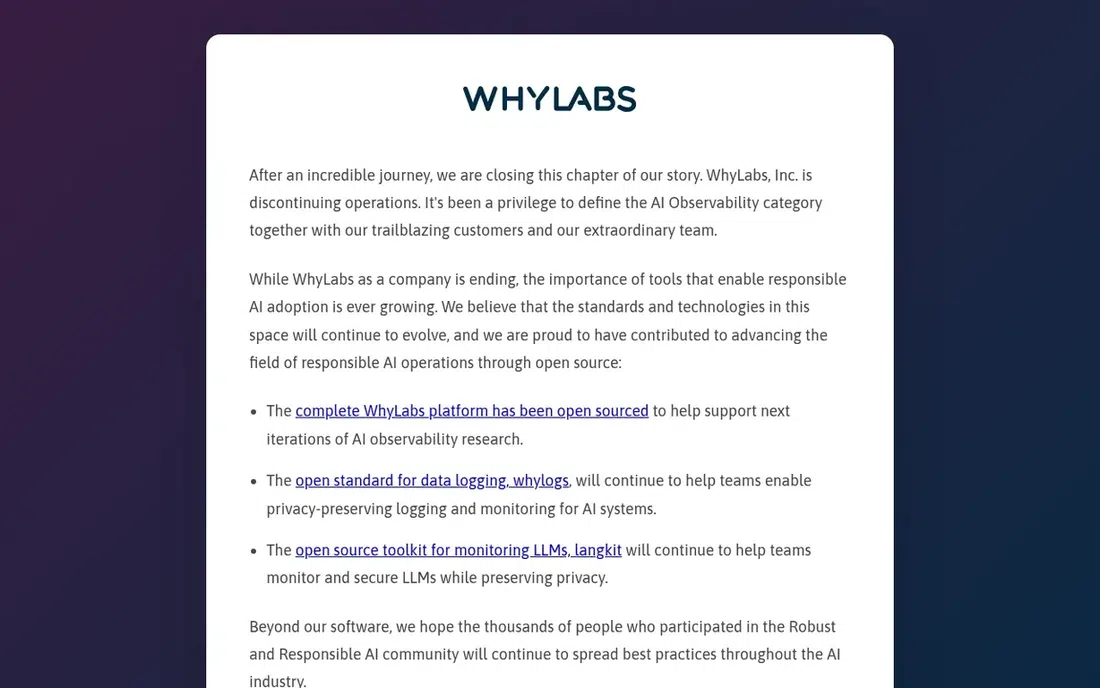
WhyLabs works best for model and data behavior monitoring. Pick something else if you need a single platform for both prompt-level debugging and full-stack application telemetry.
Setup also assumes some familiarity with monitoring concepts. Check the vendor site for WhyLabs pricing; none is listed in this comparison. Free plan details: Not stated.
Downsides: Less centered on agent trace debugging.
- Handy for drift awareness
- Monitoring oriented toward model behavior
- Needs some monitoring setup
Galileo serves evaluating and guardrailing agents. Galileo is presented as agent observability, letting teams observe, evaluate and guardrail AI agents.
The combination of evaluation and guardrails makes it a candidate for production agents where behavior needs continuous checking. Worth adding: teams without a defined evaluation approach may also have to invest time in setting one up. On cost, Galileo starts like this: $6 per month, per CPU core, billed annually. You can start on Galileo without paying.
Points against: Agent-centric scope.
- Guardrails alongside observation
- Evaluation focus for agents
- Narrower than full-stack platforms
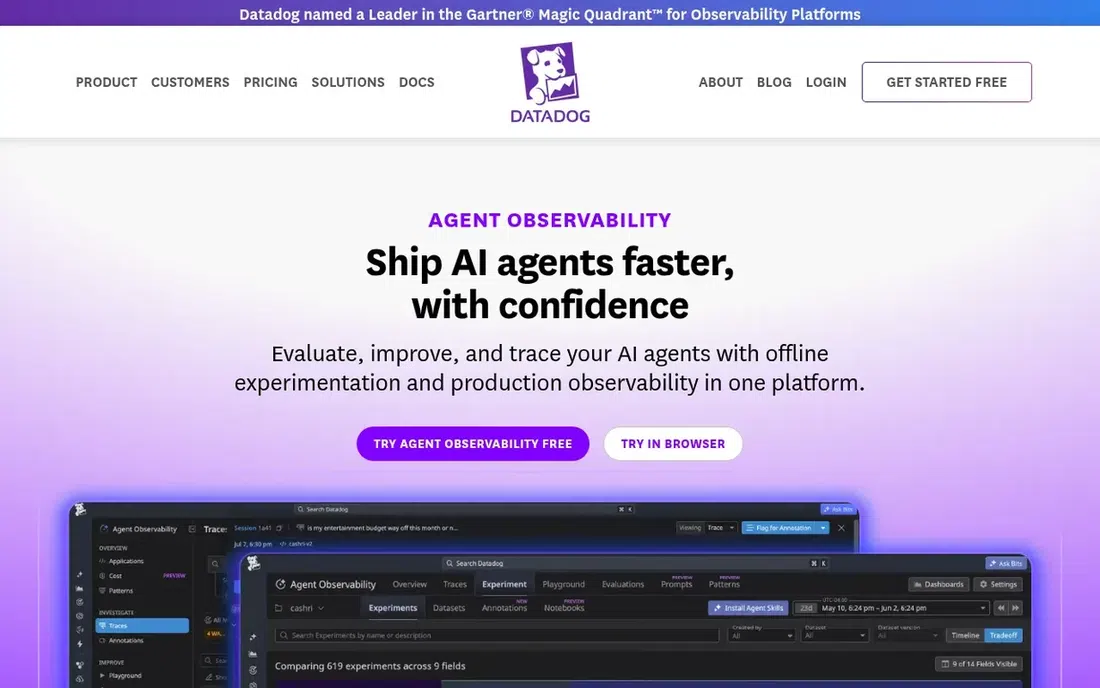
Where Datadog LLM Observability fits: teams already using Datadog. The LLM features are also one part of a wide system, which can mean more surface area than a focused tool. For everyday use, the experimentation angle helps teams test changes before they reach production.
Trade-offs to know: Best value inside the Datadog ecosystem.
Its primary advantage relies on already running Datadog, so teams on other stacks may find the fit less natural. Consider a dedicated agent observability product if AI tracing is your only need. Entry price for Datadog LLM Observability: $8 per committer per month. Trial and free access: Free trial.
- Evaluation and improvement in one place
- Offline experimentation plus production tracing
- Agent features are one part of a bigger product
How these tools were picked
LinkVetted looked at what each vendor publishes: pricing, plan limits, feature coverage for AI observability pipeline software and stated drawbacks. No hands-on testing is claimed. Plan names, prices and limits change often. Treat the figures here as a starting point and verify them with the vendor. The order reflects how well each tool fits the most common buying scenario for AI observability pipeline software, then price clarity, then free plan access. It is a starting point, not a verdict.
Pre-purchase checklist
- Confirm the entry price on the vendor page. For WhyLabs that means a quote rather than a fixed price.
- Read the fine print on the free plans from Braintrust, LangSmith and Galileo; seat, project and feature caps differ.
- Use real work to test the free trial from Dynatrace and Datadog LLM Observability, rather than a demo project.
- Before choosing Braintrust, weigh its main limit: evaluation-centric framing.
- Verify that exporting from Galileo is possible on your plan and covers all your records.
- Look at the help docs and support options for Braintrust before you commit.
FAQ
What does an AI observability pipeline actually monitor?
It generally records traces of model and agent calls, along with latency, cost and output quality signals. Numerous systems also add evaluation and guardrail checks so teams can catch regressions before users do.
Should I choose a dedicated AI tool or a full-stack product?
A dedicated tool like LangSmith or Braintrust tends to go deeper on agent tracing and evaluation. Full-stack products like Datadog, New Relic or Dynatrace make more sense when you want AI telemetry alongside existing infrastructure monitoring.
What is the cheapest option for AI observability pipeline software in this list?
On published monthly entry prices, Galileo is the lowest here at $6 per month, per CPU core, billed annually. Entry price is only part of the cost, because seats, add-ons and billing terms can change the total. All 6 picks in this AI observability pipeline software comparison list a starting price, free plan details and the main limits on their cards above.
Can I try these options before paying?
Often, yes. Braintrust, LangSmith and Galileo have a free plan and Dynatrace and Datadog LLM Observability offer a free trial. Use your own data and a real task during the test, and check what the free tier or trial limits before you rely on it.
Which options for AI observability pipeline software have a free plan?
Braintrust, LangSmith and Galileo offer a free plan in this list. Free plans usually cap users, projects or features, so check the limits on the vendor page. Several others offer a trial instead.
Do these tools publish their prices?
Not all of them. WhyLabs publishes no starting price, so expect a quote request for it. The rest, Braintrust included, show a starting price, though seats and billing terms still change the final cost.
Sources
- https://www.braintrust.dev
- https://www.dynatrace.com
- https://www.langchain.com/langsmith
- https://whylabs.ai
- https://www.galileo.ai
- https://www.datadoghq.com/product/llm-observability