Top 5 AI Cloud Platforms for 2026, Compared
Best AI cloud platform, compared. 5 tools with published prices, free plans and limits. Price notes and drawbacks come with each one. Jump to the table.

- Editor's choice
 Databricks
AI on governed enterprise data
Starts atSee websiteVisit databricks.comFull review - Great alternative
 Google Cloud
Cost-efficient inference and data integration
Starts atSee websiteVisit cloud.google.comFull review - Also consider
 CoreWeave
Large-scale training reliability
Starts atSee websiteVisit coreweave.comFull review
TL;DR:
- This list starts with Databricks, which is built for AI on governed enterprise data.
- What to know about Google Cloud first: smaller enterprise AI footprint than AWS or Azure.
- Nebius is the one to check for adaptable GPU cloud with solid support.
- 3 of 5 tools offer a free plan: Databricks, Google Cloud, AWS.
- No starting price is shown for any of the 5 tools, Databricks and Nebius included, so plan time for sales calls.
Direct answer
Databricks is the first pick on this list for AI on governed enterprise data. Look at Google Cloud for cost-efficient inference and data integration, and at CoreWeave for large-scale training reliability. The other 2 tools in the list cover narrower or pricier cases.
Quick comparison
| Tool | Best for | Starts at | Free plan? | |
|---|---|---|---|---|
| Databricks | AI on governed enterprise data | See website | Yes | Visit |
| Google Cloud | Cost-efficient inference and data integration | See website | Yes | Visit |
| CoreWeave | Large-scale training reliability | See website | No | Visit |
 AWS | Broadest model choice and ecosystem | See website | Yes | Visit |
 Nebius | Adaptable GPU cloud with solid support | See website | No | Visit |
5 options for AI cloud platform in detail
Short on time? The summary and table above give the quick view of 5 tools for AI cloud platform, and the profiles that follow give the detail behind each entry.
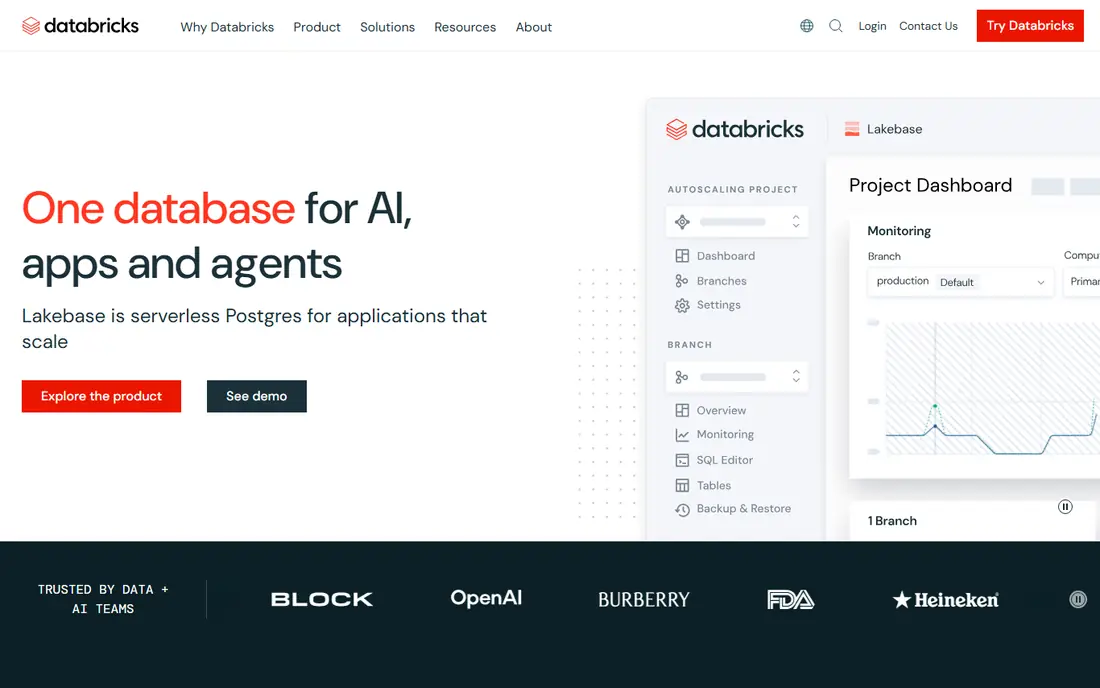
Databricks is built with AI on governed enterprise data in mind. Databricks answers a different question from the model systems: what if your AI could run where your data already lives? Databricks Units pricing is famously hard to forecast, and costs surprise teams that do not govern usage.
Honest limits: less so for pure app developers.
It is the product for data teams building AI on enterprise data, not for developers who just need a model API. Also, Unity Catalog governs data and models under one roof, which is what regulated enterprises actually need. With over 60 percent of the Fortune 500 as customers and a five-time Gartner Magic Quadrant leadership position, the enterprise credibility is unmatched in the data-AI space. From a buyer's view, the Data Intelligence Platform brings together data engineering, analytics, and AI on the lakehouse, with Mosaic AI handling model training, fine-tuning, deployment, and governance. This comparison lists no price for Databricks; ask the vendor. Databricks offers a free plan.
- AI runs straight on your governed lakehouse data
- Mosaic AI handles the full model lifecycle
- Usage-based Databricks Units pricing is notoriously hard to forecast
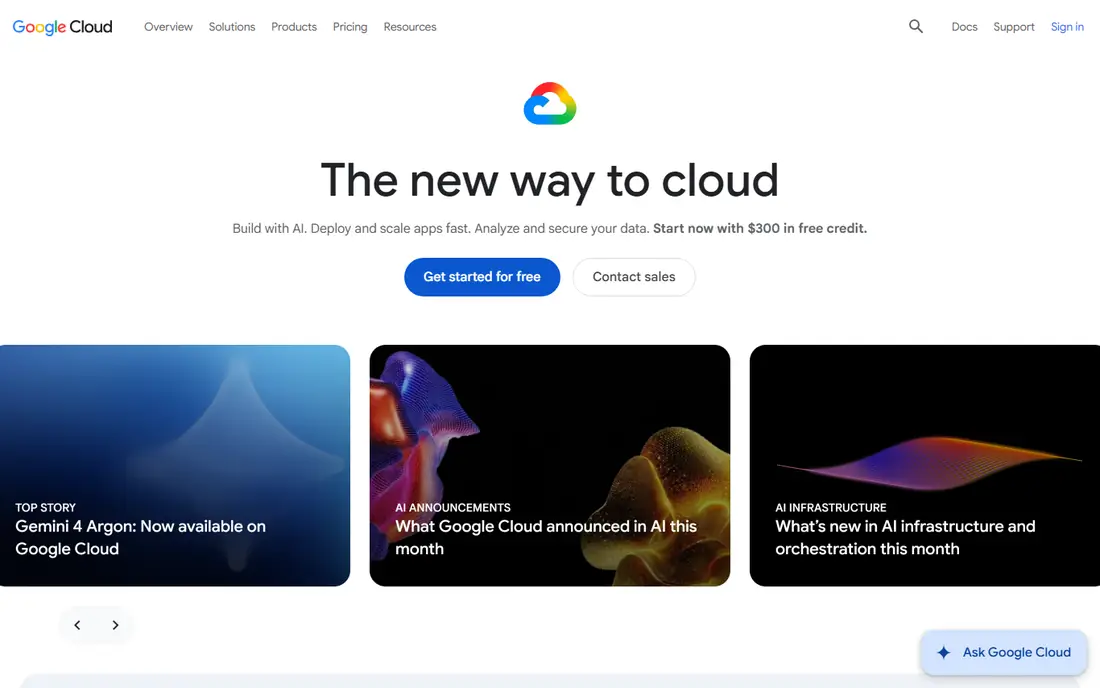
Google Cloud is designed for cost-efficient inference and data integration. The custom TPU infrastructure means Google runs AI workloads 5 to 10 percent less expensive than competitors can, and some of that flows to you. More specifically, Google Cloud is expanding fastest at 63 percent year over year, but it is still third in market share.
Honest limits: GPU quota can be hard to secure.
Teams deeply embedded in Microsoft or AWS ecosystems face migration friction. The honest catch is enterprise gravity. No starting price is listed for Google Cloud here; confirm pricing on the vendor site. Free access exists with Google Cloud.
- Gemini models with massive context windows
- BigQuery-native AI workflows
- Smaller enterprise AI footprint than AWS or Azure
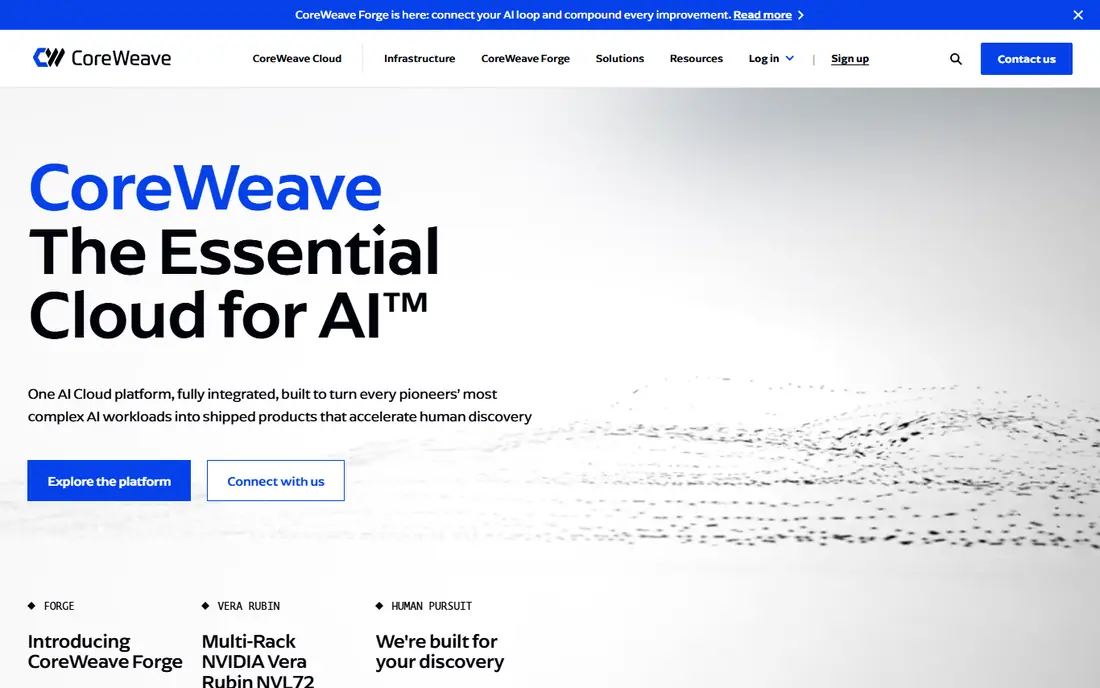
CoreWeave is designed for large-scale training reliability. The honest catch is the pricing structure. Beyond that, CoreWeave is the AI cloud the AI labs themselves use.
On top of that, nine of ten leading foundation model providers run on it. It holds the industry's only Platinum ClusterMAX rating, earned three times. That reliability is the product: when a training run costs millions, the infrastructure that does not fail is worth more than the cheapest hourly rate. As for the details, the product has expanded beyond raw compute into managed software for the AI lifecycle, with agents for research iteration and operational intelligence. In daily use, the headline $6.16 per GPU-hour for H100s is node-locked to 8-GPU minimums with no single-GPU self-serve choice, so small workloads pay an effective premium. Pricing for CoreWeave is not stated here, so ask the vendor for current figures. CoreWeave has no free tier.
Trade-offs to know: Node-locked pricing penalizes small workloads.
- Only Platinum-rated AI cloud on SemiAnalysis ClusterMAX
- Purpose-built for massive training runs
- Premium pricing compared with other neoclouds
For broadest model choice and ecosystem, AWS is a natural candidate. Bedrock puts Claude, Llama, Mistral, Cohere, Stability, and Amazon's own Nova models behind a single provider-neutral API, so you can swap models without re-architecting. For everyday use, the free level lets you experiment before committing real budget.
Drawbacks to consider: The service catalog's breadth produces real complexity.
As for the details, on-demand H100 pricing around $55 per hour for an 8-GPU node is roughly double the neoclouds, and the sheer number of overlapping AI services means teams waste months picking wrong before they pick right. SageMaker deals with serious fine-tuning and custom training, and the Trainium and Inferentia chips offer a lower-cost alternative to NVIDIA for the right workloads. In practice, with 28 percent of global cloud infrastructure spend, the capacity is there when you need it. AWS shows no starting price here, so confirm the cost on the vendor site. Free access exists with AWS.
- Deepest ecosystem of AI services from SageMaker to Trainium
- 124 availability zones of global capacity
- GPU pricing is the highest among major choices
Think of Nebius for adaptable GPU cloud with capable support. What users consistently praise is the support: 500-plus AI experts, 24/7 support by default, and free white-glove proof-of-concept engagements.
For teams that require GPU capacity without the hyperscaler quota battles, Nebius gives availability with a human touch. No starting price is listed for Nebius here; confirm pricing on the vendor site. Nebius does not include a free plan.
The main drawbacks: Enterprise procurement processes less mature.
- White-glove support with real AI experts
- Competitive $3.85 per GPU-hour H100 pricing
- Younger product than CoreWeave
How we compared the tools
The comparison looks at four things: starting price, free access, how well the feature set matches AI cloud platform, and the main limit of each tool. Seat minimums, billing terms and add-ons can move the real cost, so the starting prices here are a guide and not a quote. Order on the page follows fit for the typical buyer first, then price transparency and free access. Your own requirements should decide the final pick.
What to check before you buy
- Request quotes from Databricks, Nebius and the others; the list shows no fixed prices.
- Check what the free option really includes: Databricks, Google Cloud and AWS offer a free plan, and usage caps differ.
- Before choosing Databricks, weigh its main limit: usage-based Databricks Units pricing is notoriously hard to forecast.
- Check the integration list for CoreWeave against the tools you run today, and note which ones need a higher plan.
- Make sure Databricks lets you export your data in a format another tool can read.
FAQ
Should I use AWS, Azure, or Google Cloud for AI?
That removes most deployment friction. For everyday use, AWS wins on model breadth, Azure on Microsoft ecosystem integration and dual GPT-plus-Claude access, Google on cost-efficient inference and BigQuery integration.
Can I try these tools before paying?
Often, yes. Databricks, Google Cloud and AWS have a free plan. Use your own data and a real task during the test, and check what the free tier or trial limits before you rely on it.
Are GPU neoclouds steady for production training?
The top level is. CoreWeave holds the industry's only Platinum ClusterMAX reliability rating, and Nebius earned Platinum as well. These systems now run production training for the world's leading AI labs.
How are the tools for AI cloud platform ordered?
Databricks sits first and Nebius last because the order follows typical fit for AI cloud platform, then price clarity and free access. It is a judgement call, so read each profile for fit and limits.
What is the best AI cloud platform in 2026?
Start with Databricks if you need AI on governed enterprise data. Google Cloud is the better match for cost-efficient inference and data integration, and CoreWeave for large-scale training reliability. The best choice depends on budget, team size and workflow.
Which options for AI cloud platform have a free plan?
On this list, Databricks, Google Cloud and AWS include a free plan. Caps on seats, usage or features are common, so test the free plan against your real workload.