Best AI Lead Generation Tools in 2026: 8 Tools Compared
The best ai lead generation tools for finding, scoring, and contacting prospects. We compared eight tools on data quality, automation, outreach, and price.

- Editor's choice
 Apollo.io
Prospect data and outreach
Starts atFreeVisit apollo.ioFull review - Great alternative
 Clay
Enriched lead workflows
Starts atSee websiteVisit clay.comFull review - Also consider
 ZoomInfo
Enterprise prospect data
Starts atSee websiteVisit zoominfo.comFull review
TL;DR:
- Apollo.io and ZoomInfo lead on prospect data, but data quality still needs human checks before outreach.
- Clay suits teams that want to build enriched lead lists from many sources in one workflow.
- HubSpot suits teams that want lead scoring and outreach inside a CRM they already use.
- Respect consent, privacy law, and email rules, since AI speed does not excuse poor outreach.
Quick comparison
| Tool | Best for | Starts at | Free plan? | |
|---|---|---|---|---|
| Apollo.io | Prospect data and outreach | Free | Yes | Visit |
| Clay | Enriched lead workflows | See website | Free trial | Visit |
| ZoomInfo | Enterprise prospect data | See website | Free trial | Visit |
 Lusha | Quick contact lookup | Free | Yes | Visit |
 Cognism | Compliant B2B data in Europe | See website | Free trial | Visit |
 LeadIQ | Sales prospecting in browser | Free | Yes | Visit |
 Instantly | Cold email at scale | See website | Free trial | Visit |
 HubSpot | CRM lead scoring and outreach | Free | Yes | Visit |
The best ai lead generation tools
We compared official feature pages, pricing pages, data descriptions, and public reviews to find tools that truly help teams find and contact leads.
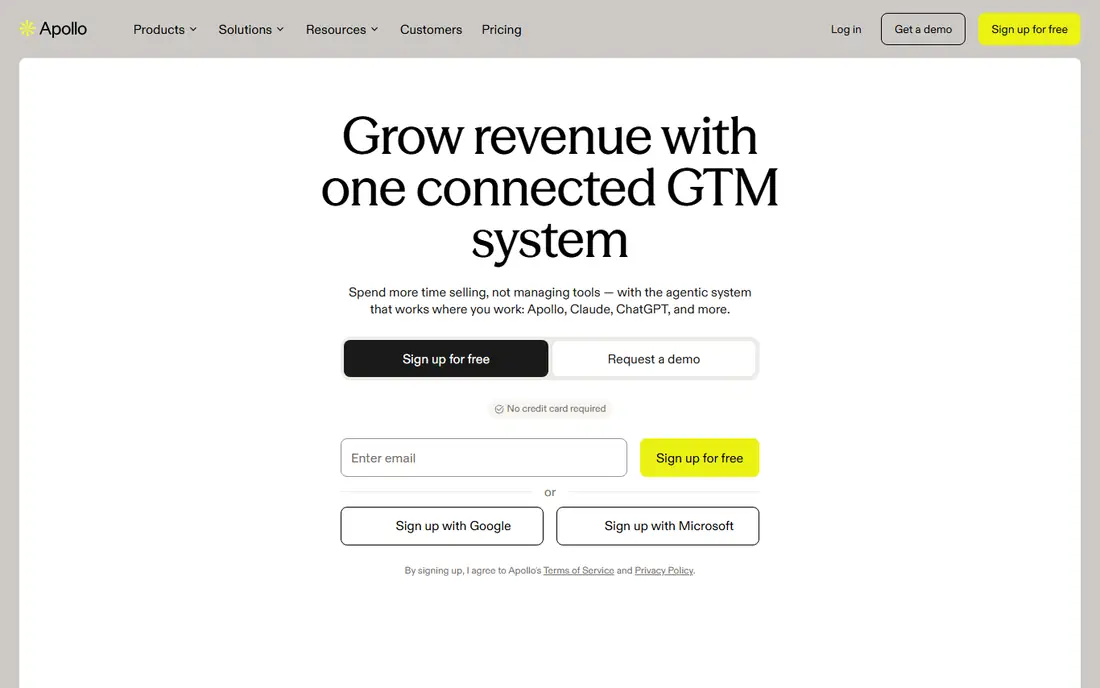
Apollo.io is a strong all round pick for the best ai tool for lead generation because it combines prospect search, enrichment, and email sequences. You can filter by title, company size, industry, and technology, then build a sequence without moving to another tool. That joined flow saves time for small sales teams.
The honest catch is data quality. No database is perfect, and Apollo records can be outdated for smaller companies or fast changing roles. Verify key contacts on LinkedIn or a company site before a high value outreach, and clean bounces quickly to protect your sender reputation.
- Large contact database
- Filters and sequences in one tool
- Free tier for small teams
- Data accuracy varies by region and role
- Best features need paid plans
Clay suits teams that want to build a lead list their way, not just buy a static list. You can pull companies from one source, enrich contacts from another, score fit with AI, and push results to a CRM or outreach tool. That flexibility helps for account based campaigns and niche markets.
The trade off is complexity and cost. Clay takes time to learn, and each enrichment step can use credits, so a broad list can get costly. Start with a narrow ideal customer profile, test enrichment on 100 leads, and measure reply quality before scaling to thousands.
- Combines many data sources
- AI enrichment and scoring
- Flexible tables and workflows
- Learning curve is real
- Credit costs can rise with enrichment volume

ZoomInfo is a top ai lead generation software choice for larger sales teams that need depth. Company hierarchies, technographics, intent signals, and contact data help reps prioritize accounts that show buying signals. Integrations with Salesforce, HubSpot, and outreach tools keep data flowing into daily workflows.
The limit is price and fit. ZoomInfo is built for teams with real budgets and structured sales processes, not for a solo founder testing an idea. Ask for a trial on your actual target market, check match rates for your niche, and confirm contract terms before committing.
- Deep company and contact data
- Intent signals
- Strong CRM integrations
- Premium pricing
- Contracts suit larger teams better than solo sellers
Lusha is useful when you already found a prospect on LinkedIn and just need a verified email or phone number. The extension shows contact details beside a profile, which fits reps who prospect one account at a time. The free tier gives a small monthly credit allowance for testing.
The catch is coverage. Lusha works best for common roles in major markets, and less well for niche industries or smaller regions. Use it as a quick lookup tool alongside a larger database, and verify important contacts before sending a high stakes message.
- Browser extension for LinkedIn
- Fast contact lookup
- Simple credit system
- Coverage varies outside major markets
- Free credits are limited
Cognism stands out for teams that sell in Europe and worry about data compliance. It emphasizes GDPR aligned sourcing, phone verified mobile numbers, and clear data handling, which helps sales leaders who must answer legal questions. Intent data and hiring triggers also help reps time outreach better.
The limit is transparency. Pricing varies by plan and is often quoted, so small teams cannot easily compare it without a sales call. Request a trial with your target countries and roles, and ask how data is sourced and refreshed before signing.
- Focus on GDPR aligned data
- Phone verified numbers
- Intent and sales triggers
- Pricing is not public for all plans
- Best value for teams focused on Europe and North America
LeadIQ fits reps who live on LinkedIn and want to capture prospects without copying data by hand. One click capture sends a contact to a sequence or CRM, and the extension keeps prospecting inside the browser. That speed helps for daily outbound work.
The honest weakness is scale. LeadIQ is excellent for individual prospecting, but it is not a full list building platform like Clay or Apollo. Use it for targeted outreach, and pair it with a database tool when you need large, filtered lists for campaigns.
- LinkedIn prospecting extension
- One click capture
- CRM sync for Salesforce and HubSpot
- Free tier is limited
- Data depth is less than ZoomInfo for large lists
Instantly is built for teams that send cold email at volume and need deliverability help. Warmup, inbox rotation, and analytics help protect sender reputation, while campaign tools test subject lines and sequences. For a team with a clean, targeted list, that infrastructure matters.
The catch is that tools do not fix a bad list or a weak offer. Cold email also carries legal and platform rules that vary by country and by recipient, so get consent where required, honor opt outs promptly, and keep volumes modest at first. Instantly works best after list quality and message quality are already sound.
- Email warmup and deliverability tools
- Campaign analytics
- Lead finder included on some plans
- Cold email rules vary by region and inbox provider
- Results depend heavily on list quality
HubSpot is a different kind of lead tool: it helps you capture, score, and nurture leads you already attract. Forms, chat, landing pages, and email sit in one CRM, and AI features help score leads, draft outreach, and summarize activity. For inbound focused teams, that unity beats a stack of disconnected tools.
The limit is prospecting depth. HubSpot free does not replace a contact database such as Apollo or ZoomInfo, so outbound teams still need a data source. Use HubSpot as the home for leads, and connect a prospecting tool for outbound lists. That split keeps data clean and outreach measurable.
- Free CRM to start
- Lead scoring and forms
- Email, chat, and ads in one system
- Advanced AI and automation features need paid hubs
- Setup takes time
How we picked these
We compared official feature pages, pricing pages, data coverage claims, and public reviews. We favored tools active in October 2026 with clear data sourcing, CRM integration, and a real free tier or trial. We did not claim hands-on testing, and we weighed data quality, compliance, automation, and total cost together. Note: this article is general information, not legal advice on privacy or email law.
How to choose an ai lead generation tool
Start with your lead source. Inbound teams need forms, scoring, and nurture tools. Outbound teams need prospect data and outreach. Account based teams need enrichment and intent signals. A tool that excels at one source may be weak at another, so name your main source before comparing features.
Test data quality on your real market
Ask for a trial and test 100 prospects in your exact target market, not a demo list. Check job title accuracy, email validity, phone coverage, and company fit. Measure bounce rate and reply rate, not just list size. A smaller, accurate list will outperform a large, stale list every time, and it will protect your domain reputation.
Build a respectful outreach process
AI can find leads fast, but it cannot replace permission and relevance. Personalize the first line with a real observation about the company, keep messages short, offer a clear next step, and honor opt outs at once. Follow local privacy and email rules, including GDPR and CAN-SPAM requirements where they apply, and keep records of consent and data sources.
Measure cost per qualified lead, not cost per contact
A cheap contact that never replies costs more than a pricier contact that books a meeting. Track cost per reply, cost per meeting, and cost per qualified opportunity by source. Review those numbers monthly, cut sources with high bounce rates, and shift budget to the channels that produce real conversations, not just large lists.
FAQ
What are the best ai tools for lead generation for small businesses?
Apollo.io free and HubSpot free are strong starting points for small businesses, with Lusha and LeadIQ useful for quick prospecting. Small teams should start with one database and one CRM, test data quality, and add enrichment tools only when volume justifies the cost.
What is the best ai lead generation software for B2B sales?
Apollo.io and ZoomInfo lead on B2B data breadth, Clay leads on flexible enrichment workflows, and Cognism leads on compliant European data. The best choice depends on team size, target market, and budget. Test match rates in your niche before choosing a long contract.
How does AI lead scoring work?
AI lead scoring ranks leads by fit and behavior, using firmographics, job role, website activity, email engagement, and intent signals. Scores help reps prioritize who to contact first, but they are only as good as the data feeding them. Review scores against real outcomes monthly and adjust weights when a score misleads reps.
Is cold email with AI tools legal?
It depends on the country, the recipient type, and consent rules. In the United States, CAN-SPAM sets rules for commercial email, while GDPR and similar laws in Europe set stricter consent and data rules. Use verified data, include a working opt out, honor requests promptly, and get legal advice for high volume campaigns.
How much do the best lead generation ai tools cost?
Costs range from free tiers on Apollo, Lusha, LeadIQ, and HubSpot to quoted enterprise pricing on ZoomInfo and Cognism. Clay and Instantly use credit or seat based pricing that scales with volume. Compare total monthly cost at your real lead volume, including data credits and CRM seats.
Can AI tools replace human prospecting?
No. AI can find, enrich, and score leads faster than manual work, but humans still need to verify fit, personalize outreach, and build trust on calls. Teams that combine AI lists with human review and relevant messaging get better reply rates than teams that automate everything without checks.