Best AI Governance Platforms in 2026: 8 Platforms Compared
We compared the best AI governance platforms for 2026, covering inventories, risk checks, policy controls and pricing so your team can choose with confidence.
- Editor's choice
 IBM watsonx.governance
Large enterprise AI programs
Starts at$3,500 per monthVisit ibm.comFull review - Great alternative
 Credo AI
Structured compliance programs
Starts atSee websiteVisit credo.aiFull review - Also consider
 Holistic AI
Risk testing and monitoring
Starts atSee websiteVisit holistic.aiFull review
TL;DR:
- The best AI governance platforms combine a full inventory of models and agents with risk scoring, policy checks and audit records in one place.
- IBM watsonx.governance suits large teams that already work with IBM tools, while Credo AI and Holistic AI focus more on structured compliance work.
- Most enterprise platforms price by quote, so budget talks should start early and include implementation and training time.
- Smaller teams should start with a clear inventory and a short list of high risk uses, then add monitoring and controls in stages.
Quick comparison
| Tool | Best for | Starts at | Free plan? | |
|---|---|---|---|---|
| IBM watsonx.governance | Large enterprise AI programs | $3,500 per month | Free trial | Visit |
| Credo AI | Structured compliance programs | See website | No | Visit |
| Holistic AI | Risk testing and monitoring | See website | No | Visit |
 OneTrust AI Governance | Privacy and governance teams | See website | No | Visit |
 Saidot | Public sector and registry work | See website | No | Visit |
 Monitaur | Regulated industry audits | See website | No | Visit |
 Enzai | Policy and workflow management | See website | No | Visit |
 Fairly AI | Continuous model oversight | See website | No | Visit |
The best AI governance platforms
AI governance software helps a company keep track of every model, agent and AI feature it runs, then check those systems against its own rules and outside regulations. The eight platforms below cover that work from different angles, so the right pick depends on team size, industry and how much automation you need.
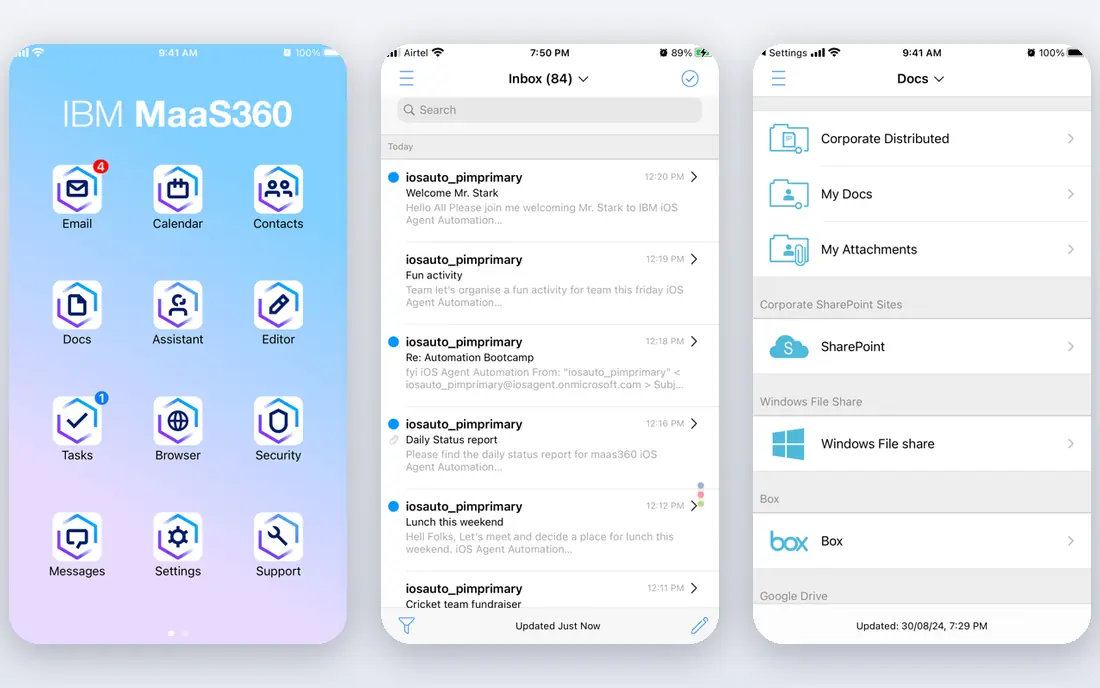
IBM watsonx.governance is built for companies that run many models and need a single record of what each one does, who owns it and how it performs. Its factsheets pull together model details, training information and evaluation results, which makes audits and internal reviews easier to prepare. The platform also tracks risk and compliance checks across the model lifecycle, from approval to live monitoring.
The trade off is scale and cost. Pricing starts at $3,500 per month for the Risk and Compliance Basic plan on IBM Cloud, and larger deployments cost more. Teams with only a handful of models may find the platform larger than they need, but for a large program with formal review gates, that depth is the point.
- Automated factsheets for models
- Mappings to NIST AI RMF and the EU AI Act
- Monitoring for models built inside or outside IBM tools
- Enterprise pricing adds up fast
- Setup can be heavy for small teams
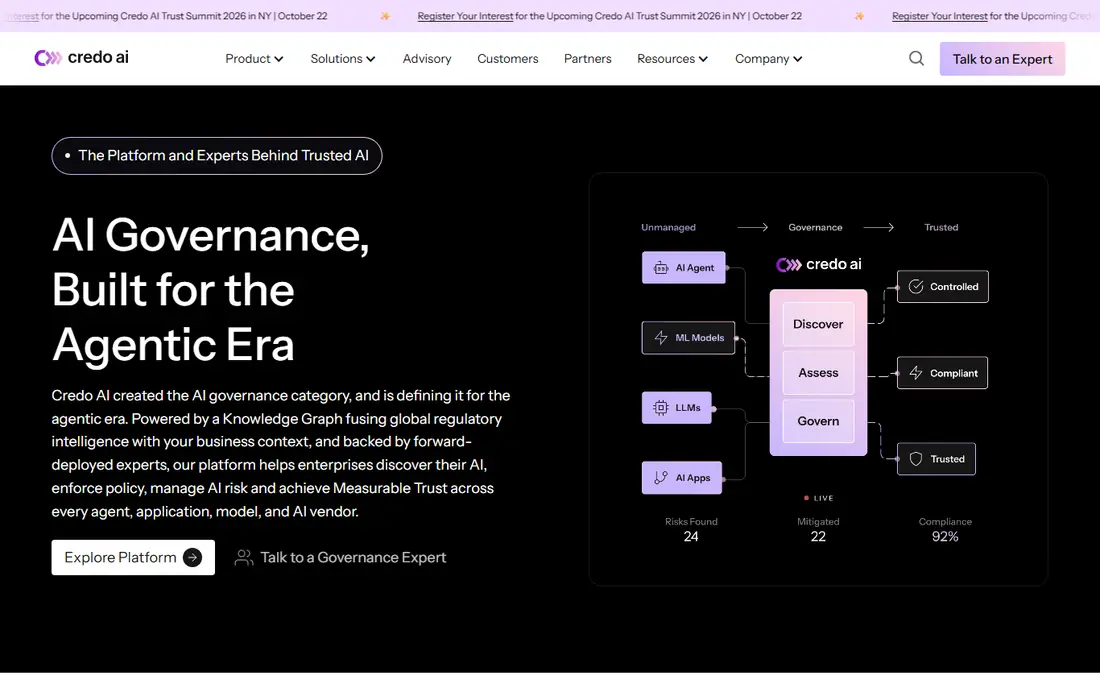
Credo AI turns governance into a repeatable workflow. Teams register AI systems, assess risk, map controls to frameworks such as the EU AI Act and NIST AI RMF, and route approvals through defined steps. That structure helps when legal, risk and product teams all need to sign off before a system ships.
Credo AI works best when a company already treats compliance as a formal process rather than a one off checklist. The downside is opacity on price, since plans are quoted rather than published. Ask for a scoped quote tied to the number of AI systems and users you actually plan to govern.
- Prebuilt policy packs for major frameworks
- Compliance mapping across regulations
- Governance workflows for approvals
- Pricing is quote based
- Smaller teams may not need the full framework library
Holistic AI stands out for teams that want evidence, not just documentation. It tests models for bias, fairness and other risks, and it can help surface AI tools already in use across a company, including ones IT did not approve. Once a system is live, monitoring keeps watch for drift and new risks.
That testing focus makes Holistic AI a strong fit for high stakes uses such as hiring, lending or benefits decisions, where a documented test result matters. The catch is that results still need human judgment, and interpreting them well may take time from risk or data science staff.
- Deep bias and fairness testing
- Discovery of AI systems in use
- Continuous monitoring after deployment
- Pricing is quote based
- Testing depth can require specialist review
OneTrust AI Governance appeals to companies that already manage privacy, data governance or third party risk in OneTrust. Adding AI governance to the same program avoids a separate inventory and keeps privacy reviews connected to AI risk reviews. The platform covers AI system inventories, risk assessments and controls mapped to common standards.
The breadth is also the drawback. Teams that only need AI governance may find themselves inside a much larger platform, with setup work to match. It fits best where privacy and AI oversight are already managed together.
- Ties AI governance to privacy programs
- Inventory and risk assessment tools
- Alignment with ISO 42001 and other standards
- Pricing is quote based
- Broad platform can feel complex at first
Saidot focuses on making AI use visible and accountable. Its registers record what AI systems an organization runs, their purpose and their risk level, which is useful for public bodies and companies that must answer to regulators or the public. The design favors clarity over heavy automation.
Saidot may suit a team whose main goal is transparency and a defensible record, rather than deep model testing. Check how it connects to your existing risk tools before committing, since its strength is the register and governance workflow rather than technical model monitoring.
- Clear AI system registers
- Transparency focused design
- Tools for public accountability
- Smaller vendor footprint than IBM or OneTrust
- Pricing is quote based
Monitaur is aimed at regulated companies that must defend model decisions to auditors and regulators. It documents the model lifecycle, keeps records in one place and supports review workflows that fit financial services and insurance. For those teams, audit readiness is the main selling point.
Companies outside regulated industries can still use it, but the value is clearest where formal model risk management already exists. As with most vendors here, pricing requires a sales conversation, so plan for a scoping call early.
- Model lifecycle documentation
- Audit ready records
- Focus on insurance and financial services
- Pricing is quote based
- Narrower market focus than general platforms
Enzai helps teams write, manage and apply AI policies across the organization. Instead of policies living in documents that nobody checks, Enzai ties them to systems, reviews and workflows. That makes it easier to show which policy applied to which AI use and when it was reviewed.
Enzai fits teams building a governance program from the policy side first, especially where legal and compliance teams lead the work. Teams that need deep technical model testing may want to pair it with a testing tool rather than expecting one platform to do everything.
- Central policy management
- Workflow tools for reviews
- Focus on AI policy programs
- Newer and smaller than the largest vendors
- Pricing is quote based
Fairly AI focuses on keeping watch after a model ships. Continuous monitoring, risk reporting and audit trails help teams spot problems early and show reviewers what changed over time. That ongoing view matters because AI systems change as data and prompts change, even when the model itself stays the same.
Fairly AI is a sensible shortlist option for teams that already have an inventory and now need monitoring to match. Ask for a demo using your own use cases, and confirm which integrations and data sources are covered before signing.
- Ongoing monitoring for models and agents
- Risk and compliance reporting
- Audit trails
- Pricing is quote based
- Feature depth varies by deployment
How we picked these
We compared official product pages, pricing pages and public documentation for AI governance software, and we looked for platforms that cover inventory, risk assessment, policy controls and monitoring rather than a single narrow feature. We favored vendors with current, active products and clear descriptions of how they support frameworks such as NIST AI RMF, the EU AI Act and ISO 42001. We did not claim hands-on testing, and we used See website wherever a vendor does not publish pricing.
What to check before you buy
Start with an inventory. Before buying software, list every AI system, model and agent in use, including vendor tools and spreadsheets with AI features. A platform can only govern what it can see, so discovery and a simple register come first for most teams.
Match the tool to your risk level
A hiring or lending model needs testing, documentation and human review. A low risk internal drafting tool needs far less. Map each use to a risk tier, then buy controls that fit the highest tier you actually run. Paying for deep testing on every low risk tool wastes budget, while skipping it on a high risk model creates real exposure.
Confirm framework coverage and reporting
Ask each vendor which frameworks it maps to and what a finished audit report looks like. Good answers include named frameworks, exportable records and clear ownership for each system. Vague answers about compliance should be treated as a warning sign, since the report is what auditors and regulators will actually read.
Plan for people, not just software
Governance software needs owners in product, legal, risk and engineering. Budget time for training, review meetings and policy updates, and name one person who owns the inventory. Without that ownership, even a strong platform becomes an empty register within a few months.
FAQ
What is the best AI governance software?
The best AI governance software depends on your program. Large enterprises often pick IBM watsonx.governance or OneTrust, while teams building a structured compliance program may prefer Credo AI. Start from your inventory size, industry rules and budget, then shortlist two or three vendors for demos.
What is the best tool for AI governance?
A strong tool covers inventory, risk scoring, policy checks and monitoring in one place. Holistic AI adds depth on testing, while Saidot and Enzai focus more on registers and policy workflows. Choose the tool whose strength matches the gap in your current program.
How much does AI governance software cost?
Costs vary widely. IBM publishes a starting price of $3,500 per month for its Risk and Compliance Basic plan, while most other enterprise vendors price by quote. Total cost depends on the number of AI systems, users and integrations, plus implementation time.
Do small companies need an AI governance platform?
Small companies still benefit from a basic inventory and risk list, even if they do not buy enterprise software. A simple register, a risk tier for each use and a named owner cover most early needs. A platform becomes worth it once the number of AI systems grows beyond what a spreadsheet can track.
How does AI governance relate to the EU AI Act?
The EU AI Act sets risk based duties for certain AI systems, including documentation, testing and human oversight for higher risk uses. Governance platforms help by recording systems, mapping controls to the Act and keeping audit trails. They do not replace legal advice, so regulated teams should still check duties with counsel.