Switching From Balena? 5 Alternatives for 2026
Balena alternatives, compared. 5 tools with published prices, free plans and limits. Top pick: Azure IoT Hub, aimed at managing large IoT device fleets.
- Editor's choice
 Azure IoT Hub
Managing large IoT device fleets
Starts atSee websiteVisit azure.microsoft.comFull review - Great alternative
 Particle
Integrated IoT product as a service
Starts at$299 a month per blockVisit particle.ioFull review - Also consider
 AWS IoT Core
Secure device communication on AWS
Starts atSee websiteVisit aws.amazon.comFull review
Direct answer
Azure IoT Hub comes first here, mainly for managing large IoT device fleets. Listed starting prices: Particle from $299 a month per block and Docker from $9 per user a month. Particle fits integrated IoT system as a service; AWS IoT Core fits secure device communication on AWS. Details, prices and limits for the rest of the 5 tools are below.
TL;DR:
- Azure IoT Hub is the opening pick, best for managing large IoT device fleets.
- Google Cloud IoT is the one to check for IoT architecture on Google Cloud.
- Docker is the lowest-priced starter here at $9 per user per month.
- One limit worth knowing about AWS IoT Core: tied to AWS ecosystem.
- Particle, AWS IoT Core, Docker: these are the 3 tools out of 5 that offer a free plan.
Last checked November 2026. Prices and plan details were read from the vendors' own pages in November 2026; vendors change plans often, so confirm the current price on the vendor site before you buy.
Quick comparison
| Tool | Best for | Starts at | Free plan? | |
|---|---|---|---|---|
| Azure IoT Hub | Managing large IoT device fleets | See website | Free trial | Visit |
| Particle | Integrated IoT product as a service | $299 a month per block | Yes | Visit |
| AWS IoT Core | Secure device communication on AWS | See website | Yes | Visit |
 Docker | Container development and secure sandboxes | $9 per user a month | Yes | Visit |
| Google Cloud IoT | IoT architecture on Google Cloud | See website | Not stated | Visit |
Tool-by-tool breakdown
LinkVetted put together this guide to Balena for readers who want a clear shortlist without reading every vendor page. It compares 5 tools on starting price, free plans, who each one suits and where each one falls short.
Azure IoT Hub serves managing large IoT device fleets. For container-based edge deployments, pair it with other tools or consider a different product. As for the details, Azure IoT Hub is a good match for Azure environments and may not be a strong match for multi-cloud or non-Microsoft stacks.
Points against: Can need significant setup effort.
It does not offer container orchestration for edge devices. As for the details, Azure IoT Hub is a cloud platform that lets you link, monitor, provision, and configure IoT devices at scale. It is meant to handle large numbers of devices and plug into Azure services for analytics and workflows. Azure IoT Hub shows no starting price here, so confirm the cost on the vendor site. Free options: Free trial.
Where it shines: Connects with Azure services.
- Supports device configuration at scale
- Link, monitor
- Azure-centric ecosystem
Particle makes the most sense for integrated IoT system as a service. It supplies a combination of hardware, connectivity, and software tools to ease IoT development. For everyday use, if you need deep integration with existing cloud services, consider a cloud provider's IoT offering.
Points against: Proprietary system.
Particle is a proprietary system, which may limit customization compared with open source alternatives. It may not suit teams that require full control over their infrastructure. Particle starts at: $299 per month per block. Particle has a free plan.
- Supports innovative firms
- Integrated IoT product
- May be less adaptable for custom needs
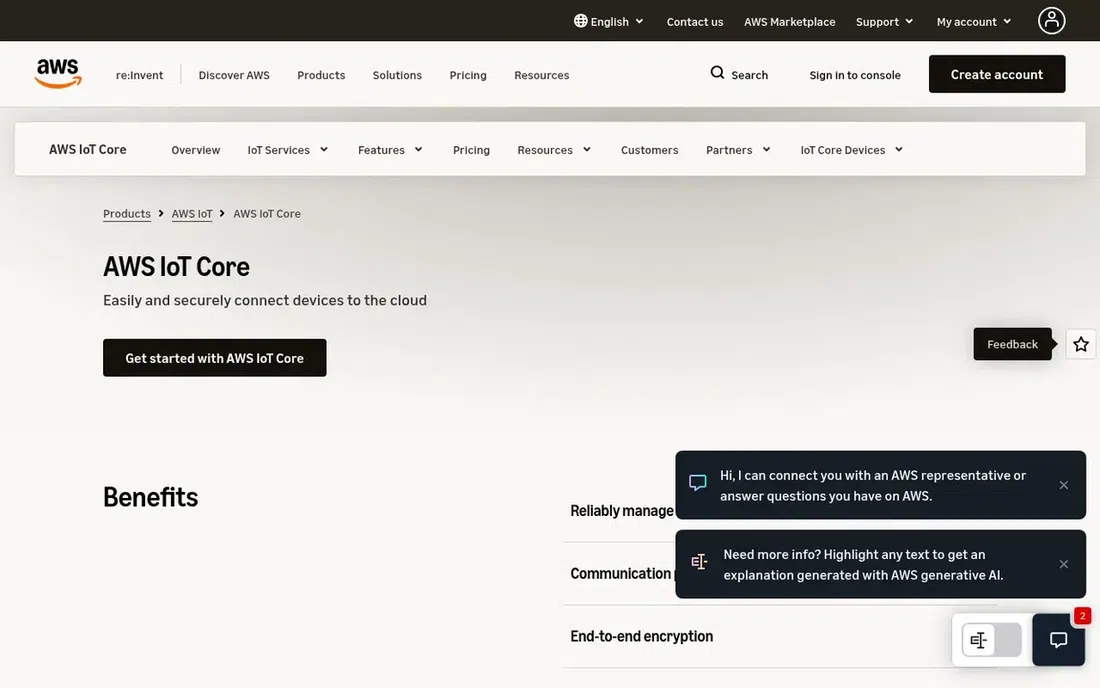
AWS IoT Core is aimed squarely at secure device communication on AWS. AWS IoT Core is a managed cloud service that makes it possible for secure two-way communication between internet-connected devices and AWS services. It gives you a device gateway and device SDKs to help link and run devices.
Where it falls short: Tied to AWS ecosystem.
In practice, AWS IoT Core is closely tied to the AWS ecosystem, so teams using other clouds may face integration overhead. It concentrates on cloud connectivity instead of on-device container orchestration. If you need a vendor-neutral or edge-first system, consider alternatives. Check the vendor site for AWS IoT Core pricing; none is listed in this comparison. Free access exists with AWS IoT Core.
- Plugs into AWS services
- Secure two-way communication
- Needs AWS configuration knowledge
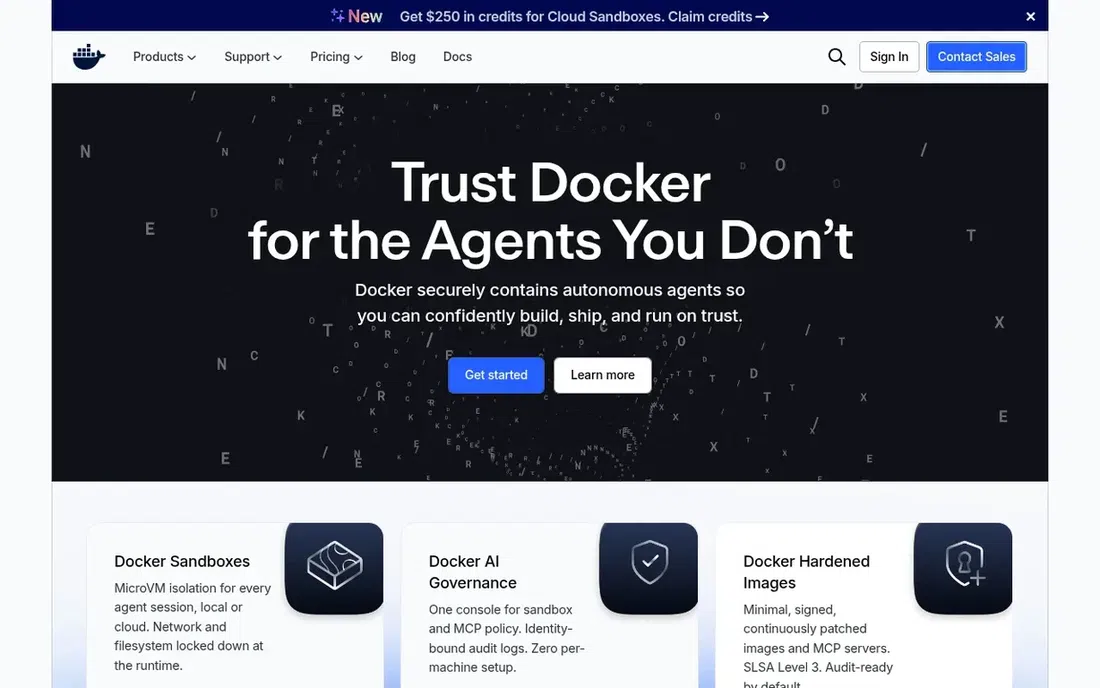
Docker is a good fit for container development and secure sandboxes. Docker is a product for building, running, and managing containers, with a focus on secure sandboxes and governance.
Points against: Needs container expertise.
It offers trusted environments for AI agents and containerized applications, along with a secure supply chain. Worth adding: Docker does not offer native IoT device management or fleet orchestration for edge devices. What you pay to start with Docker: $9 per user per month. A free plan is available with Docker.
- Runs containers anywhere
- Secure supply chain and governance features
- Not a full device management product
Google Cloud IoT
Best for: IoT architecture on Google Cloud
Google Cloud IoT is built with IoT architecture on Google Cloud in mind. Google Cloud IoT is not a single turnkey device management product like some alternatives; it is more of an architectural approach. It needs familiarity with Google Cloud services.
As for the details, if you need a ready-made device management system, consider a dedicated IoT service instead. Google Cloud IoT refers to architectural guidance and services for deploying IoT system products on Google Cloud. This comparison lists no price for Google Cloud IoT; ask the vendor. Trial and free access: Not stated.
Drawbacks to consider: Documentation concentrated on architecture.
- Uses Google Cloud services
- Guidance for IoT system architecture
- Needs Google Cloud expertise
How these tools were picked
We compared the tools on published pricing, free plan or trial availability, feature coverage for Balena, and the limits each vendor documents. Where a vendor does not publish a price, the entry says quote. Where a price depends on seats or billing term, the entry says so. The ranking is editorial: typical fit first, then clear pricing, then free access. If your needs are unusual, read the profiles rather than relying on position.
What to check before you buy
- Confirm the entry price on the vendor page. For Azure IoT Hub, AWS IoT Core and Google Cloud IoT that means a quote rather than a fixed price.
- Read the fine print on the free plans from Particle, AWS IoT Core and Docker; seat, project and feature caps differ.
- Run a trial of Azure IoT Hub with real work before paying for a year; your own workflow is the best test.
- Before choosing Azure IoT Hub, weigh its main limit: Azure-centric ecosystem.
- Ask Particle about contract length, onboarding fees and user minimums before you sign.
- Ask Docker how an export works before you move any records in; an easy exit lowers the risk.
FAQ
Do these tools publish their prices?
Not all of them. Azure IoT Hub, AWS IoT Core and Google Cloud IoT publish no starting price, so expect a quote request for those. The rest, Particle included, show a starting price, though seats and billing terms still change the final cost.
Can AWS IoT Core or Azure IoT Hub replace Balena for device management?
Yes, both supply cloud-based device connectivity and management. AWS IoT Core gives you secure two-way communication with AWS services, and Azure IoT Hub runs large device fleets.
What is the cheapest option for Balena in this list?
On published monthly entry prices, Docker is the lowest here at $9 per user per month. Entry price is only part of the cost, because seats, add-ons and billing terms can change the total. For the full picture, the cards above cover all 5 entries of this Balena alternatives list, including price, free plan and limits.
Can I try these tools before paying?
Often, yes. Particle, AWS IoT Core and Docker have a free plan and Azure IoT Hub offers a free trial. Use your own data and a real task during the test, and check what the free tier or trial limits before you rely on it.
Which options for Balena have a free plan?
Particle, AWS IoT Core and Docker offer a free plan in this list. Free plans usually cap users, projects or features, so check the limits on the vendor page. One other tool offers a trial instead.
Sources
- https://azure.microsoft.com/en-us/products/iot-hub
- https://www.particle.io
- https://aws.amazon.com/iot-core
- https://www.docker.com
- https://cloud.google.com/iot