Best AWS Secrets Manager Alternatives in 2026: 9 Secrets Tools Compared
aws secrets manager alternatives compared: 9 secrets management tools for cloud, multi-cloud and self-hosted teams, with pricing, limits, guidance for 2026.
- Editor's choice
 HashiCorp Vault
Multi-cloud platforms needing dynamic secrets
Starts atFreeVisit hashicorp.comFull review - Great alternative
 Azure Key Vault
Azure-centred teams
Starts atSee websiteVisit azure.microsoft.comFull review - Also consider
 Google Secret Manager
Google Cloud teams
Starts atSee websiteVisit cloud.google.comFull review
TL;DR:
- Our pick for most readers is HashiCorp Vault, for its balance of features and value in this list.
- Azure Key Vault is the strongest specialist pick when your main need matches its focus.
- Prices and free plans vary by tier, so check the plan that includes the features you will actually use.
- Start with a small pilot or trial before moving a whole team, household or fleet across.
Quick comparison
| Tool | Best for | Starts at | Free plan? | |
|---|---|---|---|---|
| HashiCorp Vault | Multi-cloud platforms needing dynamic secrets | Free | Yes | Visit |
| Azure Key Vault | Azure-centred teams | See website | No | Visit |
| Google Secret Manager | Google Cloud teams | See website | No | Visit |
 Doppler | Developer teams wanting a managed vault | $21 per user per month | Yes | Visit |
 Infisical | Modern self-hosted or cloud secrets | $18 per identity per month | Yes | Visit |
 OpenBao | Vault users wanting open-source licensing | Free | Yes | Visit |
 1Password Secrets Automation | Teams already using 1Password | $7.99 per user per month | Free trial | Visit |
 Akeyless | SaaS vault with zero-knowledge design | See website | Yes | Visit |
 CyberArk Conjur | Enterprises needing PAM-linked secrets | See website | Free trial | Visit |
The best AWS Secrets Manager alternatives
We compared the options below on features, pricing, ease of use and fit for different buyers, so you can shortlist two or three and test them properly.
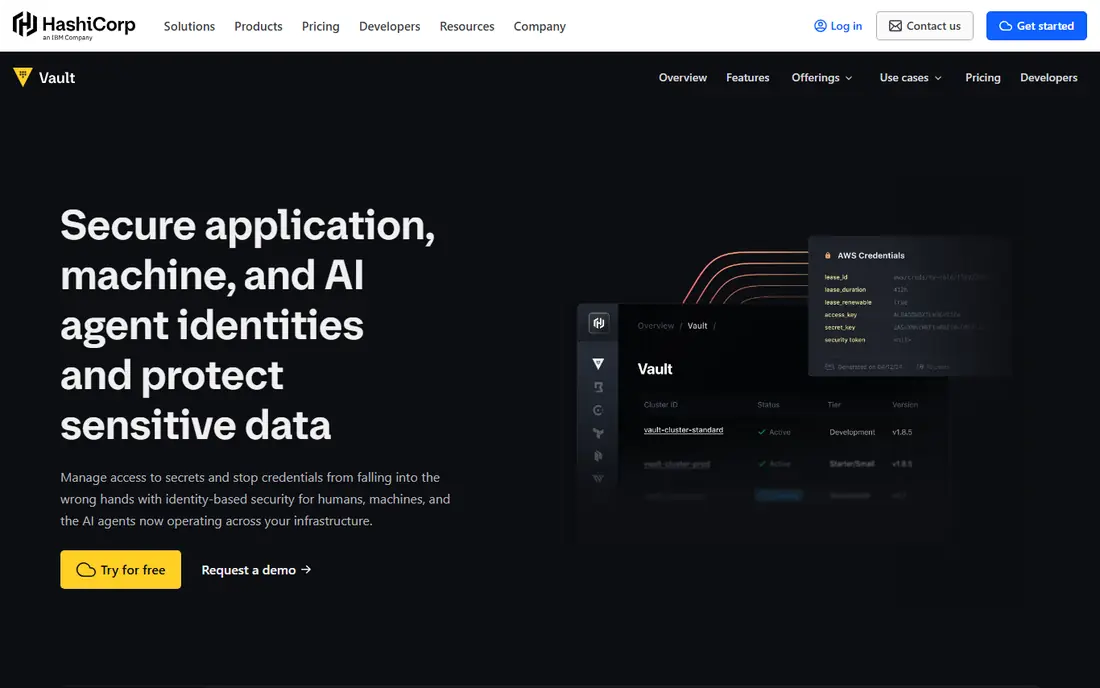
Vault is the deepest secrets engine here, issuing short-lived credentials on demand and covering PKI and encryption as a service.
Running it well takes platform skill, and managed pricing by cluster and client needs careful modelling for large estates.
We would shortlist HashiCorp Vault when multi-cloud platforms needing dynamic secrets is the main priority, and we would still check the current plan details, contract terms and support hours on the vendor site before signing. A short trial or pilot with real work, real devices or real data will tell you more than any feature list, so use that step to confirm fit for your team or household.
- Dynamic secrets
- PKI
- Encryption as a service
- Self-hosting needs ops skill
- Managed pricing is complex
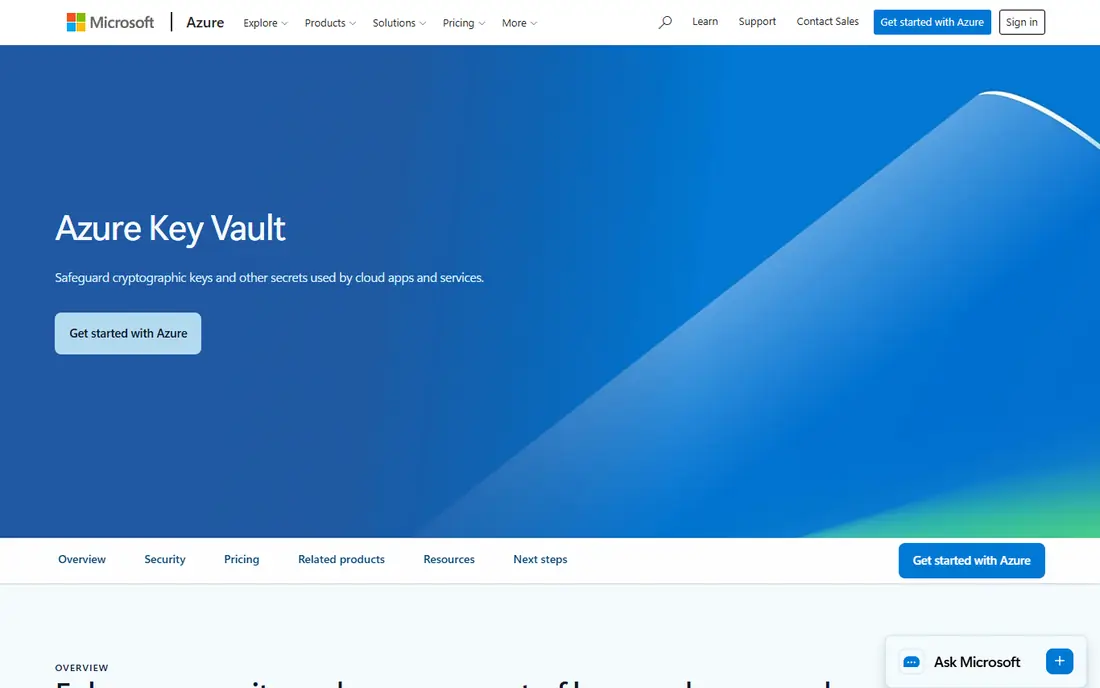
Azure Key Vault suits teams already on Azure, with native identity integration and managed hardware security options.
It is less natural as a multi-cloud vault, so teams with large AWS or GCP estates may prefer a neutral tool.
We would shortlist Azure Key Vault when azure-centred teams is the main priority, and we would still check the current plan details, contract terms and support hours on the vendor site before signing. A short trial or pilot with real work, real devices or real data will tell you more than any feature list, so use that step to confirm fit for your team or household.
- Keys, secrets and certificates
- Entra integration
- Managed HSM option
- Azure-first
- Cross-cloud use needs extra work
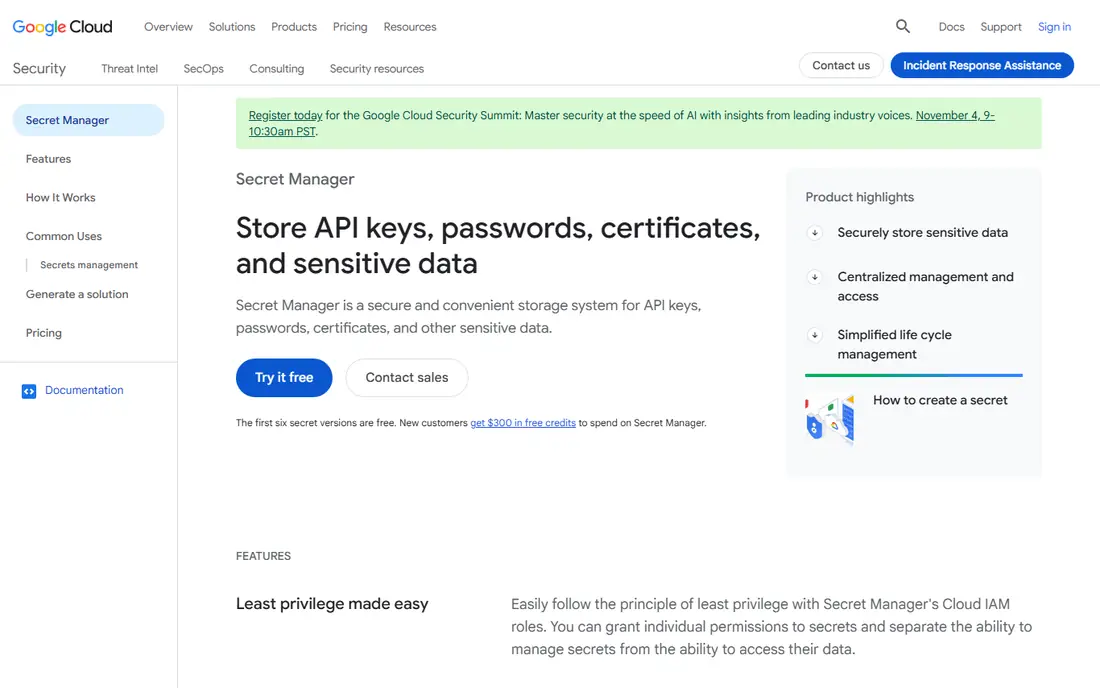
Google Secret Manager is the simplest cloud-native pick for GCP teams, with a clean API and IAM controls.
It offers less built-in rotation and dynamic secret depth than Vault, so complex rotation needs extra wiring.
We would shortlist Google Secret Manager when google Cloud teams is the main priority, and we would still check the current plan details, contract terms and support hours on the vendor site before signing. A short trial or pilot with real work, real devices or real data will tell you more than any feature list, so use that step to confirm fit for your team or household.
- Simple API
- IAM integration
- Versioning
- Fewer advanced rotation features
- GCP-first
Doppler makes secrets easy for developers, syncing environment variables to apps and CI with little setup.
Its per-seat model can grow fast, and teams that need full dynamic secrets should check the Enterprise tier.
We would shortlist Doppler when developer teams wanting a managed vault is the main priority, and we would still check the current plan details, contract terms and support hours on the vendor site before signing. A short trial or pilot with real work, real devices or real data will tell you more than any feature list, so use that step to confirm fit for your team or household.
- Easy env sync
- Integrations
- Clean dashboard
- Per-seat pricing grows with team size
- Dynamic secrets are limited
Infisical offers a modern developer experience with an open-source core, a cloud option and self-hosting for teams that want control.
Identity-based pricing needs modelling, since machine identities can outnumber humans quickly.
We would shortlist Infisical when modern self-hosted or cloud secrets is the main priority, and we would still check the current plan details, contract terms and support hours on the vendor site before signing. A short trial or pilot with real work, real devices or real data will tell you more than any feature list, so use that step to confirm fit for your team or household.
- Open-source core
- CLI and operators
- Cloud or self-host
- Paid tiers use identity pricing
- Enterprise features are gated
OpenBao is a fork of Vault under a fully open licence, offering a drop-in path for teams that want Vault capability without licence limits.
Its ecosystem is smaller than Vault, so support and integrations need checking before a migration.
We would shortlist OpenBao when vault users wanting open-source licensing is the main priority, and we would still check the current plan details, contract terms and support hours on the vendor site before signing. A short trial or pilot with real work, real devices or real data will tell you more than any feature list, so use that step to confirm fit for your team or household.
- Vault-compatible API
- Dynamic secrets
- Open licence
- Smaller vendor ecosystem
- Support is community or partner-led
1Password suits teams that already store human passwords there, since service accounts and developer secrets can sit in the same vault.
It does not match Vault for dynamic secrets, so platform teams with that need should pair it with a dedicated engine.
We would shortlist 1Password Secrets Automation when teams already using 1Password is the main priority, and we would still check the current plan details, contract terms and support hours on the vendor site before signing. A short trial or pilot with real work, real devices or real data will tell you more than any feature list, so use that step to confirm fit for your team or household.
- Human and machine secrets in one vault
- Connect and SDK
- Not a full dynamic secrets engine
- Per-user pricing
Akeyless offers a managed vault with zero-knowledge design, so teams get Vault-class features without running clusters.
Pricing is quote-led for many plans, so get a written quote that matches your secret count and gateway needs.
We would shortlist Akeyless when saaS vault with zero-knowledge design is the main priority, and we would still check the current plan details, contract terms and support hours on the vendor site before signing. A short trial or pilot with real work, real devices or real data will tell you more than any feature list, so use that step to confirm fit for your team or household.
- Zero-knowledge SaaS
- Dynamic secrets
- Gateways
- Quote-based pricing
- Learning curve
Conjur, from CyberArk, links secrets to privileged access controls, which suits enterprises with strict audit and access rules.
It is heavier than developer-first tools, so small teams will find Doppler or Infisical faster to adopt.
We would shortlist CyberArk Conjur when enterprises needing PAM-linked secrets is the main priority, and we would still check the current plan details, contract terms and support hours on the vendor site before signing. A short trial or pilot with real work, real devices or real data will tell you more than any feature list, so use that step to confirm fit for your team or household.
- Secrets plus privileged access controls
- Enterprise policies
- Heavyweight for small teams
- Setup takes time
How we picked these
We compared official feature pages, pricing pages and public documentation for each product, and we checked that each one is available and fits the topic today. We did not claim hands-on testing we did not do. Instead, we weighed what each vendor publishes, what reviewers and users commonly report, and how the pricing tiers line up with real use. That approach keeps the list honest about trade-offs, since a product that looks strong on one feature can still be the wrong pick for your budget or setup.
How to choose a secrets store without creating a new risk
We compared official pricing pages, documentation and public architecture guides, and we weighted rotation, dynamic secrets, identity integration, audit logs and hosting model. A secrets tool only helps when rotation and access control are actually used, so we favoured tools with clear audit trails and least-privilege access. We also checked whether pricing is per secret, per seat or per identity, since that unit decides the bill at scale. Start by mapping where secrets live today: code, env files, CI and Kubernetes. Move them into one vault, turn on rotation for database and cloud credentials, and give each app its own identity with least privilege. For single-cloud teams, the native vault is often cheapest. For multi-cloud teams, Vault, OpenBao, Infisical or Akeyless give a neutral home. Test rotation and revocation in staging before you rely on the vault in production, and scan git history for secrets that already leaked.
FAQ
What is AWS Secrets Manager?
AWS Secrets Manager is a managed service that stores database credentials, API keys and other secrets, with rotation and fine-grained IAM access, for teams running on AWS.
Should I use a cloud vault or a neutral vault?
Use the cloud vault when you run mainly on one cloud, since identity and rotation integrate cleanly. Use a neutral vault such as Vault or Infisical when you run across clouds or need dynamic secrets.
What are dynamic secrets?
Dynamic secrets are short-lived credentials issued on demand and revoked automatically, which reduces the risk from a leaked long-lived password. Vault and OpenBao offer the deepest support here.
How much do secrets tools cost?
Pricing varies by unit: AWS charges per secret and API call, Doppler charges per seat, and Infisical charges per identity. Model your actual secret, seat and identity counts before comparing prices.
How do I migrate secrets safely?
Move secrets in small batches, update apps to read from the vault, rotate every secret you move, and revoke old copies. Scan code and git history for leaked secrets during the move.
Sources
- https://www.hashicorp.com/en/products/vault/pricing
- https://azure.microsoft.com/en-us/pricing/details/key-vault/
- https://cloud.google.com/security/products/secret-manager/pricing
- https://www.doppler.com/pricing
- https://infisical.com/pricing
- https://openbao.org/
- https://1password.com/pricing
- https://www.akeyless.io/pricing/
- https://www.conjur.org/