Best Appian alternatives in 2026: 8 Compared
Appian alternatives for low-code apps, workflow automation and process management, from enterprise platforms to small-team tools in 2026. Compare all eight.
- Editor's choice
 Mendix
Enterprise teams building model-driven apps
Starts atSee websiteVisit mendix.comFull review - Great alternative
 OutSystems
Large customer-facing and enterprise apps
Starts atSee websiteVisit outsystems.comFull review - Also consider
 Microsoft Power Apps
Microsoft 365 and Azure teams
Starts at$20 per user per monthVisit microsoft.comFull review
TL;DR:
- Mendix and OutSystems are the closest enterprise alternatives for large, complex apps.
- Microsoft Power Apps is best for teams already on Microsoft 365 and Azure.
- Pega suits regulated industries needing AI-driven decisions and case management.
- Retool and Zoho Creator suit smaller teams that need internal tools fast and cheap.
Quick comparison
| Tool | Best for | Starts at | Free plan? | |
|---|---|---|---|---|
| Mendix | Enterprise teams building model-driven apps | See website | Yes | Visit |
| OutSystems | Large customer-facing and enterprise apps | See website | Yes | Visit |
| Microsoft Power Apps | Microsoft 365 and Azure teams | $20 per user per month | Free trial | Visit |
 Pega | Regulated industries and case management | See website | No | Visit |
 ServiceNow App Engine | IT, HR and service teams on ServiceNow | See website | No | Visit |
 Zoho Creator | Small businesses wanting low-code apps fast | $8 per user per month | Free trial | Visit |
 Retool | Developer-built internal tools | See website | Free trial | Visit |
 Bubble | Founders building web apps without a dev team | Free | Yes | Visit |
The best Appian alternatives
We compared official pricing, feature pages and public reviews to build this list of appian alternatives. Each pick below fits the topic in its own way, so read the fit and the catch before you shortlist.
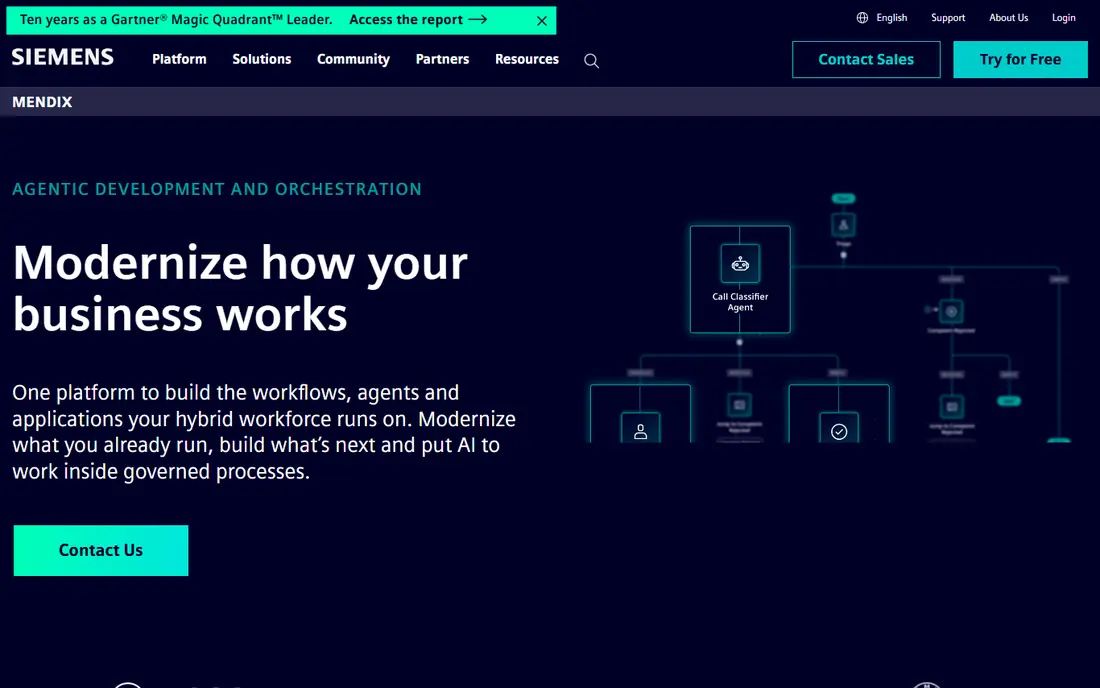
For teams weighing Mendix, the first thing to note is fit. Mendix is the closest Appian rival for enterprise apps, with visual modeling, workflow, integrations and a free community edition for learning. Its strengths include model-driven development; cloud and on-prem options; strong collaboration. That combination matters because buyers in this category often pay for features they never use, so a clear strength that matches a real job is worth more than a long feature list. This pick is best for enterprise teams building model-driven apps. The honest catch is that enterprise pricing is quote-based; learning curve for new teams. Before you commit, check the current pricing page, test a small real job, and confirm that the plan you need includes the features in this write-up, since vendors move features between tiers.
- Model-driven development
- Cloud and on-prem options
- Strong collaboration
- Enterprise pricing is quote-based
- Learning curve for new teams
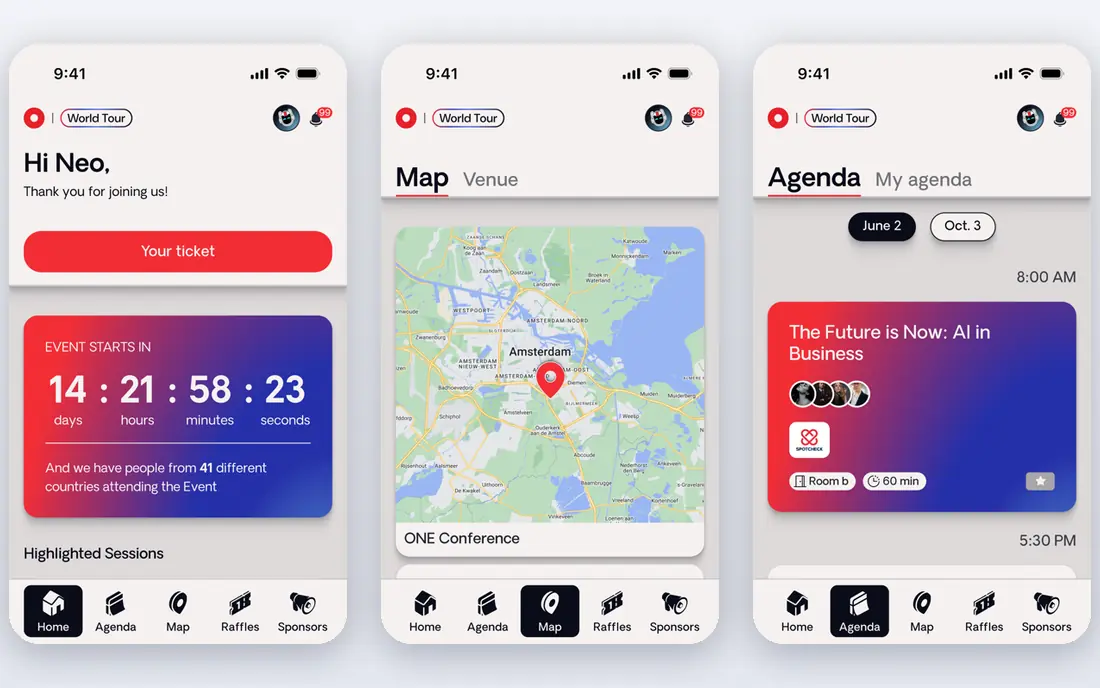
If OutSystems is on your shortlist, start with who it serves. OutSystems suits large, complex apps, with visual development, lifecycle management and native mobile support in one platform. Its strengths include full-stack visual development; strong devops; large app marketplace. That combination matters because buyers in this category often pay for features they never use, so a clear strength that matches a real job is worth more than a long feature list. This pick is best for large customer-facing and enterprise apps. The honest catch is that high enterprise cost; sales-led pricing for production use. Before you commit, check the current pricing page, test a small real job, and confirm that the plan you need includes the features in this write-up, since vendors move features between tiers.
- Full-stack visual development
- Strong DevOps
- Large app marketplace
- High enterprise cost
- Sales-led pricing for production use
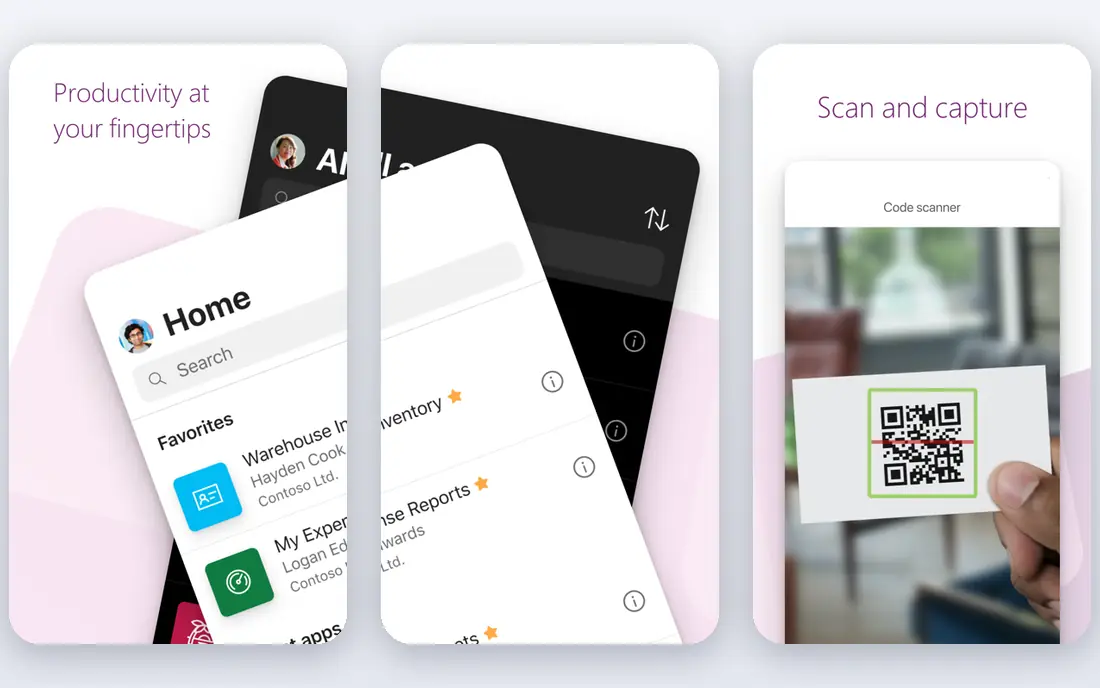
Microsoft Power Apps earns its place here for a clear reason. Microsoft Power Apps is the natural Appian alternative inside Microsoft shops, because apps, data and automation share the Microsoft stack. Its strengths include deep microsoft 365, teams and dataverse link; excel-like formulas. That combination matters because buyers in this category often pay for features they never use, so a clear strength that matches a real job is worth more than a long feature list. This pick is best for microsoft 365 and azure teams. The honest catch is that costs grow with premium connectors and dataverse use; governance needs care. Before you commit, check the current pricing page, test a small real job, and confirm that the plan you need includes the features in this write-up, since vendors move features between tiers.
- Deep Microsoft 365, Teams and Dataverse link
- Excel-like formulas
- Costs grow with premium connectors and Dataverse use
- Governance needs care
Look at Pega when your main need matches its strength. Pega suits banks, insurers and government teams that need case management, decisioning and audit trails at enterprise scale. Its strengths include ai-driven decisions; case management; strong bpm and automation. That combination matters because buyers in this category often pay for features they never use, so a clear strength that matches a real job is worth more than a long feature list. This pick is best for regulated industries and case management. The honest catch is that quote-based enterprise pricing; implementation is a major project. Before you commit, check the current pricing page, test a small real job, and confirm that the plan you need includes the features in this write-up, since vendors move features between tiers.
- AI-driven decisions
- Case management
- Strong BPM and automation
- Quote-based enterprise pricing
- Implementation is a major project
ServiceNow App Engine is worth a close look for a specific kind of buyer. ServiceNow App Engine lets ServiceNow customers build apps on the workflows, data and approvals they already use for IT and employee services. Its strengths include built on servicenow workflows; strong itsm link; automation tools. That combination matters because buyers in this category often pay for features they never use, so a clear strength that matches a real job is worth more than a long feature list. This pick is best for it, hr and service teams on servicenow. The honest catch is that best inside servicenow; enterprise pricing is quote-based. Before you commit, check the current pricing page, test a small real job, and confirm that the plan you need includes the features in this write-up, since vendors move features between tiers.
- Built on ServiceNow workflows
- Strong ITSM link
- Automation tools
- Best inside ServiceNow
- Enterprise pricing is quote-based
When we compared this category, Zoho Creator stood out on one point. Zoho Creator is the small-business pick, with a low starting price, drag-and-drop building and a scripting language for custom logic. Its strengths include low entry price; deluge scripting; offline mobile apps. That combination matters because buyers in this category often pay for features they never use, so a clear strength that matches a real job is worth more than a long feature list. This pick is best for small businesses wanting low-code apps fast. The honest catch is that less enterprise depth than mendix or outsystems. Before you commit, check the current pricing page, test a small real job, and confirm that the plan you need includes the features in this write-up, since vendors move features between tiers.
- Low entry price
- Deluge scripting
- Offline mobile apps
- Less enterprise depth than Mendix or OutSystems
For many buyers, Retool will be the practical choice. Retool suits engineering teams that need internal dashboards and admin tools fast, with drag-and-drop parts plus real code where needed. Its strengths include fast internal tool building; database and api links; code when needed. That combination matters because buyers in this category often pay for features they never use, so a clear strength that matches a real job is worth more than a long feature list. This pick is best for developer-built internal tools. The honest catch is that pricing scales with users; less suited to customer-facing apps. Before you commit, check the current pricing page, test a small real job, and confirm that the plan you need includes the features in this write-up, since vendors move features between tiers.
- Fast internal tool building
- Database and API links
- Code when needed
- Pricing scales with users
- Less suited to customer-facing apps
Bubble rounds out this list with a different angle. Bubble lets non-developers ship a real web app, with visual workflows, a built-in database and plugins for payments, auth and APIs. Its strengths include no-code web app building; database and workflows; plugin marketplace. That combination matters because buyers in this category often pay for features they never use, so a clear strength that matches a real job is worth more than a long feature list. This pick is best for founders building web apps without a dev team. The honest catch is that performance and scale need care; less suited to complex enterprise processes. Before you commit, check the current pricing page, test a small real job, and confirm that the plan you need includes the features in this write-up, since vendors move features between tiers.
- No-code web app building
- Database and workflows
- Plugin marketplace
- Performance and scale need care
- Less suited to complex enterprise processes
How we picked these
We compared official vendor pricing and feature pages, app store listings, privacy and terms pages, and public user reviews, and we only kept products that exist, work today and truly fit the topic. We favored a mix of well-known leaders and strong smaller options, and we noted pricing gaps and limits rather than repeating marketing claims. We did not claim hands-on testing that did not happen. Where a price could not be verified on a vendor page at the time of writing, we used See website rather than guessing a number, and we flagged quote-based enterprise pricing as quote-based. Check the vendor page before you buy, because prices and plan names change.
How to choose an Appian alternative
Start with who builds the app. Enterprise platforms suit professional developers working with business teams, while simpler tools suit operations staff and small teams. A platform that needs a large developer team will stall a small project, and a simple tool will stall a complex one. Next, map the process, not just the screens. Appian's strength is process automation, case management and workflow, so compare workflow engines, rules, approvals, audit trails and integrations, not only drag-and-drop form builders. Finally, price for users and apps, not just the first app. Enterprise low-code pricing is often quote-based and grows with users, environments and data. Get a written quote for your user count, app count and hosting needs, and pilot one real process before a wider rollout.
FAQ
What is the best alternative to Appian?
Mendix is the closest enterprise alternative for model-driven apps, while OutSystems suits large customer-facing apps. Microsoft Power Apps is best for Microsoft shops, and Pega is best for regulated case management.
Is there a free Appian alternative?
Mendix and OutSystems offer free community or personal editions for learning and small projects, and Bubble and Retool offer free tiers or trials. Free tiers rarely cover production use at scale.
How much does low-code software cost?
Small-team tools start at about $8 to $20 per user per month, while enterprise platforms such as Mendix, OutSystems and Pega are quote-based and often run into tens of thousands of dollars per year. Always get a quote for your scale.
Can low-code replace custom development?
For internal tools, workflows, dashboards and standard business apps, largely yes. For novel products, heavy scale or deep technical needs, custom development still wins, and many orgs use both.
Which alternative is best for small businesses?
Zoho Creator and Retool are strong small-business picks, with lower entry prices and faster setup than enterprise platforms. Bubble suits founders building a customer-facing web app without a large team.