Best Appcues Alternatives in 2026: 9 Product Tour and Onboarding Tools Compared
Looking for appcues alternatives? We compare 9 product tour and onboarding tools on pricing, no-code builders, analytics and mobile support for SaaS teams.

- Editor's choice
 Userpilot
Activation-focused onboarding
Starts at$299 per monthVisit userpilot.comFull review - Great alternative
 Pendo
Analytics plus in-app guides
Starts atSee websiteVisit pendo.ioFull review - Also consider
 UserGuiding
Budget-friendly product tours
Starts atSee websiteVisit userguiding.comFull review
TL;DR:
- Userpilot and UserGuiding are the closest no-code replacements for Appcues, with published pricing and fast setup.
- Pendo is the best pick when product analytics matter as much as tours, and its free tier covers up to 500 monthly active users.
- WalkMe and Whatfix suit large enterprises and employee training, but both are quote-based and heavier to implement.
- Most tools price by monthly active users, so model your real user count before comparing sticker prices.
Quick comparison
| Tool | Best for | Starts at | Free plan? | |
|---|---|---|---|---|
| Userpilot | Activation-focused onboarding | $299 per month | Free trial | Visit |
| Pendo | Analytics plus in-app guides | See website | Yes | Visit |
| UserGuiding | Budget-friendly product tours | See website | Free trial | Visit |
 Userflow | Clean builder with branching | $240 per month | Free trial | Visit |
 Chameleon | Highly customized in-app UX | $279 per month | Free trial | Visit |
 WalkMe | Enterprise digital adoption | See website | No | Visit |
 Whatfix | Employee training at scale | See website | No | Visit |
 Product Fruits | Small teams wanting AI walkthroughs | See website | Free trial | Visit |
 Intro.js | Developer-built free tours | Free | Yes | Visit |
The best appcues alternatives
Appcues built its name on no-code in-product experiences, but its move to custom pricing leaves many teams shopping around. These nine tools cover the same ground, from budget tours to enterprise digital adoption.
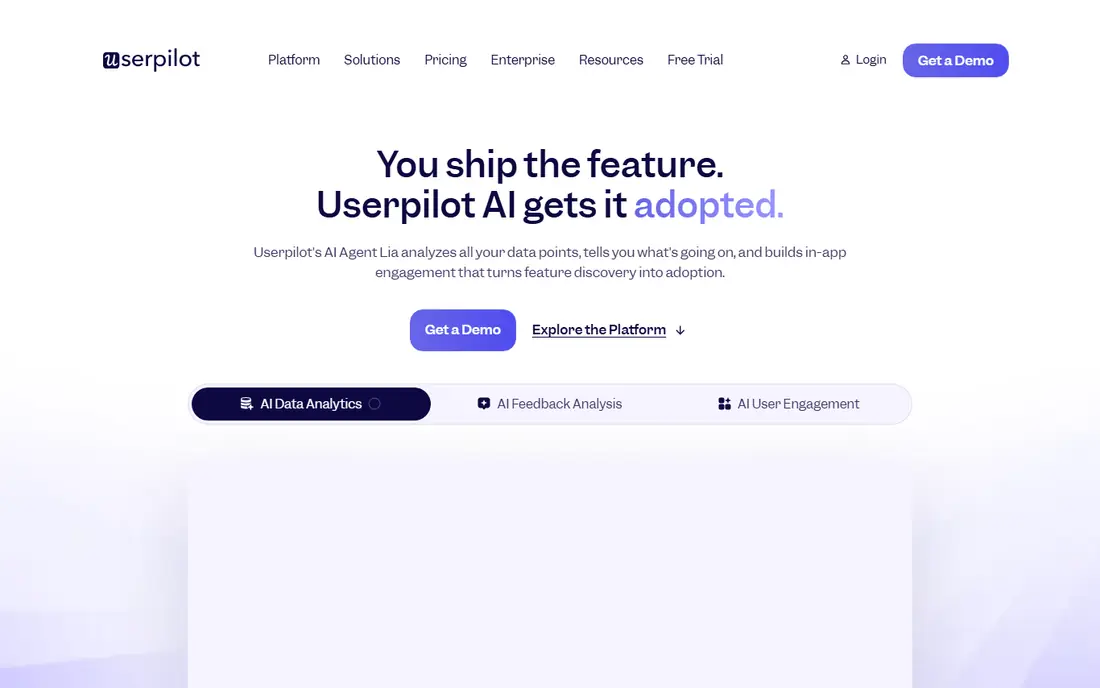
Userpilot is the most direct Appcues rival for growth teams. It covers product tours, tooltips, checklists, surveys and NPS, and it adds A/B testing so you can compare two versions of a flow rather than guessing which one works. Analytics sit alongside the builder, so you can see where users drop off.
The price is the main barrier. At $299 per month for the Starter plan, it is a mid-market tool, not a startup freebie. Teams that can use the testing and analytics depth will get value from it. Smaller teams should look at UserGuiding first.
- Built-in A/B testing for flows
- Strong analytics
- Web and mobile coverage on higher plans
- Starting price is high for early-stage teams
- The builder takes time to master
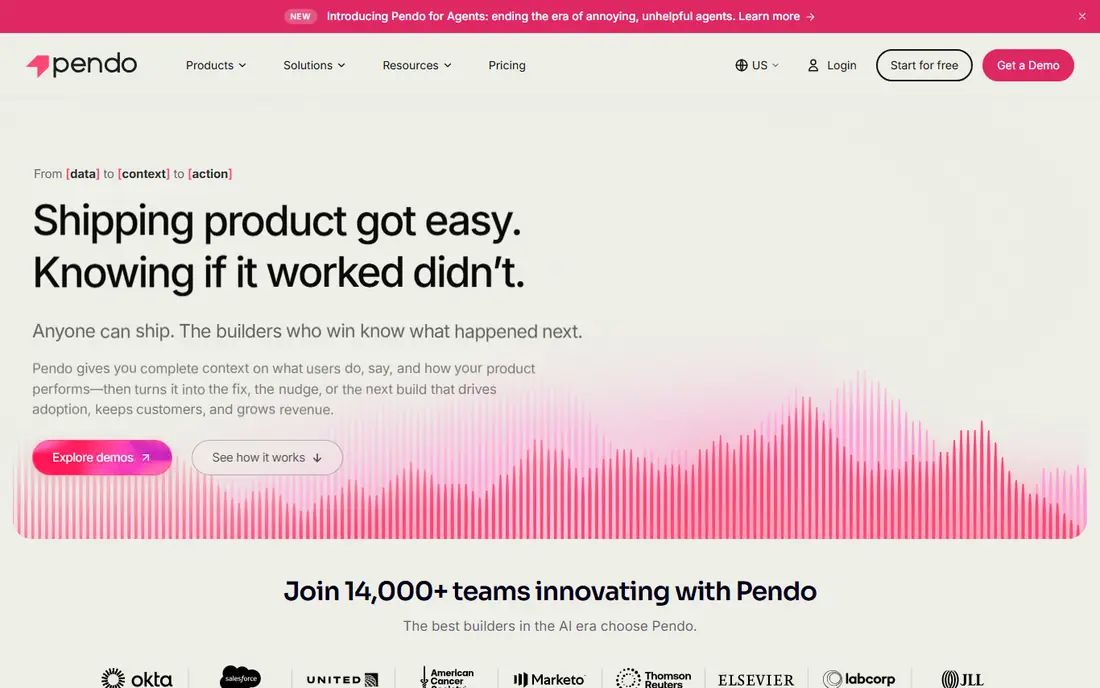
Pendo starts from analytics rather than tours. It captures product usage retroactively, so you can ask questions about past behavior without having set up tracking in advance. Guides, polls and roadmaps sit on top of that data, which makes targeting much sharper.
The free tier is a real advantage. Small products can start at no cost up to 500 monthly active users. Once you outgrow it, pricing moves to a sales conversation, and the full platform is more than a simple tour tool. Pick Pendo when insight matters as much as onboarding.
- Genuine free tier up to 500 monthly active users
- Deep retroactive analytics
- Roadmaps and feedback included
- Paid pricing is quote-based
- The platform can feel large for teams that only want tours

UserGuiding is the value pick in this category. It offers the core no-code toolkit, including guides, hotspots, checklists, a resource center and surveys, at a lower entry price than Userpilot or Chameleon. Setup is genuinely fast, and many teams ship their first guide on the first day.
The trade is depth. Mobile coverage and analytics are thinner than the bigger platforms, and very large teams may outgrow it. For a startup or small SaaS team that needs good tours without an enterprise budget, it is our first recommendation.
- Lowest entry cost among no-code rivals
- No-code builder with same-day setup
- Resource centers and surveys included
- Less depth on mobile apps
- Advanced analytics are lighter than Pendo
Userflow wins fans for its builder. Flows are easy to sketch, branch and preview, and the resulting tours look clean rather than cluttered. It covers checklists, banners, surveys and resource centers, with targeting based on user behavior.
It is more focused than Userpilot or Pendo. You will not get email orchestration or deep product analytics here, which is fine if you already have those tools. For teams that care most about the quality of the in-app experience, Userflow is a strong, focused choice.
- Intuitive drag-and-drop builder
- Branching logic for personalized flows
- Clean, fast interface
- Fewer off-product tools like email
- Higher price than budget rivals
Chameleon suits teams that care about how a tour looks. Its customization options go further than most rivals, including CSS control for teams that want tours to match their product exactly. Targeting is precise, and it supports microsurveys and launchers alongside tours.
That power comes with a learning curve. A team without design input may not use the depth, and at $279 per month it is not a budget tool. Design-led SaaS teams that treat onboarding as part of the product will appreciate it most.
- Deep CSS customization
- Precise targeting
- Strong for design-led teams
- Needs more design skill to get the best from it
- Pricing rises with scale
WalkMe is built for large organizations rather than small SaaS products. It guides employees through complex systems like Salesforce and SAP, as well as customer-facing apps, and it supports desktop, web and mobile. Its enterprise integrations are deeper than any tool on this list.
That scale brings cost and complexity. Pricing is custom, implementation often involves professional services, and small teams will find it oversized. For a large company rolling out software to thousands of employees, WalkMe is the standard to beat.
- Deep enterprise and third-party app coverage
- Strong for employee onboarding
- AI-assisted guidance
- Quote-based pricing
- Implementation is heavier and often needs services help
Whatfix focuses on employee digital adoption, with a standout feature in its Mirror sandbox. Staff can practice in a simulated copy of an application before touching the live system, which suits regulated industries and complex rollouts. It also generates training content in multiple formats automatically.
Like WalkMe, it is an enterprise sale with custom pricing and a longer implementation. Teams buying for customer onboarding rather than employee training will find Userpilot or UserGuiding a better fit.
- Auto-generated training content
- Sandbox simulation for practice
- Strong for regulated industries
- Quote-based pricing
- Setup is heavier than SaaS onboarding tools
Product Fruits is a friendly mid-market option with AI help for building walkthroughs. It covers tours, hints, checklists and announcements, plus a knowledge base, in one tidy package. European teams may also value its GDPR-aware hosting story.
It does not match the analytics depth of Pendo or the enterprise coverage of WalkMe, and its integration list is shorter. For a small or mid-size SaaS team that wants a complete, affordable toolkit, it is a good balance.
- Affordable entry point
- AI-assisted walkthrough creation
- Knowledge base included
- Smaller ecosystem than Pendo or Userpilot
- Fewer enterprise integrations
Intro.js is the honest free option. It is a lightweight JavaScript library for step-by-step tours, highlights and hints, and it costs nothing to use. Developers keep full control over styling and behavior, and there is no monthly active user meter.
The catch is that everything is code. There is no visual builder, no targeting dashboard and no analytics unless you build them. For a technical team with a simple tour need and a tight budget, Intro.js is a smart pick. For a non-technical team, a no-code tool will ship faster.
- Free and open source
- Full code control
- Lightweight with no vendor lock-in
- Requires developer time
- No no-code builder, analytics or targeting dashboard
How we picked these
We compared official pricing pages, feature documentation and public reviews for each tool, and checked availability in October 2026. We favored tools that cover the core Appcues job, no-code or low-code in-product guidance, and we included one open source library for teams that prefer code. Where pricing is quote-based, we said so rather than repeating an unverified number.
What to check before you buy
Price by monthly active users, not by seats. Tour tools usually charge for the users who see the tours, so a product with 50,000 monthly users will pay far more than the headline plan suggests. Ask each vendor what happens when you cross a tier mid-contract, and whether overages are billed automatically.
Next, test the builder with a real flow from your product. A demo tour always looks smooth. Build a five-step onboarding flow with branching, a checklist and a survey, then judge how long it took and how it looks on mobile. That test separates tools that suit your team from tools that only suit their sales deck.
Finally, check what happens to your tours if you leave. Some platforms export cleanly, others do not. Ask about data export, and avoid building your entire onboarding in a tool you cannot leave without rebuilding everything from scratch.
FAQ
What is the best free Appcues alternative?
Pendo offers the best free starting point, with a free tier up to 500 monthly active users that includes guides and analytics. Intro.js is fully free for developer-built tours. UserGuiding and Userpilot offer trials, but not permanent free plans.
Is Userpilot better than Appcues?
For teams that want A/B testing and mobile coverage, Userpilot is a strong match, and its pricing is published. Appcues suits teams that want lifecycle messaging across in-app, email and push in one platform. The better pick depends on whether testing or multi-channel messaging matters more to you.
Do product tour tools work on mobile apps?
Some do, and some do not. Pendo and Userpilot offer mobile coverage on their plans, while several no-code tools are web-first. Check native iOS and Android support before you buy if your product has a mobile app.
How much should a small SaaS team budget for onboarding software?
Budget tools start well under $200 per month, while mid-market tools like Userpilot and Userflow start around $240 to $299 per month. Enterprise platforms are quote-based and often run into five figures per year. Start with a trial and a real monthly active user count before committing.
Can I build product tours without developers?
Yes, with the no-code tools on this list. UserGuiding, Userpilot, Userflow and Chameleon all offer visual builders that let product and marketing teams ship tours without code. Intro.js is the exception, since it requires developer work.