Best Apache Spark Alternatives in 2026: 8 Engines Compared
Looking for Apache Spark alternatives? We compare 8 data engines on streaming, batch, SQL, pricing, costs, and fit for data teams of all sizes in 2026.
- Editor's choice
 Databricks
Managed Spark and analytics
Starts atSee websiteVisit databricks.comFull review - Great alternative
 Apache Flink
Real-time streaming
Starts atFreeVisit flink.apache.orgFull review - Also consider
 Apache Hadoop
Large batch clusters
Starts atFreeVisit hadoop.apache.orgFull review
TL;DR:
- Apache Spark is free and open source, so alternatives compete on managed hosting, streaming, SQL ease, or a simpler model, not on license cost alone.
- Apache Flink is the strongest streaming alternative, while Hadoop remains relevant for large batch jobs on existing clusters.
- BigQuery, Snowflake, and Databricks suit teams that want managed SQL and analytics without running clusters themselves.
- Dask and DuckDB are the best low-cost picks for Python teams and single-machine analytics.
Quick comparison
| Tool | Best for | Starts at | Free plan? | |
|---|---|---|---|---|
| Databricks | Managed Spark and analytics | See website | Free trial | Visit |
| Apache Flink | Real-time streaming | Free | Yes | Visit |
| Apache Hadoop | Large batch clusters | Free | Yes | Visit |
 Google BigQuery | Serverless SQL analytics | See website | Yes | Visit |
 Snowflake | Cloud data platform | See website | Free trial | Visit |
 Amazon EMR | Managed open-source clusters | See website | Free trial | Visit |
 Dask | Python parallel computing | Free | Yes | Visit |
 DuckDB | Single-machine analytics | Free | Yes | Visit |
The best Apache Spark alternatives
Spark handles batch, streaming, SQL, and machine learning in one engine, with in-memory processing that made it faster than disk-based Hadoop for many jobs. Teams look for alternatives when they want true streaming, simpler SQL, managed hosting, or a lighter tool for smaller data. These eight engines cover that range.
Databricks is the managed platform founded by the creators of Spark, and it remains the easiest way to run Spark without managing clusters yourself. It offers notebooks, SQL, workflows, and machine learning in one workspace, with autoscaling clusters and a lakehouse model that combines data lake and warehouse features. Teams that already use Spark often move to Databricks to reduce ops work.
Costs are usage-based, so a busy workspace can grow expensive without governance and job controls. Some teams also worry about platform lock-in, since workflows and features are tied to Databricks. If you want Spark power with managed hosting, collaboration, and SQL, Databricks is the most direct upgrade path from self-hosted Spark.
- Managed Spark with notebooks and SQL
- Unified analytics and AI workflows
- Autoscaling
- Costs can rise with usage
- Vendor platform lock-in concerns
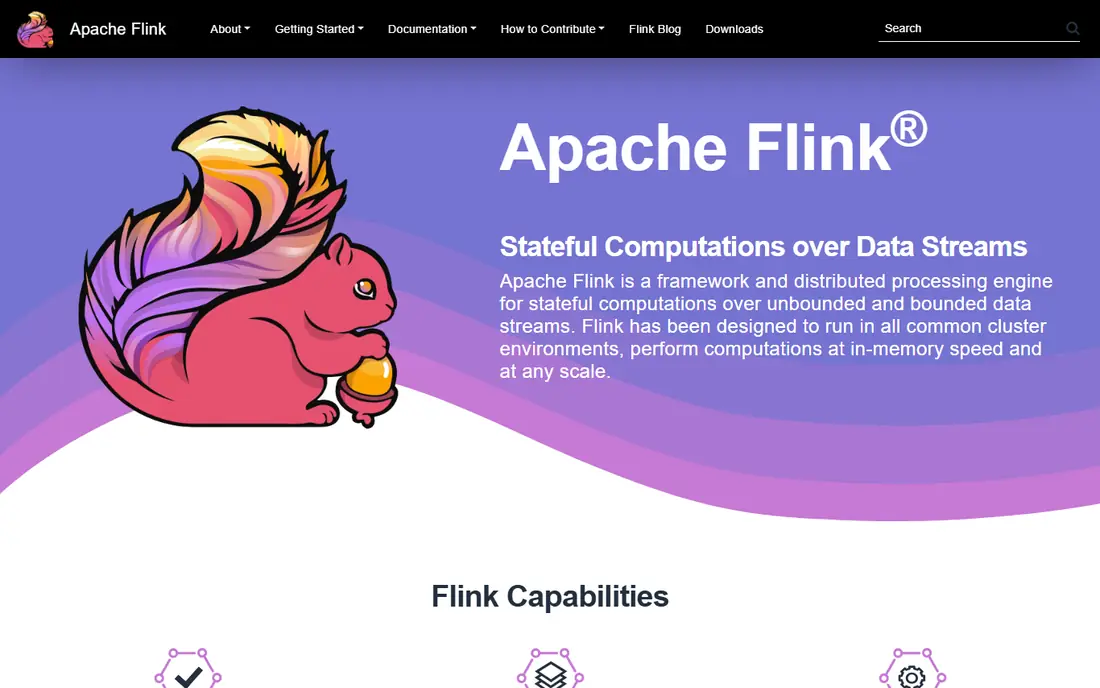
Apache Flink is a true streaming engine built for real-time data, with low latency, event-time processing, and exactly-once guarantees. It suits fraud detection, real-time analytics, and event pipelines where Spark micro-batch streaming may be too slow or too coarse. Flink also supports batch jobs, but streaming is its main strength.
The learning curve is steeper than Spark SQL, especially for stateful streaming and windowing logic. Teams need streaming expertise to operate it well at scale. If your main workload is real-time events, Flink is the strongest Spark alternative. If your main workload is batch SQL, a warehouse or managed Spark platform may be simpler.
- True streaming engine
- Low latency
- Exactly-once processing
- Steeper learning curve
- Batch use is less common than Spark
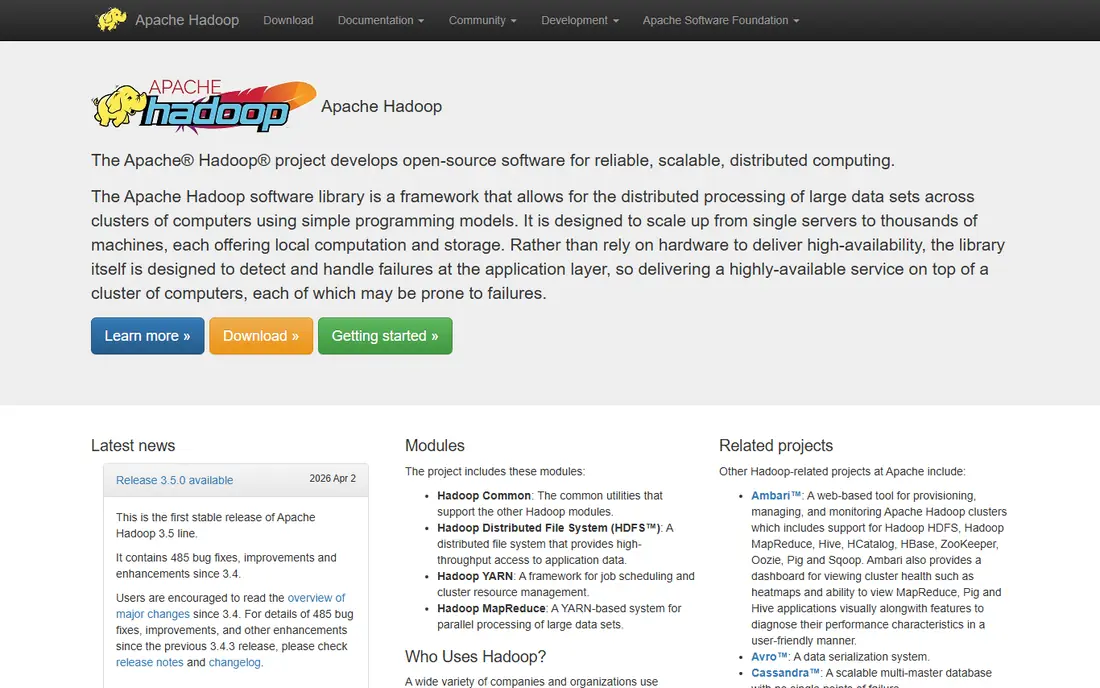
Hadoop is the original big data platform, with distributed storage and MapReduce batch processing across large clusters. It remains relevant for organizations with existing Hadoop clusters, huge archival datasets, and batch jobs that do not need interactive speed. Its ecosystem includes Hive, HBase, and other tools that many enterprises still run.
It is slower than Spark for interactive and iterative work, since MapReduce writes intermediate results to disk. Operating a Hadoop cluster also needs specialist skills. New projects rarely start on Hadoop today, but teams with a working cluster and stable batch jobs may keep it rather than migrate. For new batch work, Spark or a cloud warehouse is usually the better choice.
- Proven batch processing at scale
- Huge ecosystem
- Low license cost
- Disk-based processing is slower
- Complex to operate
- Less suited to interactive work
BigQuery is a serverless data warehouse where you run SQL queries without managing clusters or servers. It scales to petabytes, integrates with Google Cloud storage and AI tools, and charges mainly for data scanned, with on-demand pricing around $6.25 per TiB scanned. A free tier covers small queries and storage for testing.
Cost control needs care: a badly written query that scans a full table can be expensive, so partitioning and clustering matter. BigQuery is also less suited to custom streaming logic or machine learning pipelines than Spark or Flink. If your team thinks in SQL and wants fast analytics without ops work, BigQuery is a strong Spark alternative for warehouse workloads.
- Serverless SQL
- Fast queries over huge data
- Pay per data scanned
- Costs rise with scans
- Less control than a cluster engine
Snowflake is a cloud data platform that separates compute from storage, so teams can scale queries without scaling storage. It offers SQL analytics, data sharing, governance, and integrations with BI and AI tools, across AWS, Azure, and Google Cloud. Enterprises use it as a central warehouse for reporting, analytics, and data products.
Pricing uses credits, and costs can rise with heavy compute or poorly tuned queries. Snowflake is not a direct replacement for custom Spark streaming code, though it handles streaming ingestion and SQL workloads well. If your main need is governed, shareable analytics on a cloud warehouse, Snowflake is a credible alternative to running Spark yourself.
- Separate compute and storage
- SQL analytics
- Data sharing and governance
- Credit costs can rise
- Less suited to custom streaming code
Amazon EMR is a managed big data platform on AWS that runs Spark, Hive, HBase, Flink, Presto, and other open-source tools. You can spin clusters up for short jobs and pay per second for instances used, or run long-lived clusters that autoscale. It integrates with S3, SageMaker, and other AWS services, which suits teams already on AWS.
EMR reduces ops work, but you still need cluster knowledge for sizing, tuning, and job design. It is also AWS-only, so multi-cloud teams need another option. If you run Spark today and want managed hosting on AWS without moving to a new platform, EMR is a practical alternative to self-hosted Spark.
- Managed Spark, Hive, Flink, and more
- Pay per second
- AWS integration
- Still needs cluster knowledge
- AWS-only fit
Dask is a Python library that parallelizes pandas, NumPy, and scikit-learn workflows across cores or clusters. Python data teams like it because they can scale familiar code without rewriting it in Scala or Spark SQL. It runs on a single machine, a local cluster, or cloud infrastructure, and it integrates with Jupyter and common Python tools.
It is less mature than Spark for very large production pipelines, and tuning is still needed at scale. If your data fits in a Python workflow and your team already uses pandas, Dask is a low-cost, low-friction Spark alternative. If you need enterprise scheduling, governance, and multi-language support, a managed platform will serve you better.
- Free and Python-native
- Scales pandas and NumPy workflows
- Works on clusters or one machine
- Less mature than Spark for huge production jobs
- Tuning needed at scale
DuckDB is an in-process SQL database for analytics, designed to run fast queries on a single machine without a server or cluster. It reads Parquet, CSV, and other formats directly, integrates with Python and other languages, and suits analysts, data apps, and local exploration. For datasets that fit on one machine, it is often faster and simpler than Spark.
It is not a distributed engine, so it will not replace Spark for petabyte-scale clusters or true streaming pipelines. If your data is large but not cluster-scale, DuckDB can replace a heavy Spark job with a simple, free tool. Many teams use DuckDB for local work and Spark or a warehouse for production scale, which is a sensible split.
- Free and fast on one machine
- SQL analytics
- Easy embedding in apps
- Not a distributed cluster engine
- Limited for huge streaming jobs
How we picked these
We compared official docs, pricing pages, and public comparisons for data engines live in 2026. We favored tools that handle batch, streaming, or SQL analytics at scale, with a clear open-source or managed model. We included managed Spark, a streaming specialist, a warehouse pair, a managed cluster service, and two lightweight Python and SQL tools, and we noted where a tool is single-machine rather than distributed.
How to choose the right engine
Start with your workload shape. Batch SQL and reporting suit BigQuery, Snowflake, or Databricks. Real-time events suit Flink. Python workflows suit Dask. Single-machine analytics suit DuckDB. A tool that is excellent for one shape can be awkward for another, so match the engine to the job, not to a brand.
Next, check data size and team skills. If your data fits on one machine, a distributed engine adds cost and complexity for no gain. If your team writes SQL, a warehouse will launch faster than a code-first engine. If your team writes Python, Dask or Spark with PySpark will feel natural. If you already run Spark, Databricks or EMR may be cheaper in total than a full rewrite.
Finally, model total cost. Open-source engines are free to license, but clusters, storage, and engineering time are not. Managed warehouses charge by compute or data scanned, so test with real queries and set cost alerts. Pick the engine whose total cost, skills, and scale fit your next year of work, and keep a second tool for a different workload shape if needed.
FAQ
Is Apache Spark free?
Yes, Apache Spark is open source and free to use. Costs come from the computers, storage, and cloud services you run it on, plus the engineering time to operate it. Managed services like Databricks and EMR charge for the hosting and platform around Spark, not for Spark itself.
What is the best Spark alternative for streaming?
Apache Flink is the best streaming alternative, since it is built for true event streaming with low latency. Spark Structured Streaming works well for many near-real-time jobs, but Flink suits use cases where event order, state, and latency matter most, such as fraud detection and live monitoring.
Should I use a data warehouse instead of Spark?
It depends on the job. Warehouses like BigQuery and Snowflake are excellent for SQL analytics, reporting, and governed data sharing. Spark is better for custom data engineering, machine learning pipelines, and complex transformations. Many teams use both: Spark for engineering, and a warehouse for analytics.
Can DuckDB replace Spark?
For single-machine analytics, often yes. DuckDB is fast, free, and simple for datasets that fit on one machine. For distributed jobs, petabyte data, or streaming pipelines, Spark, Flink, or a managed warehouse is still needed. Use DuckDB where it fits, and keep a distributed engine for larger work.
How do I migrate from Spark to another engine?
Start with one workload, not the whole platform. Rewrite its SQL or code in the new engine, compare results row by row, and run both in parallel for a period. Check performance, cost, and failure handling before you switch traffic. Migrating job by job reduces risk and lets your team learn the new engine gradually.