Best Apache NiFi Alternatives in 2026: 9 Tools Compared
Looking for Apache NiFi alternatives? We compare 9 data integration tools on pricing, connectors, streaming, and ease of use for your team in 2026. Read more.
- Editor's choice
 Airbyte
Open source flexibility
Starts atFreeVisit airbyte.comFull review - Great alternative
 Fivetran
Managed reliability
Starts atSee websiteVisit fivetran.comFull review - Also consider
 Talend
Enterprise data work
Starts atSee websiteVisit talend.comFull review
TL;DR:
- Airbyte and Fivetran suit teams that want managed connectors with less pipeline maintenance.
- Apache Airflow fits teams that prefer code-based orchestration and full control over scheduling.
- Confluent and Estuary Flow are stronger picks when data must move in near real time.
- Stitch and Hevo Data offer simpler setups for smaller analytics teams with clear budgets.
- NiFi remains strong for visual flow design, so visual builders should check Talend and StreamSets first.
Quick comparison
| Tool | Best for | Starts at | Free plan? | |
|---|---|---|---|---|
| Airbyte | Open source flexibility | Free | Yes | Visit |
| Fivetran | Managed reliability | See website | Yes | Visit |
| Talend | Enterprise data work | See website | Free trial | Visit |
 Apache Airflow | Code-based orchestration | Free | Yes | Visit |
 Confluent | Streaming data | See website | Yes | Visit |
 StreamSets | Visual pipeline design | See website | Free trial | Visit |
 Hevo Data | Simple analytics pipelines | See website | Yes | Visit |
 Stitch | Low cost replication | $100 per month | No | Visit |
 Estuary Flow | Real time replication | See website | Yes | Visit |
The best Apache NiFi alternatives
Apache NiFi is a capable visual tool for moving and transforming data, but it can feel heavy to run and hard to scale for some teams. These alternatives cover managed connectors, streaming, and code-first orchestration.
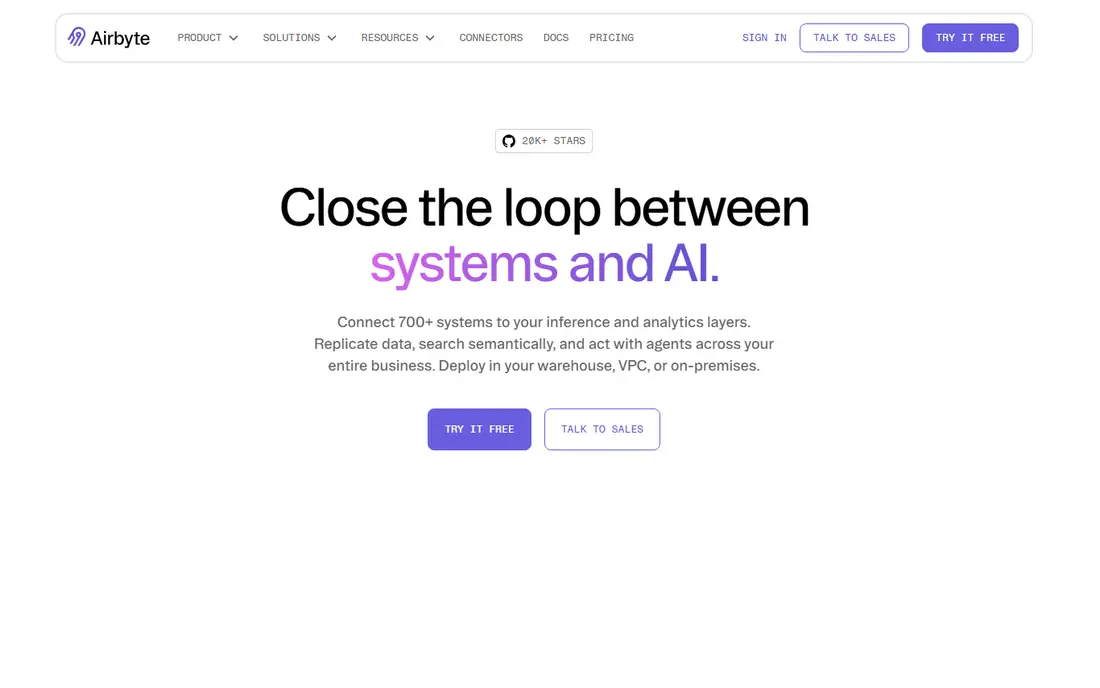
Airbyte is a natural first look for teams that like NiFi's openness but want a more modern connector library. You can run the open source version on your own infrastructure or use Airbyte Cloud for managed syncs. The catalog covers common databases, files, APIs, and warehouses, which reduces custom coding for routine replication.
The trade-off is operational work. Self-hosting gives control, but you own upgrades, monitoring, and scaling. Cloud pricing is volume based, so teams with large or chatty sources should test with real data before committing. For many analytics teams, that balance still beats maintaining NiFi flows by hand.
- Large connector catalog
- Self-hosted option
- Active open source community
- Cloud costs can rise with volume
- Some connectors need manual tuning
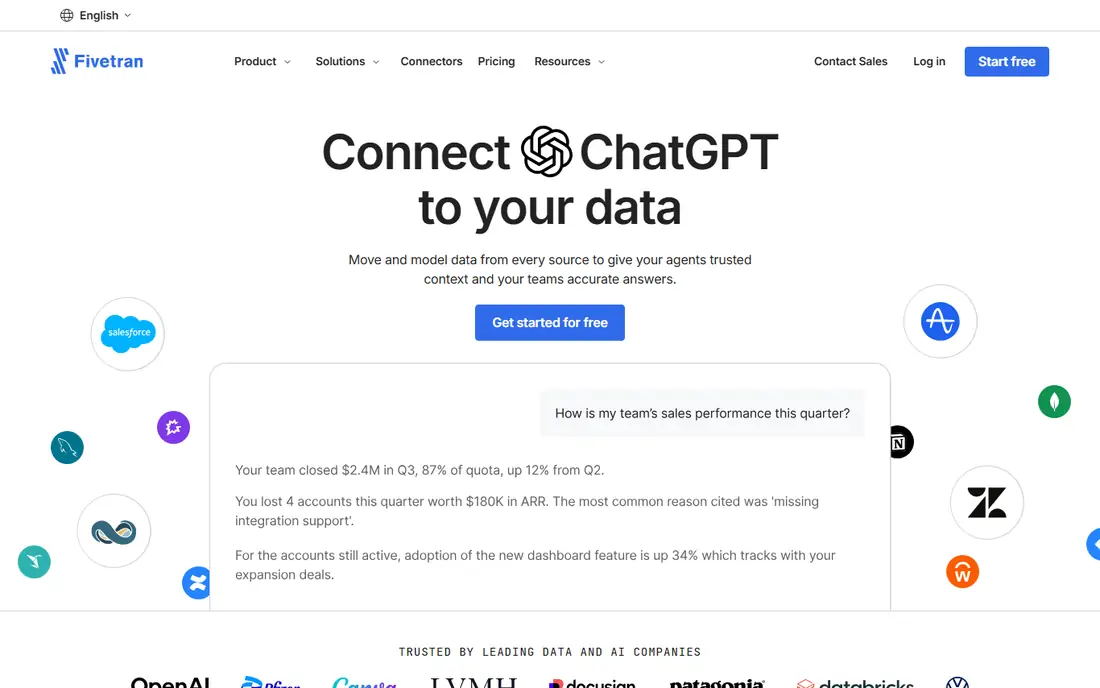
Fivetran is built for teams that would rather buy reliability than build pipelines. It handles schema drift, retries, and incremental syncs for hundreds of sources, and it normalizes data for common warehouses. That managed approach suits small data teams that cannot staff a full platform group.
The catch is cost control. Pricing follows monthly active rows, so a noisy source can raise the bill quickly. Teams that need fine-grained, visual transformation inside the pipeline may also find Fivetran less flexible than NiFi. It works best when the warehouse, not the pipeline tool, does most of the transformation.
- Broad managed connector set
- Automated schema changes
- Strong documentation
- Usage based pricing can be hard to predict
- Less visual flow control than NiFi
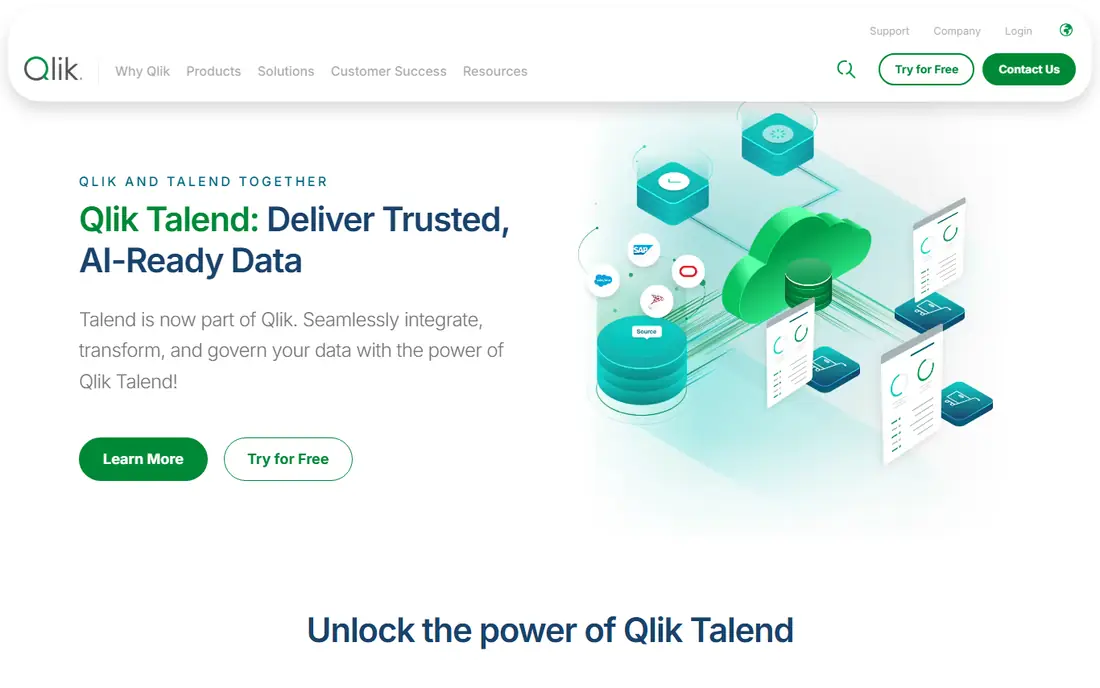
Talend appeals to larger organizations that need governance, data quality checks, and integration across many systems. Its visual studio will feel familiar to NiFi users, while its cloud platform adds scheduling, monitoring, and collaboration. It also covers batch integration, APIs, and data preparation in one family of tools.
That breadth comes with complexity. Talend projects can take time to design well, and pricing is typically quoted for enterprise use. Smaller teams may find it more than they need. For regulated or multi-system estates, though, the governance and lineage features can justify the effort.
- Visual design tools
- Data quality features
- Broad enterprise connectors
- Enterprise pricing and setup
- Steeper learning curve for new users
Airflow is not a drop-in visual replacement for NiFi. It orchestrates tasks written in Python, which makes it ideal for teams that want version control, code review, and repeatable scheduling for data jobs. Providers connect it to warehouses, cloud storage, APIs, and many data tools.
You will need engineering time to run it well, whether self-hosted or on a managed service. There is no drag and drop canvas for building flows, and debugging a failed DAG takes code skills. Teams with Python experience often prefer this trade, since workflows stay testable and easy to review.
- Python based workflows
- Strong scheduling
- Large community and providers
- No visual data flow designer like NiFi
- You manage the deployment
Confluent is the pick when data needs to move continuously rather than in scheduled batches. Built around Apache Kafka, it supports event streams, stream processing, and connectors to databases and cloud systems. The managed cloud service removes much of the Kafka operations burden.
Streaming is a different mental model from NiFi flows, so teams should expect a learning curve around topics, partitions, and schemas. Pricing also follows throughput and storage, which rewards careful topic design. For fraud checks, live dashboards, and event driven apps, that real time strength is hard to match with batch tools.
- Built on Apache Kafka
- Real time streams
- Managed cloud option
- Streaming concepts take time to learn
- Costs scale with throughput
StreamSets will feel closest to NiFi for users who like designing flows visually. Its canvas supports both batch and streaming pipelines, and it includes features for handling schema drift and data quality checks as records move. That makes it a good fit for operations teams that prefer a graphical view of each pipeline.
The main drawback is transparency. Pricing is typically quoted rather than published as a simple monthly figure, so budgeting requires a sales conversation. The community is also smaller than the largest open source projects. Teams that value visual design and enterprise support should still shortlist it.
- Visual pipeline canvas
- Streaming and batch support
- Data drift handling
- Pricing is quoted
- Smaller community than Airflow or Airbyte
Hevo Data targets analytics teams that want pipelines running quickly without writing code. You connect a source, pick a warehouse destination, and Hevo handles schema mapping and incremental loads. It also offers reverse ETL to send warehouse data back to business tools, which helps marketing and sales teams use fresh data.
The pricing model is event based, so high-frequency updates count against your tier. Teams with very large or rapidly changing tables should check that math early. For typical SaaS and database sources feeding a warehouse, Hevo is one of the easier NiFi alternatives to run day to day.
- No code setup
- Automatic schema mapping
- Reverse ETL options
- Event based pricing can grow fast
- Fewer advanced streaming features
Stitch keeps things deliberately simple. It replicates data from sources into a warehouse with minimal configuration, which suits teams that do transformation in the warehouse with SQL or dbt. The standard tier starts at $100 per month, and row tiers make the cost easier to forecast than some usage models.
What you give up is flexibility. Stitch is not a general flow designer, and it does not offer the deep transformation or streaming features of other tools here. If your main need is reliable replication at a modest price, that simplicity is a strength. If you need complex routing or enrichment mid-pipeline, look elsewhere.
- Simple replication setup
- Clear row based tiers
- Warehouse focused
- Limited in pipeline transformation
- No free plan
Estuary Flow is designed for teams that want warehouse data to stay fresh without waiting for batch windows. It uses change data capture for supported databases and lets you transform streams with SQL or TypeScript. The developer tier helps small teams test real time pipelines before paying.
It is more technical than Hevo or Stitch, and its catalog is smaller than the largest managed platforms. Teams comfortable with SQL will get the most from it, while non-technical users may prefer a no code tool. For live analytics and operational reporting, the freshness advantage is real.
- Real time change data capture
- SQL and TypeScript transforms
- Free developer tier
- Smaller connector catalog than Fivetran
- More technical setup
How we picked these
We compared official feature pages, pricing pages, connector catalogs, and public documentation for each tool, focusing on how closely each one replaces NiFi's core jobs: moving data, handling schema changes, scheduling, and monitoring. We favored tools that are actively maintained in 2026, support common warehouses and databases, and offer a clear path for small teams as well as larger ones. We did not count marketing claims as facts, and where pricing was quoted rather than published, we listed it as See website.
What to check before you switch
Start with your source and destination list, then check freshness needs. Batch tools are fine for nightly reporting, while streaming tools matter when dashboards or apps must reflect changes within minutes. Next, test schema drift: add a column, rename a field, and see whether the pipeline handles it or breaks.
Also check who will own the tool. Visual tools suit operations teams, while Airflow and Estuary suit engineers who want code and version control. Finally, run a cost test with a real source for two weeks. Row, event, and volume pricing all behave differently under real workloads, and a short trial can prevent a surprise bill.
Migration tips
Map each NiFi processor to a job in the new tool before you migrate, and keep NiFi running in parallel until the new pipeline matches row counts. Document credentials, schedules, and error handling early, since those details cause most migration delays.
A final check worth doing is testing failure handling with a real source, including a paused source, a changed schema, and a failed destination. Watch how clearly the tool reports the problem, whether it retries safely, and how easy it is to replay missed records. Pipeline reliability shows up most clearly when something breaks, not when everything runs smoothly.
FAQ
What is the closest alternative to Apache NiFi?
StreamSets and Talend are closest in visual design style, while Airbyte is closest if you want an open source, connector-led approach. The best match depends on whether your team prefers a canvas, code, or a fully managed service.
Are there free Apache NiFi alternatives?
Yes. Airbyte's open source edition and Apache Airflow are free to run yourself, and Fivetran, Hevo Data, Confluent, and Estuary Flow offer free tiers or trials. Self-hosted free options still need infrastructure and maintenance time.
What are NiFi alternatives for real time data?
Confluent and Estuary Flow are the strongest real time picks here, since both are built around streaming and change data capture. StreamSets also supports streaming pipelines for teams that want a visual canvas.
Is Airflow a replacement for NiFi?
Airflow replaces NiFi's scheduling and orchestration well, but it does not offer the same visual flow designer. Teams with Python skills often prefer Airflow, while visual teams may prefer StreamSets or Talend.
How much do NiFi alternatives cost?
Costs range from free self-hosted tools to quoted enterprise platforms. Stitch starts at $100 per month for standard replication, while managed and streaming tools usually price by volume, rows, events, or throughput, so always test with your own data.