Best Antique App in 2026: 8 Apps Compared
Our best antique app guide for 2026 compares 8 apps for identifying, valuing and selling antiques, with prices, free plans and honest limits for readers.
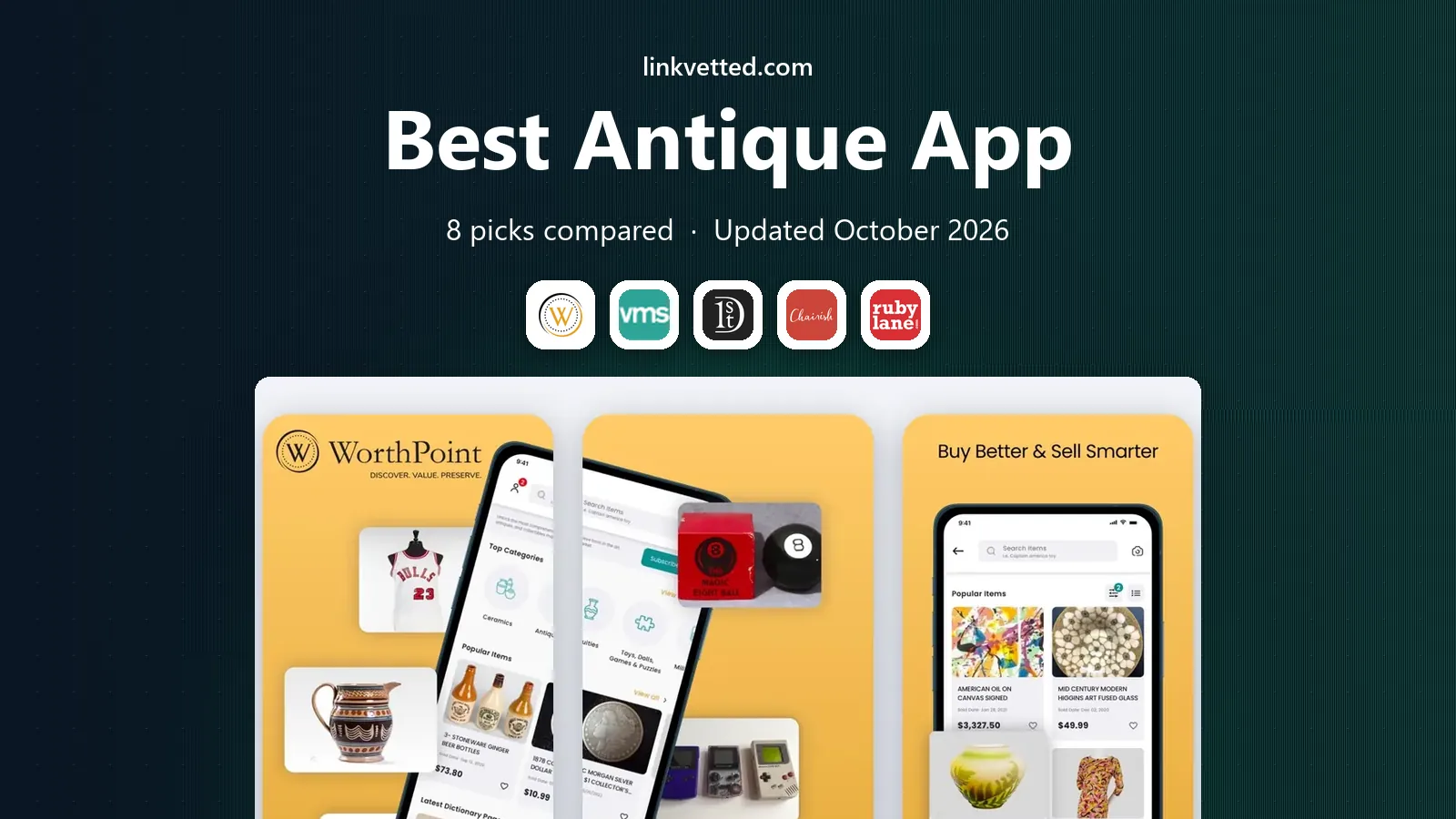
- Editor's choice
 WorthPoint
Deep sold-price archive
Starts at$29.99 per monthVisit worthpoint.comFull review - Great alternative
 ValueMyStuff
Quick expert-style valuations
Starts atSee websiteVisit valuemystuff.comFull review - Also consider
 1stDibs
High-end buying and research
Starts atFreeVisit 1stdibs.comFull review
TL;DR:
- WorthPoint is the strongest choice for documented sold prices, while photo tools are faster for a first identification.
- No app gives a formal appraisal, so treat every value as an estimate and check sold listings before you pay or sell.
- Free tools work well for common items, but rare pieces and makers marks usually need a paid archive.
- Marketplace apps show what buyers actually paid, which often matters more than an asking price.
Quick comparison
| Tool | Best for | Starts at | Free plan? | |
|---|---|---|---|---|
| WorthPoint | Deep sold-price archive | $29.99 per month | Free trial (7 days) | Visit |
| ValueMyStuff | Quick expert-style valuations | See website | No | Visit |
| 1stDibs | High-end buying and research | Free | Yes | Visit |
 Chairish | Curated vintage shopping | Free | Yes | Visit |
 Ruby Lane | Specialist dealer shops | Free | Yes | Visit |
 LiveAuctioneers | Live and past auction prices | Free | Yes | Visit |
 Invaluable | Auction bidding and results | Free | Yes | Visit |
 eBay | Current resale values | Free | Yes | Visit |
The best antique apps
Antique research splits into two jobs, and most apps do only one of them well. Some identify an object or a mark, while others show what similar pieces actually sold for. Use the list below in that order when a piece matters.
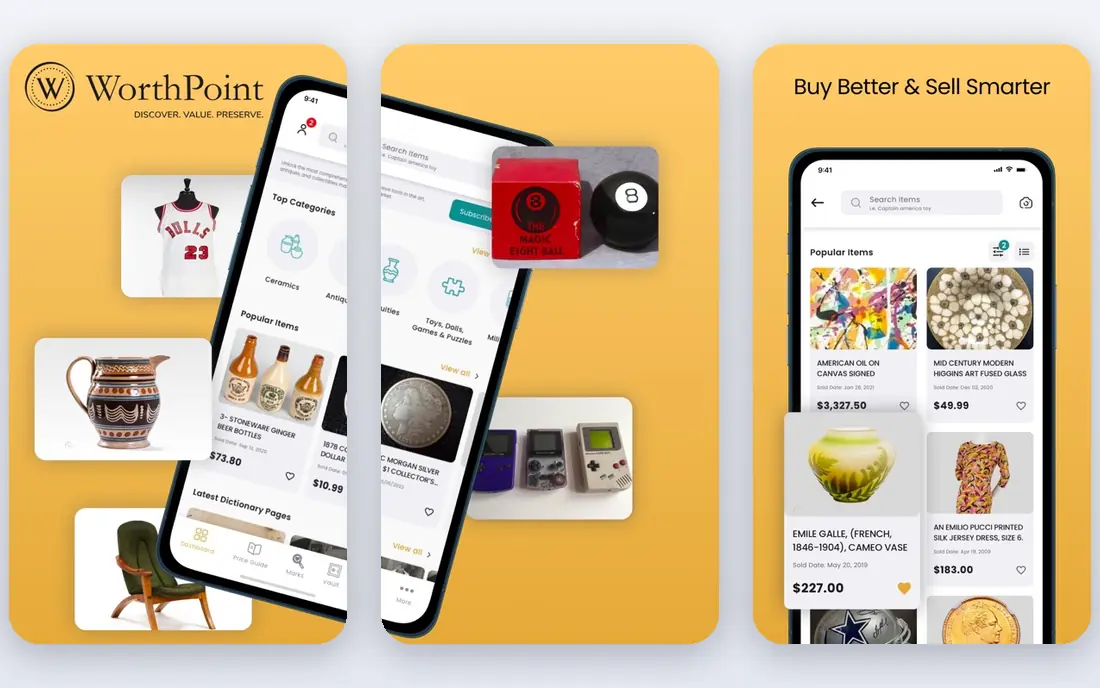
WorthPoint is our pick for serious collectors and sellers who price items often. Its archive covers antiques and collectibles from many auction houses and marketplaces, so a search can show a range of real results rather than one hopeful asking price. The mark library helps when a stamp, signature or pattern name is the only clue you have.
The catch is cost and effort. Casual users may not get $29.99 per month of value from occasional lookups, and results still need judgment about condition, size and age. Use the trial to test your own categories before paying, and compare at least three similar sold items before settling on a value.
- Very large archive of sold prices
- Makers mark library
- Image search and collection tools
- Pricey for casual use
- Desktop research feels stronger than phone-only use

ValueMyStuff takes a different route from a searchable archive. You upload photos and details, and a valuation comes back based on comparable sales and expert review. That can help when you have one unusual item and do not want to learn a whole database to research it.
It works best for a short list of pieces rather than daily sourcing. Valuations still depend on the photos and details you supply, so include marks, damage, dimensions and the back or base of a piece. For insurance or legal purposes, ask a local certified appraiser instead of relying on an online estimate.
- Human-reviewed valuations
- Simple photo upload
- Covers many categories
- Pricing is not always clear upfront
- Not a formal certified appraisal
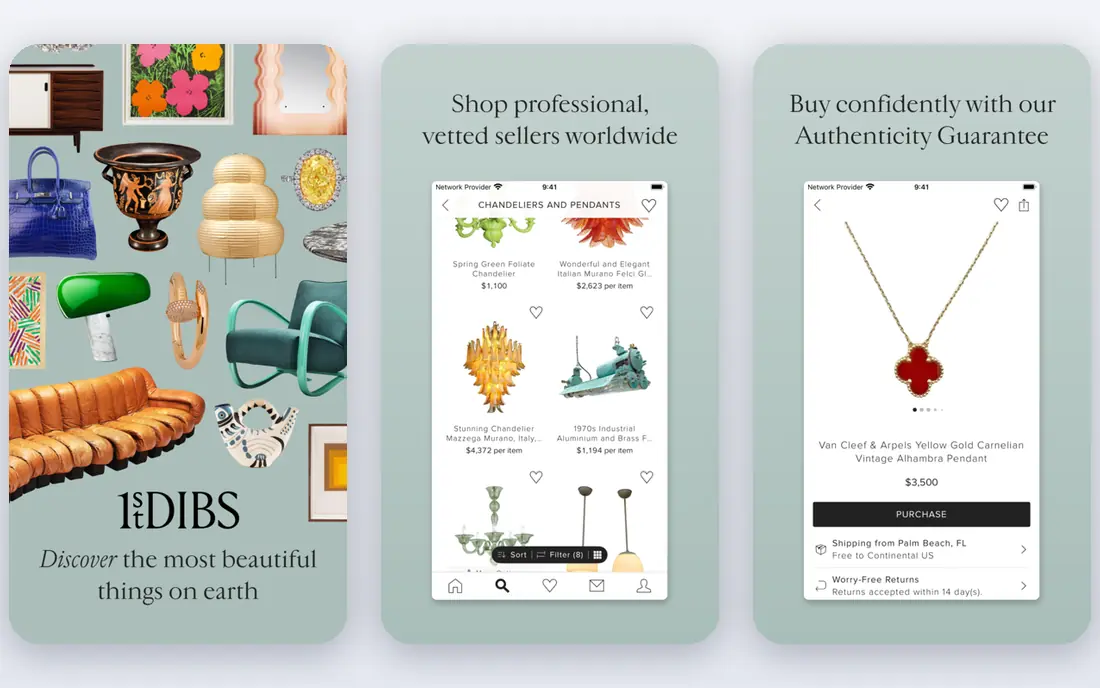
1stDibs is a good reference point when a piece sits at the upper end of the market. Listings from vetted dealers often include maker, period, materials and condition notes, which helps you learn the language of a category. Browsing sold or comparable high-end pieces can also show why two similar chairs can carry very different prices.
Do not treat a 1stDibs asking price as a market value on its own. Dealer retail prices include presentation, sourcing and margin, so they often sit above auction results. Use it to study quality and detail, then check auction and resale results for a selling price.
- Strong dealer vetting
- Detailed listings
- Useful for design-led antiques
- Prices skew high
- Less useful for everyday flea market finds
Chairish suits buyers who want a specific look and are willing to compare many listings. Filters for style, era, material and price help narrow a search, and seller pages give some sense of track record. Furniture dominates, so it is less useful for small collectibles or tools.
The honest limit is that Chairish is a retail marketplace first and a price guide second. A listed price is an offer, not a completed sale, and condition descriptions vary by seller. Ask for extra photos of joints, upholstery, repairs and marks before buying a larger piece.
- Wide vintage and antique furniture selection
- Seller ratings
- Style filters
- Retail prices vary widely
- Shipping can add a large cost
Ruby Lane has been a home for specialist dealers for years, and that focus shows in categories such as dolls, jewelry, porcelain and vintage fashion. When you find a dealer who specializes in your area, their shop can teach you more than a general search. Many listings include careful descriptions and provenance notes.
It is not the fastest app for a quick scan at a sale, and some categories are thin. Treat it as a research and buying source for niches where dealer knowledge matters. For pricing, compare the same maker and pattern across several shops rather than trusting one listing.
- Long-running dealer shops
- Strong in dolls, jewelry and china
- Detailed shop pages
- Interface feels dated
- Stock varies a lot by category
LiveAuctioneers is useful because auction results show demand in public. You can follow a category, watch live sales, and review past lots with estimates and hammer prices where published. That makes it a strong check against retail asking prices.
Bidding through a platform adds buyer fees on top of the hammer price, so a winning bid is not the full cost. For research, focus on the hammer price and condition notes, and note whether a lot sold, passed or sold below estimate. A single strong result does not prove a trend.
- Access to many auction houses
- Past results
- Live bidding
- Buyer fees apply on purchases
- Some results need an account
Invaluable covers a similar job to LiveAuctioneers, with its own set of auction houses and categories. Alerts help when you follow a maker, artist or type of object and do not want to check every catalog by hand. Past results are the most valuable part for pricing research.
As with any auction platform, read the house terms before bidding. Buyer premiums, taxes, shipping and payment rules differ, and condition reports can be brief. For valuation, use several comparable lots and adjust for condition, size and completeness.
- Large auction house network
- Alerts for artists and makers
- Past sale search
- Fees and shipping vary by house
- App experience varies by auction
eBay remains the most practical free check for what ordinary buyers pay today. Filter to sold items, match condition and completeness, and ignore active listings that have sat unsold for months. Image search can also help identify a common piece when you have no mark or maker name.
The weakness is quality control. Reproductions, later copies and mislabeled items are common, and sold prices can reflect a poor listing as much as a fair value. Use eBay for current demand, WorthPoint or auction results for history, and a specialist source when a piece looks rare or valuable.
- Huge sold-listing data
- Image search
- Active buyer demand
- Asking prices mislead
- Fakes and reproductions appear in many categories
How we picked these
We compared official feature pages, pricing pages, app store listings and public reviews for apps that identify antiques, value them or show real sale results. We kept only products that exist and work in October 2026 and that fit antiques specifically, rather than general shopping or image search alone. We favored tools with sold-price data, maker research or a dealer and auction record, and we noted where a price was an asking price rather than a completed sale.
What to check before you trust a value
Start with identification, then price, then condition. A maker mark, pattern name, material and size narrow the field far more than a broad label such as old vase. Photograph marks, bases, labels, damage and repairs, because those details change value more than age alone.
Compare at least three similar sold items, and adjust for condition. A chipped rim, replaced part, missing lid or faded finish can cut value sharply, while original packaging, a matching set or documented history can raise it. If results disagree widely, the item may be rare, misidentified or priced in different markets.
For a high-value piece, get a second opinion. A local dealer, auction house or certified appraiser can inspect the object in person, which no phone photo can replace. Online estimates are a starting point for negotiation, not a guarantee of what a buyer will pay.
FAQ
What is the best app for antiques?
WorthPoint is the strongest pick for documented sold prices and mark research, while eBay is the best free check for current resale demand. Use both when a piece matters, since one shows history and the other shows what buyers pay now.
Can an app tell me exactly what my antique is worth?
No app can give an exact value. Apps show comparable sales and estimates, and the final price depends on condition, rarity, completeness and the buyer. Treat any single figure as a range, and get an in-person opinion for valuable pieces.
Is there a free antique app?
Yes. eBay, 1stDibs, Chairish, Ruby Lane, LiveAuctioneers and Invaluable all offer free browsing and search, with optional purchases or fees. Free tools work well for common items, but deep archives such as WorthPoint usually need a paid plan.
How do I identify an antique from a photo?
Start with a clear photo of the whole item plus closeups of marks, labels and the base. Use image search on eBay or WorthPoint, then search the maker or pattern name with dimensions and material. If the mark is unclear, a mark library or specialist dealer forum can help.
Are online antique valuations reliable for insurance?
Online estimates are not a substitute for a formal appraisal. Insurers usually want a written appraisal from a qualified appraiser, with photos and a description. Use app results to prepare for that visit, not to replace it.