5 Anomali Alternatives Worth Switching To in 2026
5 options for Anomali alternatives, with entry costs, free tiers and the buyer each one serves. Where a tool struggles is spelled out. Updated November 2026.
- Editor's choiceFlashpoint Ignite
Threat intelligence across fraud and physical security
Starts atPricing on requestVisit flashpoint.ioFull review - Great alternative
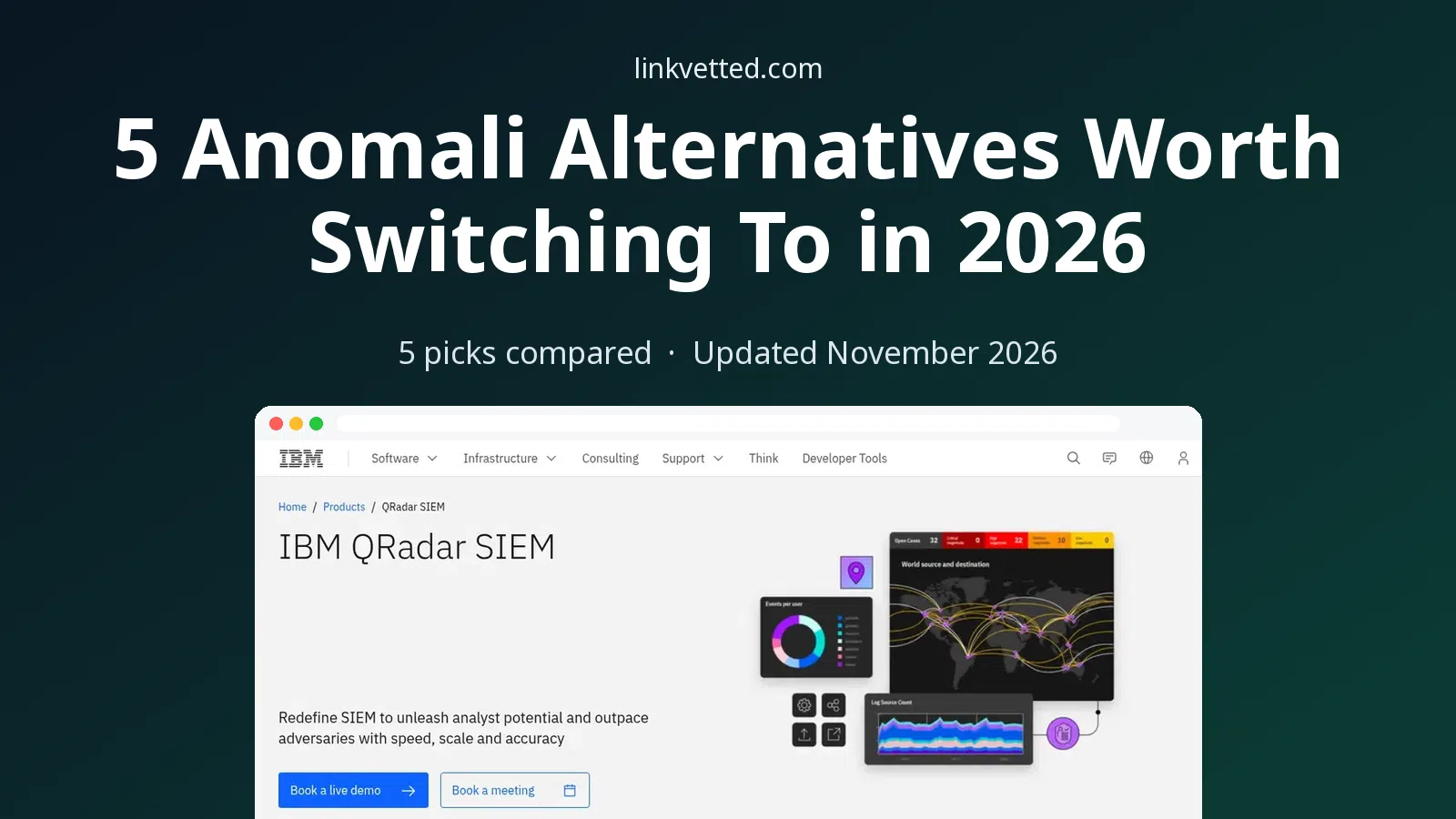
 IBM QRadar SIEM
Intelligent SIEM with actionable threat insight
Starts atPricing on requestVisit ibm.comFull review - Also considerRecorded Future Intelligence Cloud
Live actionable threat intelligence
Starts atPricing on requestVisit recordedfuture.comFull review
Direct answer
Flashpoint Ignite comes first here, mainly for threat intelligence across fraud and physical security. If your case is different, IBM QRadar SIEM suits intelligent SIEM with actionable threat insight and Recorded Future Intelligence Cloud suits real-time actionable threat intelligence. The other 2 tools in the list cover narrower or pricier cases. None of these vendors publish plan prices, so pricing is on request for every option.
TL;DR:
- Top of the list is Flashpoint Ignite, which targets threat intelligence across fraud and physical security.
- Flashpoint Ignite, Palo Alto Networks Cortex XSOAR and the 3 others all sell by quote; expect sales conversations before you see a price.
- None of the 5 tools, from Flashpoint Ignite to Palo Alto Networks Cortex XSOAR, has a free plan, so budget for a subscription or use a trial.
- One limit worth knowing about Recorded Future Intelligence Cloud: Intelligence-focused, not full SIEM.
Last checked November 2026. Pricing on request: vendors did not publish plan prices when this guide was last checked (November 2026), so ask each vendor for a written quote.
Quick comparison
| Tool | Best for | Starts at | Free plan? | |
|---|---|---|---|---|
| Flashpoint Ignite | Threat intelligence across fraud and physical security | Pricing on request | Not stated | Visit |
| IBM QRadar SIEM | Intelligent SIEM with actionable threat insight | Pricing on request | Not stated | Visit |
| Recorded Future Intelligence Cloud | Live actionable threat intelligence | Pricing on request | Not stated | Visit |
 Splunk Enterprise Security | Unified TDIR with integrated SIEM and UEBA | Pricing on request | Not stated | Visit |
| Palo Alto Networks Cortex XSOAR | Automatic incident response and SOC efficiency | Pricing on request | Not stated | Visit |
The 5 tools in detail
This LinkVetted guide covers 5 options for Anomali. Each profile lists a starting price, free plan details, strengths and drawbacks, so you can drop poor fits quickly.
Flashpoint Ignite
Best for: Threat intelligence across fraud and physical security
Flashpoint Ignite is aimed squarely at threat intelligence across fraud and physical security. Flashpoint Ignite is a threat intelligence product trusted for physical security, fraud prevention, and operational intelligence. It offers data-driven insights for teams that require to understand threats beyond traditional cyber telemetry.
If your priority is automatic incident response, a SOAR-centric alternative may be a better primary choice. Integrating its intelligence into existing workflows takes planning. Flashpoint Ignite does not show a starting price in this comparison, so check the vendor site for current pricing. On free options: Not stated.
Drawbacks to consider: Intelligence use requires integration.
- Supports operational and physical intel
- Handles fraud prevention use cases
- Not a full SIEM or SOAR
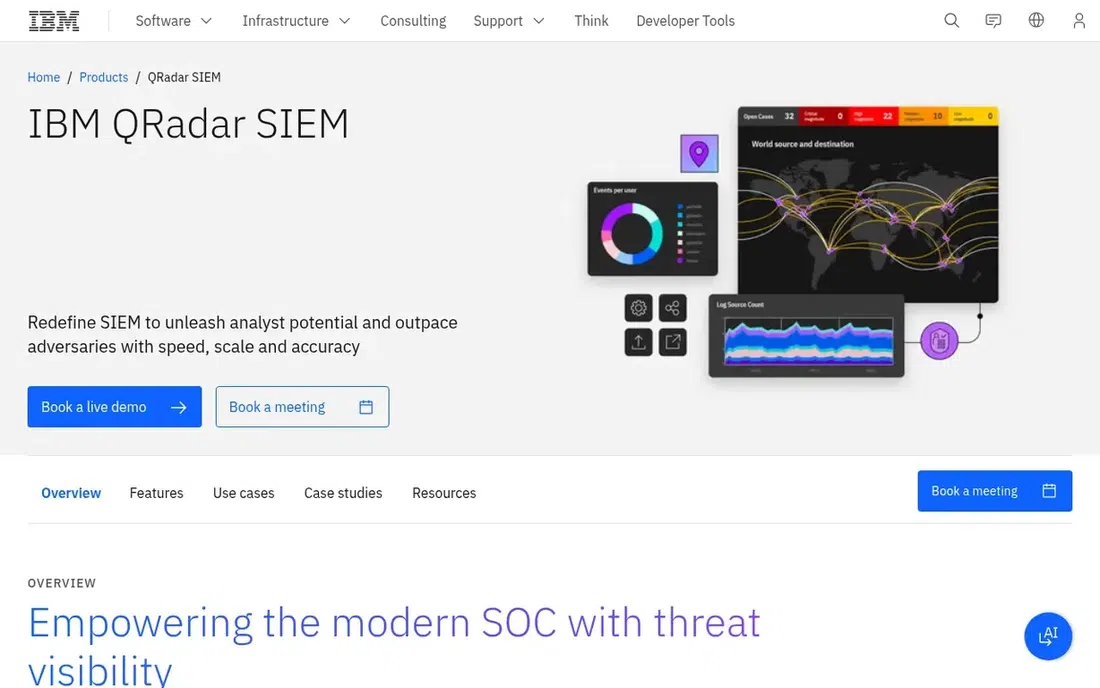
Pick IBM QRadar SIEM if this describes you: intelligent SIEM with actionable threat insight. It is pitched at security operations centers that require centralized log analysis and correlation. Effective use needs skilled administrators to handle rules and tuning.
Watch-outs: less centred on standalone intel.
As for the details, QRadar is primarily a SIEM. So teams seeking deep standalone threat intelligence may have to pair it with another source. IBM QRadar SIEM does not show a starting price in this comparison, so check the vendor site for current pricing. Trial and free access: Not stated.
- Delivers actionable insight into critical threats
- Established SIEM capabilities
- Needs skilled administration
Recorded Future Intelligence Cloud
Best for: Live actionable threat intelligence
Choose Recorded Future Intelligence Cloud for live actionable threat intelligence. Recorded Future Intelligence Cloud provides live, actionable cyber threat intelligence.
What to check first: Intelligence-focused, not full SIEM.
It helps organizations mitigate cyber risks, prioritize threats, and proactively secure their environment. In practice, if you need a single system for SIEM and automation, consider a broader operations suite. Pricing for Recorded Future Intelligence Cloud is not stated here, so ask the vendor for current figures. Free plan details: Not stated.
- Live threat intelligence
- Supports proactive risk mitigation
- Needs integration for response workflows
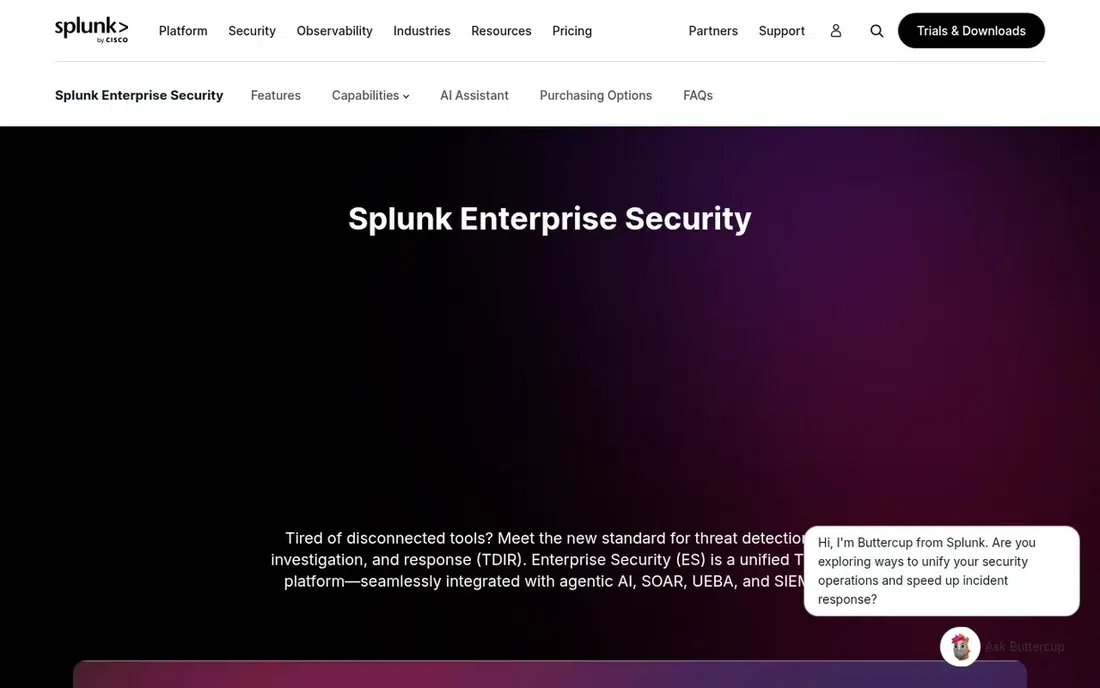
Pick Splunk Enterprise Security if this describes you: unified TDIR with integrated SIEM and UEBA. If you need a narrower threat intelligence focus, a specialized provider could be more appropriate.
Trade-offs to know: Wide product may need tuning.
The breadth of features means teams should plan for tuning and administration to get full value. It is made for organizations that want threat detection, investigation, and response in one environment. No starting price is listed for Splunk Enterprise Security here; confirm pricing on the vendor site. Trial and free access: Not stated.
- Simplifies detection and response
- Contains agentic AI capabilities
- Can be complicated for smaller teams
Palo Alto Networks Cortex XSOAR
Best for: Automatic incident response and SOC efficiency
Think of Palo Alto Networks Cortex XSOAR for automatic incident response and SOC efficiency. Teams without dedicated automation resources may find the initial setup demanding.
Cortex XSOAR is a security operations product from Palo Alto Networks that automates incident response, threat intelligence, and workflow automation. It is built for SOC teams that want to cut manual effort and speed remediation. This comparison lists no price for Palo Alto Networks Cortex XSOAR; ask the vendor. As for free access: Not stated.
Where it is weaker: May overlap with existing SOAR tools.
- Brings together incident response and threat intel
- Workflow automation cuts remediation time
- Automation setup needs planning
How these tools were picked
LinkVetted looked at what each vendor publishes: pricing, plan limits, feature coverage for Anomali and stated drawbacks. No hands-on testing is claimed. Where a vendor does not publish a price, the entry says quote. Where a price depends on seats or billing term, the entry says so. The order reflects how well each tool fits the most common buying scenario for Anomali, then price clarity, then free plan access. It is a starting point, not a verdict.
A buyer's checklist
- Request quotes from Flashpoint Ignite, Palo Alto Networks Cortex XSOAR and the others; the list shows no fixed prices.
- Before choosing Flashpoint Ignite, weigh its main limit: not a full SIEM or SOAR.
- Check the integration list for Flashpoint Ignite against the tools you run today, and note which ones need a higher plan.
- Confirm you can export your data from IBM QRadar SIEM, so leaving later does not mean losing records.
- Let daily users try Splunk Enterprise Security on real work; their feedback beats any feature checklist.
FAQ
How are the tools for Anomali ordered?
Flashpoint Ignite sits first and Palo Alto Networks Cortex XSOAR last because the order follows typical fit for Anomali, then price clarity and free access. It is a judgement call, so read each profile for fit and limits.
How do cloud-native systems differ from traditional choices?
Cloud-native systems like Exabeam are aimed at cloud deployment and AI-driven analytics, which can ease scaling and updates. Traditional SIEM choices may appeal to organizations with on-premises requirements. The right choice relies on your architecture and operational preferences.
What should I look for in an Anomali alternative?
Start by defining whether you need threat intelligence, SIEM, SOAR, or a combination. Confirm deployment choices and data coverage on each vendor site.
Can a SIEM replace a dedicated threat intelligence system?
A SIEM like IBM QRadar or Splunk Enterprise Security centres on detection and response using your telemetry. Plenty of teams use both together instead of replacing one with the other.
Do these tools publish their prices?
No. None of the tools, from Flashpoint Ignite to Palo Alto Networks Cortex XSOAR, shows a fixed starting price here, so budget time for quotes.
Can I try these tools before paying?
Not by default. None of the tools, from Flashpoint Ignite to Palo Alto Networks Cortex XSOAR, lists a free plan or a free trial here, so ask each vendor for a demo before committing.
Sources
- https://flashpoint.io
- https://www.ibm.com/products/qradar-siem
- https://www.recordedfuture.com
- https://www.splunk.com/en_us/products/enterprise-security.html
- https://www.paloaltonetworks.com/cortex/cortex-xsoar