Best Alternatives to Kindle Direct Publishing in 2026: 8 Publishing Tools Compared
Compare the best alternatives to kindle direct publishing for ebooks, print books, and wide distribution, with costs, royalty shares, and honest limits.
- Editor's choice
 IngramSpark
Bookstore and library distribution
Starts atSee websiteVisit ingramspark.comFull review - Great alternative
 Draft2Digital
Free wide ebook distribution
Starts atFreeVisit draft2digital.comFull review - Also consider
 Smashwords
Wide ebook distribution
Starts atFreeVisit smashwords.comFull review
TL;DR:
- Draft2Digital and Smashwords distribute to many stores for free upfront, taking a share of sales instead.
- IngramSpark reaches bookstores and libraries through Ingram distribution, which Amazon-only publishing does not.
- BookBaby and Lulu suit authors who want done-for-you formatting, print, and distribution in one package.
- Going wide takes more work than Kindle-only publishing, but it protects income if one store changes its terms.
Quick comparison
| Tool | Best for | Starts at | Free plan? | |
|---|---|---|---|---|
| IngramSpark | Bookstore and library distribution | See website | No | Visit |
| Draft2Digital | Free wide ebook distribution | Free | Yes | Visit |
| Smashwords | Wide ebook distribution | Free | Yes | Visit |
 Kobo Writing Life | Direct Kobo sales | Free | Yes | Visit |
 Barnes & Noble Press | Direct Nook sales | Free | Yes | Visit |
 BookBaby | Done-for-you publishing packages | See website | No | Visit |
 Lulu | Print books and direct sales | Free | Yes | Visit |
 PublishDrive | Wide distribution with subscriptions | See website | Free trial | Visit |
The best alternatives to kindle direct publishing
Kindle Direct Publishing is the largest ebook store, but it is not the only route to readers. The tools below cover wide distribution, direct sales, print, and assisted publishing.
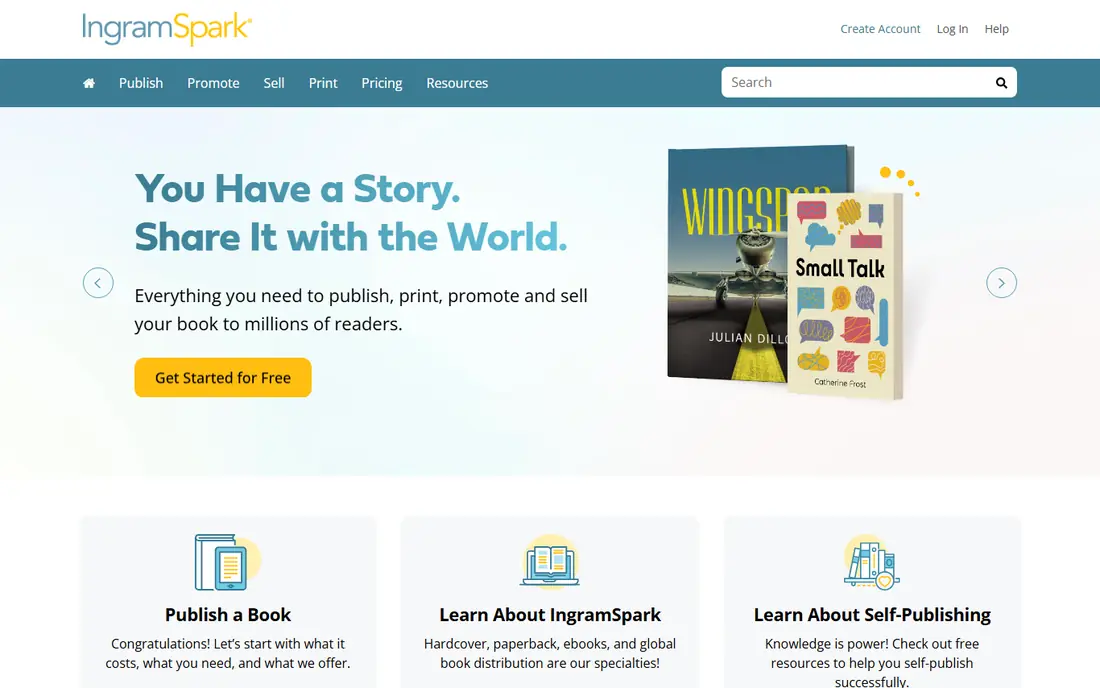
IngramSpark is the strongest alternative for authors who want print books in bookstores and libraries, not only on Amazon. Through Ingram distribution, titles appear in retailer catalogs worldwide, and bookstores can order them through their normal channels. Ebook distribution is included alongside print.
The trade-offs are cost and complexity. Setup fees and print costs vary by format, and authors must understand wholesale discounts and returns, since bookstores may return unsold print stock. For authors serious about print distribution beyond Amazon, IngramSpark is the standard choice.
- Reaches bookstores, libraries, and online retailers
- Print and ebook in one place
- Global catalog
- Setup fees may apply by format
- Interface takes learning
- Returns policies need care
Draft2Digital lets authors publish an ebook once and distribute it to Apple Books, Kobo, Barnes and Noble, and many other stores, plus libraries through partners. There is no upfront fee: Draft2Digital takes a share of the retail price on sales, which keeps the risk low for a first-time author. Free formatting tools turn a Word document into a clean ebook file.
The catch is the royalty share, which means authors earn slightly less per sale than selling direct on a store. Draft2Digital also does not offer its own print distribution, so print authors pair it with IngramSpark or Lulu. For wide ebook reach with no upfront cost, it is our pick for most people.
- Free to publish
- Distributes to many stores
- Free formatting tools
- Takes a share of royalties
- No print distribution of its own
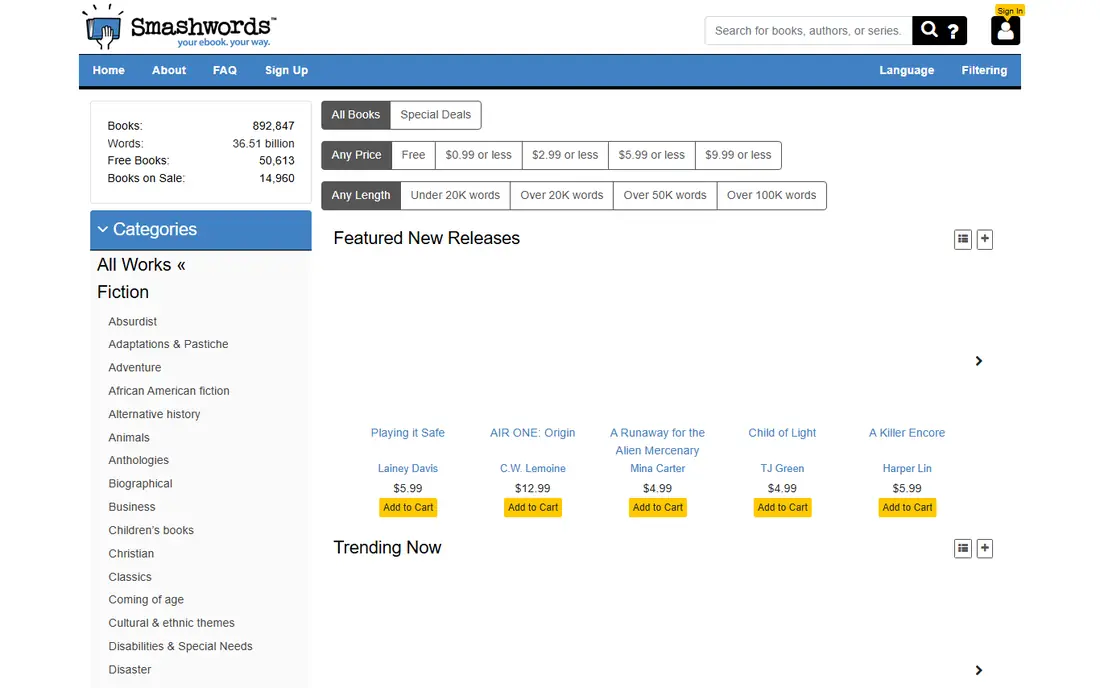
Smashwords is one of the longest-running wide distribution platforms, with its own store plus distribution to major retailers and library partners. Authors upload a formatted manuscript, set a price, and reach many stores from one dashboard. The platform is free to use, with a share taken on sales through distribution partners.
Its own store draws less traffic than Apple Books or Kobo, so most sales will come through partner stores rather than Smashwords itself. Authors who want a simple, low cost wide route and who value the platform's author-friendly history will still find it a solid choice.
- Free to publish
- Large store and distribution network
- Author-friendly terms
- Takes a share on distributed sales
- Store traffic is smaller than major retailers
Kobo Writing Life is the direct publishing portal for Kobo, which is strong in Canada, the UK, Australia, and other markets outside the US. Publishing direct means a higher royalty share than going through an aggregator, and authors control pricing and promotions on Kobo itself. The dashboard covers sales reports and promotional tools.
The limit is reach. Kobo alone does not cover Apple Books, Barnes and Noble, or Amazon, so authors going wide usually pair Kobo Writing Life with Draft2Digital or Smashwords for other stores, or use an aggregator for everything. For authors with a Canadian or international audience, direct Kobo publishing is worth doing.
- Free to publish
- Direct Kobo sales with higher royalty share
- Strong in Canada and beyond
- Kobo-only reach
- Smaller US audience than Kindle
Barnes and Noble Press lets authors publish ebooks for Nook readers and the Barnes and Noble website, with print book options as well. Publishing is free, and authors set prices and royalties through the dashboard. For US authors, it is the direct route to the largest US bookstore chain after Amazon.
Nook readership is far smaller than Kindle, so sales volume will usually be modest compared with Amazon. Still, since publishing is free, there is little downside to adding Barnes and Noble Press to a wide strategy alongside Draft2Digital and Kobo.
- Free to publish
- Direct Nook and Barnes and Noble sales
- Print options
- Nook audience is smaller than Kindle
- US-focused reach
BookBaby suits authors who want help rather than doing every step themselves. Packages can include ebook conversion, cover design, print books, and distribution to major stores, with support staff to guide the process. That hand-holding is valuable for authors who do not want to learn formatting and distribution details.
The cost is the trade-off. Packages cost more than free aggregators, and authors give up some control over formatting choices and timing. Authors on a tight budget should compare a BookBaby package against a free Draft2Digital route plus a freelance cover designer before committing.
- Formatting, cover, print, and distribution packages
- Author support
- Wide store reach
- Package pricing is higher than free aggregators
- Less control than DIY routes
Lulu is a print-on-demand platform that also supports ebooks, with a direct store where authors can sell to readers and keep a larger share. Print formats cover paperback, hardcover, photo books, and calendars, which suits authors with visual or niche print projects. Publishing a title is free, with costs only when a copy is printed.
Retail distribution through Lulu is more limited than IngramSpark for bookstore placement, so authors who want bookstore shelves should still consider IngramSpark for print. For direct sales, author copies, and niche print runs, Lulu is flexible and low risk.
- Free to publish
- Print on demand in many formats
- Direct store for authors
- Retail distribution is more limited than IngramSpark
- Unit print costs vary
PublishDrive distributes ebooks and audiobooks to many stores and library partners, with subscription plans that suit authors publishing several titles a year. Marketing tools, including price promotion support, help authors run campaigns across stores from one dashboard. That structure fits prolific indie authors better than a one-book author.
A subscription only makes sense if you publish often enough to beat the per-sale cost of a free aggregator. Authors with one book a year will usually do better with Draft2Digital or Smashwords. Authors with a backlist and a steady release schedule should compare PublishDrive subscription math against aggregator royalty shares.
- Wide store and library distribution
- Subscription plans for prolific authors
- Marketing tools
- Subscription cost suits frequent publishers better
- Royalty terms vary by plan
How we picked these
We compared official publishing pages, distribution lists, pricing models, and royalty approaches for ebook and print publishing in October 2026. We favored platforms that are actively accepting authors, distribute to real retailers or libraries, and state their costs and royalty shares openly. We used See website where package or setup pricing varies, instead of repeating third-party figures.
How to choose the right publishing route
Decide first whether you want wide distribution or Amazon-only reach. Wide publishing protects you if one store changes terms, but it needs more setup and promotion across stores. Amazon-only publishing through Kindle Direct Publishing is simpler and reaches the largest ebook audience, but it ties income to one company.
Next, separate ebook from print. Wide ebook distribution is cheap or free through aggregators, while print distribution to bookstores is IngramSpark territory. Finally, be honest about how much help you need: DIY aggregators cost less, while BookBaby packages cost more but handle formatting and setup for you.
Promotion also differs by route. Wide authors should plan to drive readers to several stores, using a universal book link tool and store-specific promotions where available. Amazon-only authors can focus on Kindle promotions and Kindle Unlimited reads, but they give up readers on other devices. Whichever route you choose, keep your own mailing list, since a list you control is the one audience no store algorithm can take away.
FAQ
What is the best alternative to Kindle Direct Publishing for wide distribution?
Draft2Digital is the best wide ebook alternative for most authors, since it is free upfront and distributes to Apple Books, Kobo, Barnes and Noble, and library partners. Smashwords is a strong second choice with a similar free model.
Can I publish on Amazon and other stores at the same time?
Yes, unless you enroll a title in Kindle Unlimited, which requires exclusivity to Amazon for that title. Authors who publish wide should avoid Kindle Unlimited for those titles, or keep some titles exclusive and others wide.
Is IngramSpark worth it for print books?
Yes, if you want bookstores and libraries to be able to order your print book. IngramSpark is the standard route for that distribution, though setup fees, discounts, and returns need careful reading before you publish.
How much does it cost to publish wide?
Ebook distribution through Draft2Digital, Smashwords, Kobo Writing Life, and Barnes and Noble Press is free upfront, with a share taken on sales. Print costs depend on page count and format, and assisted packages from BookBaby cost more but include services.
Do I keep my rights when I use these platforms?
Yes, in general you keep your rights and can remove a title, but terms vary by platform and by store. Read the distribution agreement before publishing, especially for exclusivity, pricing control, and termination terms.