Best Alexa Alternatives in 2026: 8 Voice Assistants Compared
The best alexa alternatives in 2026: compare 8 voice assistants for smart homes, phones, music, and privacy-focused homes and families before you buy.
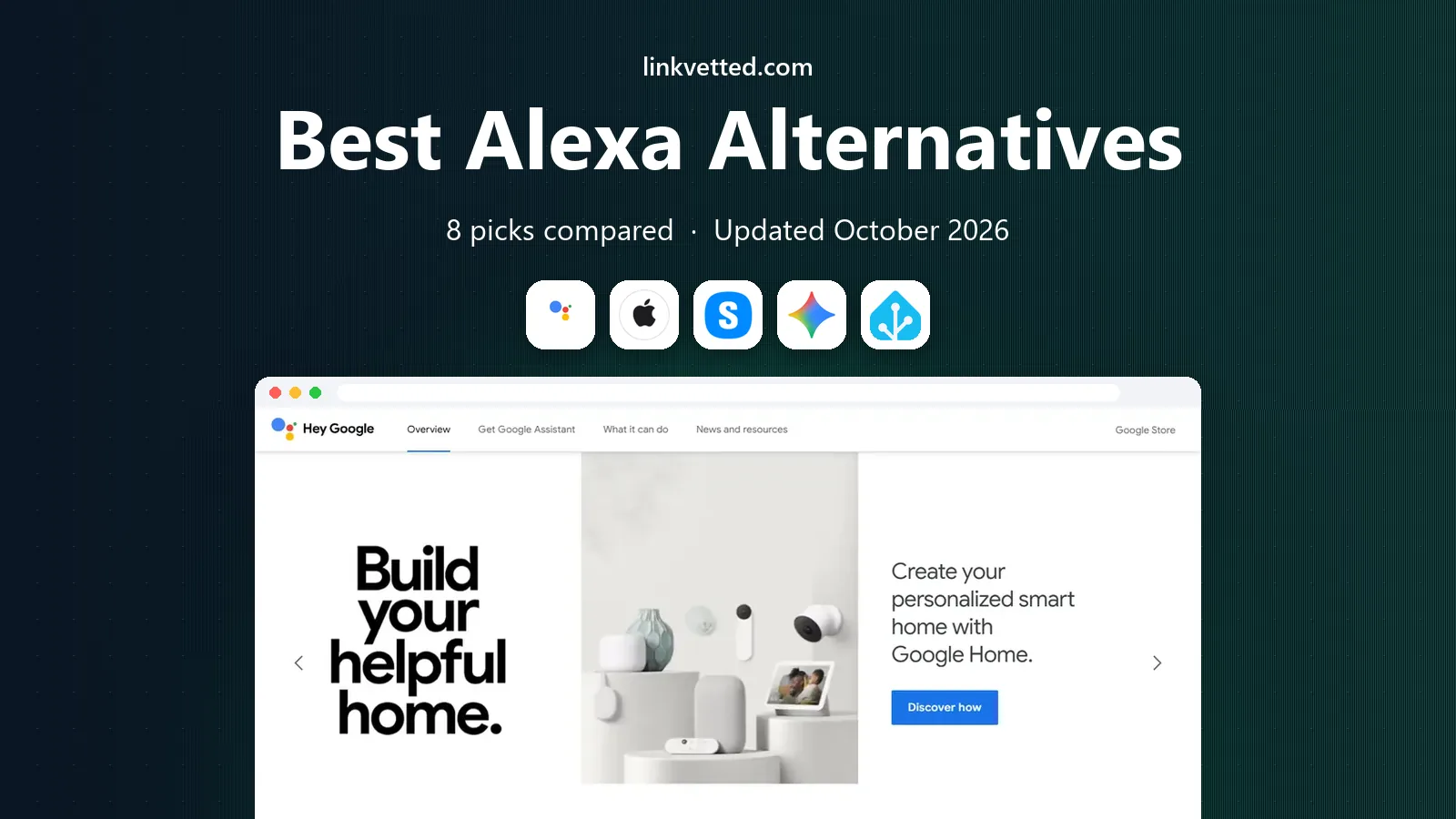
- Editor's choice
 Google Assistant
Android and Google homes
Starts atFreeVisit assistant.google.comFull review - Great alternative
 Apple Siri
Apple homes and phones
Starts atFreeVisit apple.comFull review - Also consider
 Samsung Bixby
Samsung Galaxy homes
Starts atFreeVisit samsung.comFull review
TL;DR:
- Google Assistant and Gemini lead for Android and Google users, while Siri leads for Apple homes.
- Bixby leads only for Samsung-heavy homes, and Home Assistant Assist leads for local privacy control.
- Sonos, Josh.ai, and ChatGPT Voice are partial replacements, strong for music, custom homes, or conversation, not for every Alexa job.
- Match the assistant to the phone and speakers you already own, since switching ecosystems costs more than any feature gap.
Quick comparison
| Tool | Best for | Starts at | Free plan? | |
|---|---|---|---|---|
| Google Assistant | Android and Google homes | Free | Yes | Visit |
| Apple Siri | Apple homes and phones | Free | Yes | Visit |
| Samsung Bixby | Samsung Galaxy homes | Free | Yes | Visit |
 Google Gemini | Conversational Google help | Free | Yes | Visit |
 Home Assistant Assist | Local privacy-focused control | Free | Yes | Visit |
 Sonos Voice Control | Music-first voice control | Free | Yes | Visit |
 Josh.ai | High-end custom homes | See website | No | Visit |
 ChatGPT Voice | Conversational voice help | Free | Yes | Visit |
The best Alexa alternatives
We compared eight voice assistants that replace Alexa for smart home control, phones, and conversation.

Google Assistant suits Android users and Google homes, where search, calendar, and Nest devices already shape daily routines. That focus shapes who gets the most from it, and it also sets the limits you should check during a trial.
Its strength is answers, because Google search depth helps with follow-up questions, facts, and everyday tasks. Check the plan details on the vendor site before you commit, since add-ons and limits can change the monthly total.
The catch is transition, since Google is shifting homes toward Gemini, so check which assistant your speaker and phone will run. That trade-off is the reason to trial it before you move a whole team across.
- Strong search answers
- Nest links
- Broad device support
- Transition to Gemini creates confusion
- Privacy controls need review
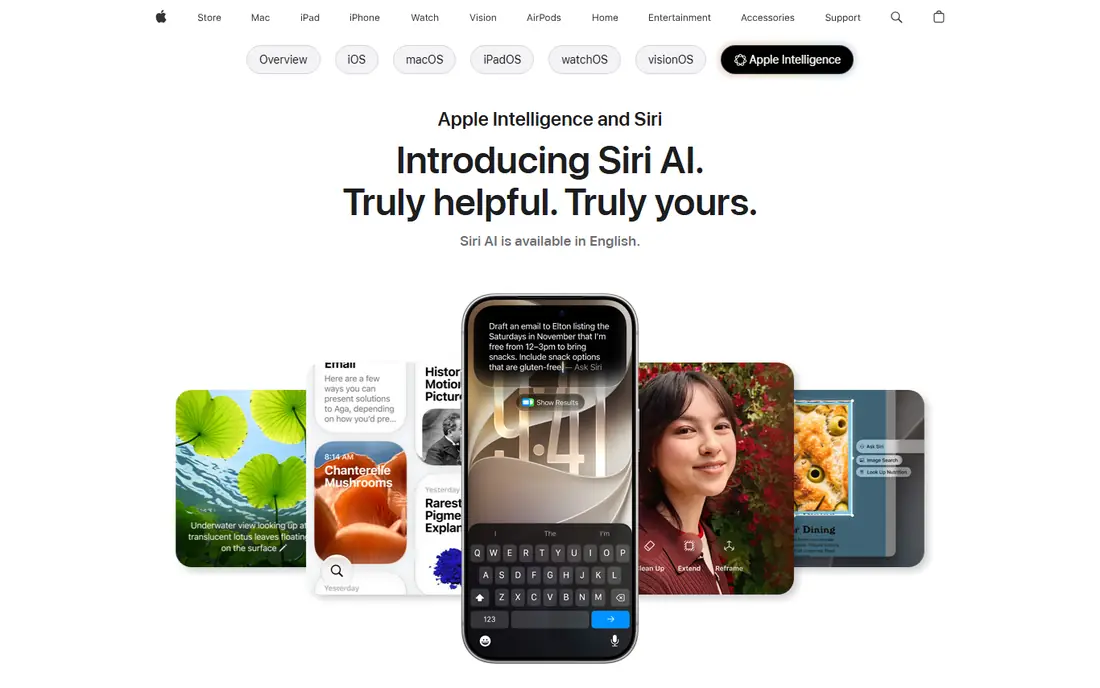
Apple Siri suits iPhone, HomePod, and Mac households that value privacy and a tight link across Apple devices. We compared its official feature pages, pricing pages, and public reviews, and that angle kept coming up first.
Its strength is privacy and Apple fit, with on-device processing for many requests and HomeKit control for certified devices. The field lines above give the starting point, and the paid tiers are where the useful team controls usually sit.
The catch is range, since the certified device list is narrower than Alexa or Google, and the best experience needs Apple hardware. If that catch does not affect your main use, it can still be a strong pick for the price.
- Privacy focus
- HomeKit links
- On-device processing for many tasks
- Smaller smart home range
- Best with Apple hardware

Samsung Bixby suits Galaxy phone, TV, and appliance owners who want voice control across Samsung devices. It is worth testing with the exact workflow you run most often, not only with a demo account.
Its strength is Samsung control, because routines and device commands reach deep into Galaxy phones, TVs, and appliances. If your volume grows, ask what the next tier costs now, rather than finding out after a busy month.
The catch is outside gear, since non-Samsung smart home devices have thinner support than on Google or Alexa. We would shortlist it when its strength matches your daily work, and pass when the weakness hits that same work.
- Deep Samsung device control
- Routines
- Phone and TV links
- Weak outside Samsung gear
- Smaller third-party range
Google Gemini suits users who want a more conversational assistant tied to Gmail, Calendar, Drive, and search. For most buyers, that first point matters more than a long feature list, because it decides daily use.
Its strength is conversation, because follow-ups, summaries, and task help feel closer to chatting than to issuing rigid commands. A short trial with real contacts, files, or tickets will show the gaps faster than a sales call will.
The catch is home control, since the shift from Assistant to Gemini for Home varies by device, so confirm your speakers are covered. Put it on a two-week shortlist and compare it side by side with one other option from this list.
- Conversational answers
- Google app links
- Voice mode
- Smart home rollout varies
- Some Assistant features still shifting
Home Assistant Assist suits privacy-minded owners who want smart home control to run locally, without sending every command to a cloud. That focus shapes who gets the most from it, and it also sets the limits you should check during a trial.
Its strength is local control, because automations and device states can stay at home, and the platform supports many device types. Check the plan details on the vendor site before you commit, since add-ons and limits can change the monthly total.
The catch is effort, since setup, voice hardware, and wake-word tuning need more skill than a ready-made speaker. That trade-off is the reason to trial it before you move a whole team across.
- Local control
- Broad device support
- No cloud lock-in
- Setup needs skill
- Voice hardware is separate
Sonos Voice Control suits Sonos owners who mainly want hands-free music, speaker groups, and basic smart home commands. We compared its official feature pages, pricing pages, and public reviews, and that angle kept coming up first.
Its strength is music fit, because it controls Sonos playback naturally, with a privacy stance that keeps voice audio on device for its own commands. The field lines above give the starting point, and the paid tiers are where the useful team controls usually sit.
The catch is range, since it is not a full home assistant, so wider device control still needs another platform. If that catch does not affect your main use, it can still be a strong pick for the price.
- Music and speaker control
- Privacy stance
- Sonos hardware fit
- Limited smart home range
- Needs Sonos speakers
Josh.ai suits high-end custom homes where a professional installer builds voice control around lighting, media, and climate. It is worth testing with the exact workflow you run most often, not only with a demo account.
Its strength is natural home language, because commands can name rooms and scenes in plain words, with a privacy-focused design. If your volume grows, ask what the next tier costs now, rather than finding out after a busy month.
The catch is price and access, since it is sold through custom installers, not as a cheap speaker for every room. We would shortlist it when its strength matches your daily work, and pass when the weakness hits that same work.
- Natural home commands
- Privacy focus
- Custom installer support
- Costly custom install
- Not a mass-market speaker
ChatGPT Voice suits people who use voice mainly for conversation, learning, brainstorming, and quick research. For most buyers, that first point matters more than a long feature list, because it decides daily use.
Its strength is dialogue, because it handles follow-ups, interruptions, and topic changes more naturally than classic assistants. A short trial with real contacts, files, or tickets will show the gaps faster than a sales call will.
The catch is home control, since it does not run a full smart home device system, so pair it with a home platform for device commands. Put it on a two-week shortlist and compare it side by side with one other option from this list.
- Natural conversation
- Research and learning
- Follow-ups
- Not a full smart home system
- Some features need a paid plan
How we picked these
We compared official feature pages, pricing pages, and app store listings, and we checked public reviews for repeated complaints about pricing, limits, and support. We kept only products that exist and work in October 2026 and that fit the topic directly, and we left out tools that needed a workaround to do the main job.
We also weighed who each product is built for, not only how long its feature list is. A strong option for a large team can be a poor fit for one person, and a cheap plan can turn costly once seats, add-ons, or usage limits are added.
We also checked the basics that cause trouble after purchase, including trial limits, export options, support hours, and whether a free plan stays useful or only previews paid features. Those checks helped us keep the shortlists honest about cost and daily effort, not only about headline features.
How to choose a voice assistant
Start with the phone in your pocket. An Android home fits Google, an iPhone home fits Siri, and a Galaxy home fits Bixby for device control. A mismatched phone and speaker adds friction every day.
Next, list the devices you must control. Check lights, locks, thermostats, cameras, and TVs against each assistant, since a missing device matters more than a clever answer feature.
Finally, set privacy rules. Review voice history, deletion options, and microphone controls, and teach everyone at home how to mute a speaker. For a fully local setup, Home Assistant Assist is the clearest path, with more setup work.
FAQ
What is an Alexa alternative?
An Alexa alternative is another voice assistant for smart homes, phones, or speakers. Google Assistant, Siri, Bixby, Gemini, and Home Assistant Assist are the closest direct options, while others cover only part of the job.
Which Alexa alternative is best for smart homes?
Google Assistant and Gemini suit most mixed-device homes, while Siri suits Apple and HomeKit homes. Home Assistant Assist suits owners who want local control and broad device support.
Which voice assistant is best for privacy?
Siri and Home Assistant Assist lead on privacy, with on-device processing or local control. Check each vendor privacy page, voice history settings, and microphone mute controls before you choose.
Can I use more than one voice assistant?
Yes, and many homes do, with one assistant per room or device type. The trade-off is confusion, since routines and device names may differ across platforms.
Do voice assistants cost money?
Most are free with a phone or speaker, including Google Assistant, Siri, Bixby, and Gemini. Costs come from speakers, smart devices, and optional paid AI plans, not from the assistant alone.