Top 5 Risk Management Software for Finance for 2026 (Prices and Free Plans)
Searching for the top risk management software for finance? Here are 5 options with prices and free plans. Each tool is judged on the same checks. No hype.
- Editor's choice
 SAP
Risk in an integrated business suite
Starts atPricing on requestVisit sap.comFull review - Great alternative
 Archer
Regulatory change in banking
Starts atPricing on requestVisit archerirm.comFull review - Also considerLogicManager
Connecting risks, controls and ownership
Starts atPricing on requestVisit logicmanager.comFull review
Direct answer
This list puts SAP first for risk in an integrated business suite. Archer is the stronger choice for regulatory change in banking, while LogicManager suits connecting risks, controls and ownership. The other 2 tools in the list cover narrower or pricier cases. None of these vendors publish plan prices, so pricing is on request for every option.
TL;DR:
- This list starts with SAP, which is built for risk in an integrated business suite.
- SAP, IBM OpenPages and the 3 others all sell by quote; expect sales conversations before you see a price.
- SAP, IBM OpenPages and the 3 others all need a premium plan or a trial, since no free plan is listed.
- IBM OpenPages suits unified risk, compliance and audit.
Last checked November 2026. Pricing on request: vendors did not publish plan prices when this guide was last checked (November 2026), so ask each vendor for a written quote.
Quick comparison
| Tool | Best for | Starts at | Free plan? | |
|---|---|---|---|---|
| SAP | Risk in an integrated business suite | Pricing on request | Not stated | Visit |
| Archer | Regulatory change in banking | Pricing on request | Not stated | Visit |
| LogicManager | Connecting risks, controls and ownership | Pricing on request | Not stated | Visit |
 ServiceNow | Risk workflows inside a broader system | Pricing on request | Not stated | Visit |
| IBM OpenPages | Unified risk, compliance and audit | Pricing on request | Not stated | Visit |
Tool-by-tool breakdown
Short on time? The summary and table above give the quick view of 5 tools for risk management software for finance, and the profiles that follow give the detail behind each entry.
SAP is a good fit for risk in an integrated business suite. SAP supplies business applications and technology spanning cloud, product and sustainability options for organizations of different industries and sizes. Organizations without an existing SAP footprint may find a dedicated risk product more straightforward.
Beyond that, risk management capabilities are spread across products, so mapping the right combination takes planning. Also, finance teams running core processes on SAP can align risk and compliance work with the same data and controls. SAP shows no starting price here, so confirm the cost on the vendor site. As for free access: Not stated.
Where it is weaker: Integration planning is essential.
- Cloud and product choices
- Suits varied industries and sizes
- Risk capabilities span several products
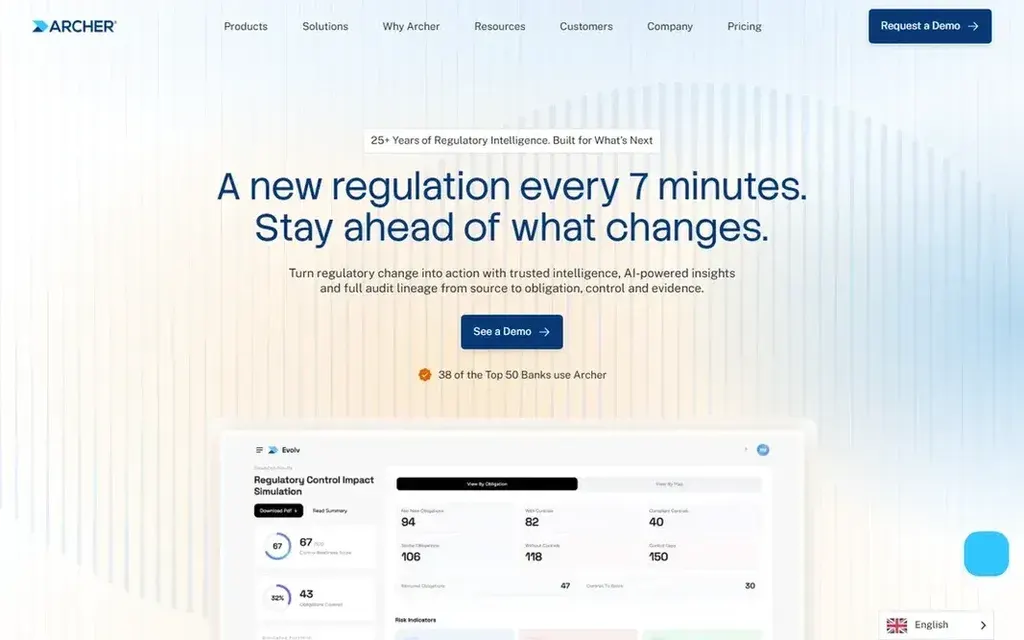
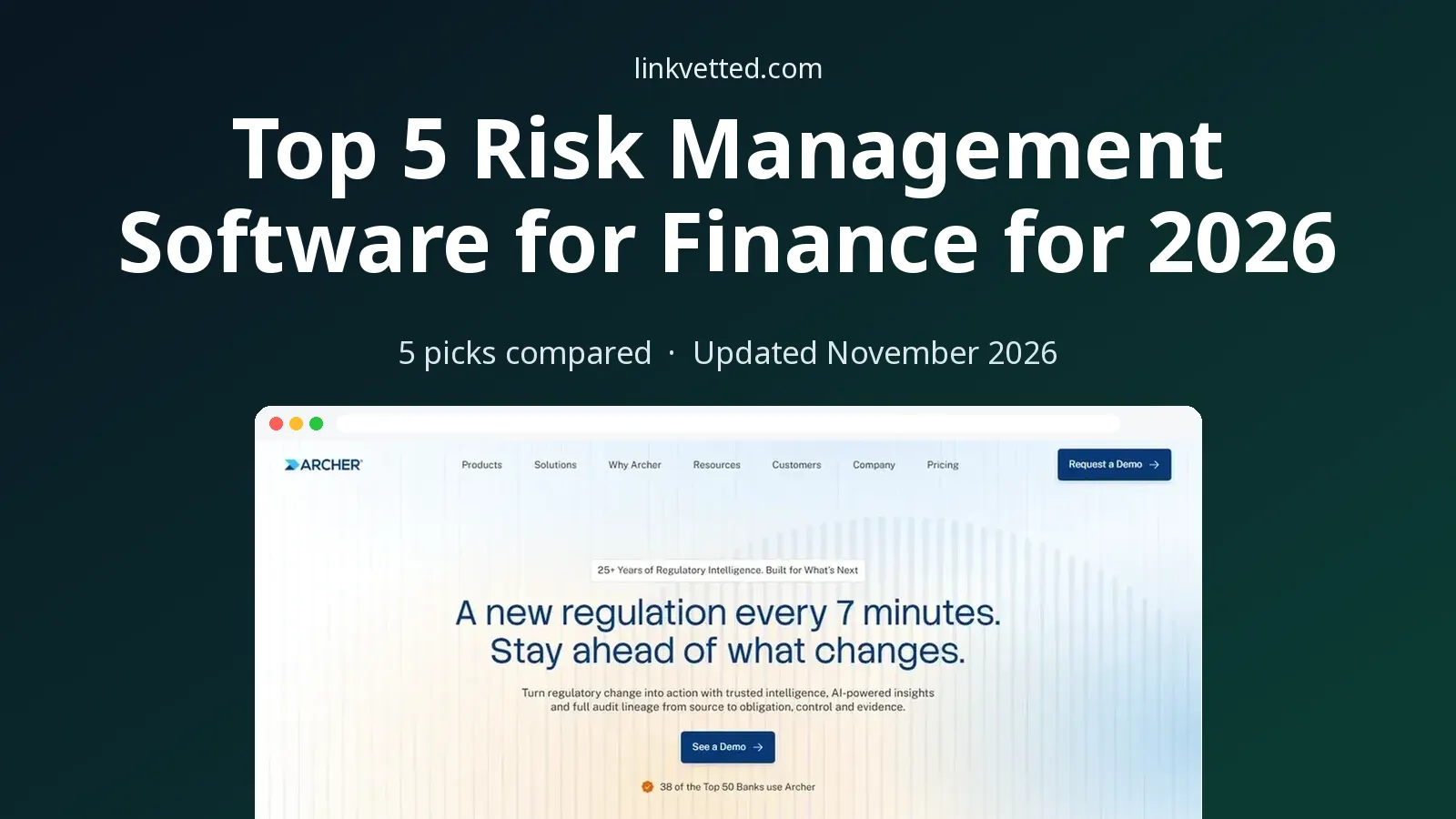
Archer targets regulatory change in banking. Archer supplies enterprise GRC with a clear focus on regulatory change management, supported by compliance-trained AI and full audit lineage.
Also, the banking orientation means other sectors may need to adapt the model to their own regulatory rhythms. Archer shows no starting price here, so confirm the cost on the vendor site. Trial and free access: Not stated.
Where it is weaker: Solid banking orientation.
- Compliance-trained AI support
- Regulatory change management focus
- Wide GRC scope needs planning
LogicManager
Best for: Connecting risks, controls and ownership
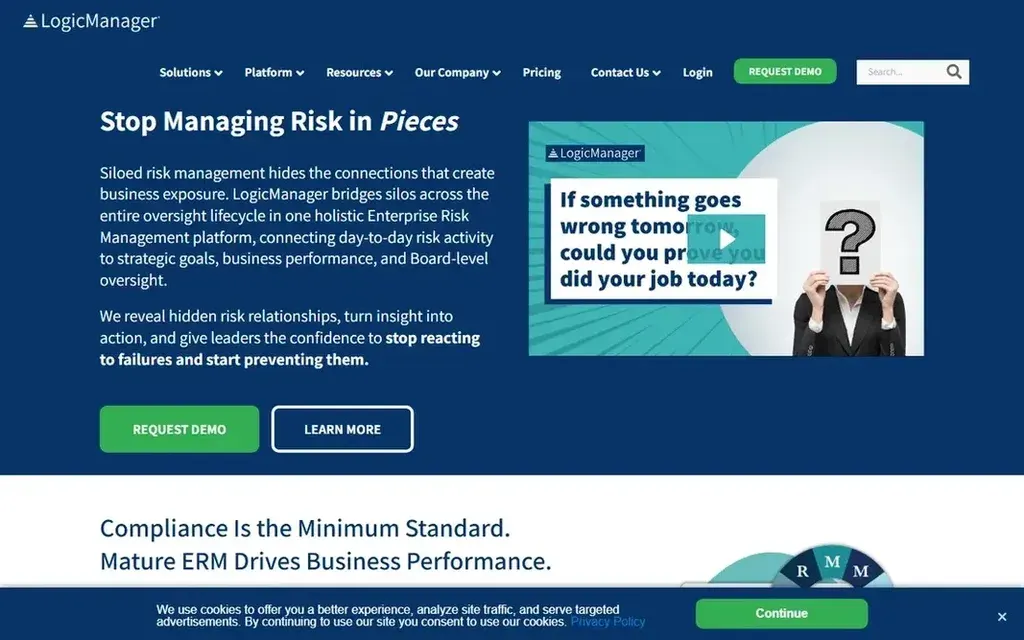
LogicManager works best for connecting risks, controls and ownership. Finance teams with layered control environments frequently value the single view of who owns each risk and how follow-up is tracked. In daily use, organizations wanting a lighter compliance checklist tool may prefer a narrower choice.
From a buyer's view, since it is built around enterprise risk management, smaller finance teams may find the structure heavier than they need. More specifically, LogicManager is an enterprise risk management platform that links risks, controls, ownership and action in one place. It is targeted at organizations that want leadership to see exposure plainly and understand what to do next. Check the vendor site for LogicManager pricing; none is listed in this comparison. Free access: Not stated.
Honest limits: Setup needs defined risk taxonomy.
- Provides leadership a clearer view of exposure
- Controls and ownership in one system
- Enterprise focus may suit bigger teams
ServiceNow targets risk workflows inside a broader product. ServiceNow is an AI product for simplifying enterprise workflows across customers and employees. For everyday use, system governance and administration also need attention.
Drawbacks to consider: Needs system governance.
Worth adding: risk management is one part of a much bigger system, so teams wanting a purpose-built risk experience may need additional configuration. Pick ServiceNow when risk work should live alongside other enterprise workflows rather than stand alone. ServiceNow does not show a starting price in this comparison, so check the vendor site for current pricing. On free options: Not stated.
- Links risk work to other processes
- Serves customers and employees
- Risk is one part of a larger product
IBM OpenPages
Best for: Unified risk, compliance and audit
IBM OpenPages works best for unified risk, compliance and audit. Pick IBM OpenPages when risk, compliance and audit should share one governed environment.
Teams needing only a straightforward risk register may find the scope bigger than necessary. No starting price is listed for IBM OpenPages here; confirm pricing on the vendor site. As for free access: Not stated.
Where it shines: Centralizes regulatory tracking.
Where it falls short: Implementation needs clear scoping.
- Supports governance programs
- Risk
- Interface ramp-up time for new users
Selection criteria
The comparison looks at four things: starting price, free access, how well the feature set matches risk management software for finance, and the main limit of each tool. Where a price is missing, the vendor does not list one publicly or ties it to a quote. Always confirm before budgeting. The order reflects how well each tool fits the most common buying scenario for risk management software for finance, then price clarity, then free plan access. It is a starting point, not a verdict.
Questions to settle before buying
- Ask each vendor, from SAP to IBM OpenPages, for a written quote; none of them publishes a starting price.
- Before choosing SAP, weigh its main limit: risk capabilities span several products.
- Total up the real monthly cost of SAP, including add-ons, extra users and usage-based fees.
- Find out whether the entry plan of IBM OpenPages covers your must-haves or only a trimmed-down version.
- Confirm minimum seats and billing terms with Archer before you commit to an annual plan.
FAQ
What should finance teams check before buying?
Check integrations with existing finance systems and ask how ownership and leadership reporting work. As for the details, review implementation scope and support choices before deciding.
Do these tools publish their prices?
No. None of the tools, from SAP to IBM OpenPages, shows a fixed starting price here, so budget time for quotes.
Can I try these tools before paying?
Not by default. None of the tools, from SAP to IBM OpenPages, lists a free plan or a free trial here, so ask each vendor for a demo before committing.
Is SAP the right pick for everyone comparing risk management software for finance?
No single tool suits every team. SAP comes first because it fits risk in an integrated business suite, while Archer suits regulatory change in banking and LogicManager suits connecting risks, controls and ownership. Match the tool to your own size, budget and workflow before deciding.
Does any tool for risk management software for finance here have a free plan?
No tool in this list, SAP and IBM OpenPages included, has a permanent free plan. Trials and quotes are the usual route, so plan a short evaluation period.
Sources
- https://www.sap.com
- https://www.archerirm.com
- https://www.logicmanager.com
- https://www.servicenow.com
- https://www.ibm.com/products/openpages