Best Similarweb Pro Alternatives in 2026: 10 Traffic and SEO Tools Compared
Looking for Similarweb Pro alternatives? We compare 10 traffic, SEO and competitive tools, with pricing, free plans, data coverage and accuracy limits.
- Editor's choice
 Semrush
All-round traffic and SEO research
Starts atSee websiteVisit semrush.comFull review - Great alternative
 Ahrefs
Backlinks and keyword research
Starts atSee websiteVisit ahrefs.comFull review - Also consider
 Moz Pro
SEO tracking and site audits
Starts atSee websiteVisit moz.comFull review
TL;DR:
- Semrush is our pick for most teams, combining traffic estimates, SEO, advertising research and content tools.
- Ahrefs suits teams focused on backlinks, keywords and content gaps.
- SpyFu and SE Ranking offer lower-cost routes to competitor keyword and traffic research.
- No third-party tool sees exact competitor traffic, so treat estimates as directional, not precise counts.
- Check data coverage for your country and niche before paying, since estimates vary by market.
Quick comparison
| Tool | Best for | Starts at | Free plan? | |
|---|---|---|---|---|
| Semrush | All-round traffic and SEO research | See website | Free trial | Visit |
| Ahrefs | Backlinks and keyword research | See website | Free trial | Visit |
| Moz Pro | SEO tracking and site audits | See website | Free trial | Visit |
 SpyFu | Competitor keyword history | See website | Free trial | Visit |
 SE Ranking | Affordable SEO and competitor tracking | See website | Free trial | Visit |
 BuiltWith | Technology and site stack research | Free | Yes | Visit |
 SimilarTech | Technology adoption tracking | See website | Free trial | Visit |
 Quantcast | Audience measurement and insights | See website | Free trial | Visit |
 Leadfeeder | Identifying companies visiting your site | See website | Free trial | Visit |
 Wappalyzer | Technology detection for any site | Free | Yes | Visit |
The best Similarweb Pro alternatives
Similarweb Pro is known for website traffic estimates, audience insights and competitive benchmarking. These alternatives cover that ground through SEO data, technology tracking, audience measurement and lead identification, with different strengths and prices.
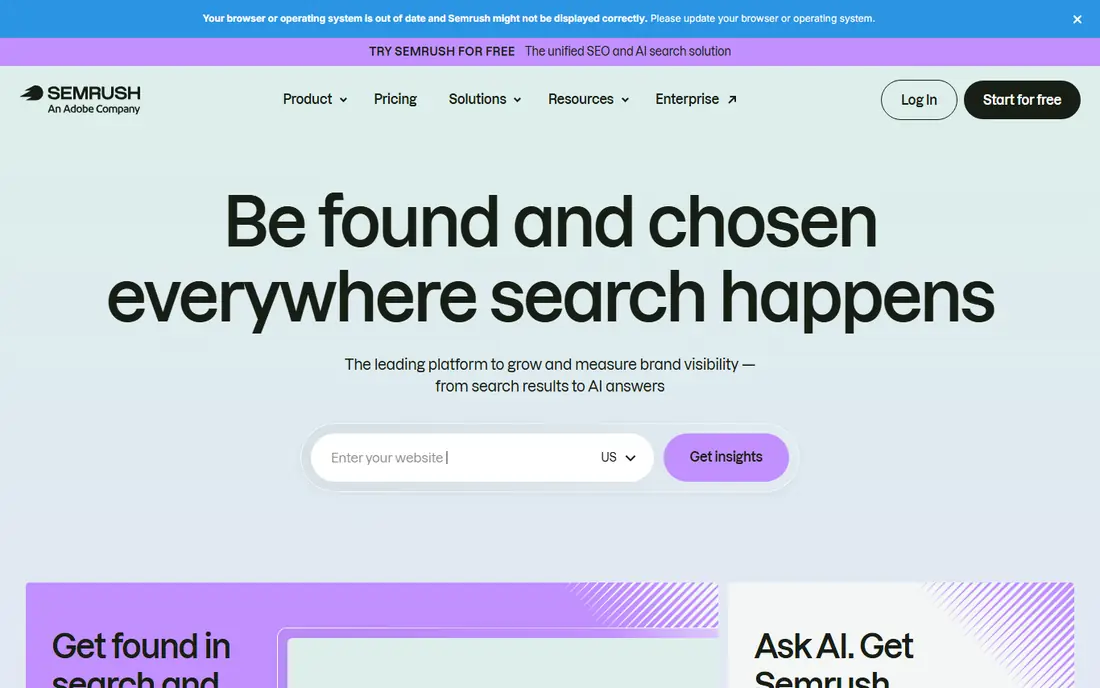
Semrush is our pick for most teams that want a Similarweb replacement. Its Traffic Analytics tool estimates visits, sources and audience behaviour, while its SEO, advertising and content tools cover keywords, backlinks and competitor campaigns. That breadth means one subscription can serve SEO, content and paid teams.
The price is higher than for a single-purpose tool, and the interface takes time to learn. Small teams that only need traffic estimates may find a cheaper option enough. For teams that want traffic plus SEO and advertising insight in one place, Semrush is the strongest all-rounder.
- Traffic analytics, keyword and backlink tools in one suite
- Advertising and social research
- Large keyword database
- Higher price than niche tools
- Breadth can overwhelm small teams

Ahrefs is best known for backlinks, but it also offers traffic estimates, keyword research and competitor content analysis. Teams can see which pages drive organic traffic for a rival, which keywords they rank for, and where backlink gaps exist. Site Audit and Rank Tracker help teams act on that research.
Ahrefs traffic data is rooted in search, so it does not replace Similarweb audience demographics or app data. Pricing is also tiered by usage limits. For SEO-led competitive research, Ahrefs is a top-tier choice that pairs well with a traffic tool if budget allows.
- Large backlink index
- Strong keyword and content gap tools
- Site audit and rank tracking
- Traffic estimates are SEO-focused, not full audience analytics
- Higher-tier plans needed for large limits
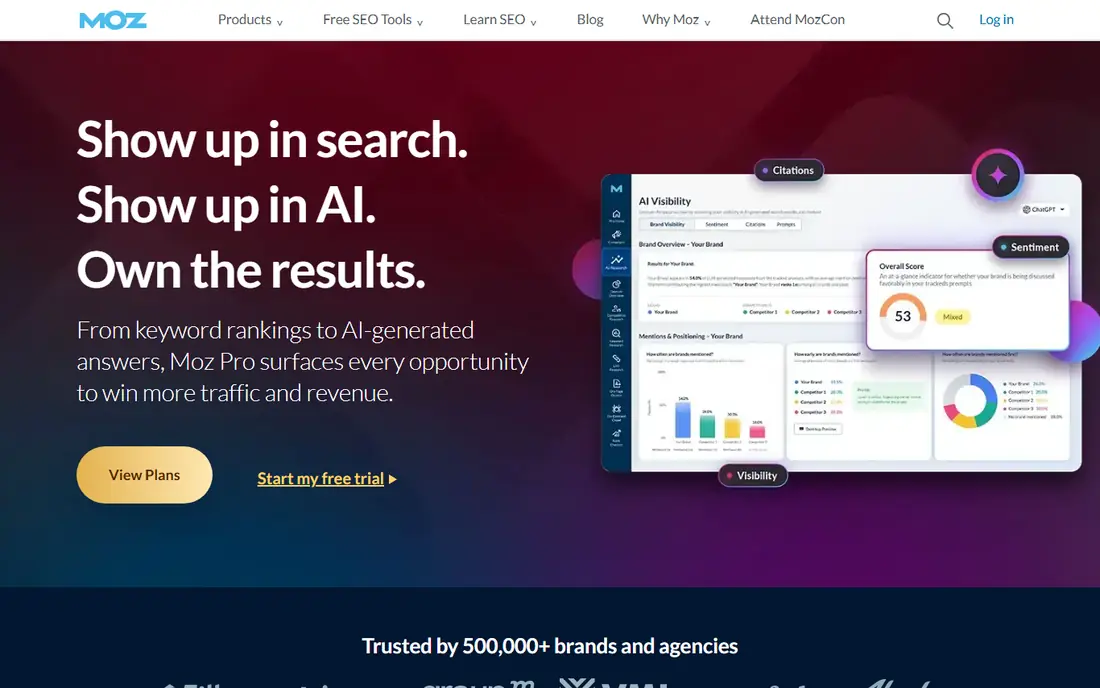
Moz Pro suits teams that want clear SEO tracking without the complexity of larger suites. It offers rank tracking, site crawls, keyword research and link data, with metrics and guides that help beginners interpret results. That clarity makes it a good first SEO platform.
Moz does not match Similarweb for website traffic and audience benchmarking, so teams focused on traffic share may need another source. Data depth also varies by country and niche. For SEO tracking and site health, Moz Pro is a dependable and approachable option.
- Rank tracking, site audits and keyword tools
- Clear metrics for beginners
- Helpful learning resources
- Traffic estimates are less detailed than Similarweb
- Database depth varies by market
SpyFu stands out for history. It shows which keywords and ads a competitor has used over time, including past campaigns that other tools may miss. That history helps teams spot seasonal patterns, long-running winners and shifts in strategy. Plans are also more affordable than large suites.
SpyFu traffic estimates are narrower than Similarweb, and the interface feels older than Semrush or Ahrefs. For teams whose main question is what competitors rank for and advertise on, SpyFu gives a lot of history for a modest price.
- Long history of competitor keywords and ads
- Affordable plans
- Easy competitor comparisons
- Traffic estimates are less broad than Similarweb
- Interface is dated compared with newer suites
SE Ranking is a budget-friendly suite for rank tracking, audits, keyword research and competitor checks. Its plans scale by usage, which helps small agencies and in-house teams control costs. White-label reporting also suits agencies that share results with clients.
Traffic and audience data are thinner than at Similarweb, and the keyword database is smaller than the largest suites. SE Ranking is best as an affordable SEO and competitor tracker, not as a full audience intelligence replacement. For that job at a lower price, it is a strong pick.
- Rank tracking, site audits and competitor research at lower prices
- Flexible usage-based plans
- White-label reporting
- Traffic data is less deep than Similarweb
- Smaller database than Semrush or Ahrefs
BuiltWith answers a different competitive question: what technology does a site use. It tracks CMS platforms, analytics tools, payment systems, hosting and many other technologies, and it can build lead lists of sites using a given stack. Free lookups let users check a single site quickly.
BuiltWith does not estimate traffic or audience, so it complements rather than replaces Similarweb. Paid plans are needed for trends, lists and API access. For sales, product and tech research, BuiltWith is a valuable and distinct source.
- Detailed technology profiles for websites
- Lead lists by tech stack
- Free lookups for single sites
- Not a traffic analytics tool
- Full lead lists and trends need paid plans
SimilarTech, now part of Similarweb, tracks which technologies websites adopt and how usage changes over time. Sales and marketing teams can find companies using a rival tool, track adoption trends and build prospect lists by stack, geography and size. That makes it useful for competitive sales research.
SimilarTech is not a traffic tool, so it should not be judged as a direct Similarweb Pro replacement for audience data. It is best paired with an SEO or traffic tool. For technology-led prospecting, it offers focused data that general SEO suites do not.
- Technology adoption and trend tracking
- Company and website profiles
- Sales prospecting filters
- Focus is technology, not traffic
- Pricing requires a quote for larger use
Quantcast focuses on audience measurement, helping advertisers and publishers understand who visits sites and how audiences behave. Its measurement network and advertising tools suit brands planning campaigns and publishers proving audience value. That audience lens is closer to Similarweb than pure SEO tools.
Quantcast is less handy for a small team that just wants a rival traffic estimate, and access depends on measurement and campaign use. For media planning and audience insight, it is a credible alternative. For everyday competitor checks, an SEO suite will be more practical.
- Audience measurement and insights
- Advertising targeting tools
- Large publisher measurement network
- Best for advertisers and publishers
- Less useful for small-site competitor traffic checks
Leadfeeder takes a different angle: it identifies companies that visit your own website, using IP and other signals, and sends that data to your CRM. Sales teams can follow up with warm prospects, score leads and see which pages a company viewed. That makes it a sales tool rather than a rival traffic estimator.
Leadfeeder will not tell you a competitor traffic total, and identification is stronger for business visitors than consumers. Teams that want to turn their own traffic into leads will find it useful. Pair it with Semrush or Ahrefs for the rival side of the picture.
- Identifies companies visiting your own site
- Integrates with CRM tools
- Lead scoring and alerts
- Shows your own visitors, not rival traffic
- Identification works best for business traffic
Wappalyzer is a quick, free way to see what a site is built with. Its browser extension lists CMS, analytics, frameworks and other tools on any page, and its web service offers technology lookups and lead lists. For a fast competitor tech check, it is hard to beat.
Wappalyzer gives no traffic or audience data, so it is a complement to SEO and traffic tools, not a replacement. Paid plans add bulk lookups and API access. For quick tech reconnaissance during competitor research, Wappalyzer is a handy free tool to keep installed.
- Browser extension detects site technologies instantly
- Technology lookup and lead lists
- Free basic use
- Technology only, no traffic data
- Deeper lists and API use need paid plans
How we picked these
We compared official feature pages, pricing pages and public reviews for traffic, SEO, technology and audience tools that work in October 2026. We looked for live products, clear data coverage, competitor research features and transparent pricing or trial options. We included a mix of all-round suites and specialist tools, since no single tool matches every part of Similarweb Pro.
How to use traffic estimates wisely
Treat every third-party traffic number as an estimate. Tools use panels, search data, partnerships and models, so totals for the same site can differ widely between providers. Compare trends and shares over time rather than treating one month total as exact, and check the same site in two tools before making a big decision.
Next, match the tool to the question. Use Semrush or Ahrefs for search and competitor content, BuiltWith or Wappalyzer for technology, Quantcast for audience planning, and Leadfeeder for your own site leads. Your own analytics remain the only exact source for your own traffic, so use third-party tools for context, not as a replacement for first-party data.
Checks before you pay
Check coverage for your country, language and niche, since estimates are stronger in large markets. Test the tool on sites you know well, and see whether rankings and trends match what you expect. Confirm seat limits, usage caps and export options, since those often decide the real cost for a team.
FAQ
What is the best alternative to Similarweb Pro?
Semrush is our pick for most teams, since it combines traffic estimates with SEO, advertising and content research. Ahrefs is best for backlink and keyword-led research, while SpyFu and SE Ranking suit smaller budgets.
Are Similarweb Pro alternatives accurate for traffic?
No tool gives exact competitor traffic. Estimates come from panels, models and search data, so totals vary between providers. Use them for trends, shares and comparisons, not as precise visitor counts.
Is there a free alternative to Similarweb Pro?
Yes, for parts of the job. BuiltWith and Wappalyzer offer free technology lookups, and Semrush, Ahrefs, Moz and SE Ranking offer free trials. Free tiers are limited, so a paid plan is usually needed for regular competitor tracking.
Can these tools replace Google Analytics?
No. Google Analytics measures your own site exactly, while these tools estimate competitor sites. Use analytics for your own performance and third-party tools for market and competitor context.
Which tool is best for finding competitor keywords?
Ahrefs and Semrush are strongest for keyword and content gaps, with large databases and gap tools. SpyFu adds long keyword and ad history at a lower price, which helps teams spot patterns over time.