Best Web Application Firewall for Cloud (2026): 6 Picks Checked on Vendor Pages
6 tools for the best web application firewall for cloud, compared on pricing, free plans and best-fit use. Caveats come with every verdict. No filler.
- Editor's choiceAWS WAF
AWS-native application protection
Starts atSee websiteVisit aws.amazon.comFull review - Great alternativeMicrosoft Azure Web Application Firewall
Azure-hosted web app security
Starts atSee websiteVisit azure.microsoft.comFull review - Also considerCloudflare WAF
Edge protection with low false positives
Starts at$7 a monthVisit cloudflare.comFull review
Direct answer
This list puts AWS WAF first for AWS-native application protection. Listed starting prices: Cloudflare WAF from $7 a month. For a different need, Microsoft Azure Web Application Firewall covers Azure-hosted web app security and Cloudflare WAF covers edge protection with low false positives. The full list of 6 tools follows, with prices and free plan facts.
TL;DR:
- This list starts with AWS WAF, which is built for AWS-native application protection.
- For complicated distributed web and API estates, Akamai App & API Protector is worth a look.
- The main caution on Google Cloud Armor: tied to Google Cloud context.
- The lowest published monthly entry price here is $7 per month, from Cloudflare WAF.
Last checked November 2026. Prices and plan details were read from the vendors' own pages in November 2026; vendors change plans often, so confirm the current price on the vendor site before you buy.
Quick comparison
| Tool | Best for | Starts at | Free plan? | |
|---|---|---|---|---|
| AWS WAF | AWS-native application protection | See website | Not stated | Visit |
| Microsoft Azure Web Application Firewall | Azure-hosted web app security | See website | Not stated | Visit |
| Cloudflare WAF | Edge protection with low false positives | $7 a month | Yes | Visit |
 Google Cloud Armor | DDoS and WAF rules on Google Cloud | See website | Not stated | Visit |
| Fortinet FortiWeb | Defending apps and APIs from threats | See website | Not stated | Visit |
| Akamai App & API Protector | Complicated distributed web and API estates | See website | Not stated | Visit |
Web Application Firewall for Cloud, one by one
This LinkVetted guide covers 6 options for web application firewall for cloud. Each profile lists a starting price, free plan details, strengths and drawbacks, so you can drop poor fits quickly.
AWS WAF
Best for: AWS-native application protection
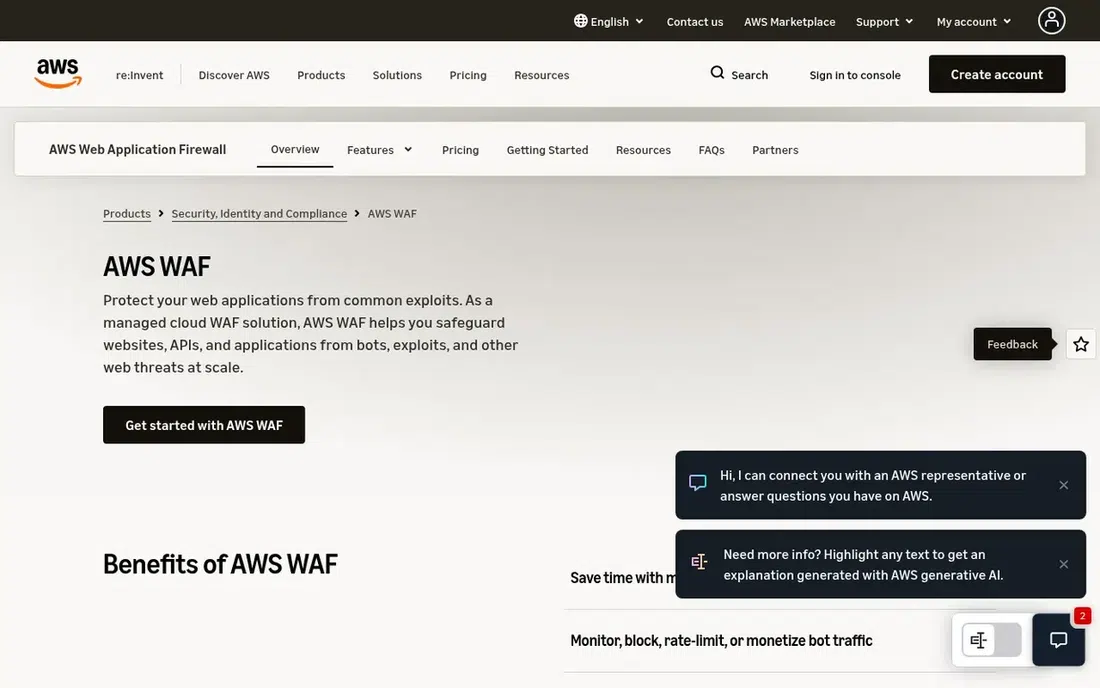
In short, AWS WAF is for AWS-native application protection. Its rules need continuing tuning to balance protection and false positives.
Trade-offs to know: Tuning rules takes effort.
Main advantages: Targets bots and layer 7 attacks. Teams outside AWS may find a provider-neutral WAF more straightforward to operate. AWS WAF does not show a starting price in this comparison, so check the vendor site for current pricing. As for free access: Not stated.
- Handles websites
- APIs and apps
- Most natural fit on AWS
Microsoft Azure Web Application Firewall
Best for: Azure-hosted web app security
In short, Microsoft Azure Web Application Firewall is for Azure-hosted web app security. Pick Azure WAF when your web apps run on Azure and you want protection integrated with that system. Azure Web Application Firewall guards web apps from typical web-hacking techniques for example SQL injection and cross-site scripting, based on Microsoft.
What to check first: Rule tuning still needed.
It is most natural for Azure workloads and less compelling for multi-cloud or non-Azure estates. Beyond that, rules still need tuning to cut false positives. Microsoft Azure Web Application Firewall does not show a starting price in this comparison, so check the vendor site for current pricing. As for free access: Not stated.
- Blocks typical hacking techniques
- Fits Azure environments
- Most natural within Azure
Cloudflare WAF
Best for: Edge protection with low false positives
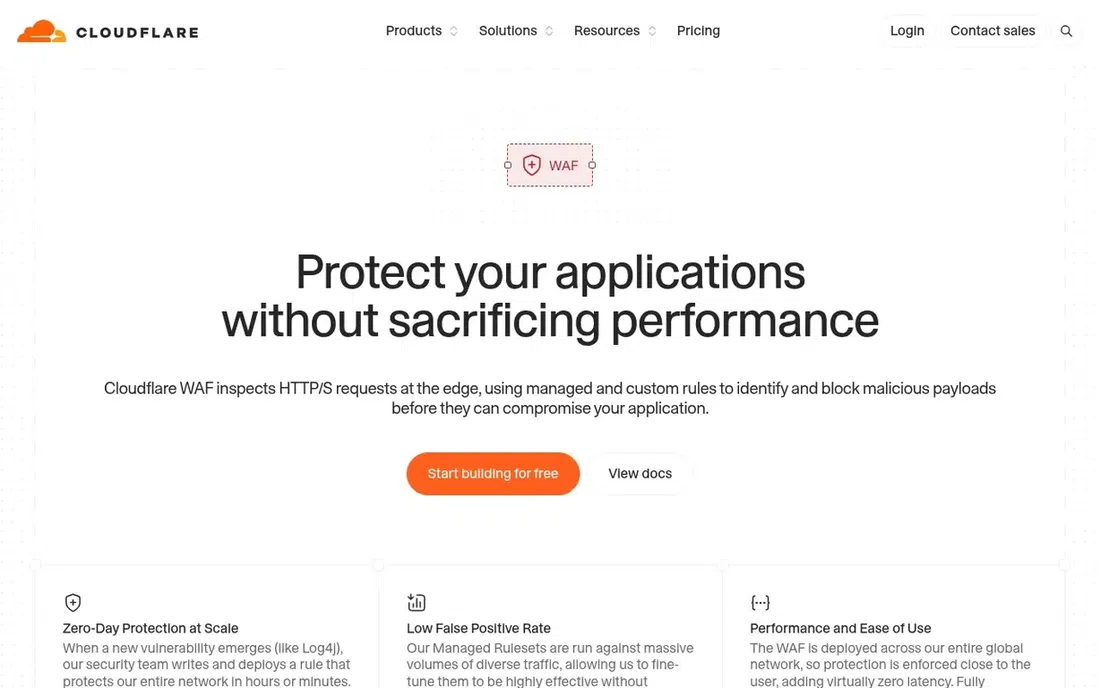
Think of Cloudflare WAF for edge protection with low false positives. Its vendor page flags zero-day protection, low false positives and automatic security updates.
It suits teams that want protection applied close to users and prefer a managed rule set that updates itself instead of hand-tuning everything. Cloudflare WAF starts at: $7 per month. You can start on Cloudflare WAF without paying.
Downsides: Policy tuning still required.
- Zero-day protection
- Edge-based deployment
- Best value within Cloudflare ecosystem
Google Cloud Armor is built with DDoS and WAF rules on Google Cloud in mind. It suits organizations running applications on Google Cloud that want network-level protection and customizable WAF rules within the same system.
Downsides: Tied to Google Cloud context.
Choose Cloud Armor when your apps live on Google Cloud and you want combined DDoS and WAF defenses there. No starting price is listed for Google Cloud Armor here; confirm pricing on the vendor site. Free options: Not stated.
- DDoS defenses
- Rich WAF rule set
- Rule design takes care
Fortinet FortiWeb
Best for: Defending apps and APIs from threats
Fortinet FortiWeb was built for defending apps and APIs from threats. Teams without existing Fortinet tooling may prefer a standalone managed WAF.
The main drawbacks: Policy tuning required.
On top of that, effective protection relies on well-tuned policies, which takes continuing attention. Choose FortiWeb when you want combined web and API defense and value alignment with the broader Fortinet ecosystem. Fortinet FortiWeb does not show a starting price in this comparison, so check the vendor site for current pricing. On free options: Not stated.
- Addresses zero-day threats
- Web and API protection
- Best fit within Fortinet stack
Akamai App & API Protector
Best for: Complicated distributed web and API estates
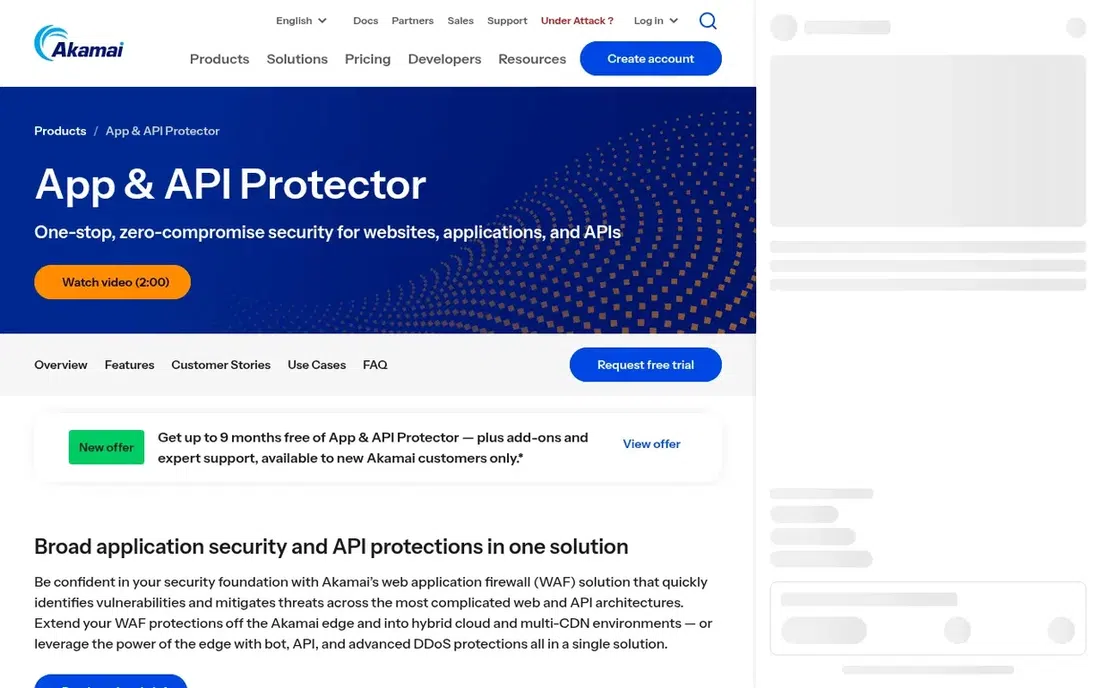
Akamai App & API Protector makes the most sense for complicated distributed web and API estates. Consider Akamai when your web and API surface is large, distributed and demands unified protection. The breadth of coverage can mean more configuration work at the start.
Akamai App & API Protector spots vulnerabilities and mitigates threats across a whole web and API estate, including complicated distributed architectures, based on the vendor. In daily use, smaller teams with a handful of apps may find it more than they need. This comparison lists no price for Akamai App & API Protector; ask the vendor. On free options: Not stated.
Drawbacks to consider: Aimed at bigger estates.
- Spans web and API estate
- Takes care of distributed architectures
- Configuration can be involved
How these tools were picked
Selection started from tools commonly considered for web application firewall for cloud, then narrowed to 6 that have clear pricing information or a clear quote process. Treat prices as a snapshot: vendors change plans often, so check the vendor site for the figure that applies today. Position on the page reflects fit for a typical buyer first, with price clarity and free access breaking ties. Treat it as a guide, not a ruling.
A buyer's checklist
- Get a written quote from AWS WAF, Microsoft Azure Web Application Firewall, Google Cloud Armor and others; the list shows no starting price for them.
- Test the free plan from Cloudflare WAF against your real workload before relying on it.
- Read the limits listed for AWS WAF first: tuning rules takes effort.
- Total up the real monthly cost of Fortinet FortiWeb, including add-ons, extra users and usage-based fees.
- Find out whether the entry plan of Microsoft Azure Web Application Firewall covers your must-haves or only a trimmed-down version.
FAQ
Which options for web application firewall for cloud have a free plan?
Cloudflare WAF is the only tool in this list with a free plan. Free plans usually cap users, projects or features, so check the limits on the vendor page.
Can I try these tools before paying?
Often, yes. Cloudflare WAF has a free plan. Use your own data and a real task during the test, and check what the free tier or trial limits before you rely on it.
Do these tools publish their prices?
Not all of them. AWS WAF, Microsoft Azure Web Application Firewall, Google Cloud Armor and others publish no starting price, so expect a quote request for those. The rest, Cloudflare WAF included, show a starting price, though seats and billing terms still change the final cost.
Should I choose a cloud-native WAF or a provider-neutral one?
A provider-neutral WAF can offer consistent protection across mixed environments. In daily use, match the choice to where your applications actually run.
Is AWS WAF the right pick for everyone comparing web application firewall for cloud?
No single tool suits every team. AWS WAF comes first because it fits AWS-native application protection, while Microsoft Azure Web Application Firewall suits Azure-hosted web app security and Cloudflare WAF suits edge protection with low false positives. Match the tool to your own size, budget and workflow before deciding.
How much tuning does a cloud WAF need?
Managed rule sets and automatic updates, as Cloudflare flags, can cut continuing effort. Plan for periodic review regardless of the product you choose.
Sources
- https://aws.amazon.com/waf
- https://azure.microsoft.com/en-us/products/web-application-firewall
- https://www.cloudflare.com/application-services/products/waf
- https://cloud.google.com/armor
- https://www.fortinet.com/products/web-application-firewall/fortiweb
- https://www.akamai.com/products/app-and-api-protector