Top 6 Synthetic Profile Detection Software for 2026 (Prices and Free Plans)
Searching for the best synthetic profile detection software? Here are 6 options with prices and free plans. The catches are listed up front. Decide faster.
- Editor's choice
 LexisNexis Risk Solutions
Data-driven risk insights and linking
Starts atSee websiteVisit risk.lexisnexis.comFull review - Great alternative
 Jumio
Identity checks with AML screening
Starts atSee websiteVisit jumio.comFull review - Also considerSardine
Live agentic fraud and AML detection
Starts atSee websiteVisit sardine.aiFull review
Direct answer
This list puts LexisNexis Risk Solutions first for data-driven risk insights and linking. Listed starting prices: Socure from $0.80 per evaluation. Jumio is the stronger choice for identity checks with AML screening, while Sardine suits live agentic fraud and AML detection. All 6 tools are compared below on price, free plan and limits.
TL;DR:
- Top of the list is LexisNexis Risk Solutions, which targets data-driven risk insights and linking.
- Just one of the 6 tools, Experian, has a free plan.
- For onboarding and customer risk management, Alloy is worth a look.
- No starting price is published for LexisNexis Risk Solutions, Jumio, Sardine and others; expect a quote.
- A fair warning about LexisNexis Risk Solutions: portfolio breadth needs navigation.
Last checked November 2026. Prices and plan details were read from the vendors' own pages in November 2026; vendors change plans often, so confirm the current price on the vendor site before you buy.
Quick comparison
| Tool | Best for | Starts at | Free plan? | |
|---|---|---|---|---|
| LexisNexis Risk Solutions | Data-driven risk insights and linking | See website | Not stated | Visit |
| Jumio | Identity checks with AML screening | See website | Not stated | Visit |
| Sardine | Live agentic fraud and AML detection | See website | Not stated | Visit |
 Socure | AI identity verification at onboarding | $0.80 per evaluation | Free trial | Visit |
 Experian | Credit and identity data context | See website | Yes | Visit |
 Alloy | Onboarding and customer risk management | See website | Not stated | Visit |
The 6 tools in detail
LinkVetted compared 6 tools for synthetic profile detection software. The goal is a practical shortlist: published prices, free plan facts, best-fit use cases and honest limits for every entry.
LexisNexis Risk Solutions makes the most sense for data-driven risk insights and linking. Proprietary linking is straight relevant to synthetic profiles, where connections between identity elements reveal fabrication.
The portfolio spans plenty of risk areas, so buyers must identify which option addresses synthetic identity detection and how it integrates. This comparison lists no price for LexisNexis Risk Solutions; ask the vendor. Free options: Not stated.
Trade-offs to know: Portfolio breadth needs navigation.
- Targeted option sets
- Wide risk decisioning
- Integration relies on chosen option

Jumio is a good fit for identity checks with AML screening. Jumio presents an identity verification and intelligence platform that goes beyond one-time ID checks, combining verification, risk signals and AML screening powered by the Jumio Identity Graph. That combination helps flag synthetic identities where documents look valid but identity elements do not cohere.
From a buyer's view, Jumio's messaging emphasizes moving past single checks, so buyers should confirm how continuous monitoring works for existing accounts. From a buyer's view, if you need heavy transaction-level fraud automation, a broader risk product may fit better. Jumio does not show a starting price in this comparison, so check the vendor site for current pricing. On free options: Not stated.
Drawbacks to consider: Graph reliance needs review.
- Identity Graph linking
- AML screening included
- One-time check heritage
Sardine
Best for: Live agentic fraud and AML detection
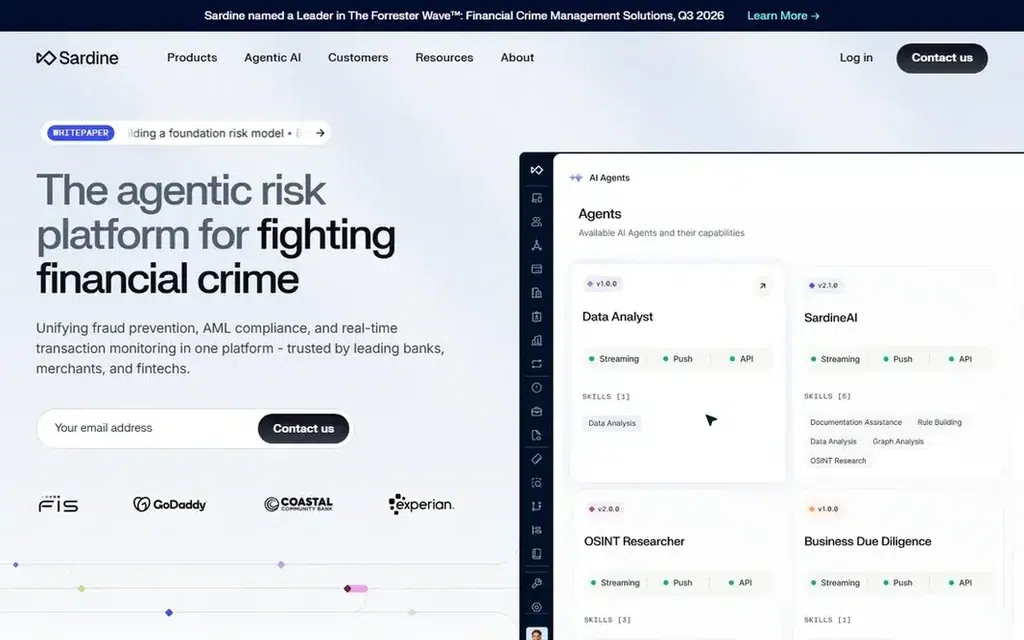
Sardine is a good fit for live agentic fraud and AML detection. Sardine positions itself as an agentic financial crime system used by banks and merchants to stop fraud in live and prevent AI-driven attacks. Since Sardine spans fraud, AML and operations, smaller teams may find the scope broader than a narrow synthetic profile check needs.
In daily use, if you only need document verification at signup, a narrower identity tool may be simpler. More specifically, buyers should confirm which signals feed synthetic identity detection and how alerts route to review queues. This comparison lists no price for Sardine; ask the vendor. As for free access: Not stated.
What to check first: Enterprise-oriented scope.
- Agentic risk system for fraud and AML
- Live detection focus
- Wide product may need configuration
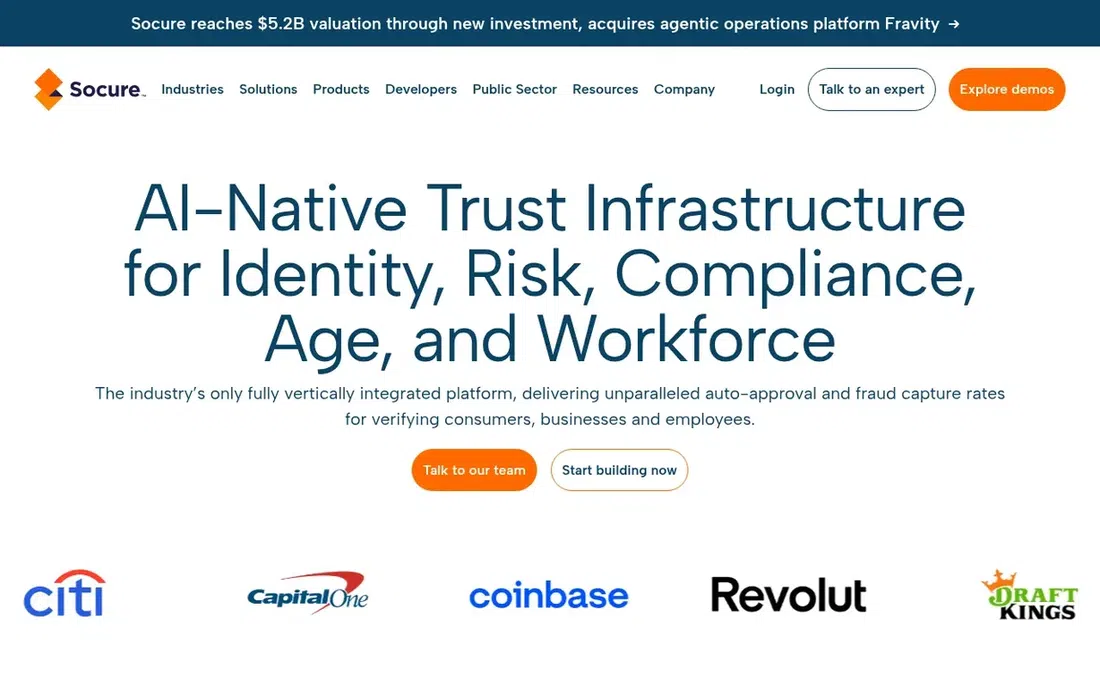
Where Socure fits: AI identity verification at onboarding. Socure's stated focus is identity verification and AI risk decisioning.
The main drawbacks: Needs integration planning.
So teams needing deep post-onboarding transaction monitoring may pair it with a fraud operations platform. On cost, Socure starts like this: $0.80 per evaluation. Free plan details: Free trial.
- Decisioning focus
- Verifies consumers, firms, employees
- Verification-centric scope
Experian serves credit and identity data context. Experian's consumer site centers on credit reports, scores and financial tools, whereas its business services draw on credit and identity data that can support fraud and synthetic identity decisions. Also, synthetic profile detection may need combining credit context with device and behavioral signals from other tools.
Honest limits: Business offerings need direct review.
In daily use, the homepage excerpt describes consumer credit tools, so business fraud and identity offerings should be confirmed straight with Experian. As for the details, if you need a ready fraud operations workflow, a dedicated product is likely a better starting point. Organizations frequently use credit file context to test whether a claimed identity has a consistent history. No starting price is listed for Experian here; confirm pricing on the vendor site. Free access exists with Experian.
- Identity context for decisions
- Consumer financial tools
- Consumer site focus
Think of Alloy for onboarding and customer risk management. Since Alloy works across data and identity providers, results rely on which sources you link and how rules are tuned.
Its orchestration approach lets teams combine identity and risk data to catch synthetic profiles at account opening and during customer risk reviews. As for the details, if you prefer a single bundled detection engine, a platform-native tool may be less effort to operate. Alloy shows no starting price here, so confirm the cost on the vendor site. Free access: Not stated.
Watch-outs: Orchestration model needs setup.
- Accelerates onboarding
- AI-powered risk management
- Data partner choices matter
How we compared the tools
Each tool was reviewed on what its vendor publishes: price, plan limits, core features and stated drawbacks. We did not run hands-on tests. Where a vendor does not publish a price, the entry says quote. Where a price depends on seats or billing term, the entry says so. Tools are placed by general fit for synthetic profile detection software, with price clarity and free access as tie-breakers. A different team can reasonably rank them differently.
What to confirm before you sign up
- Get a written quote from LexisNexis Risk Solutions, Jumio, Sardine and others; the list shows no starting price for them.
- Test the free plan from Experian against your real workload before relying on it.
- Take the trial from Socure and push a live task through it before you pay.
- Before choosing LexisNexis Risk Solutions, weigh its main limit: portfolio breadth needs navigation.
- Find out whether the entry plan of Jumio covers your must-haves or only a trimmed-down version.
- Test the integrations you rely on with Experian before committing; some connectors sit on upper tiers.
FAQ
How are the tools for synthetic profile detection software ordered?
The order follows typical fit for synthetic profile detection software, with LexisNexis Risk Solutions first and Alloy last, then price clarity and free access. It is editorial judgement, not a score, so another team could rank the tools differently.
Can I try these options before paying?
Often, yes. Experian has a free plan and Socure offers a free trial. Use your own data and a real task during the test, and check what the free tier or trial limits before you rely on it.
Which tool should I start with for synthetic profile detection?
Socure is worth reviewing if verification at onboarding is your priority. On top of that, confirm each vendor's synthetic identity coverage against your own onboarding and monitoring flows.
Do these tools publish their prices?
Not all of them. LexisNexis Risk Solutions, Jumio, Sardine and others publish no starting price, so expect a quote request for those. The rest, Socure included, show a starting price, though seats and billing terms still change the final cost.
Is LexisNexis Risk Solutions the right pick for everyone comparing synthetic profile detection software?
No single tool suits every team. LexisNexis Risk Solutions comes first because it fits data-driven risk insights and linking, while Jumio suits identity checks with AML screening and Sardine suits real-time agentic fraud and AML detection. Match the tool to your own size, budget and workflow before deciding.
Sources
- https://risk.lexisnexis.com
- https://www.jumio.com
- https://www.sardine.ai
- https://www.socure.com
- https://www.experian.com
- https://www.alloy.com